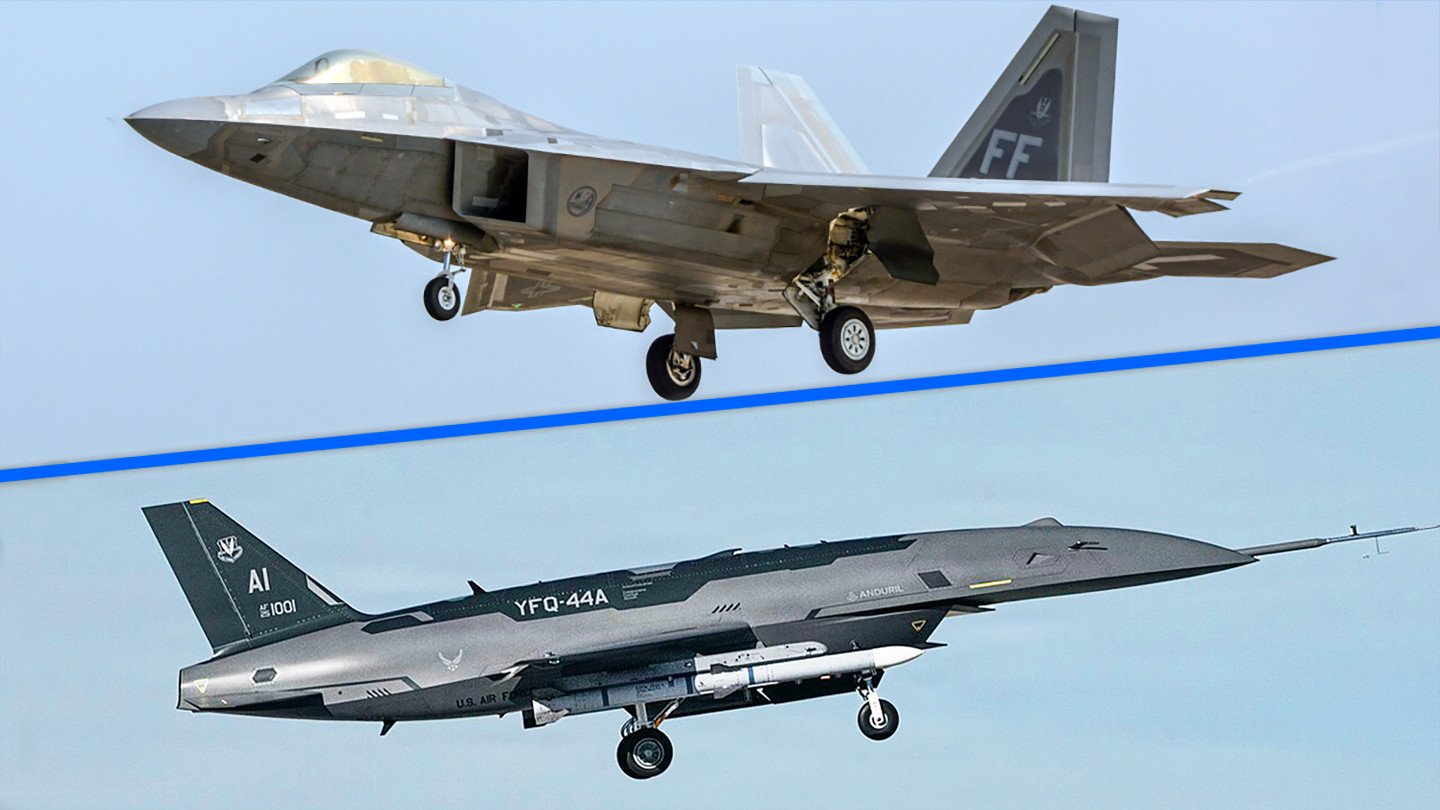
АНУ-ын Агаарын цэргийн хүчин “Collaborative Combat Aircraft” (CCA) хөтөлбөрийн хүрээнд сөнөөгч онгоцноос нисгэгчгүй онгоцыг алсаас удирдах туршилтыг амжилттай гүйцэтгэлээ.
АНУ-ын Агаарын цэргийн хүчин болон Anduril компанийн хамтран явуулсан энэхүү туршилтаар F-22 Raptor сөнөөгч онгоцны нисгэгч агаарт нисэж буй YFQ-44A Fury нисгэгчгүй онгоцонд тактикийн удирдамж өгч, маневр хийлгэжээ. Энэхүү үйл явдал нь 2030-аад он гэхэд 500 гаруй нисгэгчгүй онгоцны флотыг байлдааны эгнээнд оруулах АНУ-ын Агаарын цэргийн хүчний зорилтын хүрээнд хийгдсэн чухал алхам юм.
Туршилтын үеэр F-22 онгоцны нисгэгч “агаарын удирдагч”-ийн үүргийг гүйцэтгэж, тактикийн өгөгдлийн холбоогоор дамжуулан нисгэгчгүй онгоцны нислэгийн төлөвлөгөөг шинэчлэн илгээсэн байна. YFQ-44A онгоцны бие даасан програм хангамж нь уг тушаалыг бодит цаг хугацаанд хүлээн авч, байлдааны даалгаврыг дуурайлган гүйцэтгэжээ.
АНУ-ын Агаарын цэргийн хүчин одоогоор FQ-44A Fury болон General Atomics компанийн FQ-42A Vengeance нисгэгчгүй онгоцнуудыг үйлдвэрлэлд оруулаад байгаа юм. Эдгээр системийг арванхоёрдугаар сард болох “Emerald Flag” цэргийн сургуулилтад анх удаа томоохон хэмжээний ажиллагаанд оролцуулахаар төлөвлөж байна.
Энэхүү технологи нь нисгэгчтэй болон нисгэгчгүй онгоцны хамтын ажиллагааг (Manned-Unmanned Teaming) шинэ шатанд гаргах зорилготой юм. Агаарын цэргийн албаныхан ирээдүйд нисгэгчдийн ачааллыг бууруулах, нисгэгчгүй онгоцонд итгэх итгэлийг нэмэгдүүлэх чиглэлээр үргэлжлүүлэн ажиллахаа мэдэгдлээ.
Дэлгэрэнгүйг эх сурвалжаас харах
Эх сурвалжийг нээх ↓
A pilot flying an F-22 Raptor fighter has issued commands to a YFQ-44A Fury Collaborative Combat Aircraft (CCA) drone in a first-of-its-kind test. This is an important development for the U.S. Air Force’s CCA program, as its F-22s are set to be the first aerial ‘quarterbacks’ for these uncrewed aircraft once they enter operational service.
The Air Force and Anduril, Fury’s prime contractor, announced the “airborne tactical-control demonstration” today, but it occurred sometime earlier this month. An Anduril spokesperson confirmed directly to TWZ that this was a first for an F-22 and a pre-production YFQ-44A. Last month, the company disclosed tests involving Fury flying in formation with F-35 fighters, but stressed that the latter were not yet issuing commands to the former in mid-air. A Fury drone also launched an AIM-120 Advanced Medium-Range Air-to-Air Missile (AMRAAM) for the first time earlier this year.
The Air Force has orders in now for production of FQ-44As, as well as General Atomics’ FQ-42A Vengeance drones, under the first phase, or Increment 1, of its CCA program. The service is still planning to acquire additional CCAs, which could be of entirely different types, through a follow-on Increment 2. The goal now is to have a fleet of at least 500 CCAs, in total, by 2032. The recent test is part of efforts to lay the groundwork for an initial tranche of CCAs to start entering operational service around the end of the decade.
“During the demonstration, an F-22 pilot served as an airborne ‘quarterback,’ issuing high-level tactical directives to a single YFQ-44A,” according to a press release from the Air Force. “The aircraft’s onboard autonomy software interpreted and executed those directives in real time, conducting dynamic flight maneuvers and simulated combat tasks.”
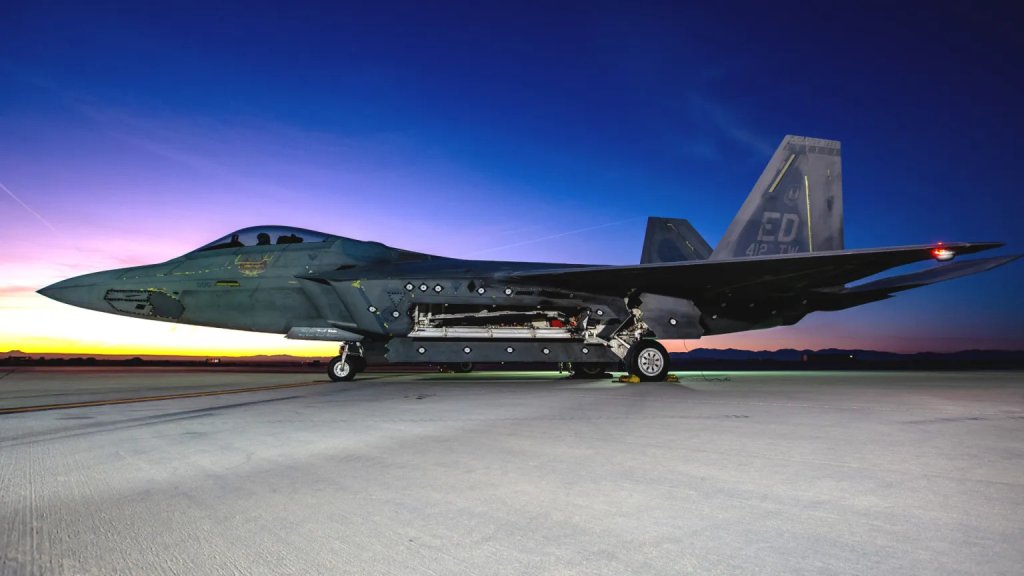
“The event brought together personnel from the 412th Test Wing, 422nd Test and Evaluation Squadron, 309th Software Engineering Group, Experimental Operations Unit, F-22 System Program Office and the CCA Software Autonomy and Teaming Branch,” according to the Air Force release.
The Experimental Operations Unit (EOU) mentioned here is based at Nellis Air Force Base in Nevada and has been leading efforts to pave the way for future Air Force CCA operations.
The “Fury and an F-22 both took off [from] Edwards AFB [Air Force Base in California] and joined up midair,” according to a separate release from Anduril. “While in flight, the Raptor pilot sent an updated mission plan to Fury using a tactical data link, commanding Fury through operationally-relevant maneuvers from the cockpit of the crewed quarterback.”
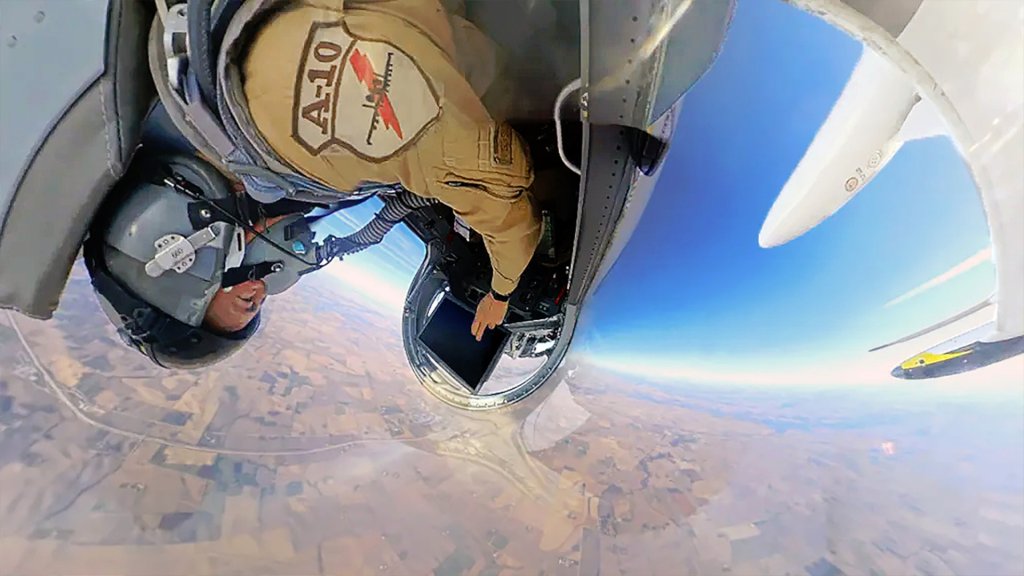
Neither the Air Force nor Anduril provided further details on how the F-22 was configured for this test. Past Air Force budget documents have mentioned the need to integrate “tablets, cables, and associated materials” onto the Raptor for this purpose. A single Raptor is also expected to be able to manage multiple CCA drones simultaneously.
The Raptor’s prime contractor, Lockheed Martin, has certainly been working with the Air Force to develop the relevant control architectures and user interfaces for that fighter, as well as the F-35. In terms of in-cockpit user interfaces for controlling drones, known work to date has centered largely on the use of touchscreen tablet-like devices, but this is understood to just be a starting point. Though tablet-based interfaces are a workable option, questions and criticisms about increased workload, especially for pilots in single-seat fighters, have been raised in the past.
It is also worth noting here that General Atomics announced a similar demonstration involving a Raptor and an MQ-20 Avenger back in November 2025. General Atomics has been using the MQ-20 as a CCA surrogate in various types of testing. What the plan might be now to demonstrate the F-22’s ability to control an FQ-42A in flight is unclear. General Atomics has previously released a picture of a Vengeance drone flying in formation with, though not being directly controlled by, Air Force fighters.
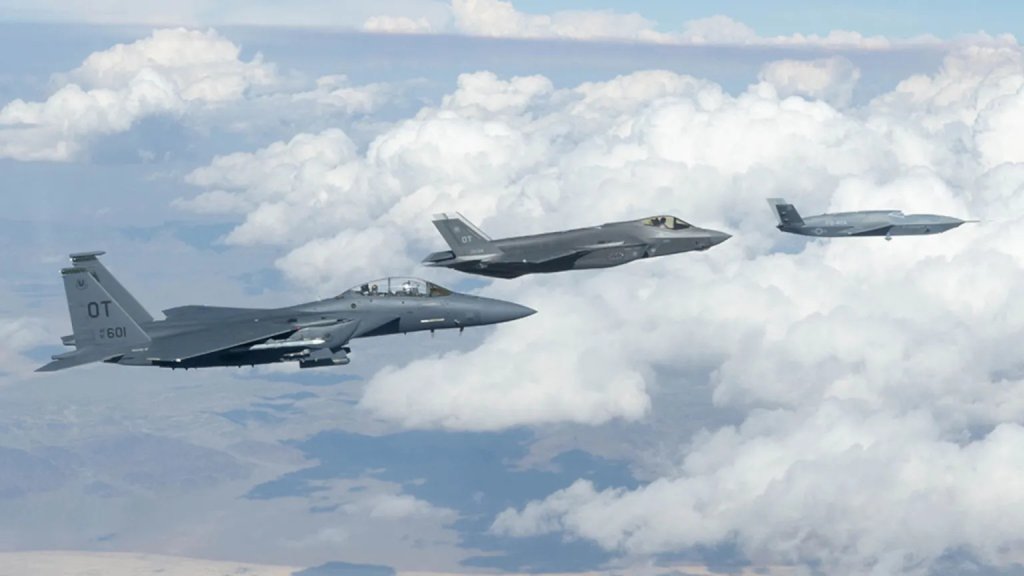
In addition, Fury and Vengeance are set to make their debut in a large-scale exercise before the end of the year. Bringing the CCAs to the next iteration of Exercise Emerald Flag will give the Air Force further opportunity to test them in a more operationally relevant context alongside crewed fighters.
“We have not yet done a LFE [large-force employment exercise] with these [CCAs], for real. The first one is going to be Emerald Flag. That’s in December,” Lt. Col. Lyndon “OTTO” Bartlett, the EOU’s Director of Operations, said during a panel at the Air & Space Forces Association’s (AFA) 2026 Air, Space & Cyber Conference in September, at which TWZ was in attendance. “That’ll be our first tip [sic] dip of the toe in an actual force integration.”
The EOU, working together with other Air Force elements and industry partners, still has to answer a host of other outstanding questions unrelated to tactical operations. CCAs will be deployed, launched, recovered,supported, and otherwise operated in ways that are distinct from their crewed counterparts, and for which new policies and procedures will need to be developed. Just making sure human pilots have trust in their uncrewed wingmen operating as expected will be critical, underscoring the specific importance of the demonstration disclosed today. All of this applies equally to the U.S. Marine Corps and U.S. Navy CCA programs, which are being run in very close coordination with the Air Force’s efforts.
When it comes to the recent test involving the F-22 and the YFQ-44A, “this achievement demonstrates what is possible when we are aligned with industry on a shared imperative: delivering capability to the warfighter at unprecedented speed,” Secretary of the Air Force Troy Meink said in a statement today. “We are driving urgency into every part of acquisition from rapid integration and flight learning to disciplined assessment, so we can turn promising technology into combat capability at the pace the threat demands.”

“This flight shows the power of crewed-uncrewed teaming and the advantage it provides our warfighters,” Air Force Chief of StaffGen. Ken Wilsbach also said. “We must test often, learn fast, and give commanders what they need, when they need it.”
“The U.S. Air Force’s CCA program is the fastest moving, most mature CCA program anywhere in the world, and will be the first to field operational aircraft,” Mark Shushnar, Anduril’s Vice President of Autonomous Airpower, said as well. “Getting there demands that Anduril and the U.S. Air Force work together to prove out the capability, define the operational procedures, and build trust between operators and their semi-autonomous wingmen.”
With all this in mind, an F-22 issuing orders to a YFQ-44A in mid-air is an important new sign of what is on the horizon for the U.S. Air Force, though there is still work to be done.
Contact the author: joe@twz.com
The post F-22 Pilot Controls FQ-44 Fighter Drone From The Cockpit For The First Time appeared first on TWZ.

