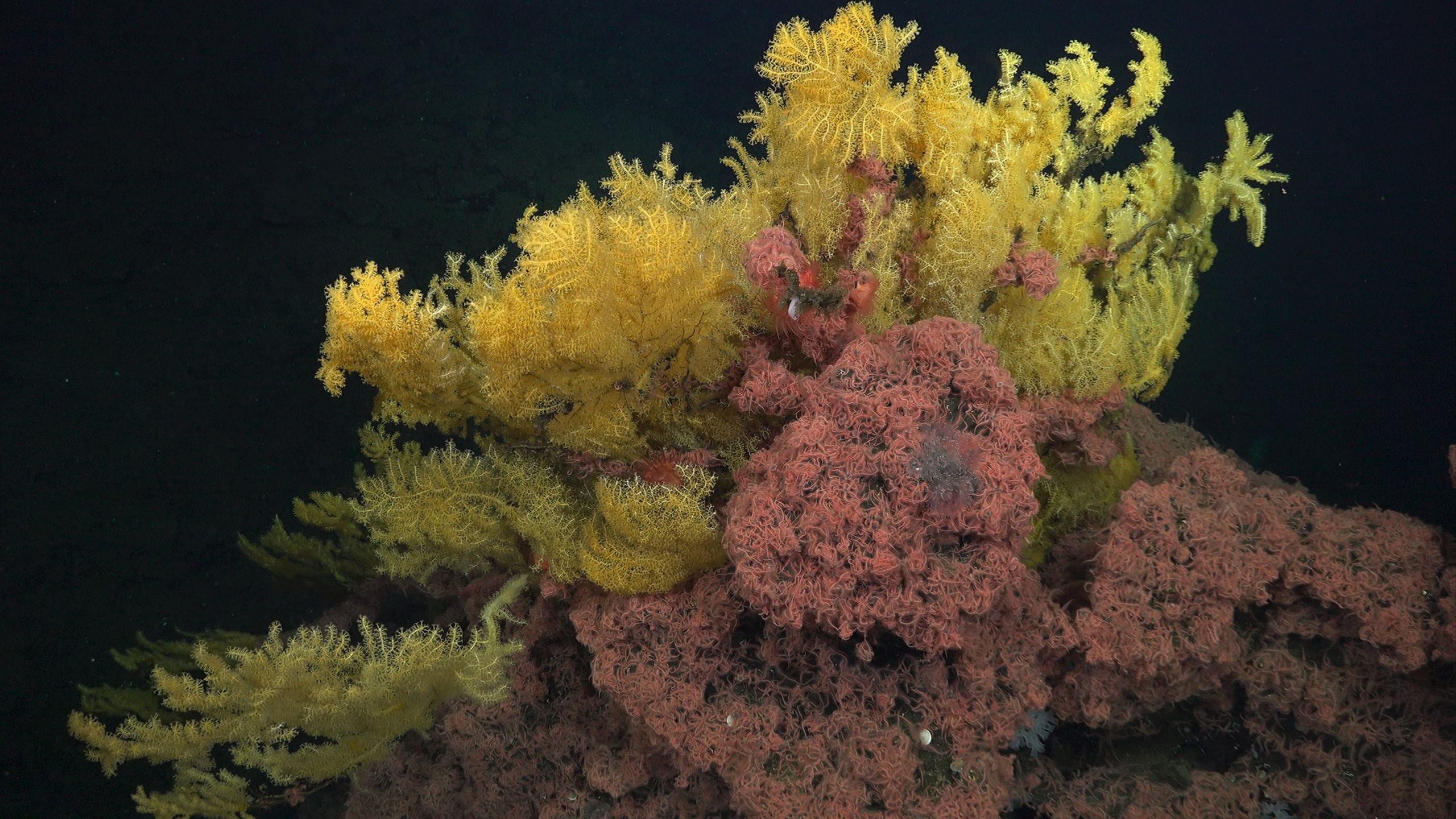
Эрдэмтэд далайн гүнээс олдож буй энэхүү өвөрмөц шүрэн колонийг ангилахын тулд амьтны аймгийн ангилал зүйд цоо шинэ овгийг нэмэх шаардлагатай болжээ.
Коста Рикагийн эрэг орчмын далайн гүнээс 360-529 метрийн гүнээс олдсон энэхүү гайхалтай нээлтийг Laurinque elenya хэмээн нэрлэжээ. Ж.Р.Р.Толкиений зохиолын хэлнээс гаралтай энэхүү нэр нь “оддын алтан мод” гэсэн утгатай бөгөөд уг шүр нь гаднах төрхөөрөө гэрэлтэж буй мэт алтан өнгөтэй аж. Судлаачид уг амьтныг анх 2019 онд ажигласан боловч түүний бүтэц, генетикийн онцлог нь мэдэгдэж буй ямар ч шүрэн овгийн шинж чанарт нийцээгүй тул шинэ овгийг (Laurinqueidae) үүсгэхэд хүргэсэн байна.
Уг шүрэн колони нь нэг метр гаруй өндөр, 1.2 метр өргөн хүртэл ургадаг бөгөөд түүний мөчир бүрийг найман талт тэгш хэмтэй бичил полипууд бүрхсэн байдаг. Генетикийн нарийвчилсан шинжилгээгээр уг зүйл нь Eunicellidae овогтой төстэй боловч бие даасан шинж чанартай болохыг тогтоожээ. Коста Рикагийн их сургуулийн судлаач Одалиска Бриди болон түүний баг далайн гүний энэхүү нууцлаг амьтныг тодорхойлохын тулд олон жилийн турш судалгаа хийсэн байна.
Эдгээр алтан шүрэн ойнууд нь хүчилтөрөгчийн хэмжээ маш бага, 8-11 хэмийн хүйтэн усанд амьдардаг бөгөөд тэдний эргэн тойронд олон тооны хэврэг од (brittle stars) амьдардаг. Ийм төрлийн шүрэн колони нь далайн гүний экосистемд чухал үүрэг гүйцэтгэж, бусад амьтдад хоргодох байр, хоол тэжээлийн эх үүсвэр болдог байна. Одоогийн байдлаар уг зүйл нь Коста Рикагаас гадна Панам болон Галапагосын арлуудад байж болзошгүй гэж таамаглаж байгаа ч баталгаажуулах шаардлагатай байгаа юм.
ZooKeys сэтгүүлд нийтлэгдсэн энэхүү судалгаа нь далайн гүний биологийн олон янз байдал бидний төсөөлж байснаас ч илүү баялаг, судалж дуусаагүй болохыг харуулж байна.
Дэлгэрэнгүйг эх сурвалжаас харах
↓Эх сурвалжийг нээх ↓
In the twilight deeps of the Eastern Pacific Ocean, a magical sight can be found on a seamount off the coast of Costa Rica.
As the underwater vehicle SuBastian glides over a rocky outcrop oddly coated with a fuzzy pink patina and punctuated with basket-shaped gleaming white sponges, a majestic yellow form emerges from the darkness.
It looks like a golden tree, so vividly yellow you can imagine it glowing.
Then, as the camera zooms closer, you can see the pink fuzz moving – a thick carpet of stars from which the golden tree blooms.
The stars, of course, are not real stars, but a teeming multitude of pink brittle stars; nor is the golden tree a real tree.
Instead, it’s a species of octocoral unlike any scientists have ever seen – one so unusual that it required a whole new branch of the tree of life to accommodate its strangeness.
In a paper describing the species, researchers led by Odalisca Breedy of the University of Costa Rica have named the coral Laurinque elenya – a name derived from Tolkien’s Elvish language Quenya, meaning “golden tree of the stars”.
You can see the golden coral forest for yourself in the footage from SuBastian’s dive, starting at around the 20-minute mark in the video below.
Corals – for all the resemblance many of them bear to plants – are animals, and they take many different forms adapted to life beneath the waves.
Octocorals are one specific group containing more than 3,000 species, named for the eightfold symmetry of the tiny polyps that line their branches.
They are a diverse bunch, and their number includes some very strange colonies indeed – so when Laurinque was found at depths of 360 to 529 meters (1,181 to 1,735 feet) during dives in 2019 and 2023, it would not have surprised scientists to find it had a few idiosyncrasies.
But Laurinque wasn’t just another eccentric aunt in a family full of them.
Its colonies can grow more than a meter tall and 1.2 meters wide, with densely branching structures covered in unusually elongated polyps – the tiny animals that collectively make up a coral colony.
These polyps can partially retract into the branches, and the microscopic skeletal structures that support the coral, called sclerites, have a distinctive assortment of shapes.
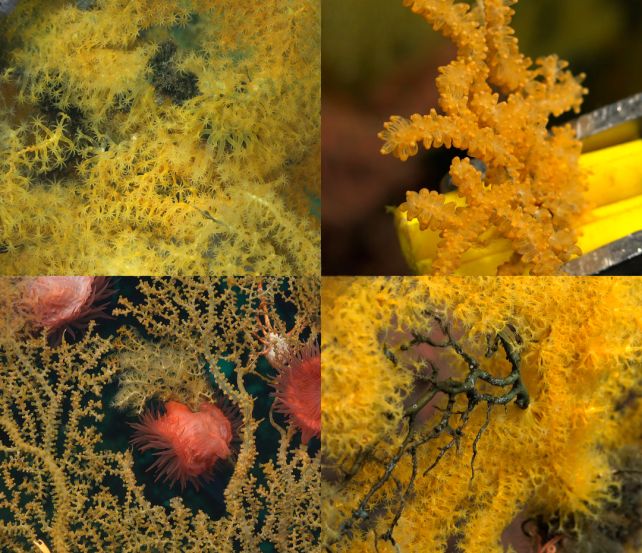
Together, these features – found in different octocoral groups, but not together in a single species in this way – made it difficult to match Laurinque with any known family of octocorals.
And its DNA only exacerbated the conundrum.
The researchers analyzed three genetic markers from the coral’s DNA, comparing them with sequences from other octocorals to see where their mysterious specimen belonged on the evolutionary family tree.
They got a match on a mitochondrial gene.
Then they got another one on the other mitochondrial gene.
Normally, this would be good news – a slam dunk that could confidently place a vexing species into a clean category.
Unfortunately, both markers matched with different octocoral families. One placed it strongly in Incrustatidae. The other was equally strong for placement in Eunicellidae.
And they couldn’t even use the third marker – ribosomal DNA – as a tiebreaker. It was magnificently inconclusive.
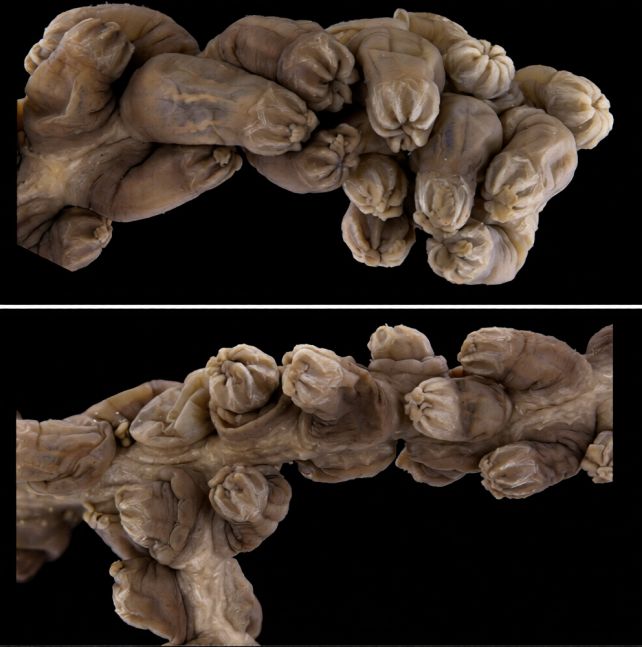
So, after several years of not knowing, they had to bring out the big guns – the collection of new specimens, followed by an analysis of hundreds of genetic regions from Laurinque. And that, finally, yielded an answer.
The coral, Breedy and her colleagues found, is closely related to Eunicellidae – but still distinct from it, the first known member of the Laurinqueidae coral family.
“I saw the octocoral garden for the first time in 2019, and I was impressed by the beauty of the landscape, which inspired, later the elvish name of the taxa. I thought the species could belong to a known family and genera, but after the preliminary morphological analysis I realized that it was something very different that I could not match with the known taxa,” Breedy said.
“In 2023 we collected more samples and thanks to the exhaustive molecular analyses made by my colleagues, Cathy McFadden, Catalina Murillo and Andrea Quattrini, we were able to determine the taxonomic placement of the stunning species, in one of the most enigmatic sites.”
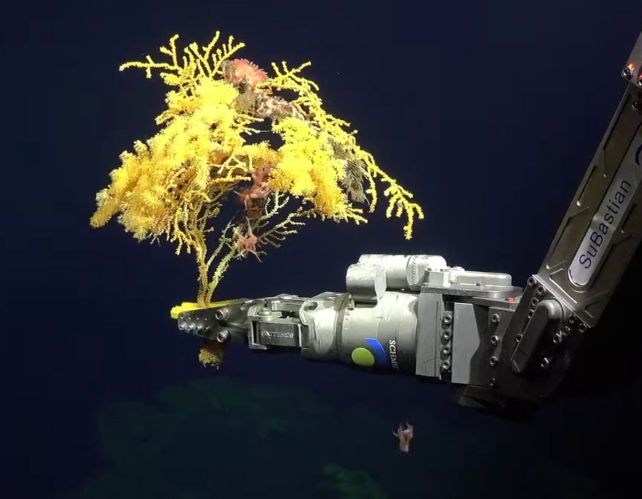
But there’s more than a whole new coral family to the discovery.
The golden coral gardens grow in waters with extremely low oxygen levels, at temperatures between 8 and 11 degrees Celsius (46 and 52 degrees Fahrenheit).
These conditions would be inhospitable to many animals, yet Laurinque forms elaborate, ethereal underwater forests, its branches rising above a seafloor almost completely obscured by brittle stars.
Such coral gardens are important habitats in the deep ocean. Their intricate, three-dimensional structures provide places for other animals to shelter, feed, and thrive, helping support biodiversity in a deeply challenging environment.
And Laurinque may not be confined to Costa Rica. The researchers report possible sightings off Panama and the Galápagos Islands, although these have yet to be confirmed.
For now, the golden tree of the stars remains a poignant and magical reminder of how much of Earth’s biodiversity is still waiting to be discovered – even in places where life seems almost impossible.
The research has been published in ZooKeys.
This article was fact-checked by Fiona MacDonald and edited by Fiona MacDonald. While we pride ourselves on our process, we are only human. If you spot a mistake, please let us know.

