Шинэ судалгаагаар архи нь тархины дархлааны эсүүдэд нөлөөлж, мэдрэлийн эсийн холбоосыг дэмжигч бүтцийг задалдаг болохыг илрүүлжээ.
Immunity сэтгүүлд нийтлэгдсэн судалгаагаар архи нь зөвхөн мэдрэлийн эсүүдэд төдийгүй тархины дархлааны “микроглиа” (microglia) эсүүдэд нөлөөлдөг болохыг тогтоов. Cleveland Clinic-ийн судлаач Димитриос Давалос болон түүний баг микроглиа эсүүд нь гэмтлийн хариу үйлдэл үзүүлэхээс гадна архины улмаас тархинд үүсэх сөрөг өөрчлөлтийг идэвхтэйгээр өдөөдөг болохыг ажиглажээ.
Судлаачид хулгана дээр хийсэн туршилтаар архи нь микроглиа эсийн үйл ажиллагааг хэрхэн өөрчилдөгийг хоёр фотонт микроскопоор ажигласан байна. Архи хэрэглэснээс хойш нэг цагийн дотор микроглиа эсүүдийн хэлбэр өөрчлөгдөж, тархины эсийг дэмждэг “гадна эсийн матриц” (extracellular matrix)-ыг задалж эхэлдэг болох нь тогтоогджээ. Энэхүү үйл явц нь мэдрэлийн эсийн холбоосыг сулруулж, танин мэдэхүйн болон хөдөлгөөний үйл ажиллагаанд сөрөг нөлөө үзүүлдэг байна.
Genetically engineered буюу генетикийн өөрчлөлттэй хулганууд дээр хийсэн туршилтаар микроглиа эс дэх MyD88 уургийг идэвхгүй болгоход архины хортой нөлөө эрс буурчээ. Хэдийгээр уг үр дүн нь хулгана дээр хийсэн туршилтаар батлагдсан ч согтууруулах ундааны хамааралтай байсан зургаан хүний тархины эдэд хийсэн шинжилгээгээр ижил төстэй бүтцийн гэмтэл илэрсэн нь хүнд ч мөн ижил механизм үйлчилж болзошгүйг харуулж байна.
Цаашид MyD88 уургийг онилсон эмчилгээ нь архины хор нөлөөнөөс тархийг хамгаалах, цаашлаад бусад мэдрэлийн өвчнийг эмчлэхэд ач холбогдолтой байж болохыг судлаачид онцоллоо. Энэхүү судалгаа нь архины тархинд үзүүлэх нөлөөг судлах шинэ чиг хандлагыг нээж байна.
<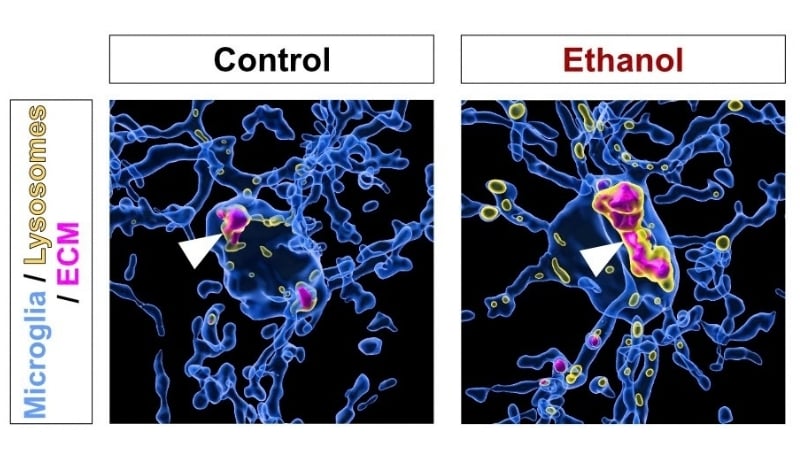
In mice given alcohol, microglia began to engulf and digest components of the matrix, breaking it down and weakening the structure.
This, the researchers suggest, results in a loss of synaptic connections, contributing to neuronal dysfunction, and possibly some of the sedative effects of alcohol.
However, in a separate experiment using genetically engineered mice, the researchers disabled a protein in microglia called MyD88, which plays an important role in activating immune responses.
In animals that had their MyD88 gene silenced, alcohol exposure resulted in significantly less neuronal damage, reduced changes in microglial shape and activity, and less pronounced sedation.
In separate tests with these protected, genetically engineered mice, the researchers degraded the animals’ extracellular matrix using an enzyme, and doing so brought back synapse loss, motor impairment, and sedation when the animals were given alcohol.
According to the researchers, this shows that the disruption of the extracellular matrix is a key, causal process that directly produces some of alcohol’s damaging effects on the brain.
While the primary findings were shown only in experiments on mice, a separate analysis of human brain tissue sourced from six deceased people with alcohol use disorder showed signs of extracellular matrix disruption compared to controls, which suggests a similar kind of microglial-driven brain damage may happen in people who abuse alcohol.
That could make MyD88 a strong therapeutic target for future research, and possibly beyond the effects of alcohol too.
“We discovered a specific neuroimmune route that alcohol activates, but it’s possible that other drugs can turn that pathway on as well,” Davalos says.
“My lab is looking into how we can target microglia or protect the brain’s ECM to prevent or limit brain damage, from substance use and possibly even other neurological diseases.”
The findings are reported in Immunity.
This article was fact-checked by Fiona MacDonald and edited by Fiona MacDonald. While we pride ourselves on our process, we are only human. If you spot a mistake, please let us know.

