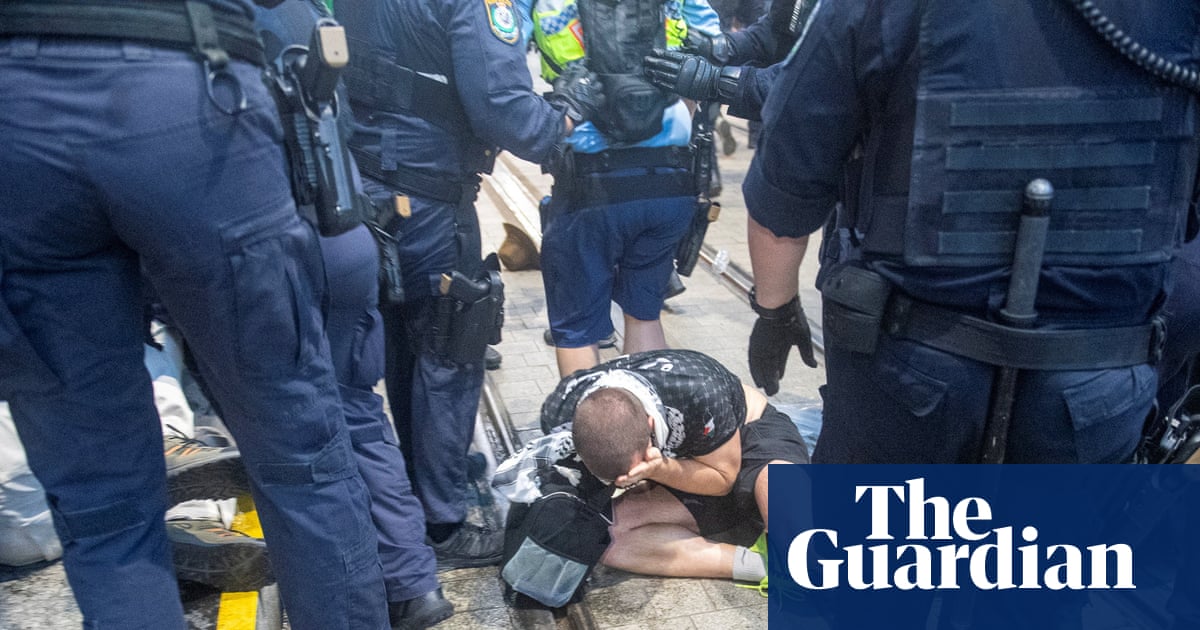
Израилийн ерөнхийлөгчийн айлчлалын үеэр Сидней хотод болсон жагсаалын үеэр цагдаа нарын авсан арга хэмжээг хууль сахиулах байгууллагын хяналтын комисс шалгаж эхэллээ.
Сидней хотын захиргааны байрны гадна хоёрдугаар сард болсон уг жагсаалын үеэр цагдаа нар хүч хэрэглэсэн, тухайлбал жагсагчдыг цохисон, мөргөл үйлдэж байсан иргэдийг албадан хөөсөн зэрэг асуудал үүсээд байгаа юм. Хууль сахиулах байгууллагын хяналтын комисс (Lecc) уг асуудлыг даваа гарагт эхлүүлсэн бөгөөд одоогоор жагсагчид “ихэвчлэн тайван байсан” бөгөөд тэдний зүгээс хүчирхийлэл үйлдсэн гэх нотлох баримт хязгаарлагдмал байгааг дурджээ. Шалгалтын явцад цагдаа нарын OC шүршигч ашигласан байдал, хүч хэрэглэсэн үйлдлээ бахархан ярьсан гэх мэдээлэл болон жагсагчдыг нэг дор бүсэлж, хөдөлгөөнийг нь хязгаарласан (“kettling”) зэрэг олон асуудлыг хянаж байна.
Шүүх хуралдааныг нээлттэй эхлүүлсэн боловч Шинэ Өмнөд Уэльс мужийн цагдаагийн комиссар Мал Ляньоны хүсэлтээр хяналтын шалгалтын тодорхой хэсгийг хаалттай горимд шилжүүлжээ. Жагсаалын дараа 30 орчим хүнийг баривчлан, янз бүрийн хэргээр буруутгасан ч сүүлийн саруудад тэдгээрийн заримынх нь хэргийг хэрэгсэхгүй болгоод байна. 2027 оны долоодугаар сард товлогдсон шүүх хуралд оролцох хүний тоо одоогоор 17 болон буурчээ.
Комиссын зүгээс цагдаа нарын ажиллагаа нь системтэй шинжтэй байсан уу, эсвэл удирдлагын түвшинд зөвшөөрөл авсан үйлдэл байсан уу гэдгийг тодруулахаар ажиллаж байна. Жагсаалын өмнө цагдаа нарт өгсөн зааварчилгааны үеэр жагсагчдыг жагсаал хийхийг хориглож, хөдөлгөөнд орохыг зөвшөөрөхгүй байхыг үүрэг болгосон гэх мэдээлэл байгаа юм. Цагдаагийн талын өмгөөлөгч жагсагчдын зүгээс цагдаа нарыг доромжилсон тохиолдлууд гарсан гэдгийг онцолсон байна.
Дэлгэрэнгүйг эх сурвалжаас харах
↓Эх сурвалжийг нээх ↓
An inquiry into a Sydney rally against the Israeli president has so far found protesters were “largely peaceful” and there is “limited evidence of physical violence on the part of the protesters”.
The Law Enforcement Conduct Commission (Lecc) kicked off its probe into the February protest at Sydney’s town hall against the visit of Isaac Herzog on Monday, outlining a number of issues it is examining, including police use of OC spray and “police boasting about gratuitous force”.
Lecc launched its investigation after widespread allegations of police brutality at the protest. Viral video footage showed police punching multiple protesters, and grabbing Muslim worshippers while they undertook sunset prayers.
Monday’s opening address was heard in public before closing for five-week long private examinations. The watchdog agreed to hold a portion of the hearing in private after the NSW police commissioner, Mal Lanyon, made a last-minute bid to have the entire hearings held in private, delaying the scheduled hearing by almost a month.
Counsel assisting the Lecc, Kirsten Edwards SC, said in her opening address that the evidence is far from concluded. But so far it shows: “there is limited evidence of physical violence on the part of the protesters. The protest appears to have been largely peaceful in its early stages.”
“Later conduct by protesters, described in the evidence of police as aggressive, was for the most part verbal and connected to a desire to march,” Edwards said.
“Footage also shows protest organisers at various points apparently attempting to defuse conflict with police.”
Police charged 30 people in the months after the protest with various offences, including hinder arrest and assault police. But almost a dozen of of those protesters have had the charges against them withdrawn.
Edwards said that the Lecc would examine police conduct according to a law in place at the time, which restricted protesters ability to march.
This law, known as the Public Assembly Restriction Declaration, or PARD, was found unconstitutional by the state’s highest court two months after the protest.
On Friday before the Downing centre local court, police withdrew charges against seven people, after four people had theirs withdrawn in recent months.
In June, the local court set a joint hearing date for 25 of the approximately 30 people initially charged, which is expected to last six weeks in the local court in July 2027. Following the dropped charges, the number of people part of that joint hearing is now down to 17.
Edwards said Lecc was examining multiple widespread concerns that had emerged in the 400 complaints lodged by the public and the 1,000 hours of footage the Lecc has reviewed. She said this included the use of OC spray against the mobility impaired and in close proximity to people’s faces.
She said Lecc was also examining “frequent pushing and shoving of protesters during crowd dispersal … police moving at speed and in formation towards fleeing protesters … The use of force during arrests and, finally, some police boasting about gratuitous force”.
“It also includes the allegation that protesters were contained within an area from which they could not leave, sometimes described as kettling,” she said.
“There are also instances of officers showing care towards the elderly and vulnerable, and showing concern about members of the protest being close to hazards.”
Edwards said Lecc was examining the issues via a number of case studies, including a man in his 60s who was struck in the face, and the “prayer incident” where Muslim worshippers were dragged away by police.
Edwards said the commission was examining questions on whether the police’s conduct was endemic “or was in some way sanctioned or encouraged by senior officers on the night.”
The inquiry heard that a briefing was held with officers ahead of the protest, where senior officers including Lanyon spoke but no recordings or notes were made.
Edwards said a common recollection from people present at the briefing was that “officers were clearly told the protest was intended to remain static and that a march was not to be permitted”.
An opening address was also given on behalf of the Lanyon by David Sulan SC. He said there was “an unprecedented level of serious verbal abuse that was directed towards police”.
“Despite these difficulties, there were many positive acts of policing before and during the protest,” he said.

