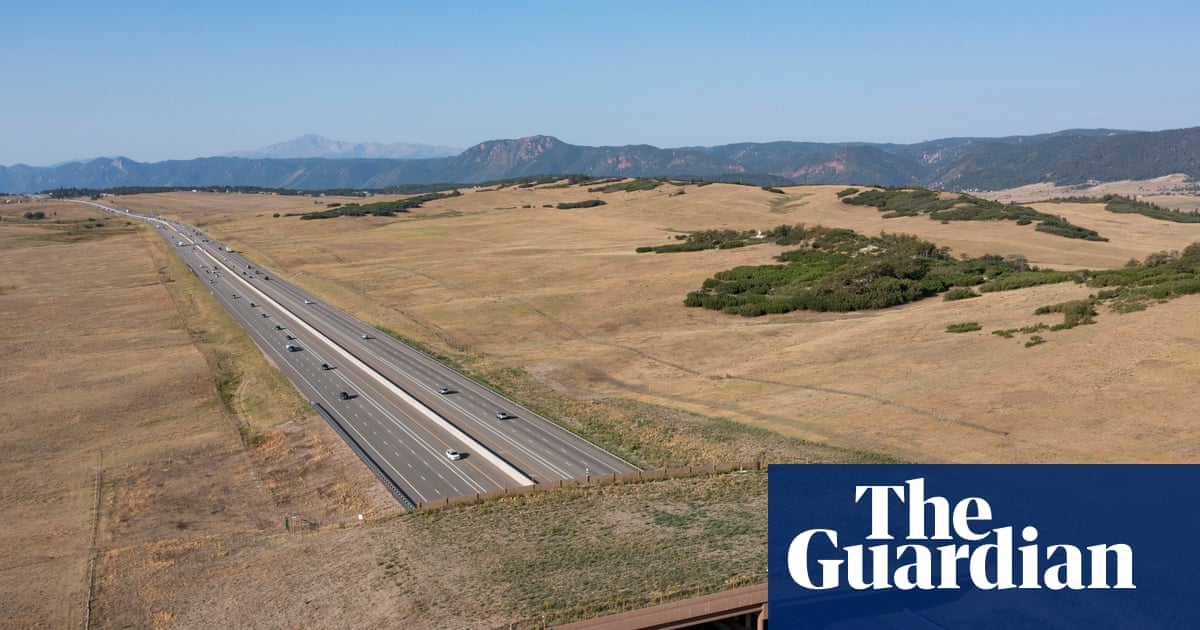
АНУ-ын Колорадо муж улс хурдны зам дээгүүр зэрлэг амьтад аюулгүй зорчих зориулалттай байгууламж ашиглалтад оруулснаар амьтан болон тээврийн хэрэгслийн мөргөлдөх тохиолдлыг 91 хувиар бууруулсан байна.
Колорадо мужийн тээврийн газраас мэдээлснээр, Денвер болон Колорадо Спрингс хотуудын хооронд орших I-25 хурдны зам дээрх энэхүү гүүр нь 10 сарын өмнө ашиглалтад оржээ. Уг байгууламж нь 200 фут өргөн, 209 фут урттай бөгөөд 39,000 акр талбай бүхий амьдрах орчныг холбосон нийт зургаан эгнээ зам дээгүүр тавигдсан байна. Төслийн хүрээнд 8 фут өндөр хашаа болон амьтдын нүхэн гарцуудыг цогцоор нь байгуулсан нь үр дүнгээ өгчээ.
Тус бүс нутагт гүүр барихаас өмнө өдөрт дунджаар нэг удаа зэрлэг амьтан тээврийн хэрэгсэлтэй мөргөлдөх осол бүртгэгддэг байв. Колорадо мужийн зэрлэг амьтан судлаач Брэндон Мареттийн хэлснээр, эх амьтан тугалаа дагуулан аюулгүй газар зогсож байгааг харах нь тус төсөл хэрхэн үр дүнтэй хэрэгжиж байгааг илтгэх хамгийн чухал агшин байжээ.
Тус бүс нутагт амьдардаг хандгай, гөрөөс зэрэг том биетэй амьтад нээлттэй, алсын хараа сайтай гарцыг илүүд үздэг байна. Тээврийн газрын байгаль орчны менежер Чак Аттардогийн мэдээлснээр, олон арван жилийн турш хурдны замаар гарах гарц хайж байсан гөрөөсүүд одоо энэхүү гүүрийг ашиглан замын нөгөө тал руу чөлөөтэй нэвтрэх болжээ.
Төслийн нийт төсөвт 30 сая ам.доллар (холбооны улсаас 22 сая, муж улсаас 8 сая) төсөвлөгдсөн ч 15 сая ам.доллараар бүтээн байгуулалтыг дуусгасан байна. Одоогоор АНУ-д 20 орчим ийм төрлийн гарц байгуулах ажил үргэлжилж байгаа бөгөөд Колорадогийн энэхүү гүүр нь одоогийн байдлаар хамгийн томд тооцогдож байна.
Дэлгэрэнгүйг эх сурвалжаас харах
↓Эх сурвалжийг нээх ↓
Colorado officials have tracked herds of elk, bears, pronghorn and even northern leopard frogs ambling across its new wildlife overpass. According to a newly released report, the overpass, which acts as a bridge over a busy stretch of interstate, has helped cut wildlife-vehicle collisions by 91% since its completion 10 months ago.
The overpass is the centerpiece of a larger system built by the state to assist wildlife crossing the highway, which also includes miles of 8-ft tall fencing and five large wildlife underpasses.
“One of the most heartwarming moments for me was when [Colorado department of transportation] sent me a picture of an elk mama taking her calf under [Interstate-25],” Brandon Marette, a wildlife biologist for Colorado parks and wildlife, told CBS News. “All came to fruition in that one moment. That elk with her calf was just standing there in safety.”
The Colorado department of transportation said before the overpass system was built, there was an average of one wildlife-vehicle crash a day in this corridor.
Such wildlife crossings are popping up across the country as a way to protect wildlife habitat and reduce collisions, which can result in injuries and deaths in humans and animals. Research has shown that overpass systems are successful in “nearly eliminating” these accidents and that such infrastructure buildouts often “pay for themselves” by preventing costly crashes.
Nearly 20 wildlife crossings are under way in the US, with the structure in Colorado currently the biggest. The overpass, which sits between the state’s two biggest cities, Denver and Colorado Springs, spans six lanes of traffic and connects 39,000 acres of habitat on both sides of the interstate. The bridge is covered in grass and measures 200ft wide and 209ft long with gradually sloped entrances to ease crossings for animals.
This region of Colorado is known for high movement of large game. State officials say that wildlife underpasses and tunnels often don’t work for big animals, such as bull elk, because they restrict mobility and don’t accommodate their antlers.
“Elk and pronghorn like these big open structures where they can see for miles in each direction,” Chuck Attardo, the environmental manager for Colorado department of transportation, told CBS News. “For decades, pronghorn going from Trinidad to Greenland were looking for a place to cross on I-25. And when we open this up, we have pronghorn on video using the overpass, and for the first time in decades they’re coming over here to the west side.”
While large game animals have been taking advantage of the crossing, officials have also tracked smaller wildlife using the corridor, including mule deer, coyotes, rabbits, frogs and the threatened Preble’s meadow jumping mouse.
The project received $22m in federal funding and $8m from the state, but officials say they were able to complete it for just $15m. Now, the Colorado department of transportation says it is hoping to build other wildlife crossings across the state.

