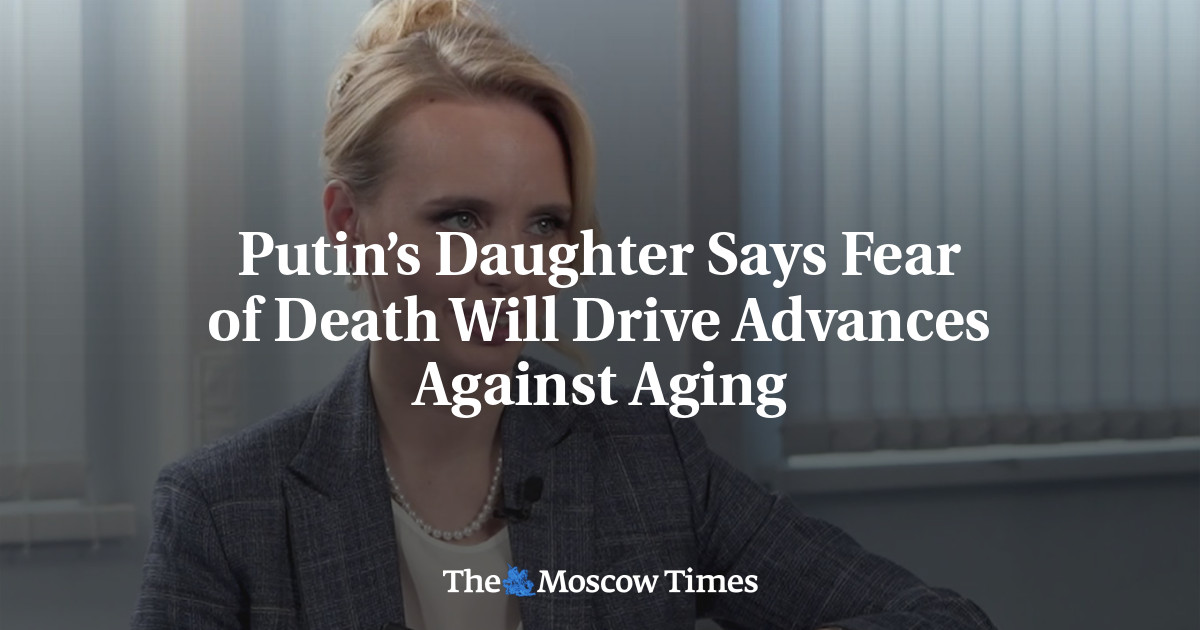
ОХУ-ын эрх баригчид хүн амын дундаж наслалтыг нэмэгдүүлэх, хөгшрөлтийн эсрэг технологид их хэмжээний хөрөнгө оруулалт хийж эхэллээ.
ОХУ-ын Ерөнхийлөгч Владимир Путины охин, эндокринологич Мария Воронцовагийн үзэж буйгаар, хүн төрөлхтний үхлээс айх мөнхийн айдас нь ирэх 10-20 жилд хөгшрөлтийг эмчлэх анагаах ухааны томоохон дэвшилд хүргэх ажээ. Тэрээр Москвагийн их сургуулийн Анагаах ухааны судалгаа, боловсролын институтийг тэргүүлдэг бөгөөд амьдралын үргэлжлэх хугацааг уртасгах нь нийгмийн бодлого, эдийн засагт хэрхэн нөлөөлөхийг судлах шинэ лабораторийн нээлтийн үеэр ийнхүү мэдэгдсэн байна. Түүний хэлснээр, хөгшрөлтийг өвчин гэж ангилдаггүй нь эм бэлдмэл боловсруулах, эмнэлзүйн туршилт явуулахад хүндрэл учруулж байгаа гол хүчин зүйл юм.
ОХУ-ын Засгийн газар 2025 онд Ерөнхийлөгчийн заавраар “Эрүүл мэндийг хамгаалах шинэ технологи” болон “Урт удаан, идэвхтэй амьдрал” үндэсний төслүүдийг эхлүүлж, нийт 2 их наяд гаруй рублийн (12 тэрбум ам.доллар) санхүүжилт төлөвлөжээ. Шинжлэх ухаан, дээд боловсролын дэд сайд Денис Секиринскийн мэдээлснээр, Оросын судлаачид эсийн хөгшрөлттэй холбоотой генийг хаах үйлчилгээтэй “хөгшрөлтийн эсрэг вакцин” бүтээхээр ажиллаж байна. Мөн Шадар сайд Татьяна Голикова 2028-2030 оны хооронд хөгшрөлтийн эсрэг эм үйлдвэрлэж эхлэх төлөвтэй байгааг дурджээ.
Энэхүү судалгааны хөтөлбөрүүд нь Курчатовын институтийн тэргүүн Михаил Ковальчукийн санаачилгатай холбоотой бөгөөд тэрээр Оросын генетикийн судалгааг удирдан чиглүүлдэг. Владимир Путины хувьд 2036 он гэхэд Оросын иргэдийн дундаж наслалтыг 81-д хүргэх зорилт тавиад байгаа юм. 2025 оны есдүгээр сард БНХАУ-д хийсэн айлчлалынхаа үеэр Путин БНХАУ-ын дарга Ши Жиньпинтэй анагаах ухааны технологи, эрхтэн шилжүүлэн суулгах замаар үхэшгүй мөнх болох боломжийн талаар ярилцаж байхыг сонссон гэх мэдээлэл хэвлэлүүдэд гарч байв.
Дэлгэрэнгүйг эх сурвалжаас харах
↓Эх сурвалжийг нээх ↓
President Vladimir Putin’s daughter Maria Vorontsova said advances in medicine could help address aging within the next 10 to 20 years, driven by humanity’s fear of death, the Vedomosti newspaper reported.
Vorontsova, an endocrinologist who heads Moscow State University’s Medical Research and Education Institute, spoke at a forum marking the launch of a laboratory at the Skolkovo Moscow School of Management to study how longer lifespans affect public policy, the economy and the labor market.
She said efforts to extend life should be divided into two stages. The first involves reaching what she described as humans’ natural lifespan of 85 to 90 years through healthy habits developed in childhood, proper nutrition and regular medical checkups.
The second involves trying to “cheat God or nature” by living beyond that natural limit, she said, acknowledging that scientific progress in this area remained limited.
Vorontsova said one obstacle was that aging is not classified as a disease, complicating drug development, which requires a clearly defined diagnosis and clinical trials.
Still, she said, the “universal human fear of death” would push medicine toward tackling aging within the next 10 to 20 years.
Her remarks come as Russia invests in research aimed at extending life, an area that has drawn interest from Putin and members of his inner circle.
Deputy Science and Higher Education Minister Denis Sekirinsky previously said Russian researchers were developing what he called a vaccine against aging that is designed to block a gene associated with age-related changes in cells.
Deputy Prime Minister Tatyana Golikova said Russia planned to begin producing an anti-aging drug between 2028 and 2030.
The research forms part of the national project New Health Preservation Technologies, which was launched in 2025 at Putin’s direction.
An unidentified source close to the Kremlin told the exiled news outlet Meduza in 2024 that the initiative stemmed from an obsession with eternal life on the part of Mikhail Kovalchuk, a Putin associate who heads the Kurchatov Institute.
Kovalchuk oversees a federal program supporting Russian genetics research in which Vorontsova also participates.
Putin has never publicly acknowledged Vorontsova and her younger sister Katerina Tikhonova as his daughters, while the Kremlin has kept details of their lives a closely guarded secret.
Russia plans to spend more than 2 trillion rubles ($12 billion) in total on the health technology project and a separate national project, Long and Active Life, also launched in 2025 at Putin’s direction.
Putin has set targets to raise Russian life expectancy to 78 by 2030 and 81 by 2036, from a reported 74.2 years. Male life expectancy is about 68.
Putin, 74, has long been interested in rejuvenation treatments, according to media reports.
During a visit to Beijing in September 2025, he was overheard discussing the prospect of achieving immortality through medical technology and organ transplants with Chinese President Xi Jinping.

