Агаарын тээврийн технологийн дэвшил нь олон хөдөлгүүртэй аварга онгоцнуудаас түлшний хэмнэлттэй, хоёр хөдөлгүүртэй загварууд руу шилжих үйл явцыг эрчимжүүлж байна.
Нисэхийн түүхэнд хүнд ачаа болон цэргийн хүч тээвэрлэх зорилгоор дөрвөөс дээш хөдөлгүүр бүхий нисэх онгоцуудыг бүтээж байв. Эдгээрийн тоонд 1929 онд анхны нислэгээ үйлдсэн 12 хөдөлгүүртэй “Dornier Do X” нисдэг завь, 10 хөдөлгүүртэй “Convair B-36 Peacemaker” стратегийн бөмбөгдөгч онгоц, 8 хөдөлгүүртэй “Hughes H-4 Hercules” болон “Boeing B-52 Stratofortress” зэрэг загварууд багтдаг. Эдгээр онгоцнууд нь тухайн цаг үеийн технологийн хязгаарлагдмал хүчин чадлыг нөхөхийн тулд олон тооны хөдөлгүүр ашиглахаас өөр аргагүй байжээ.
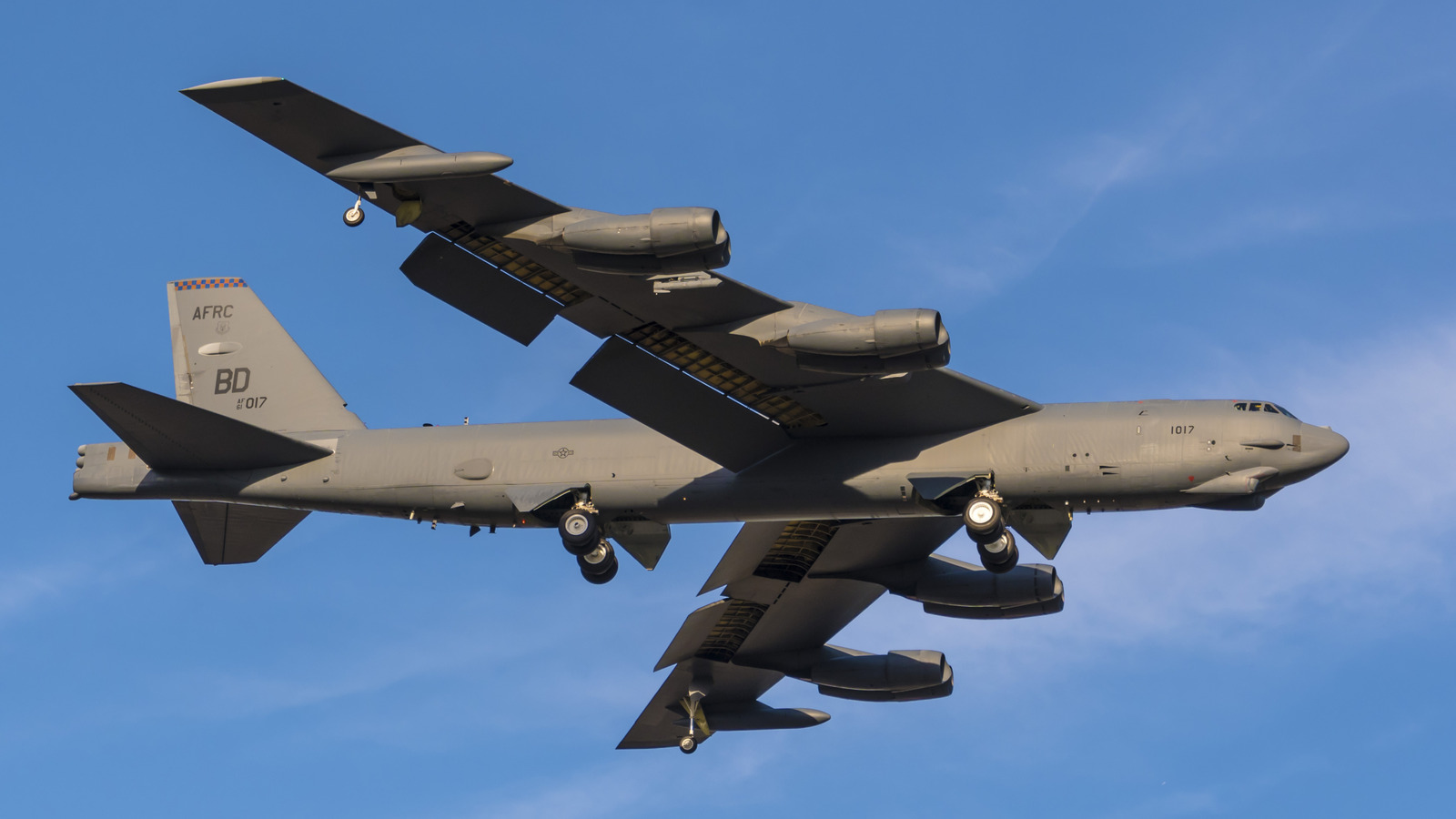
“Boeing B-52” бөмбөгдөгч онгоц нь 1955 оноос хойш АНУ-ын зэвсэгт хүчинд ашиглагдаж буй хамгийн урт настай цэргийн тийрэлтэт онгоц юм. Уг онгоц нь найман хөдөлгүүртэй бүтцээ хадгалсаар ирсэн бөгөөд одоогийн байдлаар хуучирсан хөдөлгүүрүүдийг “Rolls-Royce F130” хөдөлгүүрээр солих ажлыг АНУ-ын Агаарын цэргийн хүчин хэрэгжүүлж байна. Энэхүү шинэчлэл нь онгоцны далавч болон бусад бүтцийн өөрчлөлт хийхгүйгээр хөдөлгүүрийн хүчин чадлыг нэмэгдүүлэх зорилготой юм.
Зөвлөлтийн “Antonov AN-225 Mriya” ачааны онгоц нь зургаан хөдөлгүүртэй бөгөөд сансрын хөлөг тээвэрлэх зориулалттай бүтээгдсэн боловч 2022 оны хоёрдугаар сард Украин дахь мөргөлдөөний үеэр сүйрсэн юм. Одоогийн байдлаар “Scaled Composites” компанийн бүтээсэн “Stratolaunch” буюу “Roc” нь зургаан хөдөлгүүртэй, дэлхийн хамгийн өргөн далавчтай онгоцоор нэрлэгдэж байна. Уг агаарын хөлгийг анх пуужин хөөргөх зорилгоор төлөвлөсөн бол одоо гиперсоник зэвсэг турших тавцан болгон ашиглахаар төлөвлөж байгаа ажээ.
Дэлгэрэнгүйг эх сурвалжаас харах
Эх сурвалжийг нээх ↓
If you visit a large commercial airport today, most of the aircraft that you’d find on the ramp would probably have two engines. While many aviation enthusiasts grew up looking at four-engine behemoths like the Boeing 747 and the Airbus A380, manufacturers arereplacing them withmore fuel-efficient twinjets. This is especially true after the introduction of high ETOPS ratings, which legally allow twin-engined airliners to fly up to 330 minutes from the nearest diversion airport.
However, aviation hasn’t always been this way. At one point, large aircraft needed more than four engines just to take off. So, we’re picking out a few airplanes that had the greatest number of engines aboard. We’re only choosing crewed aircraft that required more than four working engines to take off and successfully flew at least once.
So, we’re not including NASA’s experimental X-57 Maxwell, whichnever achieved first flight, the relatively large Caprino Ca.60 Transaereo, which crashed on its first fully loaded test flight, or the five-engine Boeing 747SP that Pratt & Whitney used as an engine test bed.
Dornier Do X – 12 engines
The Dornier Do X was one of the first aircraft designed for carrying massive amounts of cargo and passengers. The German company Dornier designed and built this flying boat, which first flew in 1929 and waspowered by twelve engines in six push-pull pairs. This allowed it to carry 169 people on board — a record it held for around 20 years. Because engines back then weren’t as powerful as today’s, Dornier had to fit many units on its flying boat just to generate enough power to lift it off the water. That’s because it had a maximum gross weight (page 2) of 114,400 pounds — putting it close to the 114,199-pound maximum take-off weight of a modern Embraer E190.
It flew across the Atlantic in 1931, departing Friedrichshafen, Germany, for Natal, Brazil, via Lisbon and the Cape Verde islands. It then flew up to New York via the Caribbean, landing at what is now LaGuardia Airport on Aug. 27, 1930. Despite this successful mission, the Dornier Do X was a commercial failure because it apparently lacked sufficient powerto carry a payload economically.
Three examples of the aircraft existed: the first was eventually dismantled and displayed in Berlin, then destroyed by Allied bombing during World War II, while the other two, powered by Fiat engines, were delivered to Italy. By 1935, they were mothballedand, a couple of years later, broken up for scrap.
Convair B-36 Peacemaker – 10 engines
This is one of the largest bombers the USAF ever flew, entering service in 1949 and retiring a decade later, in 1959. Development of this hybrid aircraft began in 1941, but itmade its maiden flight in August 1946— about a year after Japan’s surrender. Its unique design combined piston and jet engines: the bomber had six Pratt & Whitney R-4360 Wasp Major piston engines and four General Electric J47 turbojet engines, for a total of 10 engines.
Despite this, the Convair B-36 Peacemaker is often consideredone of the worst bombers ever made. Each piston engine required 56 spark plugs, meaning each aircraft needed 336, making it difficult to maintain. In addition, the engines’ pusher configuration often disturbed and reducedairflow into the air-cooled engines, leading to overheating and in-flight engine fires. While the B-36 is often associated with the “Six Turning, Four Burning” slogan, some of its crews jokingly say it should be “Two turning, two burning, two smoking, two choking, and two more unaccounted for.”
Hughes H-4 Hercules ‘Spruce Goose’ – 8 engines
Bettmann/Getty
The United States lost manymerchant ships at the height of Germany’s U-boat campaign during World War II. Henry Kaiser, who used mass-productiontechniques to build nearly 1,500 Liberty Ships in a short time, thought the U.S. could avoid the danger in the Atlantic by flying cargo instead. This eventually led to the Hughes H-4 Hercules, an eight-engined transport plane supposedly capable of carrying a battalion of 750 soldiers or two 33-ton M4 Sherman tanks.
It had eight Pratt & Whitney Wasp Major R-4360 engines producing 3,000 horsepower each, for a total of 24,000 hp. The aircraft probably needed this much power to lift its 300,000-pound empty weight plus the cargo it was supposed to carry. It also had a 3,500-mile range, enough to cross the Atlantic, plus a planned cruising speed of 150 mph. This transport plane was so huge that only the Stratolaunch jet, which first took off in 2019, exceeded its 319-foot, 11-inch wingspan. What’s interesting about the Spruce Goose is that, though it looks like metal from afar, it’s actually built fromthin sheets of wood bonded with glue to avoid using lightweight aluminum, which was considered critical for the war effort.
The war ended before the first H-4 was completed. Still, the aircraft was able to take its first (and only) flight on Nov. 2, 1947 — it was originally supposed to be only a taxi test, but Howard Hughes, who owned the company that made it, hit 100 knots on the third taxi run, took off, and hit an altitude of about 70 feet.
Boeing B-52 Stratofortress – 8 engines
The Boeing B-52 Stratofortress is the oldest American military jet still in service, first deployed in 1955. This makes the design over 70 years old, withover 744 units built in eight versions. While this might seem like overkill today, it wasn’t in the 1950s.
Back then, the first variant of the venerable bomber needed eight Pratt & Whitney J57 engines because each jet produced only 10,000 pounds of thrust. The latest variant, the B-52H, uses eight Pratt & Whitney TF33-P-3/103 turbofan engines that produce 17,000 pounds of thrust, increasing total output by 70%, but it’s still dwarfed by the current biggest commercial jet engine in the world, the GE9X, which delivers 134,000 pounds of thrust.
The USAF tapped Rolls-Royce to replace the aging Pratt & Whitney engines with new F130 engines. The bomber still retained eight engines instead of converting to four, because doing so would require extensive, expensive engineering work, including redesigning and replacing the wings, engine pylons, cockpit, throttle controls, and more. Such an endeavor would cost taxpayers much more and could even introduce stresses the old airframes were not designed to handle.
Antonov AN-225 Mriya – 6 engines
Jose Luis Stephens/Shutterstock
Soviet Russia based the Antonov AN-225 Mriya on the smaller Antonov AN-124 Ruslan cargo aircraft. While the AN-124 had four engines, the AN-225, designed to carry Buran—the Soviet version of the American Space Shuttle, which sat in the graveyard of the USSR’s space program—needed six ZMKB Progress D-18 turbofan engines. This super-heavy transport aircraft first flew in 1988, but the Soviet Union’s collapse and the end of the Buran program meantit was no longer needed for its original mission. Instead, it became a specialized jet capable of carrying cargo that no other aircraft could accommodate in the 2000s.
Although construction began on two AN-225s, only one was completed. This sole jet was unfortunately destroyed in February 2022 when Russia invaded Ukraine. It was undergoing maintenance at Antonov Airport in Hostomel, with one engine disassembled. This meant that it wasn’t even airworthy when Russian paratroopers attempted to seize the airport, and it got caught in the crossfire between the attacking Russian paratroopers and the defending Ukrainian soldiers.
Antonov plansto rebuild the AN-225, with sources saying the company wants to use the unfinished airframe as a base and even salvage parts from the destroyed jet. However, even if work began today, it’s estimatedit would take at least five years to complete the project.
Blohm und Voss Bv 222 Wiking – 6 engines
German airliner Lufthansa opened a tender for a long-range flying boat in 1937, just a few years after scrapping the Dornier Do X. Three manufacturers offered prototypes, and Blohm und Voss was selected to build three Bv 222 units. The aircraft was powered by six 1000-horsepower inline engines, with its choice of diesel fuel making it easier to refuel while at sea. Construction on the Bv 222 began in 1938, but it didn’ttake its first flight until September 7, 1940, a little over a year after the UK and France declared war on Germany.
The situation meantthe Luftwaffe slowly took over the project for its own needs, and it eventually entered service as a transport plane flying missions between Hamburg, Germany, and Kirkenes, Norway. Later in its military service, it received defensive armament, including nose and fuselage machine guns and turrets on the upper fuselage. The flying boat’s assignment to Luft-Transport-Staffel 222 (LTS 222), which used a Viking longship as its official squadron marking, gave the Bv 222 its “Wiking” nickname.
The Luftwaffe built 13 Bv 222s;four were shot down or lost to enemy action, and one crashed in an accident. Four were also captured by the advancing Allied forces — two by Americans, who flew them to the U.S., and two by the British. Unfortunately, given the small number of Bv 222s ever built, none of them survive today.
Boeing B-47 Stratojet – 6 engines
While the Convair B-36 Peacemaker served as the USAF’sprimary intercontinental strategic nuclear bomber, it was built in relatively small numbers, fewerthan 400 units. By contrast, the B-47 Stratojet served as its numerical backbone, with over 2,000 aircraft delivered.
It was powered by six General Electric J47 turbojet engines, giving it a top speed of Mach 0.84. Like the Peacemaker, the Stratojet was designed to drop nuclear bombs from high altitude. However, low-level “bomb toss” techniques were also developed later, allowing it to drop nuclear bombs like a fighter instead of the usual carpet-bombing style of traditional strategic bombers.
The Stratojet served with the Strategic Air Command from 1953 to 1963, but some units were converted into weather reconnaissance versions after they were retired as bombers. By 1969, the Air Force had retired all its B-47 aircraft and replaced them withthe newer, more technologically advanced Boeing B-52 Stratofortress. Nevertheless, its legacy of swept wings lives on in almost every modern jet aircraft that we see today.
Convair XC-99 – 6 engines
The Convair XC-99 is based on the B-36 Peacemaker, usingthe large bomber’s wings, tail, landing gear, and engine configuration (though it lacked the four turbojets) and pairing them with a large double-deck fuselage. This gave it a massive payload of 100,000 pounds of cargo or up to 400 soldiers across two decks. While it isn’t one of the largest military cargo planes in history, the Convair XC-99 was still the largest in the air at the time.
Although this massive cargo plane made its first flight in 1947 and began carrying loads for the USAF, it never entered serial production. Only one prototype was built, and it was retired in 1957 after structural fatigue was discovered in its wings and fuselage bulkheads. Thatsame year, the turboprop Douglas C-133 Cargomaster entered service, offering a larger 110,000-pound payloadwhile using only four Pratt & Whitney T34-P-9W turboprop engines.
The sole example of the XC-99sits disassembled at the 309th Aerospace Maintenance and Regeneration Group (AMARG) at Davis-Monthan AFB, better known as the “boneyard.” Unfortunately, years of exposure to the elements have made restoring it to a flyable state prohibitively expensive, and it still awaits funding to be displayed in a museum.
Scaled Composites Stratolaunch – 6 engines
Modern engines have become so powerful and reliable that almost all commercial jetliners have two to four engines. However, one niche application requires six engines — the Scaled Composites Model 351 Stratolaunch “Roc.” This aircraft currently holds the world record for the widest aircraft built, with a 385-foot wingspan, and it’s powered by six Pratt & Whitney PW4056 turbofan engines, the same engines used on the Boeing 747-400.
Unlike most other aircraft on our list, which are designed to carry cargo or people, the Roc was initially designed to carry rockets and launch them into space. This let rocket launches avoid fixed launch pads and launch wherever the Roc could fly, as long as the area met the launch parameters, including good weather. This meant that it needed all those engines to carry its maximum take-off weight of 1.3 million pounds and hit an altitude of 27,000 feet.
Unfortunately, Stratolaunch ceased operations soon after its founder died. Thankfully, private equity firm Cerberus Capital Management bought the company and gave the Roc a second life as a hypersonic weapons launch platform.

