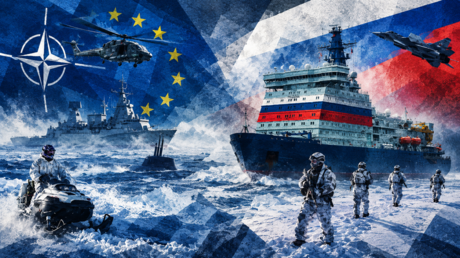
Европын комисс Арктикийг дэлхийн хүчний тэнцвэрийн төлөөх өрсөлдөөний талбар хэмээн үзэж, аюулгүй байдлын шинэ стратегиа баталлаа.
Европын комисс Арктикийн бүс нутагт чиглэсэн стратегиа шинэчлэн танилцууллаа. 2021 онд баталсан өмнөх стратегид уур амьсгалын өөрчлөлтийг гол аюул гэж тодорхойлж байсан бол шинэ баримт бичигт ОХУ-тай хийх геополитикийн өрсөлдөөн болон цэргийн аюулгүй байдлыг тэргүүн эгнээнд тавьжээ. Европын Холбоо Арктикийг “Европын хойд хөрш” хэмээн тодорхойлж, тус бүс нутаг дахь нөлөөгөө нэмэгдүүлэх байр суурьтай байна.
Today, we adopt our new 🇪🇺 Arctic Strategy.
The Arctic is where the tectonic plates of geopolitics collide head-on.
It requires us to change our strategic posture.
And work with like-minded partners that share our values ↓
https://t.co/B6GvgUOCQk
— Ursula von der Leyen (@vonderleyen) October 20, 2026
Шинэ стратегийн хүрээнд НАТО-той хамтын ажиллагаагаа гүнзгийрүүлж, цэргийн логистикийн коридор байгуулах, боомт болон нисэх онгоцны буудлуудыг цэргийн зориулалтаар шинэчлэх, мөс зүсэгч хөлөг онгоцны хүчин чадлыг нэмэгдүүлэх зэрэг зорилтуудыг дэвшүүлжээ. Мөн хиймэл дагуулын хяналтыг өргөжүүлж, “сүүдрийн флот” гэж нэрлэж буй ОХУ-ын газрын тос тээвэрлэгч хөлөг онгоцуудыг илрүүлэх, саатуулах ажиллагааг эрчимжүүлэхээр төлөвлөж байна. Европын Холбооны дипломат төлөөлөгч Кая Калласын мэдэгдснээр, ОХУ болон БНХАУ-ын Арктик дахь идэвхжил нь дэлхийн хүчний өрсөлдөөний шинэ фронтыг үүсгэж байна.
ОХУ-ын зүгээс Европын Холбооны энэхүү алхмыг олон улсын хууль тогтоомжийг зөрчсөн, далайн дээрэм хийхтэй дүйцэхүйц үйлдэл гэж буруушааж байна. Европын Холбоо нь Арктикийн далайд эрэггүй бөгөөд зөвхөн Финланд, Швед улсууд л Арктикийн тойрог дотор газар нутагтай юм. Гэсэн хэдий ч Брюссель 60 градусын өргөрөгөөс хойшхи бүх усан замыг “Арктик” хэмээн тодорхойлж, байгаль орчны зохицуулалтаа өргөжүүлэх замаар бүс нутаг дахь оролцоогоо баталгаажуулахыг зорьж байна.
Энэхүү стратегид ОХУ-ын Хойд тэнгисийн замын дагуух навигацийн эрх чөлөөг хангахыг шаардсан байна. Уг зам нь БНХАУ-аас Европ хүрэх тээвэрлэлтийн хугацааг хоёр дахин багасгах боломжтой бөгөөд ОХУ-ын нутаг дэвсгэрийн усаар дамжин өнгөрдөг стратегийн ач холбогдолтой коридор юм. Одоогоор Европын Холбооны зүгээс цэргийн зориулалттай тусгай санхүүжилт зарлаагүй байгаа ч аюулгүй байдлын асуудлыг нэн тэргүүнд тавьж байгаа нь бүс нутаг дахь хурцадмал байдлыг улам нэмэгдүүлэх эрсдэлтэй байна.
if (!!window.jwplayer === false) {
var VideoPlayer = document.createElement(‘video’);
VideoPlayer.className = “media__video_noscript”;
VideoPlayer.controls = true;
VideoPlayer.src = “https://mf.b37mrtl.ru/files/2026.10/6ad8f39920302775630e95d4.mp4”;
VideoPlayer.poster = “https://mf.b37mrtl.ru/files/2026.10/article/6ad8f35185f54008c7428b34.png”;
document.getElementById(‘nojwp’).appendChild(VideoPlayer);
}
jwplayer.key = “kESrsgULvYO7r2MfUelqj3vs+2i8JdQBqjGNmA==”;
var recomedationBlock6ad8f39920302775630e95d4 = document.getElementById(‘recomendation-6ad8f39920302775630e95d4’);
var mediaplayerContainer6ad8f39920302775630e95d4 = document.getElementById(‘mediaplayer-container6ad8f39920302775630e95d4’);
var mediaMute = false;
if (mediaMute) {
window.PROMOBOX_NO_FIXED = true;
}
jwplayer(“js-mediaplayer-6ad8f39920302775630e95d4-429920”).setup({
advertising: {
client: “vast”,
schedule: {
preroll: {
offset: “pre”,
tag: ‘https://ads.adfox.ru/258144/getCode?pp=kmk&ps=cowp&p2=fzqt’
},
}
},
image: “https://mf.b37mrtl.ru/files/2026.10/article/6ad8f35185f54008c7428b34.png”,
file: “https://mf.b37mrtl.ru/files/2026.10/6ad8f39920302775630e95d4.mp4”,
aspectratio: “16:9”,
skin: {
name: “five”,
active: “#77bd1e”,
Дэлгэрэнгүйг эх сурвалжаас харах
↓Эх сурвалжийг нээх ↓
The European Commission is preparing for “global power competition” with Russia in the Arctic
The EU has updated its Arctic strategy, and militarism has replaced climate activism as Brussels’ new preoccupation in the frozen north. Despite what the new strategy claims, however, the Arctic is not “the EU’s Northern Neighborhood.”
Unveiled on Tuesday by the European Commission, the ‘Strategy for the Arctic’ describes the region as a “critical” zone for trade, investment, and conservation, and a flashpoint for military confrontation with Russia.
Today, we adopt our new 🇪🇺 Arctic Strategy.
The Arctic is where the tectonic plates of geopolitics collide head-on.
It requires us to change our strategic posture.
And work with like-minded partners that share our values ↓
https://t.co/B6GvgUOCQk
— Ursula von der Leyen (@vonderleyen) October 20, 2026
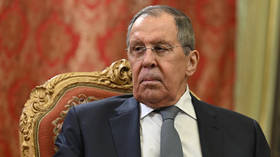
“With Russia and China increasing their footprint and ambition, the Arctic has become a front line of global power competition,” top EU diplomat Kaja Kallas said in a statement. “Our revamped Strategy reflects this new reality and puts security firmly at its core.”
To understand just how dramatic this new focus on security is, it’s necessary to turn back the clock to 2021, when the commission released its previous Arctic strategy.
The EU’s green past
Published on October 13, 2021, the strategy opened by describing climate change as “the most comprehensive threat the Arctic is facing.” Russia’s refurbishment of Soviet-era military bases along its Arctic coastline was presented primarily as something that could “further aggravate the consequences of climate change,” and the EU pledged to work with Moscow “to improve environmental and health security,” and to leave military relations with Russia up to NATO and individual member states.
Four months later, Brussels severed relations with Moscow and entered the Russia-Ukraine conflict on Kiev’s side. The title of the 2021 strategy – ‘A stronger EU engagement for a peaceful, sustainable and prosperous Arctic’ – needed an update that reflected the EU’s new militarism.
Brussels claims the Arctic
“Russia’s unprovoked and unjustified war of aggression against Ukraine has reshaped the security of the Arctic and the EU as a whole,” the new document opens, going on to assert that “the Arctic is not someone else’s frontier. It is Europe’s Northern Neighbourhood and theEuropean Union is part of the Arctic.”
Geography is not exactly on Brussels’ side here. The 27-member union has no coastline on the Arctic Ocean, and only two of its members – Finland and Sweden – have territory inside the Arctic Circle (although a Danish dependency, Greenland left the EU in 1985). Russia accounts for 53% of the Arctic Ocean’s coastline, and 45% of all land inside the Arctic Circle.
To compensate for this, the new strategy proposes that all waters north of 60 degrees latitude be considered ‘Arctic’. The commission argues that this would allow its environmental regulations to “cover the actual footprint of Arctic shipping.” It would also dramatically expand the EU’s ‘Arctic’ territory and population by bringing almost all of Finland and Sweden into the new region, including Finland’s entire 1,340 kilometer border with Russia. It is on this frontier that the EU is preparing for conflict.
War preparations
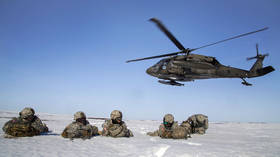
The strategy sets out a lengthy list of military objectives, with the commission promising to:
-
“Deepen engagement with NATO” and hold military exercises focused on moving troops and equipment into the Arctic
-
Develop military logistics corridors from central Europe to the Arctic
-
Upgrade ports and airports for military use
-
Expand icebreaker capacity
-
Expand satellite surveillance of the region and tracking of Russian oil tankers
-
Develop polar-capable undersea drones
-
Establish a “Maritime Security Hub” and increase data-sharing with NATO
-
Deepen military ties with Canada, Iceland, Norway, the UK, and US
The strategy is short on some specifics, and almost all of these goals are presented without an accompanying price tag. The only actual figures listed are €260 million for ten existing European Defence Fund projects, €107 million toward the construction of an undersea internet cable to Greenland, and the €200 million Greenland ‘Partnership Package’, which was announced last month. Although the commission says that this investment package will “support resilience, security and peace in the Arctic,” none of the €200 million in funding is earmarked for explicitly military projects.
Even though these objectives make up more of a wishlist than a set of concrete commitments, one in particular has the potential to push tensions with Russia to the breaking point. The strategy states that the EU will use its ‘Copernicus’ satellite network to track Russian “shadow fleet vessels,” thus making it easier for EU states to interdict and seize them. Belgium, Estonia, Finland, France, and Sweden have detained 12 of these vessels since December 2024, a number that would likely increase with the aid of satellite surveillance.
‘Shadow fleet’ is an EU euphemism for tankers carrying Russian oil in international waters. Russian oil exporters do not abide by EU sanctions, nor do importers outside the EU. Nevertheless, EU member states have abrogated the authority to seize them, in what the Kremlin considers “flagrant violation of international law” and “outright piracy and robbery.”
Should the seizures continue, Russian President Vladimir Putin has threatened to respond in kind.
The ‘hybrid war’ deception
The EU’s militarization of the Arctic is justified, the document states, as Russia is “pursuing hybrid strategies against its neighbours… from drone incursions and Global Navigation Satellite System jamming to the sabotage of undersea cables.” In the absence of real, verifiable military action by Russia against Europe, EU and NATO leaders have taken to accusing Moscow of waging “hybrid war,” describing drone sightings, fires, and accidents at weapons factories, protests, and even natural disasters as Kremlin-orchestrated plots to destabilize the West.
A wave of “drone incursions” across northern Europe and Scandinavia last year turned out to be a hoax, with Belgium’s defense minister attempting to pass off a photograph of a police helicopter as a ‘Russian drone’. Around the same time, European Commission President Ursula von der Leyen’s PR team lied about Russia “interfering”with her jet’s navigation systems over Bulgaria. Western spy chiefs have since admitted there is no evidence that Russia has sabotaged undersea power and internet cables.
Nevertheless, claims of ‘hybrid war’ have persisted in European politics and media, to the point where some analysts view the claims themselves as a form of “hybrid warfare” against the European public, used to justify military spending hikes and welfare cutbacks.
“When you are sure it is the Russians, or almost sure it is the Russians, attribute it to the Russians,” NATO Secretary-General Mark Rutte advised the bloc’s political leaders and intelligence chiefs earlier this month.
<![CDATA[
jwplayer.key = "kESrsgULvYO7r2MfUelqj3vs+2i8JdQBqjGNmA==";
var recomedationBlock6ad8f39920302775630e95d4 = document.getElementById('recomendation-6ad8f39920302775630e95d4');
var mediaplayerContainer6ad8f39920302775630e95d4 = document.getElementById('mediaplayer-container6ad8f39920302775630e95d4');
var mediaMute = false;
if (mediaMute) {
window.PROMOBOX_NO_FIXED = true;
}
jwplayer("js-mediaplayer-6ad8f39920302775630e95d4-429920").setup({
advertising: {
client: "vast",
schedule: {
preroll: {
offset: "pre",
tag: 'https://ads.adfox.ru/258144/getCode?pp=kmk&ps=cowp&p2=fzqt'
},
}
},
// Кавер видео устанавливается в prepareMedia
image: "https://mf.b37mrtl.ru/files/2026.10/article/6ad8f35185f54008c7428b34.png",
file: "https://mf.b37mrtl.ru/files/2026.10/6ad8f39920302775630e95d4.mp4",
// title: "NATOu0020Secretaryu002DGeneralu0020Marku0020Rutteu0020speaksu0020atu0020au0020pressu0020conferenceu0020inu0020Brussels,u0020Belgium,u0020Septemberu002029,u00202026",
aspectratio: "16:9",
skin: {
name: "five",
active: "#77bd1e",
background: "rgba(0, 0, 0, 0.5)",
inactive: "#FFFFFF"
},
width: "100%",
autostart: false,
mute: false,
startparam: "start",
ga: {},
sharing: {
sites: [
{
icon: "https://rt-english.com/static/img/icon/tg-square.png",
src: "https://telegram.me/share/url?text=A ‘pipe dream of EU hawks’: What’s in Brussels’ new Arctic Strategy?&url=https://rt-english.com/news/647492-eu-arctic-strategy-russia/",
label: "Telegram"
},
"twitter",
"email",
],
code: encodeURI('