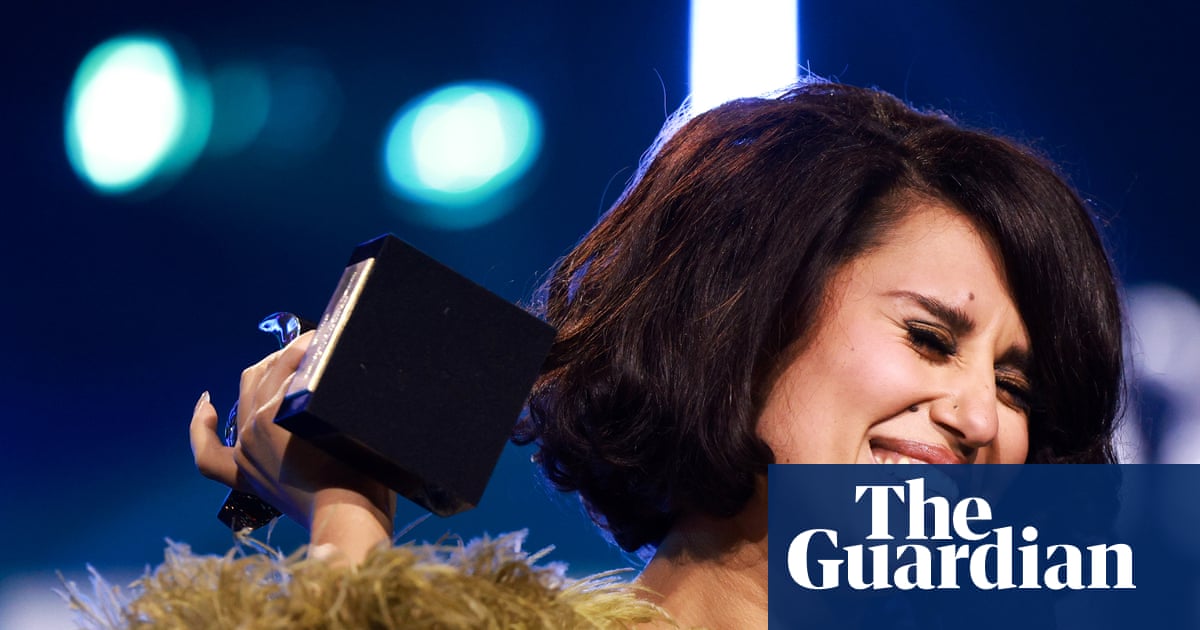
Британийн дуучин Raye өөрийн хоёр дахь студийн цомог болох “This Music May Contain Hope”-оор нэр хүндтэй Mercury шагналыг хүртлээ.
Дуучин Raye-ийн энэхүү бүтээл нь жазз, поп болон фанк урсгалуудыг хослуулсан өргөн хүрээтэй цомог болсон бөгөөд шүүгчдийн бүрэлдэхүүн түүний уран бүтээлийн цар хүрээ, бүтэц, зоримог шийдлийг өндрөөр үнэлжээ. Тэрээр 2021 онд өмнөх дуу бичлэгийн студитэйгээ зөрчилдөж байсан хүндрэлтэй үеийг даван туулж, бие даасан уран бүтээлчээр амжилттай ажиллаж эхэлсэн юм. Түүний “My 21st Century Blues” цомог нь Британийн хөгжмийн салбарын дээд шагнал болох Brit Awards-аас зургаан шагнал хүртэж байсан түүхтэй.
Ньюкасл хотноо зохион байгуулагдсан шагнал гардуулах ёслолын үеэр Raye өөрийн өнгөрсөн хугацааны бэрхшээл болон уран бүтээлч хүний хувьд цомог гаргахын ач холбогдлын талаар онцлон дурдсан байна. Тэрээр цомгийн гол сэдэв болох “найдвар” нь хүн бүрд шаардлагатай зүйл болохыг илэрхийлжээ. Энэхүү шагнал нь 25,000 фунт стерлингийн мөнгөн шагнал дагалддаг бөгөөд жил бүр Британи болон Ирландын шилдэг цомогт олгодог хүндтэй шагналуудын нэг юм.
Энэ жилийн шалгаруулалтад Пол Маккартни, Suede, Pulp зэрэг алдартай уран бүтээлчид болон хамтлагууд багтсан нь Mercury шагналын нэр хүндийг улам өсгөж байна. Гэсэн хэдий ч шагналын арга хэмжээний арилжааны чиг хандлага нэмэгдэж, томоохон дуу бичлэгийн студиудын нөлөө ихэссэн нь шүүмжлэл дагуулах болжээ. Mercury шагнал нь 2025 оноос эхлэн Лондон хотоос Ньюкасл руу шилжиж, цар хүрээгээ тэлсэн юм.
Дэлгэрэнгүйг эх сурвалжаас харах
↓Эх сурвалжийг нээх ↓
Raye is the winner of the 2026 Mercury prize, for her second studio album, This Music May Contain Hope.
Her win – for a hugely ambitious 73-minute record that spanned big band jazz, power balladry, funk and more – caps an ongoing renaissance for a British singer who at one point was in the doldrums, lashing out publicly at her record label for not letting her release a studio album.
Since that low in 2021, she split from that former label and found huge success with two albums: My 21st Century Blues, which won her six Brit awards – still the record for a single Brits ceremony – and This Music May Contain Hope, which topped the UK charts and contains the global hit Where Is My Husband!
The judging panel said: “Raye displays real imagination and scope in showing what an album can be, going beyond any one style or genre to realise her vision. The judges agreed that Raye’s superb album will serve as a huge inspiration for years to come.”
The award, handed out yearly to the best British or Irish album as voted for by a panel of music industry figures, comes with a £25,000 prize.
While This Music May Contain Hope didn’t have universally positive reviews – “there are flaws, but in fairness it pays off more often than it fails”, was the opinion of the Guardian’s pop critic Alexis Petridis – the judges hailed its “scale, structure, ambition and sheer charm”.
Where Is My Husband! proved to be a powerhouse lead single, reaching No 1 in the UK, No 6 in the US and delighting audiences globally with Raye’s witty rat-a-tat-tat delivery as she expressed her frustration at her romantic failures including “lonely acrobatics, unzipping my dress at 2am”.
It adds to a strange and heartening career for the 28-year-old singer, born Rachel Keen in west London, who started out by shuttling between genres and netting hits as a guest vocalist on pop-dance singles before finally being able to let her stylistic diversity shine on her album projects.
As lighthearted as songs like Where Is My Husband! are, she has also written about more serious subjects, such as a sexual assault she faced from a music producer.
Accepting the award at the ceremony in Newcastle, Raye said: “I cannot tell you how grateful I am to be holding this. I’m shaking, I’m jet-lagged, I’m tired, I’m grateful!”
She alluded to her difficult years with her former label, saying: “Albums are so important, and not to be bitter – because I feel like I’m mostly at peace with my past – but to come from a place where it’s all about singles and chasing the next thing, I just feel so grateful to be recognised.”
She also talked about the central topic on the album: “Hope is a very cheesy word, especially for us British people, we don’t do that deep stuff like that, but hope is something we all need … so I hope that message comes across to anyone who needs it.”
Elsewhere on the shortlist, Paul McCartney missed out in the first year he was nominated for the prize, for his reflective album The Boys of Dungeon Lane. In a video message, he said he was “chuffed” and “surprised” to be nominated on a shortlist alongside “such a group of really amazing artists”.
Suede, who opened the ceremony by performing their stridently pro-European anthem Dancing With the Europeans, weren’t able to add a second Mercury win to their trophy cabinet, after winning for their self-titled debut in 1993, the second year the award ran.
Nor could Dave, who won for his own debut album, Psychodrama, in 2019; he and McCartney were the only artists not to perform at the ceremony.
Pulp – the winners in 1996 – performed for the second year in a row: last year for their nominated album More, and this year representing the all-star compilation album Help, created to raise funds for the charity War Child.
Florence + the Machine now have the ignominious honour of being the Mercury’s joint highest nominee without winning, tying with Radiohead on five unconverted nominations.
Raye also beat stiff competition from Olivia Dean, whose album The Art of Loving has been one of the most successful albums by anyone in the singer’s generation, spending every one of its 55 weeks since release in the UK Top 10.
After losing its sponsor in 2024 and taking place in a rather low-key ceremony, the Mercury prize has repositioned itself, moving away from London to Newcastle in 2025 and scaling up in size to the city’s Utilita Arena.
In its inaugural year in its new home, the Mercury was awarded to local boy Sam Fender – though Newcastle jazz band Knats, who wowed the arena crowd with virtuosic bass soloing and spoken word poetry, weren’t able to secure back-to-back Tyneside wins this year.
There has been some consternation, though, that its focus is becoming more commercial than in the past – and not distinct enough from the Brit awards.
In 2025, seven of the 12 nominated albums reached the UK Top 3, while this year six of the nominations reached No 1, and another two were Top 3 hits. All but two of the albums (Suede’s Antidepressants and the Help charity compilation) were released by or in partnership with the three major labels: Universal, Warner and Sony.
Previously the UK’s independent music scene has been better represented, including in winners such as Arctic Monkeys, Dizzee Rascal, Sampha and Ezra Collective.
This year’s judging panel featured musicians, broadcasters, journalists and consultants: Afrodeutsche, Danielle Perry, Jamie Cullum, Lea Stonhill, MistaJam, Phil Alexander, Sian Eleri, Sophie Williams and Will Hodgkinson, with Jeff Smith as chair.

