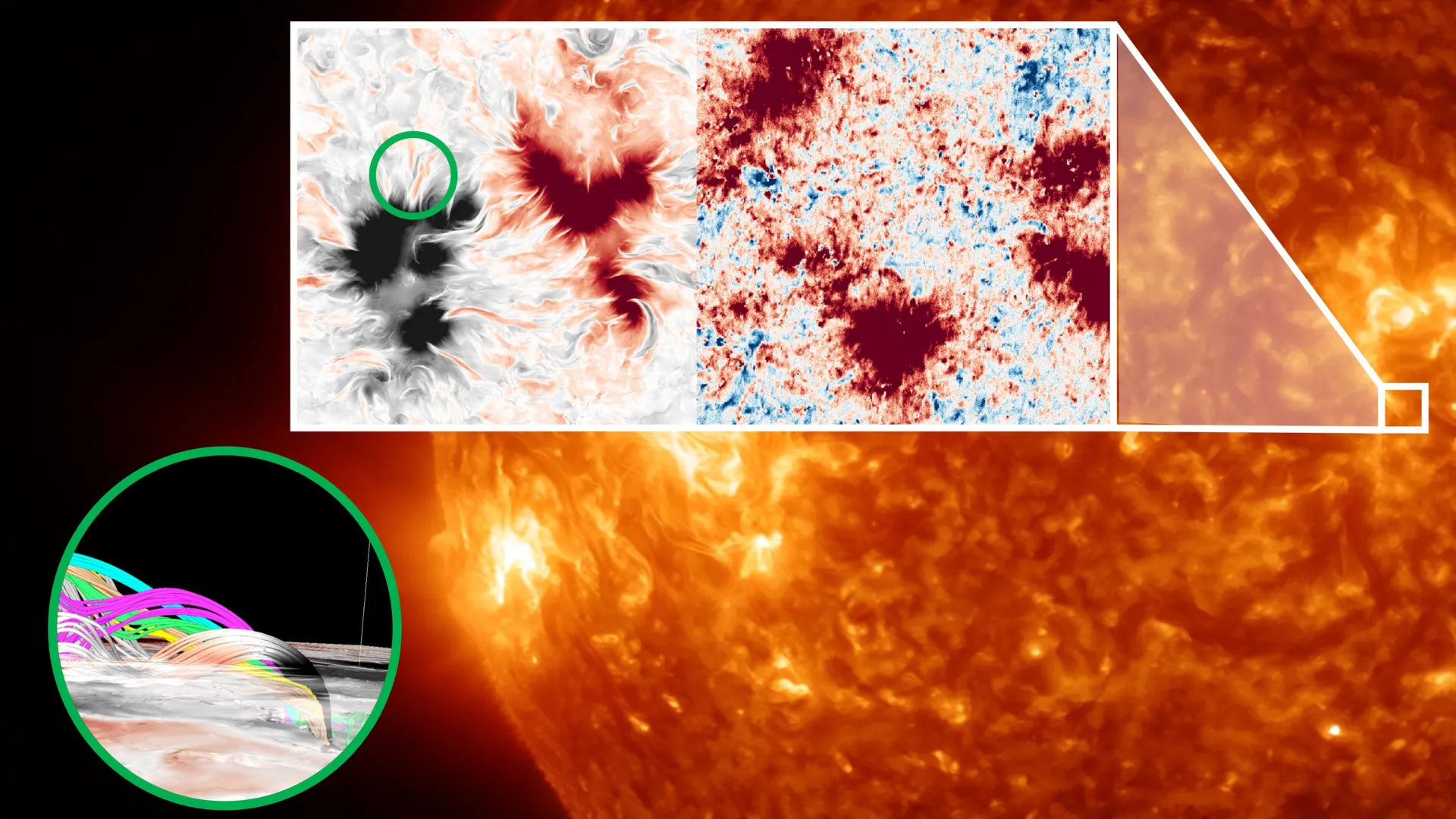
Олон улсын судлаачдын баг Нарны агаар мандлын өмнө нь ажиглахад бэрхшээлтэй байсан нарийн ширхэгт соронзон бүтцүүдийг Sunrise-III ажиглалтын төхөөрөмжийн тусламжтайгаар нээлээ.
Японы Үндэсний одон орон судлалын төв (NAOJ)-ийн удирдсан эрдэмтэд 2024 онд агаарын бөмбөлөг ашиглан Sunrise-III төхөөрөмжийг дэлхийн стратосферт хөөргөж, Нарны гадаргуугийн нам гүм гэгддэг бүсүүдэд судалгаа хийжээ. Уг судалгаагаар Нарны фотосферээс хромосфер хүртэл үргэлжлэх соронзон орны бүрхүүл нь өмнө нь төсөөлж байснаас илүү нарийн, утаслаг бүтэцтэй болохыг тогтоов. Компьютерийн загварчлалын үр дүн нь Нарны гадаргуу дээрх хөдөлгөөнүүд соронзон орны шугамуудыг мушгин, агаар мандалд ийм нарийн бүтэц үүсгэдэг гэсэн таамаглалыг дэвшүүлж байна.
Нарыг судлахад тулгардаг гол бэрхшээл нь дэлхийн агаар мандлын үймээнээс болж нарийн бүтцийг ялгаж харахад хэцүү байдаг явдал юм. Sunrise-III нь дэлхийн агаар мандлын нөлөөллөөс ангид, 35 км-ийн өндөрт байрласнаар Нарны соронзон орныг өндөр нарийвчлалтайгаар хэмжих боломж олгосон байна. Төхөөрөмжийн бүрэлдэхүүнд багтсан SCIP нэртэй хэт улаан туяаны спектрополариметр нь Нарны агаар мандлын янз бүрийн давхарга дахь соронзон орны өөрчлөлтийг тасралтгүй хянах боломжийг бүрдүүлжээ.
Энэхүү нээлт нь Нарны гадаргуу орчмын энергийн урсгал агаар мандлын дээд давхарга руу хэрхэн шилжиж, улмаар түүнийг халаахад хэрхэн нөлөөлдөг болохыг ойлгоход чухал алхам болж байна. Нарны гадаргуу дээрх нам гүм гэгдэх бүсүүд ч соронзон идэвхжилтэй болох нь тогтоогдсон нь Нарны агаар мандлын дулааныг тайлбарлах шинэ сэжүүрийг судлаачдад өглөө.
Дэлгэрэнгүйг эх сурвалжаас харах
↓Эх сурвалжийг нээх ↓
Scientists have uncovered a surprisingly complex network of magnetic structures hidden above regions of the Sun that appear relatively calm. Using the Sunrise-III solar observatory, which traveled high into Earth’s stratosphere aboard a balloon in 2024, an international research team led by the National Astronomical Observatory of Japan (NAOJ) discovered intricate, thread-like magnetic features that had previously been difficult to observe.
The findings reveal that even the Sun’s seemingly quiet regions contain elaborate magnetic structures. They also offer new clues to how energy travels upward through the solar atmosphere and contributes to its heating.
A Hidden Web of Magnetic Threads Above the Sun
Sunrise-III detected numerous thin, elongated magnetic structures woven into a larger network of magnetic fields above a quiet region of the Sun. This network, known as the magnetic canopy, extends through the chromosphere, a layer of the solar atmosphere located above the Sun’s visible surface.
The canopy develops as magnetic fields concentrated at the solar surface (photosphere) spread outward and arch upward into the chromosphere (chromosphere). Rather than forming a relatively smooth, uniformly expanding structure, however, the new observations reveal that the canopy contains many narrow, thread-like features.
To investigate how these structures form, researchers used computer simulations that successfully reproduced the patterns recorded by Sunrise-III. The results suggest that movements on the solar surface twist magnetic field lines, creating the intricate structures observed higher in the atmosphere.
The observatory also examined another quiet region near the solar limb (visible edge of the Sun). There, it measured magnetic fields within spicules, narrow jets of solar material that extend upward from the surface. These observations revealed how the distribution of magnetic fields changes with increasing height above the Sun’s visible edge.
Why the Sun’s Quiet Regions Are Difficult to Study
Although the Sun is constantly active, much of its surface lacks prominent features such as sunspots. Scientists describe these comparatively inactive areas as “quiet.” They cover most of the Sun, making them especially important for understanding how our star behaves.
However, quiet does not mean magnetically inactive. These regions contain magnetic fields that are generally weaker than those found in more active areas of the Sun. Their subtle structures are difficult to measure, especially with telescopes on the ground, where turbulence in Earth’s atmosphere can blur fine details.
Sunrise-III was designed to overcome this obstacle by carrying a powerful solar telescope far above most of the atmosphere.
A Balloon-Borne Telescope Reveals New Solar Details
Sunrise-III is an international research project built around a 1-meter telescope carried by a high-altitude balloon. During its 2024 mission, the observatory floated approximately 35 kilometers (about 22 miles) above Earth in the stratosphere, where atmospheric interference is greatly reduced.
This elevated vantage point allowed the telescope to capture exceptionally detailed measurements of the Sun’s magnetic fields.
The balloon’s gondola carried three scientific instruments developed through contributions from different countries. One of these was SCIP (Sunrise Chromospheric Infrared spectroPolarimeter), a near-infrared instrument developed under NAOJ’s leadership.
SCIP is designed to measure magnetic fields continuously across different layers of the solar atmosphere, from the photosphere to the chromosphere. This capability allowed researchers to examine how magnetic structures extend and change with altitude rather than studying only a single layer.
New Clues to How the Sun’s Atmosphere Is Heated
By observing from the stratosphere, Sunrise-III provided researchers with an unusually detailed picture of magnetic fields above the Sun’s quiet regions. Its measurements revealed that the chromosphere contains far more intricate magnetic structures than a simple expanding canopy would suggest.
Understanding these structures could help scientists investigate how energy generated by motions near the solar surface is transferred into higher layers of the atmosphere.
The discovery offers an important step toward explaining how magnetic activity contributes to heating the Sun’s atmosphere, including in regions that appear calm when viewed from afar.

