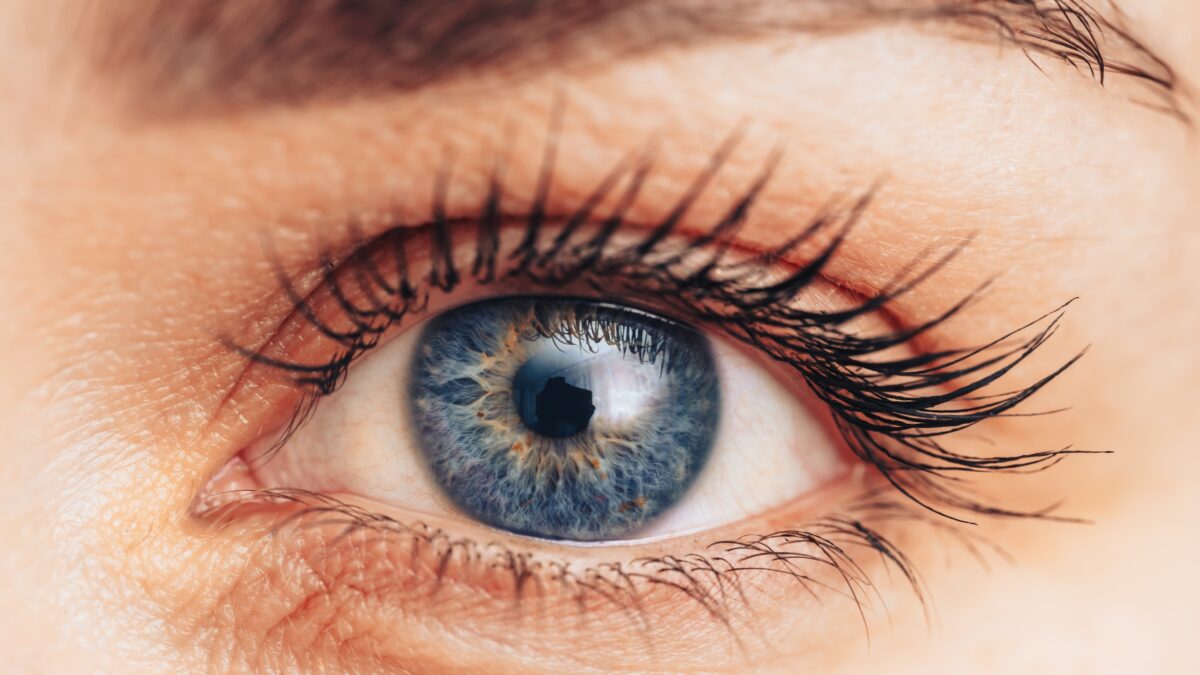
Судлаачид чангаар ярих болон дотроо бодох үед хүний тархины сэрэл өдөөгдөх түвшин харилцан адилгүй байгааг илрүүлсэн байна.
iScience сэтгүүлд нийтлэгдсэн шинэ судалгаагаар чангаар ярих болон дотроо бодох (inner speech) үед хүүхэн харааны хэмжээ өөр өөрөөр өөрчлөгддөг болохыг тогтоожээ. Цукубагийн их сургуулийн мэдрэл судлаач Рюта Кувамизу (Ryuta Kuwamizu), Рицүмейкан их сургуулийн хөгжлийн сэтгэл судлаач Рёичи Ватанабэ (Ryoichi Watanabe) нараар ахлуулсан баг 80 оюутныг оролцуулан гурван төрлийн туршилт хийсэн байна. Оролцогчид тоо тоолох дасгал хийх явцад тэдний хүүхэн харааны хэмжээг хянаж, тархины сэрэл өдөөгдөх үйл явцыг судалжээ.
Туршилтын үр дүнгээр чангаар ярих нь хүүхэн харааг тогтмол өргөсгөж байгаа нь ажиглагдсан бөгөөд энэ нь ярианы үйлдэл, амьсгалын өөрчлөлт, анхаарал төвлөрөл зэрэг тархины үйл ажиллагаатай холбоотой болохыг тогтоов. Харин дотроо бодох үед хүүхэн харааны хариу үйлдэл нь харьцангуй бага буюу даалгаврын хүндрэлээс хамаарч өөрчлөгдөж байлаа.
                <![CDATA[

            if ('undefined' !== typeof window.tmntag
Дэлгэрэнгүйг эх сурвалжаас харах
↓Эх сурвалжийг нээх ↓
They say the eyes are the windows to the soul, and in actuality, there’s almost no end to what they reveal about you.
The fluctuating size of your pupils can offer clues about the information you perceive, indicate whether you’re inhaling or exhaling, and even respond to things you’re imagining.
Now, a new study in iScience by researchers in Japan has discovered an unusual link between the size of your pupils and the way you speak – and it turns out there’s a different effect depending on whether you’re speaking aloud or just silently inside your own head.
Most of us have some form of inner voice inside our heads, which helps us to organize our thoughts, memorize things, and formulate what we’re going to say.
“Neuroimaging studies over the past two to three decades suggest that inner speech, or covert speech, draws on a fronto-temporal speech-production network that partly overlaps with, but is not identical to, the network engaged during overt speech,” explains a team led by neuroscientist Ryuta Kuwamizu from the University of Tsukuba and developmental psychologist Ryoichi Watanabe from Ritsumeikan University.
But while much research has investigated how inner speech activates the brain’s cortical networks, less is known about how it relates to the brain’s arousal systems.
To explore this, researchers conducted three experiments involving 80 healthy university students, with the participants performing simple counting exercises while having the sizes of their pupils monitored, which offers a non-invasive way to investigate changes in brain arousal.
In each experiment, participants would perform the counting exercise by either speaking aloud, or by counting silently in their heads, with the order being randomized each time.
In the first experiment, participants counted upward from 1, using consecutive integers (for example, 1, 2, 3, 4 etc.).
In the second experiment, to take things a bit further, participants counted upwards again, but this time they had to count objects each time, such as cats, balls, or books (for example one cat, two cats, three cats, etc.).
In the final experiment, participants had to do step counting, in randomized increments of 2, 3, or 4. For example, if the increment was 3, the sequence would be 1, 4, 7, 10, and so on.
In a surprise result that the researchers didn’t expect, the team found inner and overt speech produced different responses in the participants’ pupils, with overt speech consistently eliciting pupil dilation (with the pupil diameter increasing), but inner speech producing more mixed results.
As the tasks changed, the pupil response during inner speech also changed, with greater dilation emerging when the counting required more mental effort.
In the first and simplest counting experiment, the participants’ pupil size actually constricted during inner speech, while there was no significant change in pupil size during the second test.
It was only in the third and most difficult task, the step-counting exercise, that inner speech triggered pupil dilation, potentially reflecting the mental effort required.
“The most robust finding across all three experiments was the consistent pupil dilation elicited by overt speech, suggesting that the presence of vocalization is an important factor shaping pupil-linked arousal,” the researchers explain.
“This dilation likely reflects the integrated pupil-linked arousal recruitment associated with motor execution, respiratory variation, sensorimotor feedback, and attention, each of which is presumed to engage brainstem arousal systems and cortical network states, potentially contributing to efficient speech production.”
By contrast, it seems running our inner monologue is generally much less arousing.
Even in the third step-counting experiment, the amount of pupil dilation seen during inner speech was reduced compared to when participants performed the same task aloud.
It’s possible, the team thinks, that the extra effort required to convert inner thoughts into spoken words – involving numerous forms of motor control, including articulation, breathing, auditory monitoring, and more – is one of the reasons speaking aloud involves comparatively high arousal.
There may also be functional advantages in terms of attention and memory, with a previous study finding that changes in pupil dilation corresponded to how well words were remembered after they were spoken aloud.
Whatever the case, it appears speaking aloud is a highly arousing task.
The researchers note that the sustained pupil dilation they recorded in the speaking participants in experiment 3 – reaching approximately 0.4 mm for more than 10 seconds – is comparable to vigorous physical exertion, including levels previously seen during high-intensity cycling at roughly 80 percent of maximal oxygen uptake.
Or, in somewhat simpler terms, it’s hard to make words.
The findings are reported in iScience.
This article was fact-checked by Fiona MacDonald and edited by Fiona MacDonald. While we pride ourselves on our process, we are only human. If you spot a mistake, please let us know.

