Texas A&M University-ийн судлаачдын PNAS сэтгүүлд нийтэлсэн судалгаагаар эсэд РНХ хэт их хуримтлагдах нь митохондрийн үйл ажиллагаанд сөргөөр нөлөөлж, эрчим хүчний дутагдалд хүргэдэг болохыг илрүүлжээ.
Судлаачид хүний эсэд вирус нэвтрүүлж, РНХ-ийн хуримтлалыг өдөөх замаар туршилт явуулсан байна. Үүний үр дүнд эс дэх РНХ-ийн хэмжээ нэмэгдэхэд митохондрийн хүчилтөрөгчийн хэрэглээ буурч, улмаар эсийн эрчим хүч үйлдвэрлэх чадвар суларч байгааг ажиглажээ. Тус сургуулийн вирус судлаач Zhilong Yang-ийн тайлбарласнаар, РНХ-ийн задрал нь уургийн үйлдвэрлэлийг хянахаас гадна эсийн эрчим хүчний тэнцвэрт байдлыг хадгалахад чухал үүрэгтэй аж.
Тус багийнхан зөвхөн митохондрийг тусгаарлан РНХ нэмэхэд гэмтэл үүсэж байсан нь энэ нь эсийн түвшинд явагддаг өмнө нь мэдэгдээгүй хариу урвал байж болзошгүйг харуулжээ. Энэхүү үйл явц нь дархлааны тогтолцоо идэвхжихээс өмнө явагддаг бөгөөд зөвхөн вирусийн РНХ төдийгүй уураг үүсгэгч мРНХ-ийн илүүдэл ч ижил сөрөг нөлөөтэй болохыг тогтоосон байна.
Энэхүү шинжлэх ухааны нээлт нь хөгшрөлттэй холбоотой өвчин, вирусийн халдвар болон РНХ-д суурилсан эмчилгээний аргуудыг хөгжүүлэхэд чухал ач холбогдолтой юм. Судлаачид РНХ-ийн сөрөг цэнэг нь митохондрийн эргэн тойронд хуримтлагдаж, эрчим хүч үйлдвэрлэхэд шаардлагатай цахилгаан цэнэгийн тэнцвэрийг алдагдуулдаг байж болзошгүй гэсэн таамаглал дэвшүүлж, цаашид энэхүү механизмыг нарийвчлан судлахаар төлөвлөж байна.
Дэлгэрэнгүйг эх сурвалжаас харах
↓Эх сурвалжийг нээх ↓
RNA, or ribonucleic acid, is one of the most important molecules in keeping the body functioning correctly. One of its main jobs is to turn the information stored in our genetics into actual proteins that build and operate cells, for example.
To stay healthy, cells keep RNA production and deletion in a careful balance, but there are ways this balance can be tipped over. Invading viruses tend to produce more RNA, and aging, certain cancers, and neurodegenerative diseases can also cause disruption.
In a study published in PNAS, researchers outline a newly discovered way that too much RNA can cause harm: It can interfere with tiny power plants called mitochondria inside cells, limiting their energy production capacities.
According to the team behind the study, led by researchers from Texas A&M University, this gives us an important new perspective on age-related diseases, viral infections, and therapies that target or utilize RNA.
“Scientists have long known that RNA degradation helps control protein production and remove defective RNA,” says virologist Zhilong Yang, from the College of Veterinary Medicine and Biomedical Sciences (VMBS) at Texas A&M University.
“Our study reveals another important role: It helps cells maintain the energy they need to function properly.”
The researchers added a vaccinia virus to human cells cultured in the lab, tweaking the chemical setup to drive RNA accumulation – as the virus would normally boost both RNA production and RNA degradation, to survive and to avoid detection.
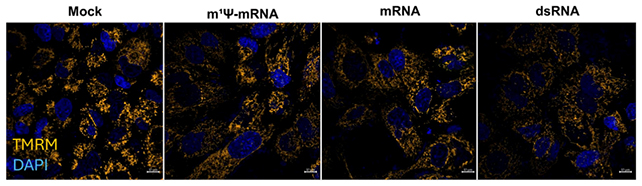
Further experiments involved direct RNA transfers, without infection, including mRNA (the type that makes proteins), and double-stranded RNA (the type associated with viruses, and which triggers potentially damaging immune responses).
Oxygen use by the cells was used as a proxy for mitochondria, enabling the researchers to link RNA amounts with mitochondria health.
“When we isolated only the mitochondria and added RNA, we still saw mitochondrial damage,” says Djamal Brahim Belhaouari, from VMBS. “That was the moment we realized this could be a previously unknown cellular response to RNA.”
“Too much double-stranded RNA or mRNA that cannot be degraded effectively may contribute to disease processes in some contexts.”
Too much RNA was linked to lower oxygen use and energy output from the cells, and the reaction happened before the immune system had been activated, suggesting that this isn’t being caused by the body’s standard emergency response.
And while double-stranded RNA has been linked to cell damage before – albeit not mitochondria-related – the inclusion of mRNA here too suggests that too much of these molecules in general isn’t good for cells.
“mRNA is a normal component of our cells, but it seems like with many good things, if we get too much, that can become a problem for the cell,” says Yang.
“When too much RNA builds up, including mRNA, it can damage the mitochondria and interfere with the cell’s ability to produce energy.”
The next steps are to work out exactly why this is happening, and confirm the link between an abundance of RNA and mitochondria suffering under the load. Testing these findings in living organisms should also tell us more about the reactions involved.
As RNA is such an important messenger for the body, it’s often used in vaccines to create a harmless virus fragment, which then protects against the real virus. Further down the line, these findings could help make those vaccines safer and more effective.
RNA therapies are also being developed to attack cells too – specifically, cancer cells. Again, knowing how and why RNA might overload mitochondria will be useful here too, once scientists have confirmed precisely how it works.
“We think the negatively charged RNA may accumulate around mitochondria and disrupt the electrical balance needed for energy production, although how it happens is unknown,” says Yang. “This is a new concept that we are continuing to explore.”
“Understanding this mechanism could help researchers design and optimize future RNA-based therapeutics and vaccines by better understanding how cells respond to large amounts of RNA.”
The research has been published in PNAS.
This article was fact-checked by Fiona MacDonald and edited by Fiona MacDonald. While we pride ourselves on our process, we are only human. If you spot a mistake, please let us know.

