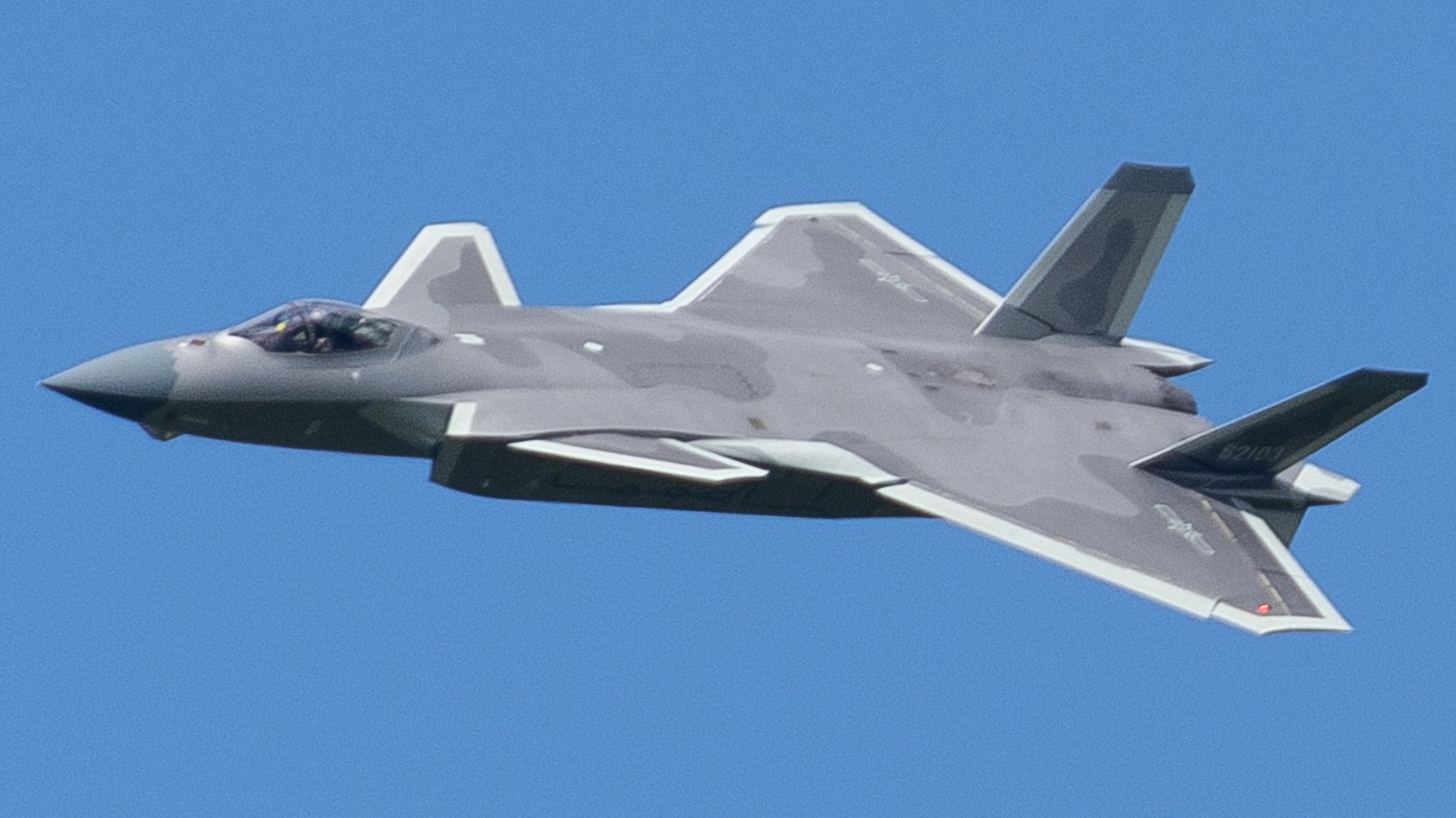
БНХАУ-ын шинэчилсэн загварын тав дахь үеийн сөнөөгч онгоц нь далайн болон газрын байг онох нарийвчлалтай цохилт өгөх чадавхтай болохыг төрийн мэдээллийн хэрэгслээр зарлав.
Хятадын Ардын чөлөөлөх армийн агаарын цэргийн хүчин (PLAAF) 2017 оноос хойш ашиглаж буй Chengdu J-20 “Mighty Dragon” сөнөөгч онгоцны шинэ хувилбар болох J-20S-ийг 2025 оны есдүгээр сард болсон цэргийн парадын үеэр анх олон нийтэд танилцуулсан юм. Хоёр хүний суудалтай энэхүү загвар нь агаарт давуу тал тогтоохоос гадна далайн хөдөлгөөнт байг устгах, цахим саатал үүсгэх, тактикийн удирдлага болон хяналтын цогц чадвартай болохыг Хятадын төрийн хэвлэлүүд онцолжээ.
Тус сөнөөгч онгоц нь жолоодлоготой болон жолоодлогогүй нисэх төхөөрөмжүүдтэй хоршин ажиллах (manned-unmanned teaming) чадамжтай бөгөөд энэ нь АНУ-ын F-35, F-22 болон ОХУ-ын Su-57 зэрэг тав дахь үеийн сөнөөгч онгоцнуудын гүйцэтгэх үүрэгтэй төстэй юм. Хэдийгээр Хятадын тал цэргийн технологийнхоо талаарх дэлгэрэнгүй мэдээллийг нууцалдаг ч, J-20S-ийн энэхүү шинэ чадвар нь Өмнөд Хятадын тэнгис болон Номхон далайн бүс нутаг дахь стратегийн зорилтуудтай нь холбоотой гэж шинжээчид үзэж байна.
J-20 нь өмнө нь хамтарсан байлдааны нисэх онгоцны (CCA) удирдлагын системтэй ажиллах чадвараа харуулсан бөгөөд энэ нь барууны орнуудын хөгжүүлж буй технологитой дүйцэхүйц алхам болж байна. Далайн байг онох нарийвчлал нь шинэ төрлийн пуужин эсвэл зэвсэглэлийн системтэй холбоотой байж болох ч, тус онгоцны бодит хүчин чадал болон зэвсэглэлийн бүтэц нь одоогоор тодорхойгүй хэвээр байна. БНХАУ өөрийн цэргийн хүчин чадлыг барууны орнуудын эсрэг сөрөг хүчин болгон бэхжүүлэх бодлогын хүрээнд J-20 онгоцыг олон үүрэгт зориулалт бүхий сөнөөгч онгоц болгон хөгжүүлсээр байна.
Дэлгэрэнгүйг эх сурвалжаас харах
Эх сурвалжийг нээх ↓
Just like the United States, the People’s Republic of China has developed its own fifth-generation fighter. The Chengdu J-20 Mighty Dragon began flying for the People’s Liberation Army Air Force (PLAAF) in 2017, and since then, it’s been upgraded multiple times. The newest variant, the J-20S, was first shown alongside other new weapon systems at China’s parade commemorating the 80th anniversary of the end of World War II in the Pacific in September 2025.
China’s new jet, which looks similar to the American-made F-35 Lightning II but costs more, has been said to have the ability to strike maritime targets. While it might seem easy to hit a maritime target, they’re constantly in motion, as is the water’s surface, so striking one isn’t necessarily as simple as sighting something and squeezing a trigger. Conducting precision strikes on maritime targets brings the J-20 further into modern fifth-generation fighter specs, and the newest twin-seater variant is shaping up to challenge whatever the West has to throw its way.
According to state-run media, the J-20S “boasts exceptional medium-and long-range air superiority capabilities, precision strike capabilities against ground and maritime targets, as well as prominent situational awareness, electronic jamming and tactical command and control capabilities, and is capable of conducting manned-unmanned teaming operations.” These capabilities are similar to those featured on other fifth-generation fighters like the F-35, the F-22 Lightning, and the Russian Federation’s Sukhoi Su-57 Felon. China continues to modernize and upgrade its military capabilities for a potential conflict with the West, and the J-20S is merely the latest step in that direction.
China’s Chengdu J-20S Mighty Dragon
While China has never been in the habit of revealing much about its military capabilities, it does enjoy showing them off at parades. Once seen by the West, analysts pore over images and video to try to identify their capabilities, but in the case of the J-20S, state-run media let the cat out of the bag. The veracity of China Central Television’s claims remains suspect, but it’s likely that China is moving forward with a maritime strike capability for the J-20S due to its goals in the South China Sea and elsewhere in the Pacific.
China designed the J-20 for air-supremacy missions, and it poses a threat to Western assets, including the aforementioned fifth-generation aircraft. In addition to a maritime strike capability, the J-20 has previously demonstrated a working capability with collaborative combat aircraft (CCA) through its command and control systems. This is something that defense contractors in the West have been working on for some time. The U.S. Air Force’s CCA program aims to operate wingmen drones alongside crewed aircraft; it appears that China has beaten the U.S. in that regard.
Unfortunately, due to China’s secrecy, which is understandable, the J-20’s maritime strike capabilities are largely unknown. It might involve a new type of missile or other ordnance, but whatever it is, China will likely keepdeveloping the J-20 as a more robust multirole aircraft to ensure it remains a potential foil to Western fifth-generation fighter jets for the foreseeable future.

