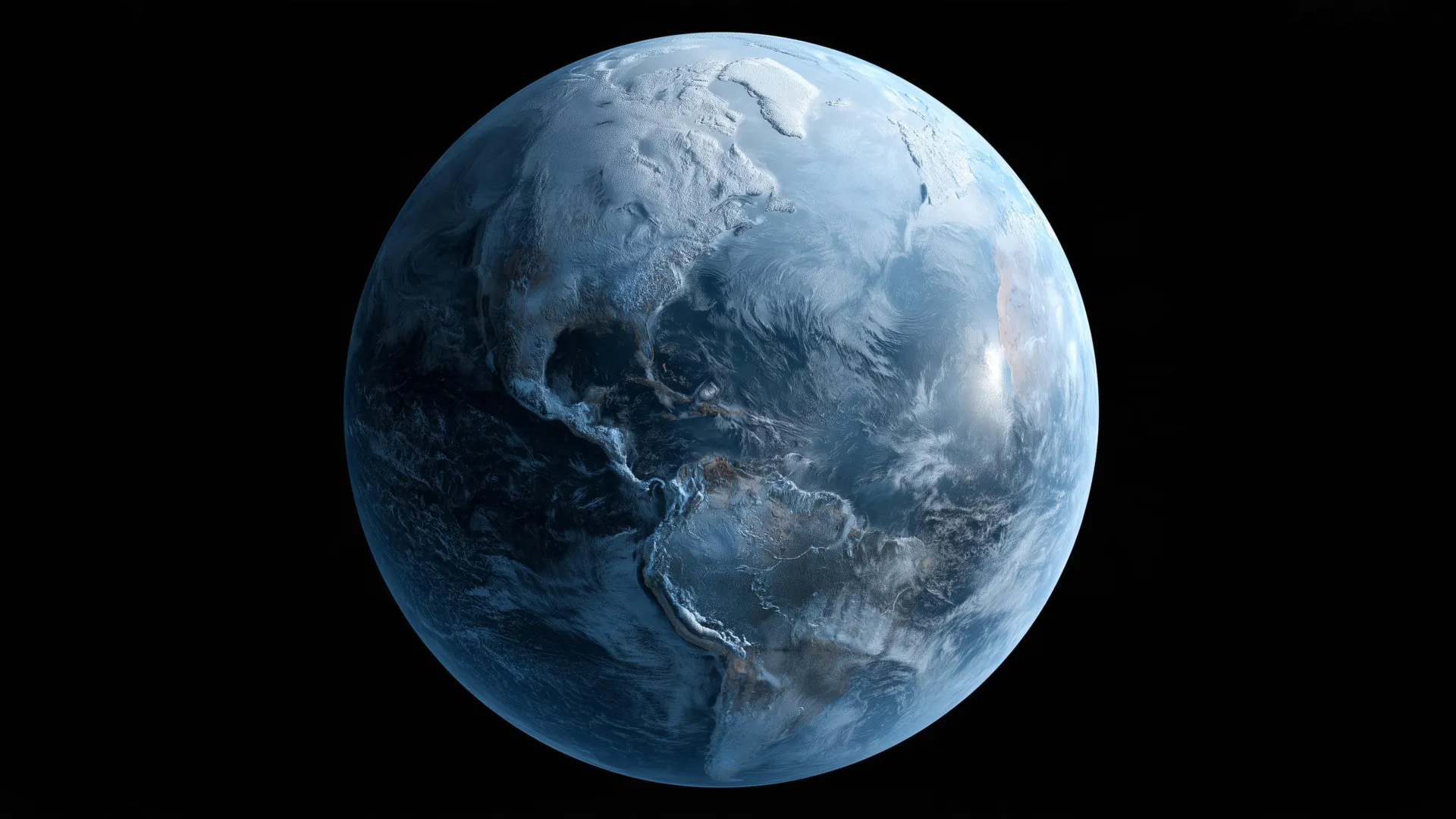
Эрдэмтэд хойд туйлын мөсөн бүрхүүл ба Антарктидын далай хоорондын холбоо нь дэлхийн мөстлөгийн үеийг үүсгэхэд нөлөөлдөг болохыг тогтоожээ.
University of St Andrews-ийн судлаачид дэлхийн өнгөрсөн мөстлөгийн үеүд хэрхэн эхэлснийг тайлбарлах шинэ механизмыг илрүүлснээ Journal of Climate сэтгүүлд нийтлүүлжээ. Судалгаагаар Хойд хагас бөмбөрцгийн мөсөн бүрхүүл өргөжин тэлэх үед үүссэн хүйтэн ус Атлантын далайгаар дамжин Антарктидын бүс рүү шилжиж, далайн эргэлтэд нөлөөлдөг болохыг тогтоосон байна.
Энэхүү үйл явц нь Антарктидын орчмын далайд агаар мандлын нүүрстөрөгчийн давхар ислийг (CO2) илүү ихээр шингээх нөхцөлийг бүрдүүлдэг аж. Агаар мандалд дахь CO2-ын хэмжээ буурах нь дэлхий даяар хөрөх шалтгаан болж, мөстлөгийн үеийг улам эрчимжүүлдэг байна. Өмнө нь эрдэмтэд дэлхийн хоёр туйлд болж буй энэхүү үйл явц хэрхэн холбогддогийг тайлбарлахад хүндрэлтэй байжээ.
Судлаачид компьютерийн загварчлал ашиглан хойд өргөрөгт үүссэн хүйтэн ус Антарктидын далайд үзүүлэх нөлөөг шалгасан байна. Туршилтын үр дүнд зөвхөн хойд бүс нутгийг хөргөхөд л дэлхийг бүхэлд нь хөргөхтэй дүйцэхүйц хэмжээний CO2-ын шингээлт бий болж байгааг илрүүлжээ. Энэхүү үзүүлэлт нь хойд туйлын температурын өөрчлөлт нь Антарктидын далайн нүүрстөрөгч хадгалах чадварт хүчтэй нөлөөлдөг болохыг харуулж байна.
Судалгааны багийн ахлагч, доктор Мэдисон Шанкл энэхүү нээлт нь дэлхийн уур амьсгалын түүхэн дэх нүүрстөрөгчийн эргэлтийн нууцыг тайлахад томоохон алхам болсныг онцоллоо. Энэхүү механизм нь өнөөгийн нөхцөлд далай тэнгис болон байгалийн бусад системүүд агаар мандалд нэмэгдэж буй нүүрстөрөгчийн давхар исэлд хэрхэн хариу үйлдэл үзүүлэхийг ойлгоход чухал ач холбогдолтой юм.
Дэлгэрэнгүйг эх сурвалжаас харах
↓Эх сурвалжийг нээх ↓
Scientists at the University of St Andrews have identified a previously unknown process that may help explain how Earth entered past ice ages. Their findings reveal a surprising connection between ice sheets in the Northern Hemisphere and ocean changes near Antarctica, suggesting that cooling in one part of the world could trigger a chain reaction affecting the entire planet.
The study, published in the Journal of Climate, offers a possible explanation for how growing northern ice sheets influenced ocean circulation and sea ice in the Southern Hemisphere. These southern changes are known to help reduce atmospheric carbon dioxide (CO2), an important factor in the development of ice ages. Until now, scientists have struggled to explain how processes occurring at opposite ends of the planet could be so closely connected.
One of the main forces behind Earth’s past ice ages was a reduction in atmospheric CO2 as more carbon became stored in the oceans. Much of this process was controlled by changes in the Southern Ocean surrounding Antarctica. However, a major question remained unanswered: How could expanding ice sheets in the Northern Hemisphere, initially driven by natural variations in Earth’s orbit, cause the distant Southern Ocean to absorb more CO2?
How Northern Ice Sheets Could Trigger Changes Near Antarctica
The researchers propose that the answer lies in the movement of ocean water between the hemispheres. As large ice sheets spread across northern regions, they cool nearby waters in the North Atlantic. Over time, these colder waters circulate southward, eventually reaching the Southern Ocean.
If the cooling is sufficiently strong, it could alter ocean circulation around Antarctica in ways that allow more CO2 to be stored beneath the ocean’s surface. As atmospheric CO2 declines, the planet cools further, potentially helping intensify an ice age.
To investigate this possibility, the team used computer simulations of ocean circulation. Rather than lowering temperatures across the entire planet, they cooled only the northernmost latitudes (mimicking the effect of a large ice sheet) and examined how the Southern Ocean responded.
The results were striking. Cooling the far northern regions alone produced 74% as much CO2 drawdown as a separate simulation in which the entire planet was cooled. This suggests that temperature changes in the Northern Hemisphere could have a powerful influence on the Southern Ocean and its ability to store carbon.
A Missing Link in Earth’s Ice Age Mystery
The simulations provide strong support for the proposed connection between expanding northern ice sheets and changes in the Southern Ocean. They suggest that colder water originating in the North Atlantic could eventually influence circulation around Antarctica, helping remove CO2 from the atmosphere and contributing to the global cooling associated with past ice ages.
For decades, much of the research into ice age climate changes has concentrated on the Southern Ocean because of its important role in controlling atmospheric carbon dioxide. Only more recently have scientists begun to recognize how changes in distant ocean regions might influence these processes.
Lead author Dr. Madison Shankle, from the University of St Andrews School of Earth and Environmental Science, explained the importance of the findings:
“Essentially, we’ve produced evidence of a plausible mechanism connecting these two far-flung puzzles pieces – Northern Hemisphere ice sheets and Southern Hemisphere ocean circulation changes leading to CO2 drawdown – which has been a tricky thing to explain in our theory of Earth’s past ice ages. Our study takes the step of actually demonstrating them working in model simulations, which is a big step forward for this field.”
What Ancient Ice Ages Reveal About Today’s Climate
Understanding how past ice ages developed offers scientists a valuable way to study Earth’s natural carbon cycle. These periods reveal how carbon dioxide moves between the atmosphere and oceans, and how changes in that balance can influence global temperatures.
By identifying another mechanism that may have helped reduce atmospheric CO2 during ancient ice ages, researchers can develop a more complete picture of how Earth’s climate system operates.
That knowledge is especially important today, as scientists work to understand how the planet’s oceans and other natural systems will respond to the additional carbon dioxide now entering the Earth system.

