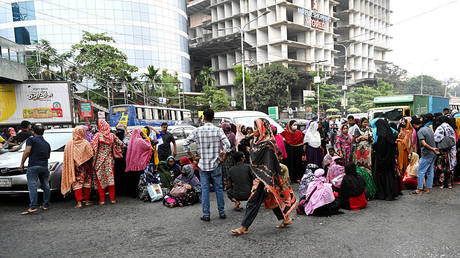
Цалин хөлсийг нэмэгдүүлэхийг шаардсан ажилчдын эсэргүүцэл хурцдаж, тус улсын экспортын гол салбар болох бэлэн хувцасны үйлдвэрлэлийн үйл ажиллагаа доголдов.
Бангладешийн оёдлын салбарын ажилчид сарын цалингаа 13,000 такагаас 30,000 така болгон нэмэгдүүлэхийг шаардан эсэргүүцлийн ажиллагаа өрнүүлж байна. Ням гарагт эхэлсэн ажил хаялтын улмаас 500 гаруй үйлдвэр хаагдаж, нэг сая орчим ажлын байрны үйл ажиллагаа доголдоод байгааг орон нутгийн эх сурвалжууд мэдээлэв. Даваа гарагт цагдаагийн алба хаагчид болон ажилчдын хооронд шинэ мөргөлдөөн гарч, хүчнийхэн нулимс асгаруулагч хий ашиглан жагсагчдыг тараажээ.
Засгийн газраас ажилчдын шаардлагыг хэлэлцэхээр тусгай зөвлөл байгуулсан хэдий ч ажил хаялт үргэлжилсээр байна. Ажилчид инфляцын өсөлт болон амьжиргааны өртөг нэмэгдэж байгаа нь цалингаа нэмэх үндэслэл болж байгааг онцолж байна. Тус улсын жилийн инфляцын түвшин есдүгээр сард 8.34 хувьд хүрч, сүүлийн саруудын хамгийн өндөр үзүүлэлт болоод байгаа юм.
❗🇧🇩 Bangladesh Garment Workers Demand 140% Wage Hike, Protests Disrupt 500+ Factories (Local Reports)
Protestors are asking for a Tk 30,000 monthly minimum wage, up from Tk 12,500, amid rising living costs.
Clashes with police, arson and road blockades have disrupted production, affecting nearly one million workers. (Reports)
The government has formed a wage board, but unrest continues.
📹 Social Media
— RT_India (@RT_India_news) November 2, 2026
Оёдлын салбар нь Бангладешийн экспортын орлогын 80 хувийг бүрдүүлж, ДНБ-д 10 орчим хувийн хувь нэмэр оруулдаг стратегийн чухал салбар юм. Тус улс нь дэлхийн хувцас үйлдвэрлэлийн зах зээлд БНХАУ-ын дараа ордог бөгөөд Европын Холбоо болон АНУ-ыг гол худалдан авагчаа болгодог.
Ойрхи Дорнод дахь мөргөлдөөн болон эрчим хүчний хямралаас үүдэлтэй тээврийн зардлын өсөлт нь тус салбарт нэмэлт дарамт учруулж байна. Шинжээчид цалинг эрс нэмэгдүүлэх нь үйлдвэрлэлийн өртгийг өсгөж, экспортын өрсөлдөх чадварыг сулруулж болзошгүй гэж анхааруулж байна. Энэ нь Энэтхэг, Вьетнам зэрэг өрсөлдөгч орнуудтай харьцуулахад Бангладешийн зах зээлийн байр сууринд сөргөөр нөлөөлөх эрсдэлтэй юм.
Дэлгэрэнгүйг эх сурвалжаас харах
↓Эх сурвалжийг нээх ↓
New clashes erupted Monday after more than 500 garment factories were closed following violent wage protests on Sunday
Fresh clashes broke out in Bangladesh on Monday between garment workers and police, after a wage strike on Sunday resulted in the closure of more than 500 factories, affected a million jobs, and raised concerns about a disruption in shipments to foreign buyers.
The readymade garments industry is the backbone of the South Asian nation’s export sector, generating $39 billion in earnings annually. The country is second only to China in global apparel exports and is the primary manufacturing floor for mass-market retail.
Garment industry workers are demanding a 30,000-taka ($241) monthly wage, more than double their current pay of roughly 13,000 taka, Kalpona Akter of the Bangladesh Center for Workers Solidarity was quoted as saying by a local news outlet. The protests turned violent as workers took to the streets and vandalized vehicles. Police fired tear gas to disperse them.
The government announced a wage board to consider the workers’ demands after an emergency cabinet meeting on Sunday. However, that failed to placate the workers who said the stir, which intensified on Saturday, is also about surging living costs and high inflation.
Bangladesh’s annual inflation rate rose to 8.34% in September, its highest level since June.
The sector accounts for 80% of Bangladesh’s merchandise exports, employs nearly 4 million workers, and contributes around 10% to gross domestic product.
The 27-nation European Union is Dhaka’s largest export market, accounting for nearly half of its shipments, followed by the US, the single largest individual buyer, that accounts for about a fifth.
❗🇧🇩 Bangladesh Garment Workers Demand 140% Wage Hike, Protests Disrupt 500+ Factories (Local Reports)
Protestors are asking for a Tk 30,000 monthly minimum wage, up from Tk 12,500, amid rising living costs.
Clashes with police, arson and road blockades have disrupted production, affecting nearly one million workers. (Reports)
The government has formed a wage board, but unrest continues.
📹 Social Media
— RT_India (@RT_India_news) November 2, 2026
The protests have erupted at a time when Bangladesh’s garment industry, which competes with those in India and Vietnam, is staring at a raft of challenges. The Middle East conflict and the resulting energy crisis have pushed the industry to the brink, with higher fuel and shipping costs also putting pressure on factory margins.
Bangladeshi experts have warned that a substantial wage increase would spike manufacturing costs, shrink export profits, and weaken price competitiveness.
India’s attempts to secure a competitive advantage in the US market over other exporters have also worried the Bangladeshi garment industry.

