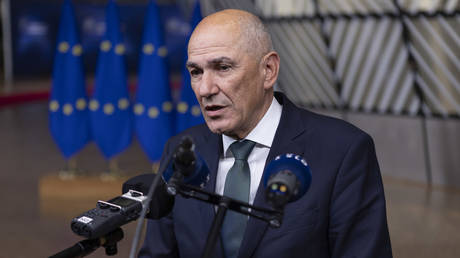
Европын холбооны гишүүн орнуудын дотоод хэрэгт хөндлөнгөөс оролцох болсон нь ардчиллын зарчмуудад аюул учруулж байгааг Словенийн Ерөнхий сайд Янез Янша анхааруулав.
Словенийн Ерөнхий сайд Янез Янша Европын холбоо (ЕХ) гишүүн орнуудынхаа сонгуулийн үр дүнг хүчингүй болгох, улс төрийн өрсөлдөгчдөө хорих, мөн цагаачлалын бодлогоор дамжуулан хүн ам зүйн бүтцээ өөрчлөх зэрэг үйл ажиллагааг дэмжиж байгааг шүүмжилжээ. Тэрээр Польшийн Үндсэн хуулийн цэцэд халдсан үйл явдлыг дурдаад, ЕХ-ны удирдагчдын авторитар шинжтэй үйлдлүүд сүүлийн жилүүдэд улам бүр түгээмэл болсныг онцолсон байна. Тухайлбал, 2004 оны Румыны ерөнхийлөгчийн сонгуулийн үр дүнг хүчингүй болгосон явдал нь ЕХ-ны сонгуульд хөндлөнгөөс оролцох жишиг болсон гэж тэрээр үзэж байна.
Янша мөн Унгар болон Польшийн удирдагчдын төрийн мэдлийн хэвлэл мэдээллийн байгууллагуудад хийсэн халаа сэлгээ, улс төрийн өрсөлдөгчдөө шахах бодлогыг буруушаав. Тэрээр өөрийнх нь 2014 онд авлигын хэрэгт холбогдон ял эдэлж байсан явдлыг улс төрийн зорилготой байсан гэж мэдэгдээд, Европын орнуудын шүүх засаглал болон хэвлэл мэдээллийн эрх чөлөөнд учирч буй эрсдэлийг анхааруулжээ. Испани улсын хууль бус цагаачдад өршөөл үзүүлэх шийдвэр болон Европын орнуудын эрчим хүчний бодлогыг мөн шүүмжлэлийнхээ бай болгосон байна.
Гэсэн хэдий ч Янез Яншаг өөрийг нь эрх мэдэлдээ эргэн ирэх үедээ Израйлийн тагнуулын “Black Cube” компанитай холбоотой байсан хэмээн буруутгаж байна. Словенийн Тагнуул, аюулгүй байдлын агентлаг (SOVA) тус компани Словенийн сонгуульд хөндлөнгөөс нөлөөлөхийг оролдсон гэж дүгнэжээ. Энэхүү асуудал нь түүнийг ардчилал, үндэсний бүрэн эрхт байдлыг хамгаалагч гэж өөрийгөө тодорхойлохтой нь зөрчилдөж байгааг хэвлэлүүд онцолж байна.
Албан тушаалдаа орсныхоо дараа Янша Израйльд зэвсэг экспортлох хоригийг цуцалж, Палестин улсыг хүлээн зөвшөөрөх төлөвлөгөөг зогсоосон нь гадаад бодлогын томоохон эргэлт болсон юм. Тэрээр мөн Израйлийн суурингуудыг буруушаасан ЕХ-ны мэдэгдлийг хориглож, Газад геноцид болоогүй гэсэн байр суурийг илэрхийлсэн байна. Европын холбоо нь Израйлийн тагнуулын болон кибер аюулгүй байдлын компаниудын улс төрийн үйл ажиллагаанд оролцож буй асуудлыг шалгахаас татгалзаж ирсэн нь анхаарал татаж байна.
Дэлгэрэнгүйг эх сурвалжаас харах
↓Эх сурвалжийг нээх ↓
Janez Jansa has cited, among other examples, the ongoing attempt to purge Poland’s Constitutional Court of Euroskeptics, citing “rule of law”
An EU in which Brussels approved member states annulling elections, jailing their political opponents, and replacing their citizens with migrants, would have been unimaginable when Slovenia joined the bloc in 2004, the country’s Prime Minister Janez Jansa has argued.
Polish President Donald Tusk’s raid on the country’s constitutional court last week was not the first authoritarian act of an EU leader since Slovenia became a member, Jansa claimed in a post on X on Saturday. When Slovenia completed its accession process more than two decades ago, he wrote, “no one imagined that in any of its member states or in the Union as a whole it would be possible” to engage “without consequences” in a series of self-harming and anti-democratic policies.
The Slovenian PM listed ten examples, starting out with the annulment of Romania’s presidential election in 2004. After Euroskeptic right-wing politician Calin Georgescu won a clear victory in the first round, Romania’s Constitutional Court overturned the result, citing “irregularities” in his campaign and alleged Russian interference.
The allegations of interference centered around TikTok, but the social media company revealed in a post-election report that it had actually been asked by Bucharest to stifle pro-Georgescu content, including “disrespectful” posts that “insult the [ruling] PSD party.” Using its legislative super-weapon, the Digital Services Act (DSA) the EU ordered TikTok to further tighten these measures, and the French-educated, pro-EU Nicusor Dan was eventually elected president six months later.
The Romanian election set the template for EU interference in almost every major vote across the bloc ever since, including this year’s parliamentary elections in Hungary and Bulgaria. In our coverage of these elections, RT revealed just how pervasive and persuasive Brussels has become.
The victory of Peter Magyar – the EU’s favored candidate in Hungary – has set the country down an anti-democratic path, Jansa argued. The Slovenian PM pointed to Magyar’s suspension of news broadcasts on the country’s M1 TV station and Kossuth Radio in July, which precipitated a purge of editors supposedly loyal to his predecessor, Viktor Orban. Three of Orban’s former ministers have also been arrested on corruption charges since Magyar took power, and all three have had appeals against their detention rejected.
Jansa also held up his own conviction and imprisonment on corruption charges as a red flag for EU democracy. The Slovenian PM spent five months behind bars in 2014 after he was convicted of accepting bribes. Jansa maintained that the prosecution was politically motivated, and the conviction was overturned by Slovenia’s Supreme Court in 2015.
As in Hungary, Jansa condemned his predecessor, Robert Golob, and Polish Prime Minister Donald Tusk, for purging their respective countries’ national broadcasters of political opponents. After they took power – Tusk in 2023 and Golob in 2022, both leaders claimed that their national media outlets were under the control of the right-wing governments that preceded them, and used this as pretext to sack senior managers and appoint loyalists in their place.
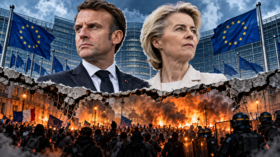
“There is no democracy without media pluralism or strong anti-government media, and in Poland these are the public media,” the leader of Poland’s right-wing PiS party, Jaroslaw Kaczynski said at the time, denouncing Tusk’s actions.
Jansa also took issue with the decision of Spanish Prime Minister Pedro Sanchez’s government this June to announce a sweeping amnesty for illegal immigrants. More than 900,000 foreign nationals have since applied for legal status in Spain, according to the country’s Migration Ministry. The conservative opposition People’s Party slammed the move as “unsustainable” given the country’s already strained housing market and public services.
In August, thousands of Moroccan migrants descended on Spain’s North African enclave of Ceuta after the country’s Supreme Court ruled that migrants intercepted at sea could not be immediately deported. Multiple EU member states have condemned Madrid’s permissive approach toward migration, with some tightening border controls for those arriving from Spain.
Concluding his list of grievances, Jansa took aim at the EU’s environmental policies, including Germany’s decision to phase out nuclear energy in the wake of the 2011 Fukushima disaster in Japan, and Brussels’ decision to “tax carbon energy sources while simultaneously closing [Nuclear Power Plants] and relocating industry to countries with low environmental standards under the pretense that this is how we save the planet.”
All of these developments and decisions have created “an EU that must now save itself from itself,” Jansa concluded.
The elephant in the room
However, despite portraying himself as a defender of democracy and national sovereignty, Jansa’s return to office this year was tainted by allegations of foreign interference. Jansa reportedly met with executives from Black Cube, an Israeli private intelligence firm staffed by Israel Defense Forces and Mossad veterans, in Ljubljana last December. Three months later, a series of covertly-recorded conversations were released, in which members of Robert Golob’s center-left Svoboda party discussed petty corruption within the Slovenian government.
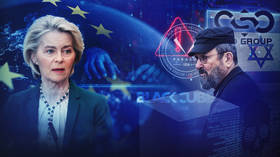
The videos weakened Golob’s standing ahead of parliamentary elections in May, and despite Svoboda narrowly beating Jansa’s SDS party, Jansa was able to build a right-wing coalition and return to office in June.
Slovenia’s Intelligence and Security Agency (SOVA) has since established that Black Cube deliberately attempted to “influence democratic elections” by releasing the videos. “This interference was most likely commissioned from within Slovenia,” the agency concluded, without directly mentioning Jansa.
During his first week in office, Jansa lifted an embargo on arms sales to Israel that had been imposed by Golob, removed import restrictions on goods originating in illegal Israeli settlements, and froze Slovenia’s planned recognition of a Palestinian state. Jansa blocked an EU condemnation of Israeli settlements in August, and after meeting Israeli Prime Minister Benjamin Netanyahu in September, told Slovenia’s parliament that “under international law, there is no genocide in Gaza.”
RT examined Black Cube’s actions in Slovenia in our ‘Wired for War’ series, and discovered that the EU has consistently refused to investigate election interference by Black Cube, Blackcore, and a multitude of private intelligence and spy-tech firms linked to the Israeli state.

