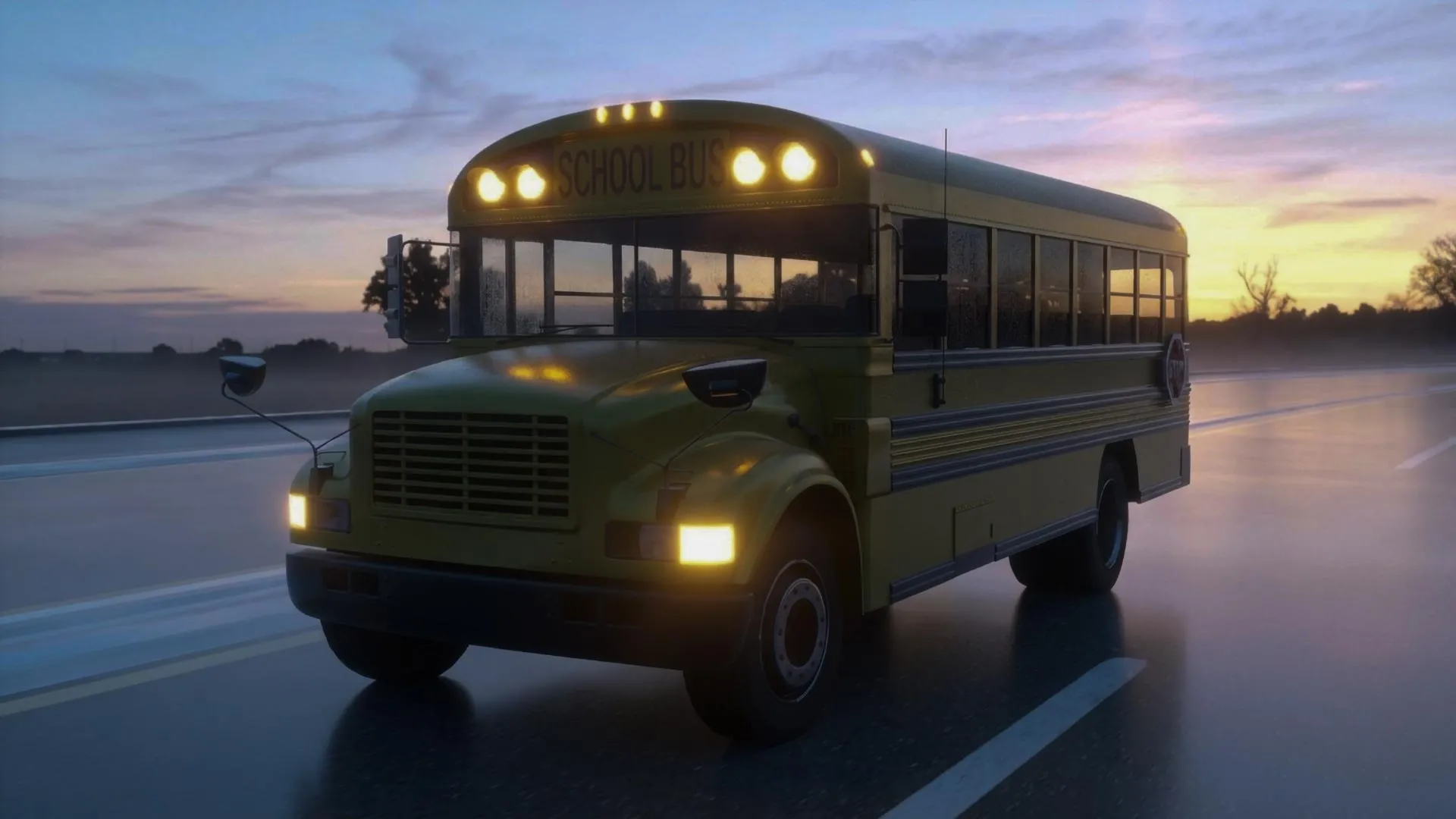
Өвлийн өглөөг нэг цагаар харанхуй болгох цагийн өөрчлөлт хүүхдийн замын аюулгүй байдал, өглөөний нарны гэрэл авах боломжид нөлөөлж мэднэ.
Вашингтоны их сургуулийн судлаачид зуны цагийг байнга мөрдвөл хүүхдүүдийн сургуульд зорчиход ямар өөрчлөлт гарахыг тооцжээ. Тэд ийм өөрчлөлтийг дэмжсэн 19 мужаас 14-ийнх нь сурагчдын тоо, сургууль эхлэх цаг, байршлын мэдээллийг ашиглан нар мандахаас өмнө явах аяллын тоог одоогийн цаг солих тогтолцоотой харьцуулсан байна. Өвлийн улиралд нар мандах цаг нэг цагаар хойшилж, арваннэгдүгээр сараас гуравдугаар сар хүртэл өглөө илүү харанхуй болно.
Тооцоогоор Вашингтон мужид харанхуйд сургууль руу зорчих аялал бараг 35 саяар, Жоржиа мужид ойролцоогоор 71 саяар нэмэгдэх аж. Миссисипи, Алабама мужид одоогийн тогтолцоогоор тус бүр хоёр сая орчим ийм аялал бүртгэгдэх бол зуны цагийг байнга мөрдвөл 20 саяас давах тооцоо гарчээ. Улсын хэмжээнд нэмэгдэх хэмжээг судлаачид дор хаяж хоёр тэрбум аялал гэж үнэлсэн бөгөөд судалгааг Current Biology сэтгүүлд аравдугаар сарын 29-нд нийтэлсэн байна.
АНУ-ын зам тээврийн ослын бүртгэлийн шинжилгээгээр сургуулийн насны явган зорчигч оролцсон нас баралттай осол нар мандахаас өмнөх харанхуй өглөө нар мандсаны дараах үеэс ойролцоогоор хоёр дахин их магадлалтай байжээ. Мөн өглөөний хурц гэрэл биеийн хоногийн хэмнэлийг зохицуулахад тусалдаг бөгөөд нойр, сэтгэл санаа, хоолны дуршил зэрэгт нөлөөлдөг. Тиймээс өглөөний гэрэл багасах нь хүүхдүүдийн нарны гэрэл авах боломжийг хязгаарлаж болзошгүй гэж судлаачид тэмдэглэжээ.
Судлаачид 14 мужийн сургуулийн бодит мэдээлэлд тулгуурласан ч улсын хэмжээнд гаргасан тооцоонд хүүхдүүд өглөөний 8 цаг орчимд гэрээсээ гарна гэж үзсэн байна. Олон хүүхэд үүнээс эрт явдаг тул хоёр тэрбумын тооцоо бодит нөлөөг дутуу үнэлсэн байж болзошгүй. Цагийн бүсийн баруун захад байрлах, нар харьцангуй орой манддаг сургуулиуд болон хичээл эрт эхэлдэг дүүргүүдэд өөрчлөлт илүү их тусах төлөвтэй; хичээлийг хойшлуулах нь гэр бүл, ажлын цагийн хуваарьт мөн нөлөөлж болохыг судлаачид анхааруулжээ.
Дэлгэрэнгүйг эх сурвалжаас харах
↓Эх сурвалжийг нээх ↓
Keeping daylight saving time in effect all year could bring brighter evenings, but new research suggests the change would come with a troubling consequence for American children. A nationwide switch could result in at least 2 billion additional trips to school in darkness, potentially increasing safety risks while reducing children’s exposure to important morning sunlight.
The debate over permanent daylight saving time has gained momentum in Washington, D.C. This past summer, the U.S. House of Representatives approved legislation that would eliminate the annual return to standard time in the fall. Nineteen states, including Washington, have already approved measures supporting the change, which would take effect in those states if the federal bill becomes law.
The legislation remains stalled in the Senate, with school start times emerging as a major concern. Permanent daylight saving time (DST) would push sunrise an hour later during the winter months, leaving mornings darker from November through March. Although this would affect everyone traveling early in the day, researchers at the University of Washington wanted to understand what it would mean specifically for children heading to school.
Permanent Daylight Saving Time Could Add Billions of Dark School Commutes
To measure the potential impact, the research team examined 14 of the 19 states that have already approved permanent daylight saving time measures. They combined school enrollment figures, individual school start times, and geographic coordinates to determine how frequently students would need to travel to school before sunrise. The researchers then calculated the total number of these trips under the proposed system and compared it with the current practice of changing clocks twice a year.
The results revealed substantial increases. In Washington state alone, permanent daylight saving time would produce nearly 35 million additional school commutes in darkness. Similar patterns emerged across the other 13 states, with Georgia showing the largest increase at approximately 71 million additional dark trips.
When the researchers extended their findings to estimate the nationwide impact, they calculated that permanent daylight saving time would create at least 2 billion more trips to school before sunrise compared with the current system.
The potential consequences go beyond inconvenient mornings. An analysis of U.S. traffic collision records found that fatal crashes involving school-aged pedestrians were roughly twice as likely to occur during dark mornings as after sunrise. The findings were published October 29 in the journal Current Biology.
“It’s called the ‘Sunshine Protection Act’ because you get an extra hour of light at the end of the day. But you will take that hour from the morning. You could call it the Sunshine Destruction Act,” said senior author Horacio de la Iglesia, a professor of biology at the University of Washington. “These dark mornings will inequitably affect children who have to go to school at a certain time. It’s a very tangible metric that anybody from any state or socioeconomic background can relate to. Nobody wants their kids to go to school in the dark.”
Why Morning Sunlight Matters for Children’s Health
Beyond concerns about traffic safety, losing access to morning sunlight could interfere with the body’s natural daily rhythms. Bright light early in the day helps synchronize the circadian clock, the internal timing system that influences sleep, mood, appetite, and other important functions. When people receive too little morning light, maintaining these biological rhythms can become more difficult.
For children, who must typically follow fixed school schedules, darker mornings could mean missing a valuable opportunity to receive daylight at a time when their bodies need it.
“When we send kids to school in the dark, we are depriving them from an opportunity to get that morning daylight,” said lead author Guadalupe Rodríguez Ferrante, a postdoctoral researcher in biology at the University of Washington. “We were asking what’s the cost for these children. We wanted actual numbers, a real number of kids based on the geographic location of each school.”
The researchers also identified which communities would experience the greatest changes. Schools located near the western boundaries of time zones, including those in Forks, Washington, would be particularly affected because sunrise already occurs relatively late in those locations. Districts that begin classes early in the morning would face similarly large increases in dark commutes.
Mississippi and Alabama offer striking examples. Schools in both states begin, on average, before 8 a.m. Under the current clock system, each state has approximately 2 million school trips in darkness. With permanent daylight saving time, that figure would rise to more than 20 million trips per state.
“Some districts probably never experience a dark commute under the current system, and, if this passes, suddenly they will wake up to this new reality that their kids are going to school in the dark,” Rodríguez Ferrante said. “Keep in mind that we used the actual start time listed for each school, and a lot of schools offer breakfast or other things before school, so the kids could be getting there even earlier.”
Why the 2 Billion Estimate May Be Too Low
Although the researchers used detailed school information to calculate changes in 14 states, their nationwide estimate required broader assumptions. To project what would happen if the entire United States adopted permanent daylight saving time, they assumed students would generally be leaving for school at around 8 a.m.
Because many children begin traveling earlier, the team believes the projected increase of approximately 2 billion dark commutes may substantially underestimate the actual impact.
“For the estimation, we assumed students would be leaving home around 8 a.m.,” Rodríguez Ferrante said. “That’s pretty late, so our calculation is likely an underestimation of the real number.”
The findings also raise questions about efforts to improve teenagers’ sleep by delaying high school start times. Adolescents typically have biological clocks that shift later than those of younger children and adults, making later school schedules beneficial. The researchers argue that permanently moving clocks forward could undermine some of those gains by making morning sunlight less accessible.
One possible solution would be to start school later to compensate for the darker mornings. However, de la Iglesia argues that such a change could have ripple effects throughout daily life, potentially requiring families and workplaces to adjust their schedules as well.
“I’ve heard the argument, ‘If we’re in permanent DST, we can just delay the school start time to address these issues,'” de la Iglesia said. “Well, if we do that, you will end up going to work later. And everything is going to get delayed. You will get out of work an hour later, and you will miss the opportunity to enjoy your evening light. And essentially, we’re just going to be realigning everybody to solar time. That, by definition, is Standard Time.”
The researchers’ findings highlight a central tradeoff in the debate over permanent daylight saving time. While eliminating seasonal clock changes would provide more evening sunlight during winter, the additional daylight would come at the expense of morning light, potentially affecting children’s safety, sleep, and daily routines.
Additional study authors include high school student Daniel Zhang and University of Washington biology undergraduates Nirekh Dasika, Alicia Nam, Jessie Lu, Navneet Tumber, Elena Kully-Rivera, Viridian Klei, and Micaela E. Romero.

