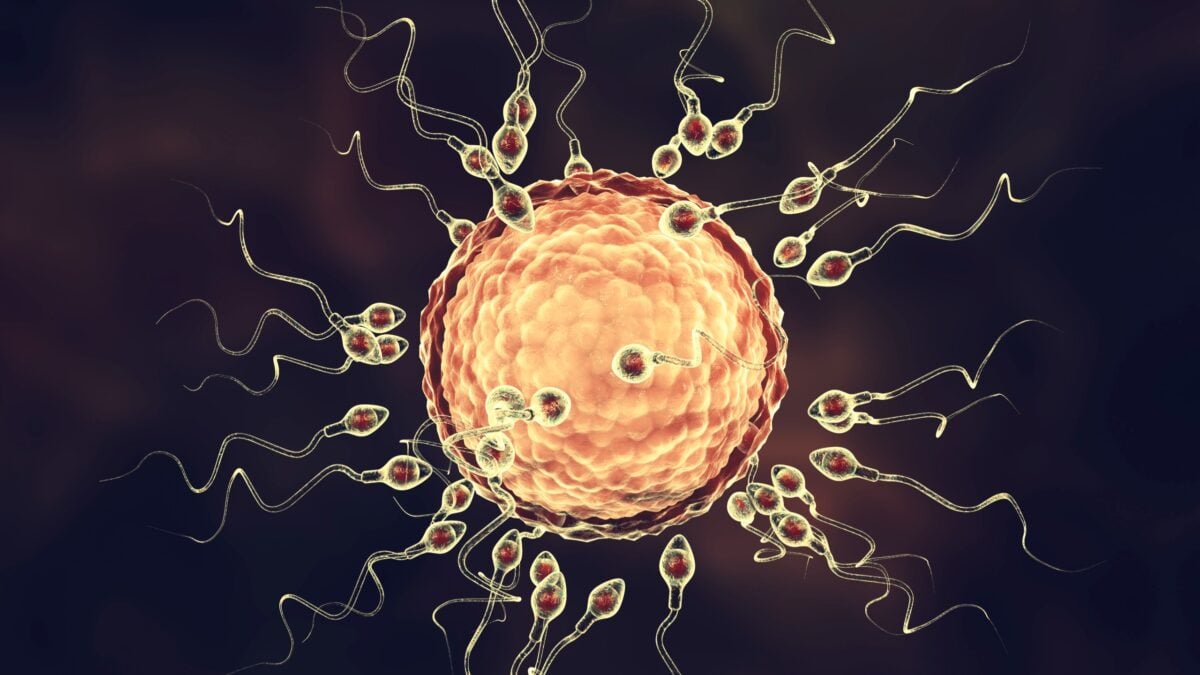
Хулганад дунд насанд РНХ-ийн бүрэлдэхүүн огцом өөрчлөгдсөн бол хүний сорьцод төстэй хэв шинж ажиглагдсан ч хүний насжилтад ийм огцом зааг байдгийг судалгаа тогтоогоогүй.
The EMBO Journal-д хэвлэгдсэн судалгаагаар хулганын эр бэлгийн эс дэх жижиг РНХ-ийн хэсгүүдийн харьцаа дунд насанд огцом өөрчлөгдөж, нас ахихад урт хэсэг олширч, богино хэсэг цөөрдөг болохыг илрүүлжээ. Судлаачид энэ хэв шинжийг хүний хоёр тусдаа донорын бүлгийн сорьцод мөн ажигласан байна.
РНХ нь ДНХ-д хадгалагдсан мэдээллийг уураг үүсгэхэд оролцдог бөгөөд эр бэлгийн эс үр тогтох үед РНХ-ийн хэсгүүдийг өндгөн эсэд хүргэдэг. Нас ахисан хулганын эр бэлгийн эсэд рибосомын РНХ-ийн хэсгүүд урт байв; мөн тэдгээртэй төстэй хэсгийг хулганы үр хөврөлийн үүдэл эсэд оруулахад бодисын солилцоо, мэдрэлийн доройтолтой холбоотой генүүдийн идэвх өөрчлөгджээ.
Эдгээр үр дүн нь эр бэлгийн эсийн РНХ-ийн насжилттай холбоотой өөрчлөлт үр хөврөлийн эхний хөгжлийн үеийн генийн илэрхийлэлд нөлөөлж болзошгүйг харуулж байгаа ч хүний хөгжилд үзүүлэх нөлөө нь тогтоогдоогүй. Ютагийн их сургуулийн судлаач Ци Чений хэлснээр, хулгана болон хүний сорьцод ажиглагдсан ижил төстэй өөрчлөлт нь эр бэлгийн эсийн насжилтыг илтгэх молекулын “цаг” байж болох бөгөөд түүний шалтгаан, РНХ-ийн өөрчлөлтийг үүсгэдэг ферментүүдийг судлах шаардлагатай.
Нас ахихад эр бэлгийн эсийн ДНХ гэмтэж, генийн мутаци хуримтлагддаг нь эрэгтэй хүний үр тогтоох чадвар буурах, удамд хортой мутаци дамжихтай холбоотой гэж үзэж ирсэн. World Health Organization-ын 25 орны 8,500 хосыг хамарсан судалгаагаар үргүйдлийн тохиолдлын 45 хувьд эрэгтэй хүний хүчин зүйл дангаараа эсвэл хэсэгчлэн нөлөөлжээ. Эрэгтэй үргүйдлийн шалтгаан, ачааллыг дутуу ойлгодог бөгөөд эмчилгээний үед эрэгтэйчүүд орхигдож, нөхөн үржихүйн туслах аргын ачаалал эмэгтэйд төвлөрөх нь бий гэж 2024 оны Nature Reviews Urology-ийн редакцын өгүүлэлд тэмдэглэсэн байна.
Дэлгэрэнгүйг эх сурвалжаас харах
↓Эх сурвалжийг нээх ↓
It takes two to tango, and yet when it comes to research on human reproduction, female fertility has historically taken the lead.
Now, emerging research is putting a new foot forward.
Sperm from older fathers may show more signs of aging than we thought, and not just from DNA mutations.
A recent study, published in The EMBO Journal, has reported a clear “aging cliff” in mouse sperm that hasn’t been detected before.
It has to do with RNA, which helps translate the instructions stored in DNA into proteins.
In mice, the mixture of small RNA fragments carried by sperm transitions sharply in midlife.
Specifically, the heads of older sperm seem to contain more long pieces of RNA molecules and fewer short pieces.
The same pattern was then confirmed in human samples, using two separate groups of donors.
This does not establish whether humans experience the same abrupt aging cliff, but the parallels are worth investigating further.
“It’s like finding a molecular clock that ticks with age in both mice and humans, suggesting a fundamental, conserved molecular signature of sperm aging,” says urology researcher Qi Chen from the University of Utah.
“Maybe this progressive length shift accumulates quietly, until it triggers the ‘cliff’ change at mid-life.”
For decades, scientists have known that as sperm age, they tend to accumulate more DNA damage and genetic mutations.
This has long been used to explain why male fertility declines with age, and why harmful mutations may be passed on to offspring.
But it’s not just DNA that sperm delivers to an egg. It also delivers fragments of RNA, possibly picked up in the epididymis, the duct that carries sperm out of the testes, and these too may matter for fertilization and development.
These RNA fragments may regulate early embryonic development, and some evidence suggests they may even pass environmental traits on to the next generation.
In older mouse sperm, fragments of rRNA appear to be longer.
What’s more, when researchers introduced RNA fragments resembling those of older sperm into mouse embryonic stem cells, they observed changes in the activity of genes associated with metabolism and neurodegeneration.
This suggests that age-related changes in the RNA molecules that sperm hold could influence how genes are expressed during early development.
The findings have “unveiled a novel sperm aging landscape” in both mice and humans, the authors argue, “heralding a new era in reproductive health where a deeper understanding of the ‘sperm RNA code’ helps shape healthier generations.”
Developmental neuroscientist Noriko Osumi from Japan’s Tohoku University was not involved in the research, but in an accompanying piece for The EMBO Journal, she explains why sperm RNA is a “particularly compelling” target for male fertility research.
“Sperm deliver more than a haploid genome,” she writes.
They also deliver RNA fragments, and these are “not merely passive remnants but part of the information delivered at fertilization”. For instance, they can carry epigenetic information that could feasibly influence offspring development.
Today, in many parts of the world, parents are having kids later in life, and yet scientists know remarkably little about how male sex organs age and how that impacts reproduction or the health of future offspring.
A large study from the World Health Organization (WHO) involving 8,500 couples in 25 countries found that male factors contributed fully or at least in part to 45 percent of infertility cases.
In 2024, an editorial on male infertility in the journal Nature Reviews Urology argued that “the burden of male infertility is often unrecognized and its causes are poorly understood.”
This means that “men can be sidelined during treatment and the burden of medically assisted reproductive techniques falls on the woman, even if she herself has no reproductive issues,” the editorial explained.
This new research seeks to better understand how sperm function may decline with age.
Chen and colleagues now want to figure out why these RNA changes are occurring, and what can be done about it.
“If we can understand the enzymes driving this shift, they could become actionable targets for interventions to potentially improve sperm quality in aging males,” Chen says.
“Stay tuned.”
The research has been published in The EMBO Journal.
This article was fact-checked by Rebecca Dyer and edited by Rebecca Dyer. While we pride ourselves on our process, we are only human. If you spot a mistake, please let us know.

