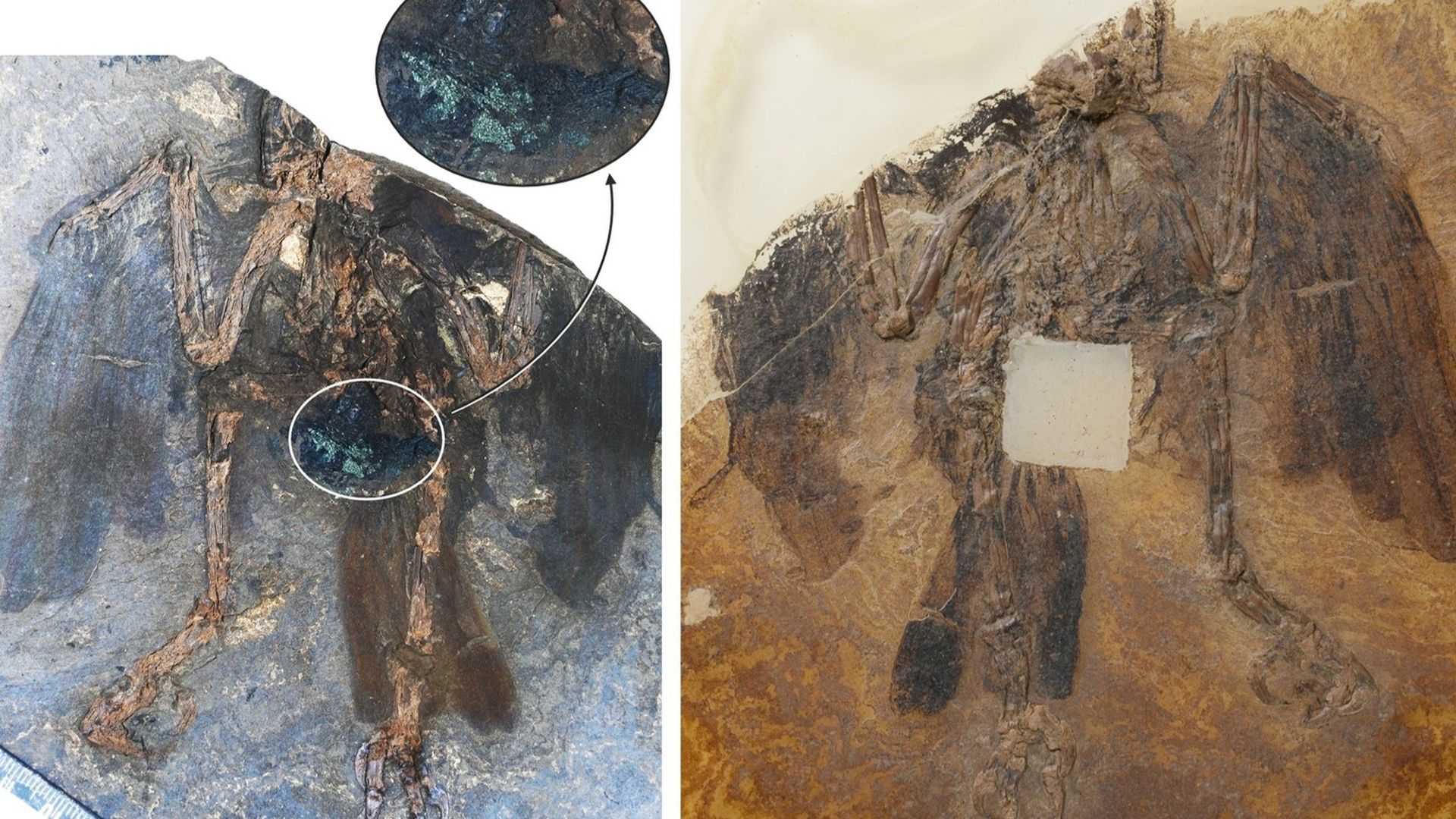
Германаас олдсон чулуужсан үлдэгдэл шар шувууд шөнийн амьдралд хэзээ шилжсэнийг тогтооход шинэ баримт нэмлээ.
2025 онд Германы Месселийн нүх хэмээх чулуужсан олдвороор баялаг газраас бараг бүтнээрээ хадгалагдсан залуу шар шувууны үлдэгдэл олжээ. Судлаачид үүнийг Masillastrix blattophaga хэмээх шинэ зүйл гэж тодорхойлсон бөгөөд биеийн урт нь 12 см-ээс бага байв. Гавлын яс нь олдоогүй ч ходоодонд нь байсан гялалзсан, ногоовтор хөх жоомыг таньж чаджээ.
Жоомын солонгорсон өнгө нь өдрийн цагаар идэвхтэй шавжид түгээмэл байдаг тул энэ шар шувуу өдөр ан хийдэг байсныг илтгэх нэг баримт гэж судлаачид үзэж байна. Өдний төрх болон далавчны дээд хэсгийн бүдүүн бугалганы яс ч ийм таамгийг дэмжжээ. Харин орчин үеийн шөнийн шар шувуудын бугалганы яс нарийхан бөгөөд бараг чимээгүй нисдэг.
Гэхдээ шар шувуу жоомоо үүр цайх эсвэл бүрийд барьсан байх боломжтой тул энэ баримт дангаараа өдрийн идэвхийг батлахгүй. Месселийн олдворын ойролцоох хурдаснаас ижил төрлийн жоом олдсон нь ходоодон дахь шавжийг тодорхойлоход тусалжээ. Судалгааг арваннэгдүгээр сарын 2-нд Current Biology сэтгүүлд нийтэлсэн байна.
Судалгааны ахлах зохиогч, Германы Senckenberg Research Institute and Natural History Museum Frankfurt-ийн палеонтологич Геральд Майрын үзэж буйгаар шар шувууд 47-35 сая жилийн өмнө шөнийн амьдралд шилжсэн байж магадгүй. Шөнийн идэвхтэй байсан хамгийн эртний шар шувуудын олдвор ойролцоогоор 35 сая жилийн настай бол шар шувууны хамгийн эртний олдвор Ogygoptynx wetmorei 60 сая орчим жилийн настай. Шар шувууд яагаад шөнийн амьдралд шилжсэнийг одоогоор тогтоогоогүй; махчин шувуудтай өрсөлдөхөөс зайлсхийх, эсвэл шөнийн хөхтөн амьтдаар хооллох боломж нэмэгдсэн гэх таамгууд бий ч эдгээр бүлэг 20-25 сая жилийн өмнө эрс олширсон нь шилжилтийн шалтгааныг тайлбарлахгүй байна.
Дэлгэрэнгүйг эх сурвалжаас харах
↓Эх сурвалжийг нээх ↓
A fledgling owl that lived 47 million years ago in what is now Germany offers tantalizing new clues about when most of these birds became nocturnal, a new study shows. The discovery brings researchers one step closer to finally solving the biggest mystery about these birds.
The young owl is a newly described species named Masillastrix blattophaga. Researchers unearthed the almost perfectly preserved bird in 2025 in the Messel Pit, an ancient lake surrounded by a forest that is now the richest fossil site in the world for understanding life in the Eocene epoch (56 million to 34 million years ago). The skull is missing, but the rest of the fossil was so well preserved that researchers found the owl’s last meal in its stomach: a greenish-blue, iridescent cockroach.
The cockroach is one of several pieces of evidence suggesting that this tiny owl was diurnal, or active primarily during the day. Iridescence is associated with a diurnal lifestyle, so it appears that the owl, which measured less than 5 inches (12 centimeters) long, was hunting in the daytime, researchers said in the new study.
This indicates that owls were not nocturnal 47 million years ago and so must have switched to the night-owl lifestyle more recently, said study first author Gerald Mayr, a paleontologist and head of ornithology at the Senckenberg Research Institute and the Natural History Museum Frankfurt in Germany.
“There exists a consensus that owls must have evolved from a diurnal ancestor,” Mayr told Live Science in an email. That’s because some early owl fossils have head-rotation structures similar to those of diurnal raptors and bony ridges above the eye sockets that could have shaded the owls’ eyes from the sun.
Therefore, it is plausible that the Messel owl was fully diurnal, rather than active during the daytime and nighttime as some owls are today, because that would imply that some of its ancestors had already evolved nocturnal traits, Mayr said.
Researchers also found a cockroach identical to the one in the Messel owl’s stomach in sediments just a few feet away from the new fossil. This well-preserved cockroach helped the team to identify the insect inside the owl, the researchers wrote in the study, which was published Nov. 2 in the journal Current Biology.
It’s possible that the owl ate the cockroach at dawn or at dusk, which might cast doubt on whether the bird was diurnal. But there are other clues hinting that the owl was diurnal, including the appearance of some of the owl’s feathers and the stoutness of its upper wing bones.
Mayr said he and his colleagues believe the shape of the upper wing bones, or humeri, is an indicator of when owls are active. The Messel owl’s stocky humeri hint that the species flew during the day, when silent movement doesn’t confer a significant advantage because there is enough light to see predators. Conversely, modern nocturnal owls have slim humeri and fly almost soundlessly, he said.
Assuming this hypothesis is correct, the earliest known nocturnal owl species are from about 35 million years ago, in the Late Eocene, Mayr said. Owl fossils from this period and more recently look a lot like modern owls and have elongated humeri, he noted. The oldest known owl in the fossil record, Ogygoptynx wetmorei, dates to around 60 million years ago.
This means that owls likely became nocturnal between 47 million and 35 million years ago. This is the best current estimate, because the owl fossil record is very sparse and species are often described from only a few isolated bones, according to the study.
“We still know so little about the early evolution of modern birds,” Mayr said, adding that every fossil discovery has the power to change even well-established ideas in the field.
- ‘I’m more hopeful that birds can endure than maybe even our own species’: Paleontologist Steve Brusatte on why birds are the ultimate survivors
- ‘He began to cry, and almost fell to the floor’: The fluffy fossil that finally showed the world that birds are dinosaurs
- Ancient duck-like creature discovered in Antarctica may be the oldest modern bird ever discovered
The big question that remains is why owls became nocturnal. Previous theories suggested that owls evolved this behavior to avoid competition with diurnal birds of prey or to benefit from a proliferation of nocturnal mammals. But studies show that both of these groups exploded much later than 35 million years ago — around 20 million to 25 million years ago — suggesting there wasn’t a clear advantage driving owls to switch to nocturnal lifestyles at that time.
The new results have deepened the uncertainty of why owls turned nocturnal. But “by narrowing down the time frame when owls became nocturnal, our study may eventually contribute to solving this mystery,” Mayr said.

