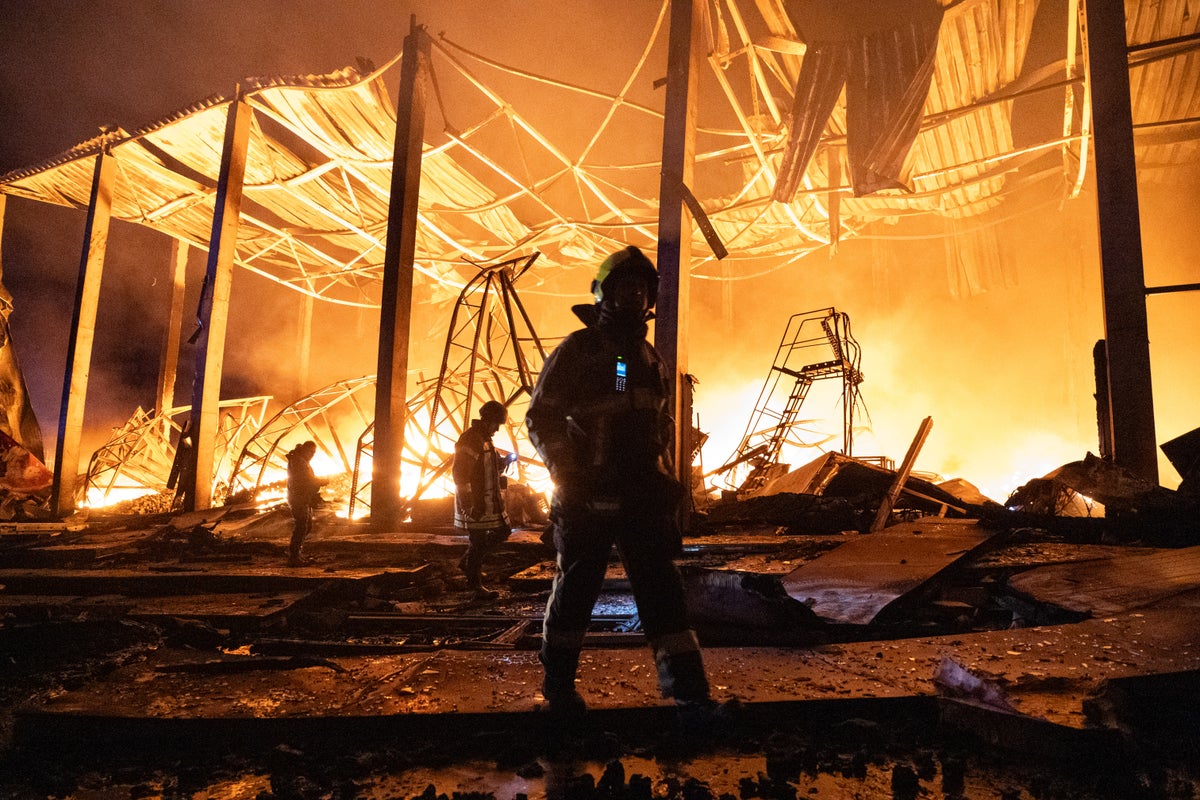
Абу Дабид мягмар гарагт эхлэх хоёр өдрийн уулзалтаар талуудын зөрүүтэй байр суурийн дунд аюулгүй байдлын асуудлыг хэлэлцэнэ.
ОХУ, Украйн, АНУ-ын төлөөлөгчид хоёрдугаар сараас хойш анх удаа дайныг зогсоох асуудлаар хэлэлцэхээр болжээ. Энэ оны эхээр болсон өмнөх уулзалтууд бодит ахиц гаргаагүй бөгөөд фронтын 1,200 километр орчим шугамд тулаан үргэлжилж, талууд дроноор болон пуужингаар харилцан цохилт өгч байна.
ОХУ-ын Ерөнхийлөгч Владимир Путин Украиныг ОХУ-ын хууль бусаар нэгтгэсэн дөрвөн бүсээс цэргээ татах, НАТО-д элсэх зорилгоосоо татгалзах, армийн хүчин чадлаа хязгаарлахыг шаардаж байна. Украины Ерөнхийлөгч Владимир Зеленский эдгээр шаардлагыг няцааж, нэн түрүүнд гал зогсоох хэлэлцээр байгуулж, газар нутгийн асуудлыг Путинтэй шууд уулзан шийдвэрлэх ёстой гэж үзэж байгаа юм.
Абу Дабийн хэлэлцээний гол сэдэв нь аюулгүй байдлын баталгаа бөгөөд Зеленский НАТО-гийн тавдугаар зүйлтэй төстэй зохицуулалтыг холбоотнуудтайгаа ярилцаж байгаагаа мэдэгджээ. Европын зарим улс энхийн хэлэлцээрийн дараа Украйнд цэрэг байрлуулах боломжийг хэлэлцсэн ч ОХУ үүнийг эсэргүүцэж, Украины газар нутагт байрласан Европын цэргийг хууль ёсны бай гэж үзнэ хэмээн анхааруулсан; Киев Европын холбоотнуудыг хэлэлцээнд оролцуулахыг хүсэж байгаа бол Москва одоогийн шатанд татгалзаж байна.
Кремль аливаа тохиролцоонд ОХУ-ын аюулгүй байдлын баталгааг тусгахыг шаардаж, Европын улс орнуудыг өргөн хүрээний хэлэлцээнд хожим оролцуулах шаардлагатай гэж мэдэгджээ. АНУ-ын Ерөнхийлөгч Дональд Трамп Европыг хамарсан өргөн хэлэлцээр яригдаж буйг хэлсэн бол ОХУ Украйны эрчим хүчний дэд бүтцэд цохилтоо нэмэгдүүлж, Киев холбоотнуудаасаа генератор болон агаарын довтолгооноос хамгаалах хэрэгсэл хүсээд байна.
Дэлгэрэнгүйг эх сурвалжаас харах
↓Эх сурвалжийг нээх ↓
Want to bookmark your favourite articles and stories to read or reference later? Start your Independent Membership today.
Already a member?
{
experienceElement.style.display = ‘none’;
let checks = 0;
const maxChecks = 50;
const checkDrawerVisibility = setInterval(() => {
const drawer = document.querySelector(‘.pn-drawer–login, .pn-drawer, #login-drawer, .login-drawer-container, [class*=”login-drawer”]’);
const drawerCloseBtn = document.querySelector(‘#drawer > div > button’);
const isDrawerVisible =
(drawer &&
(drawer.offsetParent !== null ||
drawer.classList.contains(‘is-open’) ||
window.getComputedStyle(drawer).display !== ‘none’)) ||
drawerCloseBtn;
checks++;
if (isDrawerVisible) {
clearInterval(checkDrawerVisibility);
const monitorClosure = setInterval(() => {
const drawerStillHere = document.querySelector(
‘.pn-drawer–login, .pn-drawer, #login-drawer, .login-drawer-container, [class*=”login-drawer”]’
);
const innerContent = document.querySelector(‘#drawer > div’);
const isVisible =
(drawerStillHere &&
(drawerStillHere.offsetParent !== null ||
drawerStillHere.classList.contains(‘is-open’) ||
window.getComputedStyle(drawerStillHere).display !== ‘none’)) ||
innerContent;
if (!isVisible) {
clearInterval(monitorClosure);
experienceElement.style.display = ‘flex’;
}
}, 500);
if (drawerCloseBtn) {
drawerCloseBtn.addEventListener(
‘click’,
() => {
setTimeout(() => {
experienceElement.style.display = ‘flex’;
}, 100);
},
{ once: true }
);
}
} else if (checks >= maxChecks) {
clearInterval(checkDrawerVisibility);
experienceElement.style.display = ‘flex’;
}
}, 200);
};
{
document.documentElement.classList.add(‘mos-bookmark-open’);
const el = document.querySelector(‘.bookmark-experience’);
if (el) el.style.display = ‘flex’;
document.cookie = ‘mos-plan-select=; Max-Age=0; path=/; expires=Thu, 01 Jan 1970 00:00:00 UTC;’;
el?.querySelector(‘.subscribe-link’)?.addEventListener(‘click’, (e) => {
e.preventDefault();
document.cookie = ‘mos-plan-select=; Max-Age=0; path=/; expires=Thu, 01 Jan 1970 00:00:00 UTC;’;
setTimeout(() => {
window.location.href = “https://www.independent.co.uk/subscribe/app?regSourceMethod=Bookmarks”;
}, 500);
}, { once: true });
el?.querySelector(‘.close-btn’)?.addEventListener(‘click’, () => {
document.documentElement.classList.remove(‘mos-bookmark-open’);
}, { once: true });
});
]]>
For the first time since February, Russian, Ukrainian and U.S. negotiators are scheduled to hold talks on ending the full-scale war that is nearing the five-year mark, with security guarantees topping the agenda.
The two-day session starting Tuesday in Abu Dhabi, United Arab Emirates, follows previous rounds of negotiations early this year that failed to produce any visible progress toward ending Europe’s most devastating conflict since World War II.
The negotiations follow last month’s localized truce around the Russian-occupied city of Oleshky in southern Ukraine that was brokered with the help of U.S. first lady Melania Trump and allowed the evacuation of some of its residents and the delivery of desperately needed humanitarian supplies.
cookie.trim() === ‘__DEBUG__=true’)) { console.log(‘Ad logs: “mpu1”, injectedAtParagraph: 3’); }]]>
But even as Moscow and Kyiv touted the weeklong ceasefire as a positive model, fierce fighting has continued along the 1,200-kilometer (about 750-mile) front line. Both sides also have escalated their long-range attacks on each other with drones and missiles.
A look at the talks and what’s on the agenda:
Russia and Ukraine have sharply divergent demands
Russia and Ukraine remain far apart on key elements of any prospective peace deal.
Russian President Vladimir Putin wants Ukraine to pull its troops back from the four regions that Moscow illegally annexed early in the war but never fully captured. He also demands that Ukraine abandon its bid to join NATO, accept strict limits on its military and drop restrictions on the Russian language and the Moscow-affiliated Orthodox Church in Ukraine.
cookie.trim() === ‘__DEBUG__=true’)) { console.log(‘Ad logs: “taboola-carousel-thumbnails”, injectedAtParagraph: 6’); }]]>
Putin wants a comprehensive peace deal on those conditions and won’t agree to a general halt in hostilities, arguing that such a pause would only allow Ukrainian troops to rest and replenish their weapons stockpiles.
Ukrainian President Volodymyr Zelenskyy rejects Putin’s demands to voluntarily cede Ukrainian territory Russia has not been able to take on the battlefield and agree to limits on the military and arrangements with Western partners, which it sees as essential security guarantees to stop Russia invading again in the future.
cookie.trim() === ‘__DEBUG__=true’)) { console.log(‘Ad logs: “mpu2”, injectedAtParagraph: 8’); }]]>
Ukraine argues that an immediate ceasefire is the first step toward negotiating a wider settlement and says a direct meeting between Putin and Zelenskyy is the only way territorial issues can be settled.
Security guarantees top the agenda
Russia and Ukraine said the Abu Dhabi talks will focus on security guarantees.
cookie.trim() === ‘__DEBUG__=true’)) { console.log(‘Ad logs: “mpu3”, injectedAtParagraph: 10’); }]]>
Zelenskyy noted that Ukraine and its allies have discussed security guarantees similar to NATO’s Article 5, which states the alliance sees an attack on one of its members as an attack against all.
In an interview broadcast Nov. 5, he said Ukraine’s security guarantees boil down to what Western allies would do if Russia launches a new invasion of his country.
“If Russia starts again, what will happen,” Zelenskyy asked. “Who will do what, with what means, and when?”
Some European nations have mulled a possible deployment of their troops to Ukraine after a prospective peace deal. Russia rejects that as a nonstarter, warning it would view any European troops on Ukrainian soil as legitimate targets.
The Kremlin insists that any prospective deal should offer security guarantees for Russia as well. Just before Moscow launched the all-out invasion in 2022, it demanded that NATO roll back its deployments of troops and weapons from the alliance’s members in Central and Eastern Europe, seeing their presence as a security threat. Similar demands will likely be part of any comprehensive peace deal put forth by Russia.
U.S. President Donald Trump said after meeting Putin’s envoy Kirill Dmitriev at the White House on Nov. 4 that some kind of grand deal about European security was in the works, although he did not elaborate.
“It’s going to be a big agreement and it’s going to involve more than Ukraine,” Trump said, adding that it might include all of Europe.
Ukraine wants Europe at the table but Russia says no
Ukraine insists its European allies must have a seat at the negotiating table, while Russia opposes any such involvement at this stage.
“No one is going to invite them to the negotiating table,” Kremlin foreign affairs adviser Yuri Ushakov snapped when asked if European envoys could join the Abu Dhabi talks. He added that if they fly there, they won’t be allowed into the room.
Kremlin spokesman Dmitry Peskov said the Europeans would need to be involved in broader negotiations, but only later.
“Since the discussion will touch upon the future security architecture in Europe while addressing the mutual security of Russia and Ukraine, at some stage it would be impossible to do it without the Europeans,” he said.
On Oct. 27, Finland’s President Alexander Stubb and Norway’s Prime Minister Jonas Gahr Støre spoke by phone with Putin in their first known direct conversation since shortly after the 2022 invasion. They said they spoke in their capacity as the heads of Russia’s Nordic neighbors and not on behalf of the European Union, which has struggled to pick a negotiator with Moscow.
Peskov sarcastically noted that EU members “can’t even decide yet who is authorized to speak on their behalf,” calling it “a protracted indecisiveness and a lack of readiness on its part.”
On Nov. 4, Zelenskyy said in a post on X that he had held a 90-minute conversation with U.S. negotiators Steve Witkoff and Trump’s son-in-law Jared Kushner, saying the talks “must move forward at full throttle to bring this war to an end as quickly as possible.”
Kushner said on X that “our objective is to develop practical arrangements that address the security concerns of all sides, reduce the risk of future conflict, and create a more stable and predictable security environment.”
For over 30 years, “Europe and Russia have struggled to establish a sustainable security framework,” Kushner wrote. “Decades of mistrust, competing security concerns, and the devastating consequences of this war make this an extraordinarily difficult challenge, but one that is essential to lasting peace.”
He noted the main goals of the talks were “permanent security consultations, reliable crisis communications, greater military transparency, reciprocal measures to reduce escalation risks, and an enduring framework for long-term European security and stability.”
Russia’s envoy took a hard line at earlier talks
Putin aide Vladimir Medinsky, who led Russia’s delegation in the first direct peace talks with Ukraine in Istanbul in March 2022 and in subsequent sessions, remains Moscow’s chief negotiator.
A former culture minister who wrote books about purported Western plots against Russia over the centuries, Medinsky is known for his hard-line views and blustery statements. At the 2025 talks, also in Istanbul, he reportedly said it took Peter the Great 21 years to defeat Sweden in the 18th century and Moscow also is ready now to fight as long as it takes.
Russia ramps up strikes on Ukraine’s power grid
Putin has said repeatedly that Russia will achieve its goals by force if Ukraine fails to accept its conditions for peace.
Russia has intensified its strikes on Ukraine’s power system, seeking to undermine the country’s resolve as winter sets in. Moscow has relied on ballistic missiles and new, faster jet-powered drones, taking advantage of Ukraine’s shortage of U.S.-made Patriot interceptors.
Zelenskyy said last week that “every power plant in Ukraine has been damaged in one way or another by attacks” and urged Kyiv’s allies to provide generators and other equipment to keep the electricity flowing.
He also pleaded with allies to tap their own air defense stockpiles to help Ukraine fend off Russia’s attacks and replenish them later.

