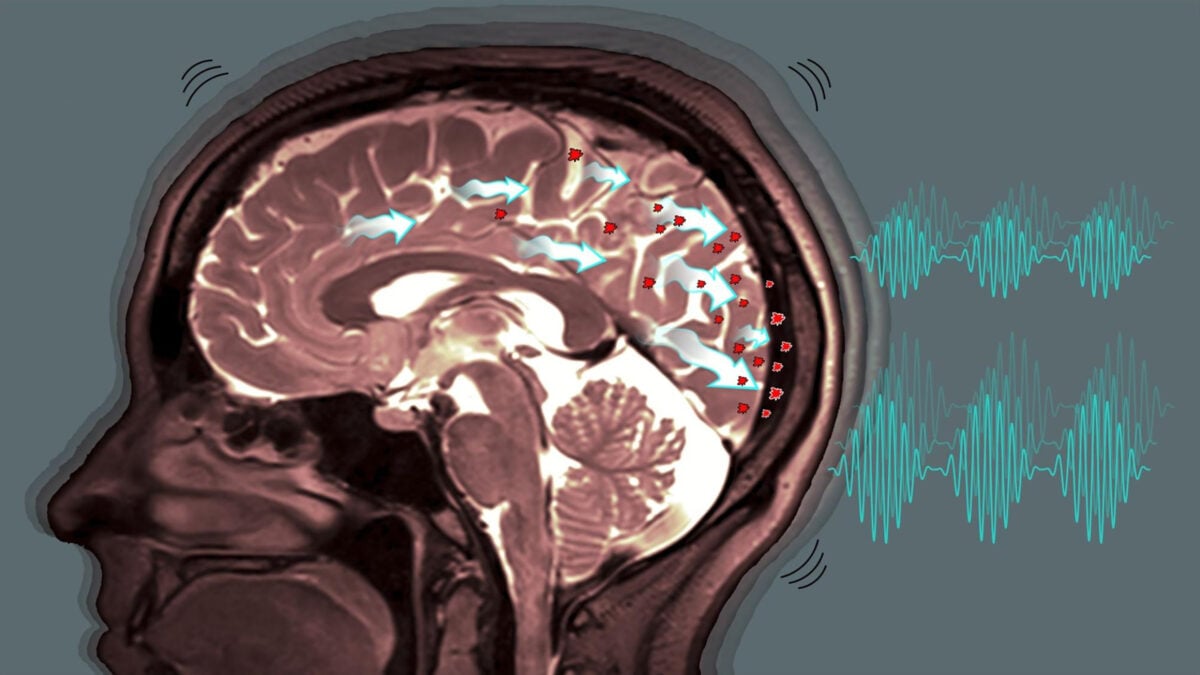
Цусны даралт бууруулах эм болон зөөлөн чичиргээ хавсарсан нэг удаагийн туршилтаар цусан дахь зарим уургийн хэмжээ нэмэгдсэн ч энэ арга Альцгеймерийн өвчнийг эмчилнэ гэж дүгнэх боломжгүй байна.
Финландын Оулугийн их сургуулийн судлаачид 27–61 насны, деменцгүй 29 эрүүл оролцогчид цусны даралт бууруулах эмийн хоёр тун уулгаж, чичиргээт гудас дээр хагас цагаас илүү хугацаанд хэвтүүлжээ. Тус арга нь шөнийн цагаар идэвхждэг тархины хаягдал бодис гадагшлуулах тогтолцооны үйл ажиллагааг дуурайлган дэмжих зорилготой байв.
Туршилтын дараа цусан дахь амилоид-бета уургийн хоёр төрөл болон астроцит хэмээх тархины эсийг дэмждэг GFAP уургийн хэмжээ нэмэгдсэн нь эдгээр бодис тархинаас гадагшилсан байж болзошгүйг илтгэжээ. Харин Альцгеймерийн явцтай холбоотой тау уургийн хэмжээ өөрчлөгдөөгүй байна. Нөлөө нь ахимаг насны оролцогчид болон цусны даралт нь илүү буурсан хүмүүст хүчтэй байсан бөгөөд тархины зурагт уураг тархины арын хэсгийн венийн судсаар гадагшилсан байж болох шинж ажиглагджээ.
Гэхдээ уургийн түвшнийг тархинд шууд хэмжээгүй, оролцогчдын ой санамж болон танин мэдэхүйн чадварыг шалгасан үр дүн гараагүй. Цусан дахь уургийн өсөлт нь тэдгээр бодис тархинаас идэвхтэй гадагшилснаас гадна цус-тархины хориг түр хугацаанд суларсантай холбоотой байж болзошгүйг судлаачид тэмдэглэсэн. Судалгааны үр дүнг Nature Communications сэтгүүлд нийтэлсэн бөгөөд цаашид энэ аргыг удаан хугацаанд, деменцийн шинж тэмдэг илэрч эхэлсэн хүмүүст судлах шаардлагатай гэжээ.
Дэлгэрэнгүйг эх сурвалжаас харах
↓Эх сурвалжийг нээх ↓
Put this down as one of the more unusual approaches to Alzheimer’s treatment that we’ve come across to date: having patients lie on a vibrating mattress to clear out waste proteins that could be building up in the brain.
These vibrations are designed to mimic the brain’s natural garbage disposal system, which runs mainly at night.
Blood pressure in the brain drops, and slow pulses then clear out anything that shouldn’t be there, ready for the morning.
In this study, two doses of a blood pressure reduction pill were combined with a session on a vibrating mattress lasting a little over half an hour.
In a group of 29 participants aged between 27 and 61, this increased levels of particular proteins in the blood – suggesting they’d been successfully cleared out of the brain.
The researchers behind the experiment, led by a team from the University of Oulu in Finland, have published their findings in Nature Communications.
The team is confident the method can inform future treatments for neurodegenerative conditions.
“Alzheimer’s disease and many other diseases that cause dementia are characterized by the gradual accumulation of harmful proteins in the brain over decades,” says neuroradiologist Vesa Kiviniemi, from the University of Oulu.
“Now that we can safely enhance the brain’s own clearance system, which gradually becomes less effective with age, while people are still healthy, it may be possible in future to prevent these diseases, or at least slow their progression.”
The proteins that the treatment seemed to sweep into the blood were two types of amyloid beta (which gathers into harmful clumps in Alzheimer’s disease), and glial fibrillary acidic protein (GFAP), which supports important brain cells called astrocytes.
For other proteins – including the tau protein that’s heavily linked to the progression of Alzheimer’s in the brain – there was no change.
These proteins are a normal part of the brain, but when they’ve done their job and need recycling, it’s important they’re wiped away. This process happens less efficiently as we get older, and in the case of diseases like Alzheimer’s, it breaks down significantly.
“The results suggest that harmful proteins were cleared from the brain more efficiently than usual,” says biomedical engineer Johanna Tuunanen, from the University of Oulu.
It shows that future treatments using the same combination of lower blood pressure and subtle vibrations may be able to clear out waste proteins before they become a problem, and before dementia takes hold.
Notably, the impact was greater on older participants and those whose blood pressure fell further, suggesting the method was working as the researchers intended. The team also points out that brain scans showed the clear-out happened in the veins at the back of the brain, as you would expect from participants lying on their backs, due to gravity.
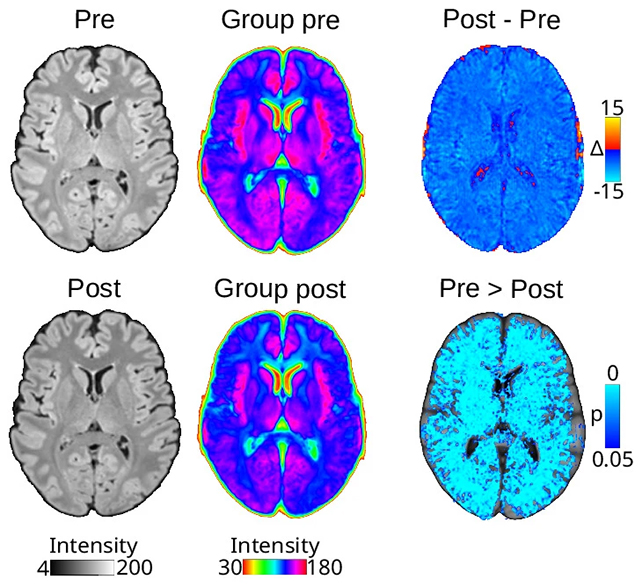
“The effect largely resembled the physiological changes we have previously observed during sleep,” says Tuunanen. “This makes the finding particularly interesting as a way of enhancing the brain’s own clearance mechanisms.”
It’s important to be aware of the limitations of this study. These were healthy volunteers, without dementia, and protein levels in the brain weren’t directly measured. There were no results reported from tests on memory or any other facet of cognitive performance.
A boost of Alzheimer’s-related proteins in the blood may also mean that the treatment temporarily loosened the blood-brain barrier as well as actively pushing these substances out of the brain, the researchers acknowledge.
However, even with those caveats, this is an encouraging step forward for the treatment approach – on top of the work already done in mouse models.
Future studies can now take this approach further, by seeing how it works over longer periods of time (rather than a single session), in people who have started to show some of the symptoms associated with dementia.
“The next step is to investigate what benefits the treatment might offer patients with early-stage memory impairment,” says Kiviniemi. “We are currently planning follow-up studies in collaboration with other leading experts in the field.”
The research has been published in Nature Communications.
This article was fact-checked by Fiona MacDonald and edited by Fiona MacDonald. While we pride ourselves on our process, we are only human. If you spot a mistake, please let us know.

