Археологичид Перу улсын Жауранга дахь эртний булшнаас төрөлхийн гажигтай нярайн шарилыг илрүүлсэн нь уг эмгэгийг баталсан анхны археологийн тохиолдол болж байна.
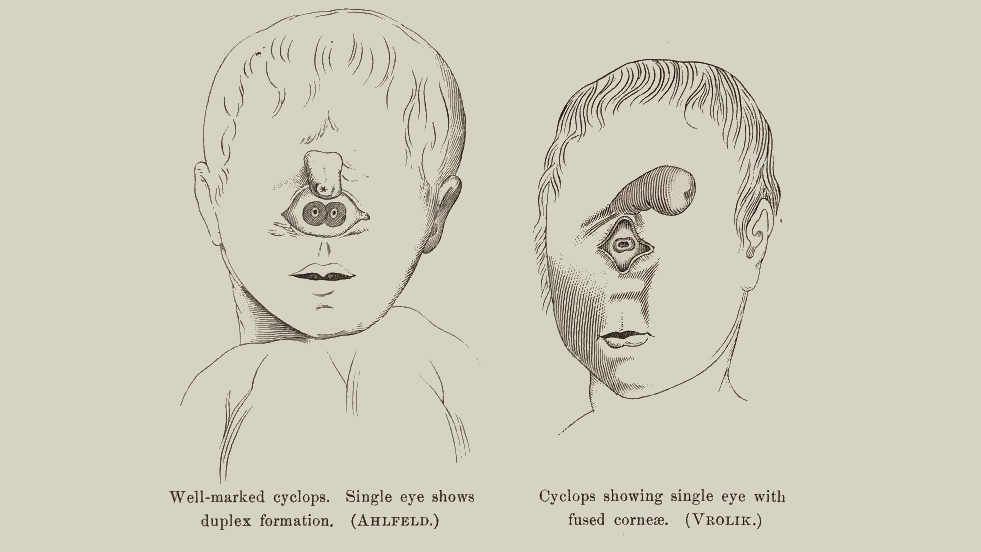
Перу улсын өмнөд хэсгийн Палпа хөндийд орших Жауранга археологийн дурсгалт газраас 1600 жилийн настай шаазан ваар олдсон бөгөөд дотор нь хоёр нярай хүүхдийн шарил байжээ. Судлаачид тэдгээрээс нэг нь нүүрнийхээ голд ганцхан нүдний ухархайтай, гавлын яс нь гажигтай байсныг тогтоосон байна. Энэхүү төрөлхийн гажиг нь грек домогт гардаг нэг нүдтэн буюу “циклоп”-той төстэй тул шинжлэх ухаанд “циклопиа” хэмээн нэрлэдэг.
Эльса Томасто-Кагигао болон Ларс Фехрен-Шмитц тэргүүтэй олон улсын эрдэмтдийн баг PNAS сэтгүүлд нийтэлсэн судалгаагаараа дамжуулан уг нярайн геномыг дарааллуулан тогтоожээ. Шинжилгээгээр хүүхэд 13-р хромосомын илүүдэлтэй буюу “Патау хам шинж” (trisomy 13)-тай байсан нь тогтоогдсон бөгөөд энэ нь циклопиа үүсгэдэг генетикийн гол шалтгаануудын нэг юм. Энэхүү гажиг нь ураг бүрэлдэх явцад тархины урд хэсэг баруун, зүүн хоёр бөмбөлөгт хуваагдаж чадаагүйгээс үүсдэг бөгөөд 100,000 төрөлт тутамд нэг тохиолддог маш ховор эмгэг аж.
Вааранд хамт оршуулсан хоёр нярай нь өөр өөр эхтэй болохыг ДНХ-ийн шинжилгээ баталсан байна. Булшнаас ямар нэгэн тусгай тахил эсвэл зан үйлийн эд зүйлс олдоогүй нь тухайн үеийн Назка иргэншил төрөлхийн гажигтай хүүхдийг бусад хүүхдүүдийн адил энгийн байдлаар оршуулсныг илтгэж байна хэмээн судлаачид дүгнэжээ.
Өмнө нь циклопиа эмгэгийг зөвхөн орчин үеийн болон түүхэн үеийн анатомийн цуглуулгуудаас бүртгэж байсан бол археологийн малтлагаар ийм олдвор илэрсэн нь анхны тохиолдол юм. Хүүхэд төрснийхөө дараа хэр удаан амьдарсан нь тодорхойгүй байгаа ч зарим судлаачдын үзэж буйгаар, хэдэн долоо хоног эсвэл сарын турш асрамж авсан байх магадлалтай байна. Энэ нь эртний нийгэмд бие бялдрын гүнзгий өөрчлөлттэй төрсөн нярайг хэрхэн хүлээн авч, асарч байсан талаарх шинэ асуултыг хөндөж байна.
Дэлгэрэнгүйг эх сурвалжаас харах
↓Эх сурвалжийг нээх ↓
In the dry valleys of southern Peru, the Nazca people buried many of their youngest children in ceramic jars. Archaeologists have examined dozens of these graves over the years. Most tell much the same story: a child died young and was laid to rest.
One jar was different. It held two baby girls, one of whom had been born with an extraordinarily rare condition. Nothing like it had ever been identified in an ancient burial anywhere in the world.
A Small Skull With One Eye Socket
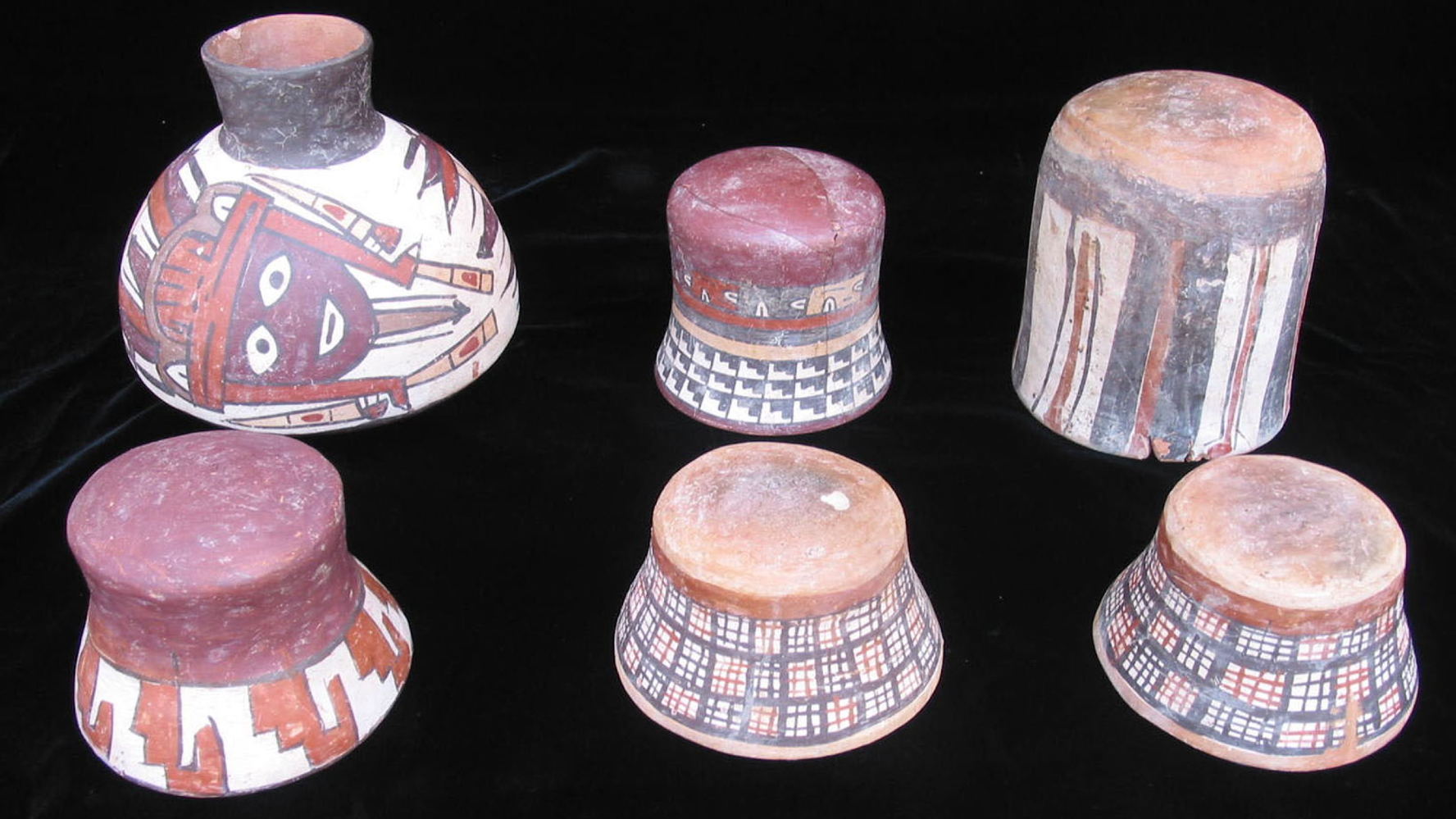
The urn came from Jauranga, an archaeological site in Peru’s Palpa Valley, in the same desert region where the enormous ground drawings known as the Nazca Lines stretch across the landscape. The burials belong to the Middle Nazca period, roughly AD 325 to 440.
Examining the remains of one infant, researchers encountered a tiny skull with a single eye socket at the center of the face. Other bones of the head were abnormal, too. Together, the features pointed to cyclopia, a fatal congenital defect in which a baby develops one central eye, resembling the one-eyed cyclops of Greek mythology.
The findings appeared November 9 in PNAS. Archaeologist Elsa Tomasto-Cagigao of the Pontifical Catholic University of Peru led the study alongside anthropologist Lars Fehren-Schmitz of the University of California, Santa Cruz, and researchers from Peru, the United States and Germany.
The skull offered strong physical evidence. But the team wanted to know what had caused the abnormality, and for that they needed something much harder to recover from a 1,600-year-old infant: DNA.
What Went Wrong Before She Was Born
Cyclopia develops when the front of the embryonic brain fails to divide into separate left and right hemispheres. The defect occurs in approximately one in 100,000 births. Affected babies often have no nose, or a small tubular structure above the single eye. Most pregnancies involving cyclopia end in miscarriage. Among infants born alive, survival is usually brief.
The process begins remarkably early.
Tomasto-Cagigao explained that the underlying cause was already present at conception. The visible defect, however, would have developed around the fourth or fifth week of pregnancy, at the point when the frontal region of the brain should have separated.
From the infant’s remains, the researchers successfully extracted and sequenced her genome. The analysis established that she was female and carried an extra copy of chromosome 13, a genetic condition known as trisomy 13, or Patau syndrome. It is one of the principal genetic causes of cyclopia, although only a small proportion of infants with trisomy 13 develop the defect.

The genetic evidence also settled an important question about the skull. Its unusual shape was not the result of intentional head modification, a practice known from ancient cultures, nor had the bones simply been distorted after burial. The abnormality had its origins before birth.
Trisomy 13 is associated with increasing maternal age. Whether the girl’s mother was older, though, is something Fehren-Schmitz said the researchers cannot determine.
The most striking part of the discovery lay elsewhere. Inside the jar itself.
Two Girls in One Jar
At the bottom of the ceramic urn lay the infant with cyclopia. Directly above her were the remains of another baby girl, whose skeleton showed no apparent abnormalities. “Nevertheless, it appears that they were interred in a single event,” Tomasto-Cagigao told Live Science.
Burial in ceramic urns was customary for young children in the region, and the researchers found no indication that the grave had been reopened for a second burial. Both girls appear to have been placed there together.
DNA provided another unexpected detail: the infants had different mothers.
Beyond that, their connection remains uncertain. The second girl’s genetic material was too poorly preserved for researchers to establish whether the babies shared any other family relationship.
Nor did the grave contain the kind of offerings that might suggest an unusual ceremony. The urn was in an ordinary cemetery, surrounded by other burials, with no special objects accompanying the two children.
For Fehren-Schmitz, the absence of anything extraordinary was itself revealing. “It was neither ‘excluded’ because of it nor treated in a ‘special’ way,” he told Live Science.
Despite being born with a condition that would have made her appearance noticeably different, the little girl was buried much as other children in her community were buried.
That distinction matters in the context of ancient Andean societies, where people with disabilities sometimes occupied particular social or religious roles. At Jauranga, the archaeologists found no evidence that the infant was either singled out for special treatment or denied an ordinary burial.
There are limits to what one grave can tell us. “If that reflects Nasca society as a whole, we can’t say based on one case,” Fehren-Schmitz said, “but it does reflect the community this infant was part of, even if only briefly.”
A First for Archaeology
Cyclopia itself is no medical mystery. Physicians have described the condition for centuries, and specimens survive in anatomical collections around the world. What makes the Peruvian discovery exceptional is its archaeological setting. Until now, no excavated ancient burial had yielded a confirmed example.
“This condition has been documented in historic and modern anatomical collections, but to my knowledge this is the first archaeological example of this developmental abnormality,” said Siân Halcrow, a bioarchaeologist at the University of Otago in New Zealand who was not involved in the research.
One question remains particularly difficult to answer. How long did the baby live?
Fehren-Schmitz has said the researchers are confident she was born alive, although they cannot establish her exact lifespan. Given the severity of cyclopia, he considers it most likely that she survived only a short time.
Halcrow noticed something in the study’s estimated age at death, however. The figures leave open the possibility that the infant survived for several weeks or even months.
For a baby born with cyclopia, surviving that long would have required extraordinary attention. Someone would have needed to feed her, keep her warm and protect her through a period when even basic survival would have been difficult.
Whether that happened cannot yet be established. But the possibility changes how the burial might be understood. The child may have received more than a place among the dead. She may also have been cared for, day after day, while she was alive.
For Halcrow, the case raises a larger question about the care ancient communities gave to infants born with profound physical differences. The remains cannot tell researchers who held this baby, who fed her or how her family responded to her condition.
Enjoyed this article? Subscribe to our free newsletter for engaging stories, exclusive content, and the latest news.

