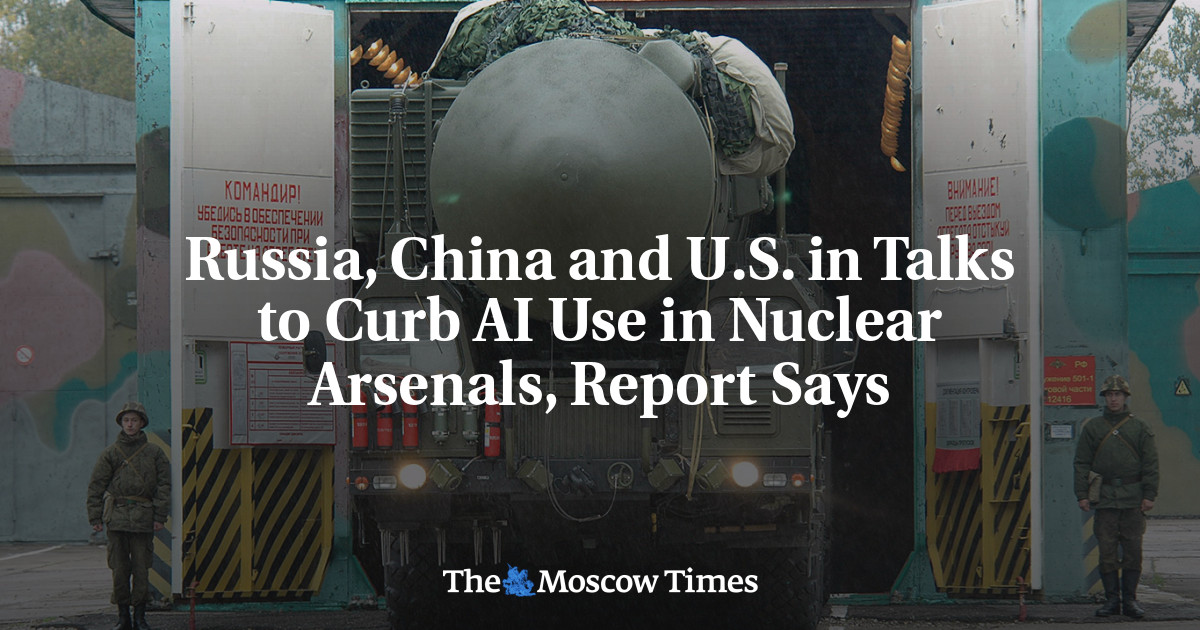
Гурван улсын төлөөлөгчид цөмийн удирдлага, хяналтын системд хиймэл оюун ухааныг ашиглахтай холбоотой аюулгүй байдлын хязгаарлалтыг тогтоохоор ажиллаж байна.
Ирэх долоо хоногт Шэньжэнь хотод болох АПЕК-ийн дээд хэмжээний уулзалтын хүрээнд ОХУ, БНХАУ болон АНУ-ын төлөөлөгчид цөмийн зэвсгийн нөөцөд хиймэл оюун ухаан (AI) ашиглахыг хязгаарлах асуудлаар хэлэлцээ хийхээр төлөвлөж байна. Уулзалтын бэлтгэл ажлын хүрээнд талууд Украйны дайн болон Солонгосын хойгийг цөмийн зэвсэггүйжүүлэх зэрэг маргаантай асуудлуудыг хэлэлцэх асуудлын жагсаалтаас гаргаж, зөвшилцөлд хүрэх боломжтой сэдвүүдэд анхаарлаа төвлөрүүлжээ.
БНХАУ-ын зүгээс Украйны асуудлыг ОХУ болон АНУ-ын хоёр талт яриа хэлэлцээний хүрээнд, харин Солонгосын хойгийн аюулгүй байдлыг Пёньян болон Вашингтоны хоорондын асуудал гэж үзэх байр суурьтай байна. Иймд талууд цөмийн зэвсэг удирдах системд хиймэл оюун ухаан ашиглахтай холбоотой эрсдэлээс сэргийлэх “хамгаалалтын бүс” байгуулах асуудлыг голчлон хэлэлцэхээр төлөвлөж байна.
ОХУ-ын хувьд цэргийн уян хатан байдлаа алдахгүйн тулд цөмийн удирдлагын системд тавих албан ёсны хязгаарлалтын талаар болгоомжтой хандаж байгаа юм. Үүний зэрэгцээ дипломатууд цөмийн дайнд ялагч гэж байхгүй бөгөөд ийм дайныг хэзээ ч өдөөж болохгүй гэсэн зарчмыг баталгаажуулсан хамтарсан мэдэгдэл гаргахаар ажиллаж байна.
Кремлийн хэвлэлийн төлөөлөгч Дмитрий Песков энэ долоо хоногт ОХУ нь Вашингтон, Бээжинтэй хэлэлцээрийн асуудлуудаа харилцан солилцож байгааг мэдэгдсэн юм. Тэрээр уг уулзалт нь дэлхий нийтийн анхаарлыг татсан, олон төрлийн асуудлыг хөндсөн чухал үйл явдал болно гэдгийг онцолжээ.
Russia is in discussions with China and the United States about making a mutual committment to restrict the use of artificial intelligence in nuclear arsenals,the South China Morning Post reported Wednesday, ahead of aplanned trilateral summit next week on the sidelines of the APEC summit in Shenzhen.
Working-level negotiators have narrowed the summit agenda down to areas of potential consensus after larger geopolitical flashpoints — including the war in Ukraine and the denuclearization of the Korean Peninsula — largely fell off the table, the newspaper reported, citing sources familiar with the matter.
China reportedly prefers that talks about the Ukraine war take place directly between Russia and the U.S., while treating Korean Peninsula security as a bilateral issue between Pyongyang and Washington.
Instead, negotiating teams have focused on establishing guardrails around artificial intelligence in nuclear command-and-control systems.
Russia maintains acautious stanceregarding formal curbs on nuclear command systems, largely resisting agreements that could constrain its military flexibility.
Russian, Chinese and American diplomats are also reportedly working toward a joint declaration reaffirming the principle that a nuclear war cannot be won and must never be fought.
Kremlin spokesman Dmitry Peskovsaid this week that Moscow was exchanging agenda proposals with Washington and Beijing ahead of the summit.
“There could be a wide variety of issues,” Peskov said, adding that the meeting “will draw the attention of everyone in the world.”
Дэлгэрэнгүйг эх сурвалжаас харах
↓Эх сурвалжийг нээх ↓
Russia is in discussions with China and the United States about making a mutual committment to restrict the use of artificial intelligence in nuclear arsenals,the South China Morning Post reported Wednesday, ahead of aplanned trilateral summit next week on the sidelines of the APEC summit in Shenzhen.
Working-level negotiators have narrowed the summit agenda down to areas of potential consensus after larger geopolitical flashpoints — including the war in Ukraine and the denuclearization of the Korean Peninsula — largely fell off the table, the newspaper reported, citing sources familiar with the matter.
China reportedly prefers that talks about the Ukraine war take place directly between Russia and the U.S., while treating Korean Peninsula security as a bilateral issue between Pyongyang and Washington.
Instead, negotiating teams have focused on establishing guardrails around artificial intelligence in nuclear command-and-control systems.
Russia maintains acautious stanceregarding formal curbs on nuclear command systems, largely resisting agreements that could constrain its military flexibility.
Russian, Chinese and American diplomats are also reportedly working toward a joint declaration reaffirming the principle that a nuclear war cannot be won and must never be fought.
Kremlin spokesman Dmitry Peskovsaid this week that Moscow was exchanging agenda proposals with Washington and Beijing ahead of the summit.
“There could be a wide variety of issues,” Peskov said, adding that the meeting “will draw the attention of everyone in the world.”

