
Гэвч Донбассын нутаг дэвсгэрийн асуудлаар талуудын байр суурь зөрүүтэй хэвээр байна.
Абу Дабид хоёр өдөр үргэлжилсэн хэлэлцээ нь талуудын есөн сарын дараах анхны шууд уулзалт байв. Олзлогдсон цэргүүдийг солилцох зарчмын тохиролцоонд хүрсэн бөгөөд солилцох хүний тоог пүрэв гарагт эцэслэхээр болжээ. АНУ-ын тусгай элч Жаред Кушнер үүнийг мөргөлдөөн эхэлснээс хойших хамгийн том хүмүүнлэгийн солилцоо байж болзошгүй гэж мэдэгдсэн бол Украины Ерөнхийлөгч Володимир Зеленский цар хүрээ нь нэлээд том байна гэж хэлэв.
Зуучлагчид хэлэлцээгээр ахиц гарсан гэж мэдээлсэн ч газар нутгийн асуудлаар бодитой тохиролцоонд хүрээгүй байна. Киев ОХУ-ын Ерөнхийлөгч Владимир Путиний Донбассын бүс нутгийг бүхэлд нь шилжүүлэх шаардлагыг няцаасаар байгаа бөгөөд АНУ-ын зуучлагчид дайны дараах аюулгүй байдлын баталгаа, эдийн засгийг сэргээн босгох асуудлыг хэлэлцээнд түлхүү оруулахыг зорьжээ. Кушнер талуудын хооронд итгэлцэл байхгүйг онцолж, газар нутгийн асуудлыг хамгийн хүнд саад гэж тодорхойлсон байна.
Кушнер болон АНУ-ын тусгай элч Стив Виткофф пүрэв гарагт Москвад очиж Путинтэй уулзахаар төлөвлөсөн бөгөөд Европын төлөөлөгчдийг хэлэлцээнд оролцуулах саналаа тавих аж. Тэд ОХУ-аас буцсаны дараа Ирландад Зеленскийтэй уулзахаар төлөвлөсөн бөгөөд Украины тал оны эцэс гэхэд албан ёсны тохиролцоонд хүрэхийг зорьж байгааг Ерөнхийлөгч нь мэдэгджээ. Абу Дабид Европын төлөөлөгчид болон НАТО-гийн албаныхан АНУ, Украины төлөөлөгчидтэй уулзсан ч ОХУ-ын тал хамтарсан хэлэлцээ хийхээс татгалзсан байна.
Хэлэлцээ үргэлжилж байх үеэр хоёр тал харилцан шинэ цохилт өгсөн гэж буруутгав. Украины албаныхны мэдээлснээр ОХУ-ын цохилт төвийн бүсийн зургаан цахилгаан дэд станцыг онилж, Одесса мужийн захад болсон халдлагын улмаас гурван хүн амиа алдсан бол ОХУ-ын Белгород мужид Украины дроны цохилтоор нэг хүн нас баржээ. Украйны гадаад хэргийн сайд Хар тэнгисийн үр тариа тээвэрлэх замд гал зогсоох саналыг Москвагаас албан ёсоор хариу ирээгүй гэж мэдэгдсэн бөгөөд ОХУ-ын хүчин Украины нутаг дэвсгэрийн ойролцоогоор тавны нэгийг хяналтдаа байлгаж байна.
Дэлгэрэнгүйг эх сурвалжаас харах
↓Эх сурвалжийг нээх ↓
Want to bookmark your favourite articles and stories to read or reference later? Start your Independent Membership today.
Already a member?
Negotiators from Russia and Ukraine have agreed to a major prisoner swap following two days of peace discussions in Abu Dhabi, though American mediators cautioned that deep divides remain over key matters such as territory.
Marking their first direct negotiations in nine months, both nations established an agreement in principle to exchange prisoners of war, with specific numbers expected to be finalised on Thursday.
US envoy Jared Kushner described the planned exchange as the “biggest humanitarian release of prisoners” during the four-and-a-half-year conflict, while Ukrainian President Volodymyr Zelenskiy indicated that its overall scale would be “significant.”
Although delegates from both Moscow and Kyiv reported progress at the Abu Dhabi summit and pledged to continue dialogue, few other concrete breakthroughs were announced following the meetings mediated by Washington.
Kushner, son-in-law to US President Donald Trump, stated that negotiators were seeking to appeal to the direct interests of both sides to bring an end to Europe’s largest conflict since the Second World War, expressing optimism that a path toward peace could be established.
Despite upbeat public assertions from Trump, there have been no indicators of substantial compromise regarding primary points of contention after more than four and a half years of fighting since Russia launched its full-scale invasion of Ukraine.
Kyiv continues to firmly dismiss demands from Russian President Vladimir Putin to hand over the entire eastern Donbas region as a condition for peace. With discussions stalled on territorial concessions, American mediators have attempted to pivot negotiations toward post-war security commitments and economic reconstruction.
“The reality is there is no trust right now between the sides and that is to be expected after a conflict like this,” Kushner observed, acknowledging that while land issues had been touched upon, they represent the most difficult hurdle.
“I think this was a good first step,” he remarked.
Kushner revealed that he and fellow US envoy Steve Witkoff are scheduled to travel to Moscow on Thursday for discussions with Putin. During these talks, they plan to propose bringing European allies into the process, arguing that European representatives must be included at the negotiating table.
Following their visit to Russia, the American negotiators intend to fly to Ireland to confer with Zelenskiy, who is slated to attend a gathering of European leaders there.
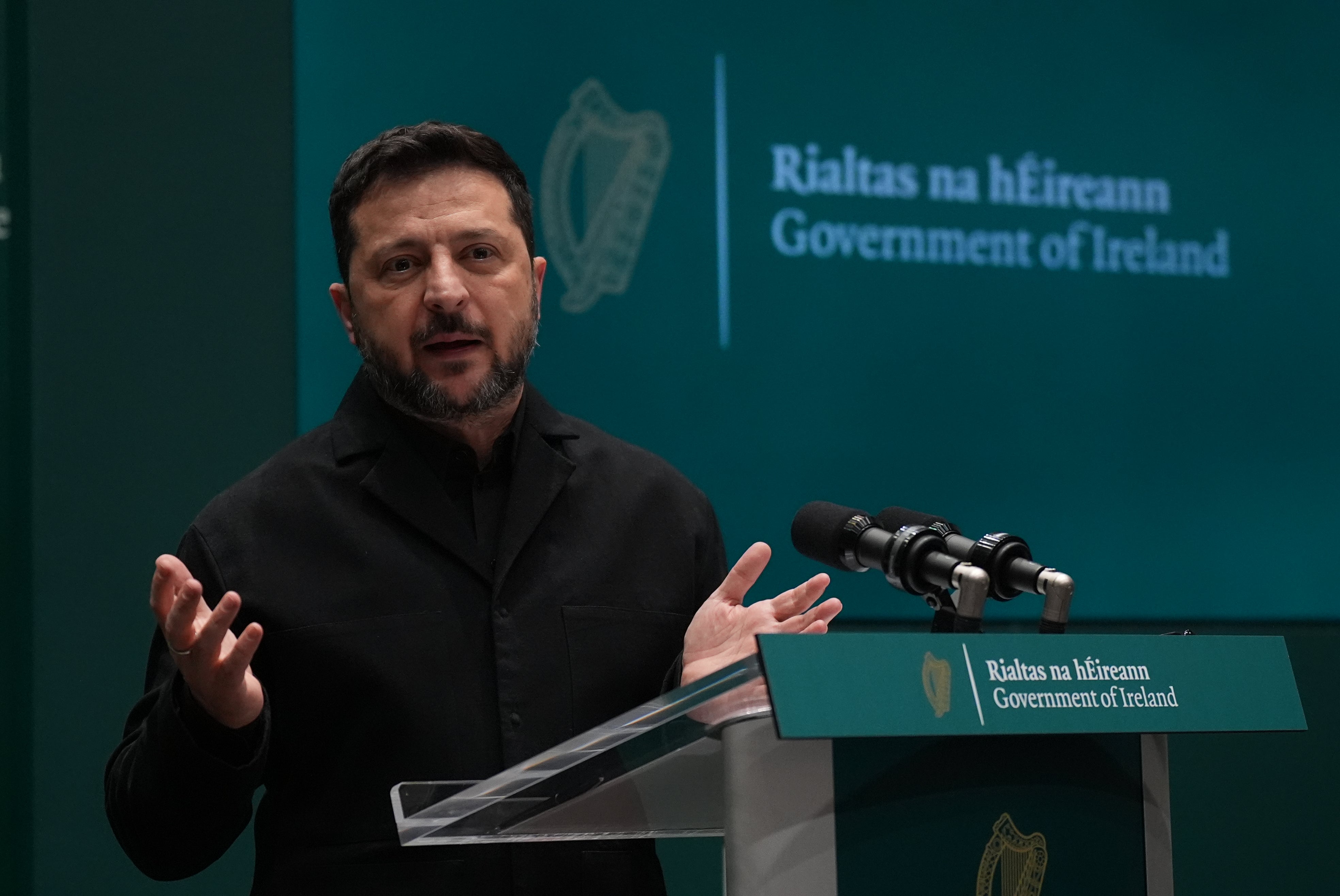
Speaking to journalists in Dublin on Wednesday, Zelenskiy emphasised that Ukraine remains focused on securing a formal agreement before the end of the year.
“A lot will depend today on the format of the dialogue of the American and Russian sides tomorrow… I believe it is also very important for the Americans…to achieve a result this year, in my view, given what we are seeing happening,” he said.
“And it seems to me that they really do want this very much.”
Even as talks proceeded in Abu Dhabi, both nations accused each other of carrying out fresh strikes overnight.
Ukrainian officials reported that Russian forces struck six electricity substations across central Ukraine, while an attack targeting a market in the Odesa region left three people dead. Meanwhile, local authorities in Russia’s Belgorod region reported one death following a Ukrainian drone strike.
Ukrainian negotiator David Arakhamia described the summit as intense, noting that the delegation from Moscow had arrived with “strict directives”, though he added that the exchanges provided “good momentum” toward achieving a resolution by year-end.
While European delegates and NATO representatives met US and Ukrainian envoys in Abu Dhabi, the Russian delegation refused to hold joint talks with them. Arakhamia stressed that future negotiations must take a multilateral form with Europe represented directly.
Russia’s chief negotiator, Vladimir Medinsky, remarked on Russian state television that he felt a peace settlement had moved closer, though he asserted that “a great deal depends on Ukraine, on the US stance, and on whether Europe comes to its senses”.
Moscow has consistently voiced opposition to European military aid for Kyiv. As the Trump administration has reduced direct US aid to Ukraine, European nations have stepped in as the primary financial and military supporters of Kyiv.
Reiterating the Kremlin’s standing demands, Medinsky told the Russian state news agency TASS that “every inch” of Russian land must be returned, referring to Putin’s insistence on total control over the Donbas.
Ukraine had aimed to use the Abu Dhabi gathering to advance a ceasefire covering Black Sea grain shipping routes as a de-escalation measure, but Foreign Minister Andrii Sybiha, speaking during a visit to Turkey, confirmed Kyiv was still awaiting a formal response from Moscow.
Russian forces currently occupy approximately one-fifth of Ukrainian territory, much of it seized prior to the 2022 invasion, though their frontline advances have slowed over the past year.
With ground positions largely static, Moscow has continued targeting Ukrainian urban centres and energy infrastructure, while Ukraine has ramped up strikes against Russian oil refineries and strategic sites.
Russian officials have called for a broader framework on European security architecture to be established before resolving the specifics of the current war. Prior to initiating its full-scale invasion in February 2022, Moscow demanded NATO withdraw forces from member nations that joined after 1997—a demand rejected by the alliance.
European diplomats insist that wide-ranging security discussions can only occur after a formal ceasefire is established, maintaining that Russia should neither shape European security arrangements nor be rewarded for starting the conflict.
Trump stated last week that the conflict was nearing a settlement through a “big beautiful agreement” that might incorporate security guarantees for Europe, though he has frequently made assertions of impending breakthroughs that have yet to materialise.

