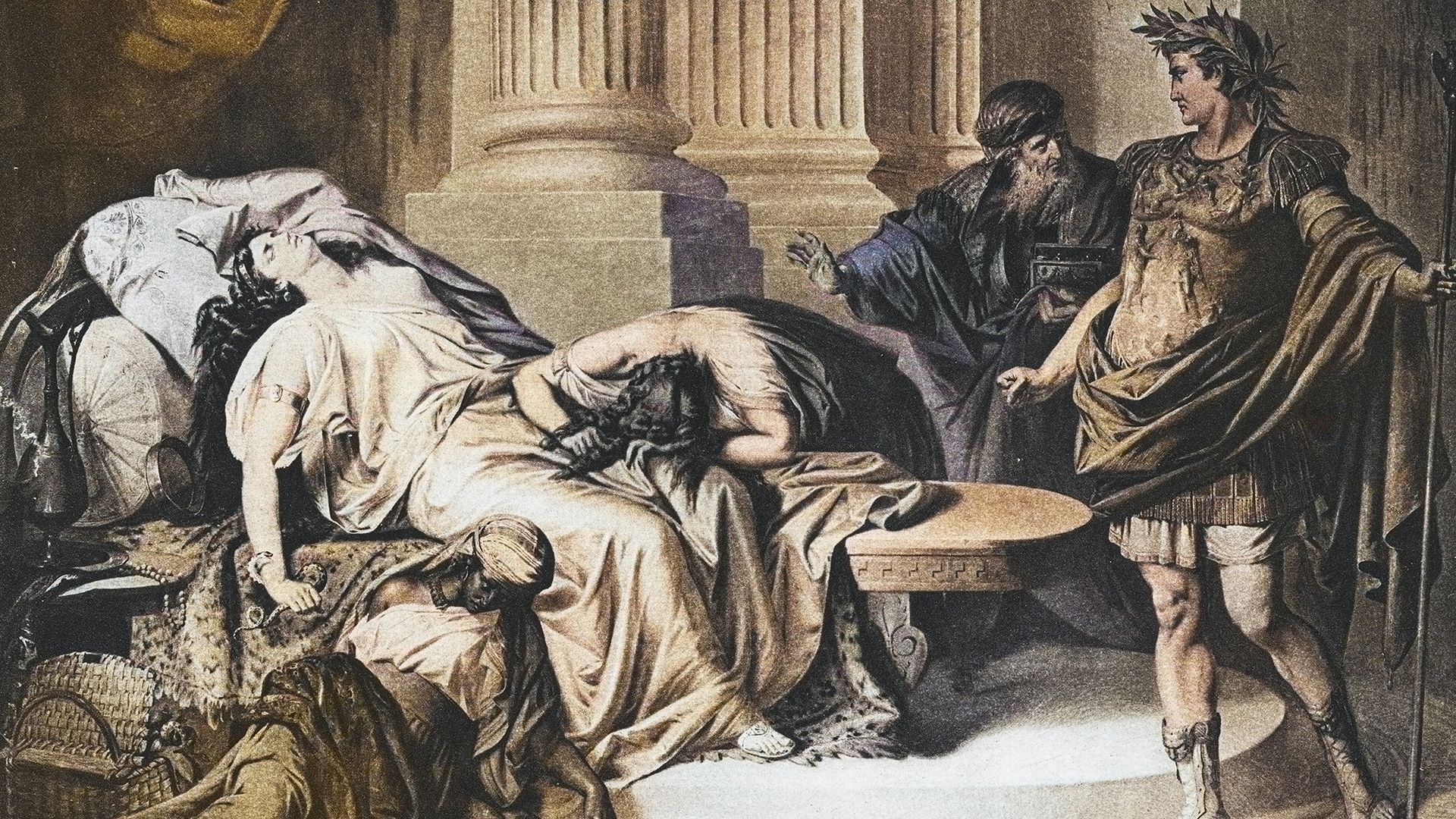
Археологичид болон түүхчид Египетийн сүүлчийн хатан хаан Клеопатрагийн үхлийн шалтгааныг баттай нотлох баримт одоогоор олдоогүй гэж үзэж байна.
МЭӨ 31 онд Акциумын тулаанд ялагдсаны дараа Клеопатра амиа хорлосон гэдэгт түүхчид санал нэгддэг ч түүнийг могойд хазуулж нас барсан гэх хувилбарыг эргэлзээтэй гэж үздэг. Ромын эзэн хаан Августын суртал ухуулгын нэг хэсэг байж болзошгүй энэхүү түүхээс гадна хортой тос түрхэх, хортой зүү ашиглах зэрэг бусад таамаг дэвшүүлдэг ч эдгээрийг нотлох биет баримт байхгүй юм. Клеопатрагийн булш болон Александрия хотын хааны эдлэнгийн туурь усан дор үлдсэн нь судалгааны ажлыг улам хүндрүүлж байна.
Монтклер мужийн их сургуулийн профессор Пруденс Жонс болон Глазгогийн их сургуулийн түүхч Жэйн Дрэйкотт нарын үзэж буйгаар, тухайн үед хатан хааныг амиа хорлоход хүргэсэн шалтгаан нь түүнийг олзлогдохоос татгалзсан шийдвэр байсан болов уу. Тэрээр Ромын гудамжаар ялагдсан олзны хүн болон явахыг хүсээгүй тул өөрийн нэр төрөө авч үлдэхийн тулд амиа хорлох замыг сонгосон гэж судлаачид дүгнэжээ.
Түүхийн эх сурвалжуудад могойд хазуулсан тухай дурддаг ч энэ нь Клеопатрагийн дайснуудын зохиосон түүх байх магадлал өндөр гэж эрдэмтэд онцолж байна. Тухайн үед Александрия хотод могой хэлбэртэй гоёл чимэглэл ихээр дэлгэрсэн байсан нь Ромчуудыг төөрөгдүүлсэн байж болзошгүй юм. Мөн Клеопатра амьсгалын замын дутагдалд хүргэдэг могойн хорноос илүүтэй, хурдан үйлчилгээтэй хор ашигласан байх магадлалтай гэж үздэг.
Дэлгэрэнгүйг эх сурвалжаас харах
↓Эх сурвалжийг нээх ↓
The death of Cleopatra is among the most famous in history. In 31 B.C., the Egyptian queen and her Roman ally and lover, Mark Antony, lost the Battle of Actium to Octavian, who would later become Rome’s first emperor, Augustus. The following summer, Cleopatra was captured during a Roman ambush inside her royal tomb in Alexandria.
According to Octavian’s account, rather than facing the disgrace of defeat, the queen allowed a venomous asp snake to bite her and quickly succumbed to its poison. Some Roman writers, such as the historian Velleius Paterculus, repeated that story without question.
But others were far less certain of this account, calling it Roman propaganda to cement Octavian’s rise to power. And most historians today doubt that a snake was involved at all. So how did Cleopatra die?
Live Science spoke with experts, who told us that the queen’s death is still shrouded in mystery.
“We cannot know for sure exactly how Cleopatra died,” Prudence Jones, a professor of classics at Montclair State University in New Jersey and author of “Cleopatra: A Sourcebook” (University of Oklahoma Press, 2006), told Live Science in an email.
What historians largely agree on is that Cleopatra VII, the last queen of Egypt’s Ptolemaic dynasty, took her own life and that she chose a method that left her body composed and dignified.
Lost evidence
Physical evidence of Cleopatra’s death is elusive. Much of Alexandria’s royal quarter now lies underwater, and underwater archaeologist Franck Goddio, who has been excavating it, hasn’t found the queen’s mausoleum, Jones said. Even if Cleopatra’s remains surfaced, bones would be unlikely to show evidence of snake venom, she added, noting that forensics is outside her area of expertise.
The best witness may have been Olympus, Cleopatra’s personal physician. “Unfortunately, nothing survives of Olympus’ account,” Jones said.
What does remain is a story told largely by Cleopatra’s enemies. The earliest surviving account is a poem by the Roman poet Horace, whose patron was a close friend of Octavian, said Jane Draycott, a historian at the University of Glasgow. His Ode 1.37, written around the time of her death, celebrates Octavian’s victory and already pictures the queen handling serpents — yet it ends with grudging admiration for a woman who refused to be paraded as a trophy.
A queen out of options
Following her capture, Cleopatra was held under military guard. By then, she had already tried to end her life twice. Cleopatra had tried to stab herself when Roman soldiers broke into the mausoleum where she had barricaded herself, and she later tried to starve herself, stopping only after Octavian threatened her children.
To Draycott, those attempts leave little doubt that Cleopatra would rather die than live as a captive. “She does not want to be a prisoner; she does not want to be led through the streets of Rome in triumph as a defeated foe,” she told Live Science.
In the Greco-Roman world, suicide didn’t carry the stigma it later acquired under Christianity, she added. “It was a way of wiping the slate clean, removing any shame, any disgrace from yourself.” After the defeat of his remaining forces at Alexandria and hearing a false report of Cleopatra’s death, Antony was the first of the two lovers to die by suicide.
According to the Greek biographer Plutarch, who based his account on that of Cleopatra’s personal physician, Cleopatra visited Antony’s tomb, bathed, ate and sent Octavian a sealed letter asking to be buried beside Antony, signaling that she meant to die. Octavian realized what was happening and sent messengers rushing to her, but they arrived too late. They found her dead in her royal regalia, with her attendants Iras and Charmion dying beside her.
The trouble with the snake
Jones has compiled what ancient historians, biographers, geographers and physicians wrote about Cleopatra’s death. Every source mentions a snakebite, but several also suggest other possibilities, including a poisonous ointment, poison hidden in a hollow hairpin, and snake venom poured into a wound the queen made by biting herself. Only one of these writers, the geographer Strabo, was alive when Cleopatra died, and the only people in the room with her died, too.
The Roman historian Cassius Dio wrote that the sole clue was a pair of faint pricks on her arm. That doesn’t settle much, however. “A cobra bite can appear as two small puncture wounds, but not all cobra bites appear this way and not all double puncture wounds result from snakebites,” Jones said.
Jones traces the snake version of the story to Octavian, who was in Alexandria when Cleopatra died. Plutarch reported that an image of Cleopatra with an asp clinging to her was carried in Octavian’s triumphal procession in Rome. “Octavian, however, was Cleopatra’s enemy and for that reason we may not want to accept his account uncritically,” Jones said.
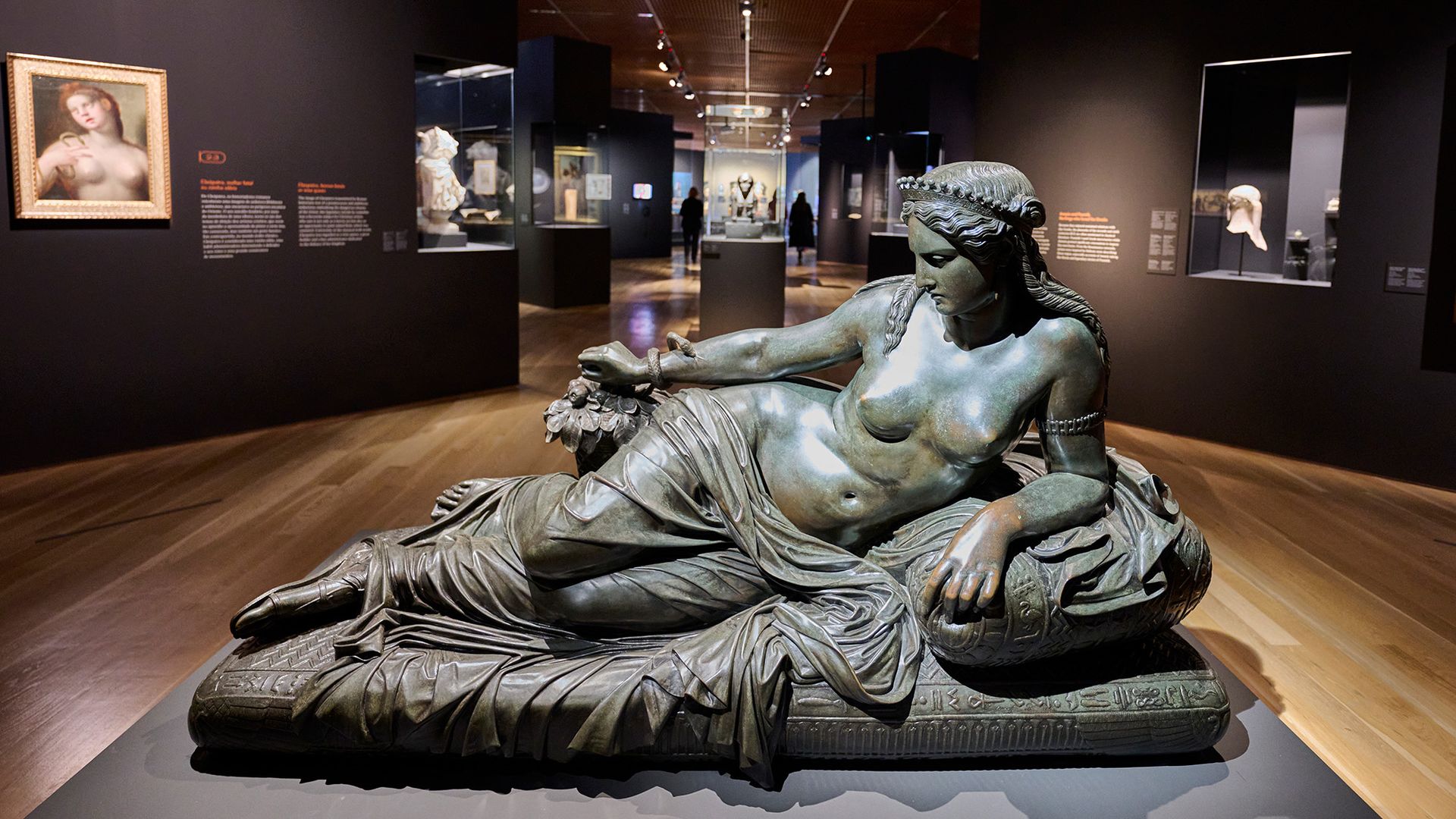
Draycott suggested another possible source of confusion: Snake-shaped jewelry was fashionable in Alexandria at the time, so Romans viewing an effigy of the queen may have mistaken a snake bracelet for a real snake.
Draycott doesn’t think one snake could have killed all three women. Jones is less certain. Snakes don’t inject the same amount of venom with every bite, and some “dry bites” deliver none at all, Jones said. “On the other hand, I don’t think it is impossible, as the body of a cobra contains enough venom to kill multiple people,” she added.
A quiet poison
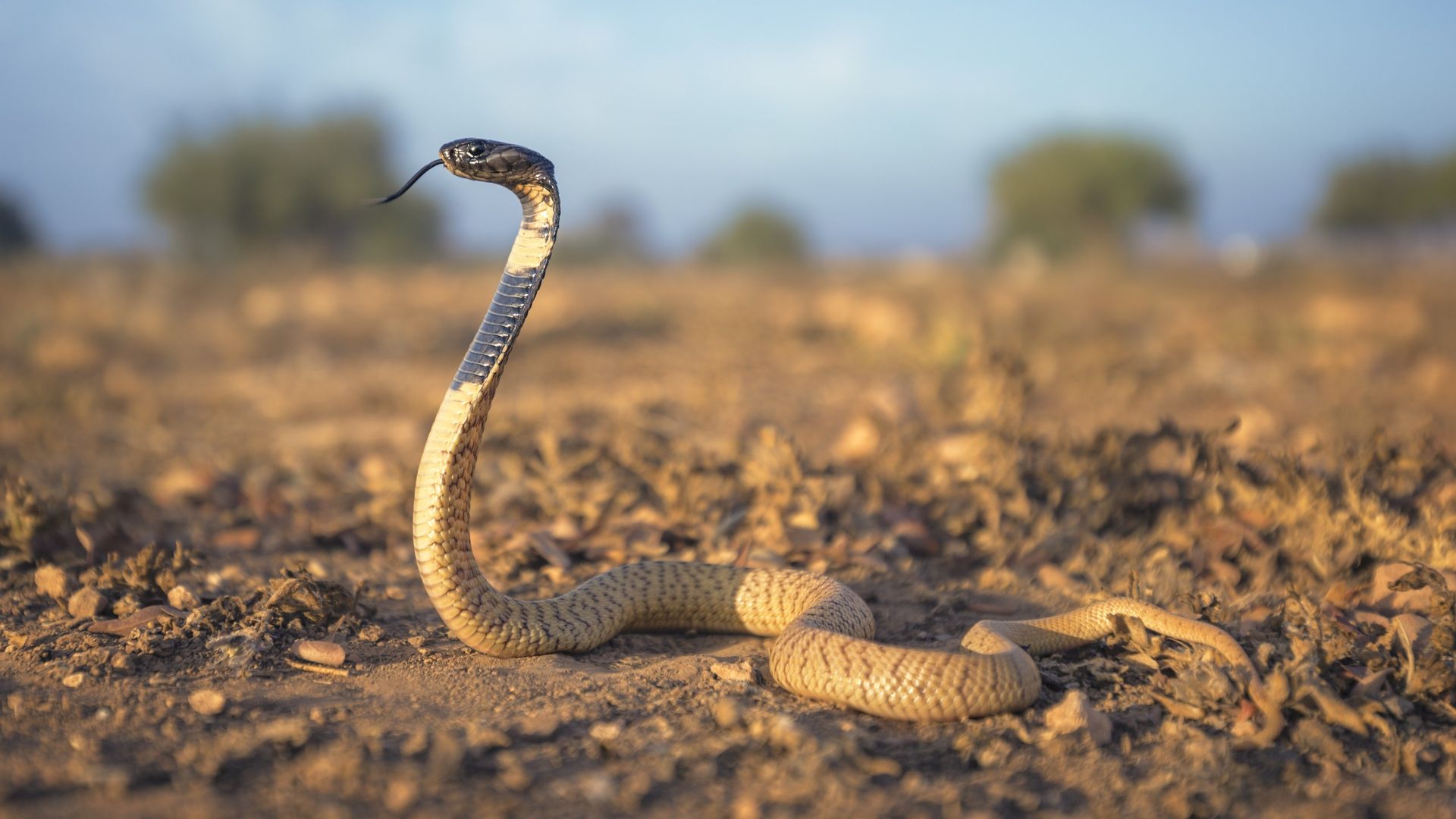
The general view among historians, Draycott said, is that Cleopatra took some kind of poison — one that worked quickly and didn’t cause seizures or vomiting. The absence of these symptoms is telling: An asp is believed to be what is now known as the Egyptian cobra (Naja haje), whose venom causes a slow, agonizing death with respiratory failure.
Cleopatra likely would have had other means, then. Alexandria was the Mediterranean’s center of scientific study, and texts from the period, such as Nicander’s “Theriaca,” catalog venomous animals, Jones noted. Cleopatra’s father, Ptolemy XII, even consulted the pharmacologist Zopyrus about antidotes. Plutarch claimed that Cleopatra personally oversaw experiments that observed the effects of deadly poisons on condemned prisoners.
Still, that claim and other poison stories should be read with caution, Draycott said, because they draw on Roman stereotypes about women. In the Roman view, “manly men will battle with swords,” while women, seen as “deceitful and weak” at this time, were thought to kill in secret. “They’ll sneak it into your food,” Draycott said, summing up the stereotype.
Roman writers were equally suspicious. Poisoning allegations dogged the Hellenistic dynasties of ancient Egypt and the neighboring Seleucid kingdom, as well as Rome’s own imperial family. Some were probably true, Draycott said, but others may have been foodborne illnesses or other health conditions people didn’t understand.
The method may remain a mystery, but for most historians, the motive doesn’t change: Cleopatra chose to die on her own terms.
Are you a fan of mummies and hieroglyphs? Find out with our ancient Egypt quiz!

