
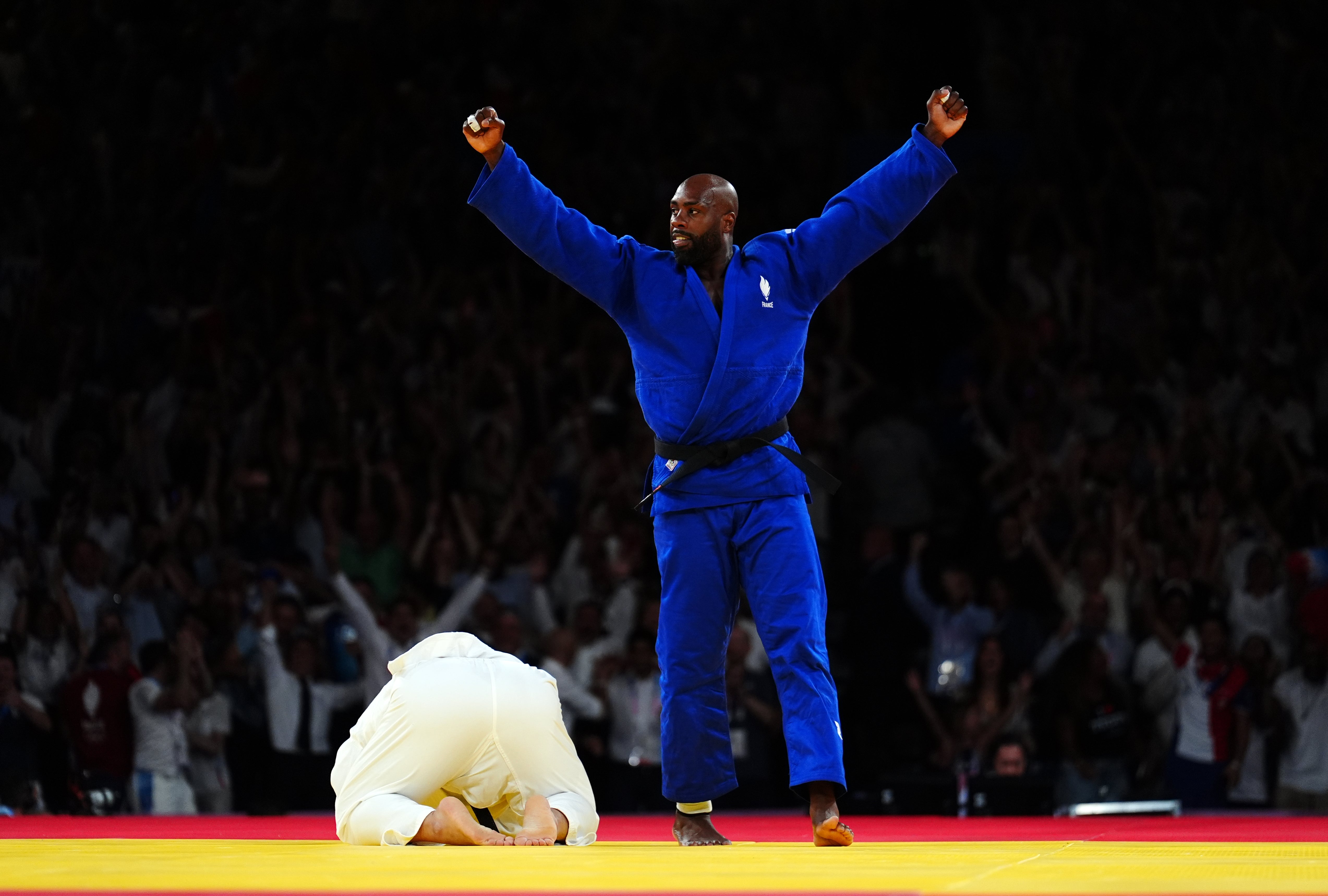
Олимпын таван алтан медальт Ринер Францын төрийн тэргүүн болохоор зорьж байгаа ч нэр дэвшигчээр бүртгүүлэхийн тулд сонгогдсон 500 албан тушаалтны дэмжлэг авах шаардлагатай.
37 настай Ринер даваа гарагт кампанит ажлаа эхлүүлж, Францад айдас, бухимдал, нийгмийн хуваагдал нэмэгдэж, хүмүүс ирээдүйгээ төсөөлөхөд бэрх болсон гэж мэдэгджээ. Гэвч эдгээр асуудлыг хэрхэн шийдэх талаар тодорхой бодлого танилцуулаагүй бөгөөд өөрийгөө баруун, зүүний аль ч талд хамааруулахгүй, улс оронд “эрүүл ухаан” хэрэгтэй гэж байр сууриа илэрхийлсэн байна.
Тэрбээр баасан гарагт Парисын хойд захын эмнэлэгт кампанит ажлынхаа анхны уулзалтыг хийжээ. Ринерийн бодлогын хөтөлбөр тодорхойгүй байгаа талаар ерөнхийлөгчийн сонгуульд нэр дэвшигч, хэт барууны үзэлтэй Марин Ле Пен шүүмжлэлтэй байр суурь илэрхийлсэн байна.
Ринер сонгуулийн саналын хуудсанд нэрээ бичүүлэхийн тулд дөрөвдүгээр сарын эхний шатны санал хураалтын өмнө сонгогдсон 500 албан тушаалтны баталгааг авах ёстой. Шинжээчдийн үзэж байгаагаар түүний танигдсан байдал болон ялгаварлан гадуурхалтын асуудлыг ойлгох боломж нь дэмжлэг татаж болох ч улс төрийн туршлага дутмаг байгаа нь сул тал болж магадгүй. Францын сонгогчид өөрчлөлтийг хүсэхийн зэрэгцээ улсын өр, Украины дайн болон Европын аюулгүй байдал зэрэг сорилтыг даван туулах туршлагатай удирдагчийг ч эрэлхийлж байна.
Дэлгэрэнгүйг эх сурвалжаас харах
↓Эх сурвалжийг нээх ↓
Want to bookmark your favourite articles and stories to read or reference later? Start your Independent Membership today.
Already a member?
French judo icon Teddy Riner suggests he would get the better of Donald Trump in a handshake contest if the pair were ever to meet as presidents of their respective nations—an assertion that is hardly a stretch.
Yet that scenario remains a major “if”.
Even with five Olympic gold medals under his belt and more than 3.3 million followers across his social media platforms, Riner’s newly announced bid for the presidency of France promises to be a far tougher contest than many of the opponents he defeated.
History and rules stand in his way
The list of celebrities who have successfully built political power from screen or sporting fame is notably shorter in France than in the United States, where Trump, Ronald Reagan, Arnold Schwarzenegger, Jesse Ventura, two-time NBA champion Bill Bradley, and former Buffalo Bills quarterback Jack Kemp converted stardom into high office.
Retiring sporting icons such as two-time Olympic judo champion David Douillet, fencing champion Jean-François Lamour, and Guy Drut, the 110-metre hurdles champion at the 1976 Montreal Olympics, did win seats in France’s parliament and served as sports ministers.
However, Riner is targeting France’s top office, seeking to become the first famous figure to achieve this since World War II hero Gen. Charles de Gaulle.
To feature on the ballot for April’s first round of voting, Riner must gain endorsements from a minimum of 500 elected officials—a requirement purposefully designed to prove challenging.
The measure, intended to limit the size of the field and filter out fanciful candidacies, is an indication of how France has traditionally regarded running the country as a serious business. It has been in place since the 1981 election and was one of the barriers that foiled a presidential bid by comedian and actor Coluche that year.
“In France, there are complex hurdles to entry for people who don’t come from the establishment,” said François Hourmant, a professor of political science at Angers University who has studied celebrity culture in French and North American politics.
“Moving from the tatamis to the political arena isn’t that simple, and isn’t something everyone can do,” he said in a phone interview with The Associated Press.
Riner’s first campaign stop
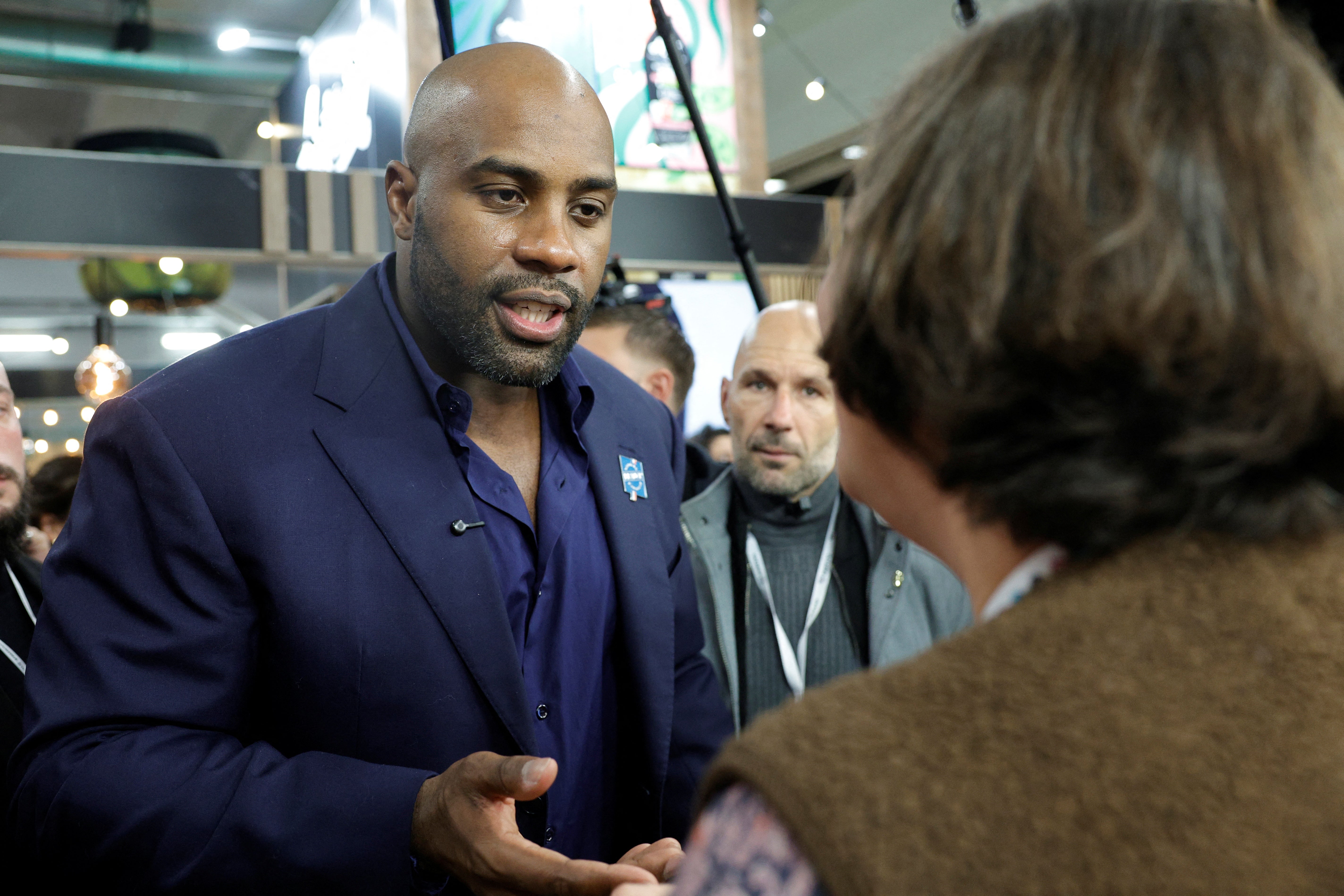
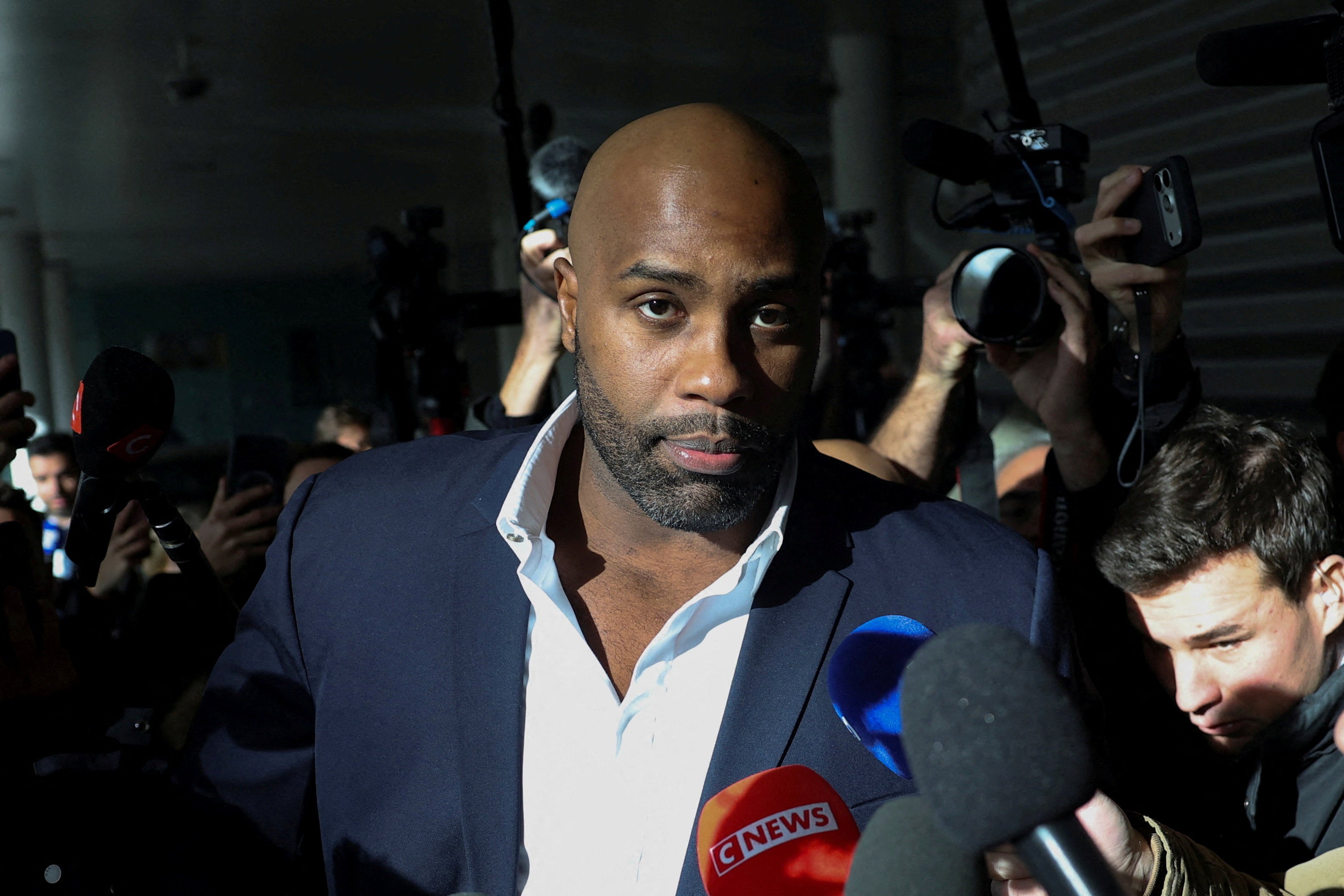
A thicket of cameras that greeted the 37-year-old on Friday, when he made his first campaign stop at a hospital in the northern suburbs of Paris, testified to the star power that Riner brings to the race.
Looking fighting fit in a dark suit and open-neck shirt, he towers over everyone from the height of his 2.04-meter (6-foot, 8-inch) frame. His imposing physicality and easy charisma translate readily to television.
But the policy proposals Riner plans to bring to the campaign remain unclear. He describes himself as neither left nor right on the political spectrum and says France “needs common sense” and not “a professional politician who recites lessons and squabbles all day long.”
In a two-minute, 37-second video that launched his campaign Monday and in an interview with the newspaper Le Parisien, Riner spoke of problems that he sees in France, among them “fear,” “anger,” a “social divide” and people unable “to envisage a future.” But he offered few solutions or blueprints for building what he called “the France that we want.”
Outside the hospital after meeting staff members, Riner said he is still working on his campaign platform and didn’t answer questions, responding with a “have a good rest of the day, au revoir” before heading back to his car.
Far-right candidate Marine Le Pen, widely seen for now as the favorite to succeed President Emmanuel Macron in May, took a gentle swipe during a campaign stop of her own on Friday, saying she couldn’t form an opinion about Riner’s bid without knowing anything about his platform.
As a dominant judoka whose mantra was “Never let anyone steal your beefsteak,” Riner told the AP in 2013 that he would sometimes wrestle up to five people at once in training to make it more challenging. As a fledgling politician, he says he is steeled for more rough-and-tumble.
“When you know how to take punches, you also know how to throw them,” he told Le Parisien.
An electorate hungry for change but also experience
The rise of Le Pen and the challenge she faces from the other end of French politics from far-left leader Jean-Luc Mélenchon together suggest a swath of French voters want deep and disruptive change.
But analysts believe many also want a seasoned hand to deal with the multitude of domestic and international challenges that France faces, including its record public debt and the threat to European security posed by Russian President Vladimir Putin and his war in Ukraine.
“Teddy Riner certainly embodies renewal, but he doesn’t necessarily embody experience. So that is probably one of his main disadvantages,” said Mathieu Gallard, research director at the Ipsos polling institute.
Riner, who is Black, was born on the French Caribbean island of Guadeloupe and grew up in Paris. Both Gallard and Hourmant said the potential that Riner is more likely to understand and combat discrimination could attract people of color in an election where Le Pen’s party and others on the far right are again seeking to focus on immigration.
“But again, is that enough to translate into votes,” Gallard asked.
“Teddy Riner’s skin color will be a political issue for some people,” Hourmant said. For some, “it may be a reason to support him, seeing a racialized candidate from the overseas territories. For others, it will be a deterrent.”

