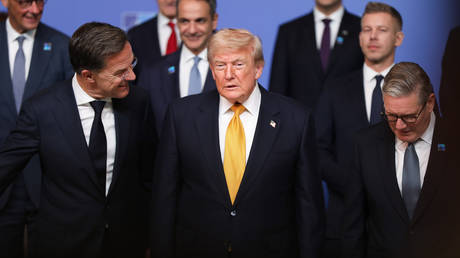
Албанийн Ерөнхий сайд Эди Рамагийн мэдэгдснээр, НАТО-гийн удирдагчдын дээд хэмжээний уулзалтыг 2027 онд Тирана хотод зохион байгуулах төлөвлөгөөг цуцалжээ.
НАТО-гийн дээд хэмжээний уулзалтыг 2027 онд Албанийн нийслэлд зохион байгуулах боломжгүй болсныг Ерөнхий сайд Эди Рама пүрэв гарагт мэдэгдлээ. Тэрээр уулзалт хэзээ болох талаар нийтлэг шийдвэр гараагүй байгааг дурдаад, 2028 онд уулзалт зохион байгуулах боломжтойг нэмж хэлэв. НАТО-гийн Ерөнхий нарийн бичгийн дарга Марк Рютте тус эвсэл шаардлагатай үедээ уулзалт товлох уян хатан зарчимтай болохыг тайлбарласан байна.
АНУ болон Европын холбоотнуудын хоорондын харилцаа, ялангуяа батлан хамгаалах салбарын санхүүжилт болон Ирантай холбоотой цэргийн ажиллагааны асуудлаарх үл ойлголцлоос үүдэн НАТО-гийн үйл ажиллагаанд өөрчлөлтүүд гарч байна. Тухайлбал, 2025 онд Гааг хотод болсон дээд хэмжээний уулзалтын дараах мэдэгдэлд Албанийг дурдсан байсан ч энэ онд Анкара хотод болсон уулзалтын баримт бичигт уг улсын нэр хасагджээ.
Эвслийн хүрээнд сайд нарын түвшний уулзалтуудын давтамжийг ч бууруулж, энэ жил батлан хамгаалахын сайд нарын аравдугаар сарын хурал цуцлагдсан байна. АНУ-ын албаны хүмүүс Европ бол Вашингтоны аюулгүй байдлын тэргүүлэх чиглэл биш гэдгийг илэрхийлж, цэргийн дэмжлэгийг АНУ-ын гадаад бодлогын санаачилгыг дэмжих эсэхтэй холбон үзэх хандлагатай байгаагаа илэрхийлжээ. АНУ-ын Ерөнхийлөгч Дональд Трамп НАТО-гийн гишүүн орнуудын батлан хамгаалах зардал болон үнэнч байдлын асуудалд сэтгэл дундуур байгаагаа удаа дараа илэрхийлсэн юм.
Дэлгэрэнгүйг эх сурвалжаас харах
↓Эх сурвалжийг нээх ↓
The US-led military bloc will not hold a top-level meeting in Tirana in 2027, Albanian Prime Minister Edi Rama has said
NATO has dropped plans to hold a leaders’ summit in 2027, Albanian Prime Minister Edi Rama has said. The summit was supposed to be held in the Albanian capital of Tirana. The decision comes as tensions between Washington and its European NATO allies continue to mount.
US President Donald Trump has repeatedly criticized Washington’s European NATO allies over their defense spending and refusal to support the US military campaign against Iran.
Speaking on Thursday, Rama said that “there is not yet a common position on when the [NATO] summit will happen, for sure not in 2027.” He added that “in 2028, if it will be a summit, it will be in Tirana.”
NATO Secretary-General Mark Rutte, meanwhile, played down the change, telling the Associated Press that the military bloc is “flexible” with its summits and will convene one “when a necessity is there.”
The declaration adopted at NATO’s 2025 summit in The Hague stated that the leaders looked “forward to our next meeting in Türkiye in 2026 followed by a meeting in Albania.” However, any mention of the Balkan nation was conspicuously absent from a similar document issued after this year’s gathering in Ankara.
In April, Reuters reported, citing several officials speaking anonymously, that NATO members were considering holding fewer summits, breaking with the recent practice of annual gatherings. Some of the sources cited a desire to avoid confrontations with Trump.
Moreover, NATO has throttled back its ministerial meetings, canceling the customary October gathering of defense chiefs this year, with none scheduled for 2027 either. The number of foreign ministers’ get-togethers has likewise been reduced from two to one for next year.
US Defense Secretary Pete Hegseth and Secretary of State Marco Rubio have either not attended or left early during some of the previous meetings.
Earlier this year, US envoy to NATO Matthew Whitaker said that Europe only ranked fourth among Washington’s global security priorities, taking a back seat to the “defense of the homeland,” as well as the situation in the Western Hemisphere and the Pacific.
“For 77 years our NATO allies have taken advantage of the United States’ strength,” Whitaker told Newsmax in August.
Whitaker’s remarks followed a Bloomberg report claiming that Washington was intending to make continued military support for European NATO member states contingent on whether they had “been publicly supportive” of US foreign-policy initiatives, including those in the Middle East and Western Hemisphere.
Ahead of the July summit in Ankara, Trump told reporters that he was “very disappointed with NATO,” suggesting that Washington could further scale back its military footprint in Europe.
“I just want loyalty. You know, we’re so loyal to them. We are always fighting for them,” the US president said earlier.
Hegseth previously accused European NATO members of
denying Washington predictable access to their bases and airspace during the US military campaign against Iran, an apparent reference to France, Spain, and Italy. He concluded that NATO had degenerated into a “paper tiger and a one-way street” following the end of the Cold War.

