Шинэ шалгуур БЖИ дангаар үнэлэхэд таргалалттай гэж андуурах эсвэл оношлохгүй өнгөрөх тохиолдол байгааг харуулжээ.
Таргалалтыг уламжлалт байдлаар биеийн жинг өндрийн квадратад хувааж тооцдог биеийн жингийн индексээр (БЖИ) үнэлдэг. Гэвч БЖИ нь нарийвчлал багатай гэж үздэг тул 2025 онд таргалалтыг тодорхойлох шинэ, цогц шалгуурыг мэргэжилтнүүд санал болгосон байна.
Nature сэтгүүлд нийтлэгдсэн судалгаанд Хятад, Их Британи, АНУ, Испанийн 844,108 насанд хүрэгчийг хамарсан дөрвөн бүлгийн мэдээлэлд шинэ шалгуурыг БЖИ-тэй харьцуулжээ. БЖИ дангаар хэрэглэхэд оролцогчдын 8.6 хүртэлх хувийн таргалалтыг илрүүлээгүй бол 3.1 хүртэлх хувийг шинэ шалгуураар таргалалттайд тооцохгүй байхад таргалалттай гэж ангилсан байна.
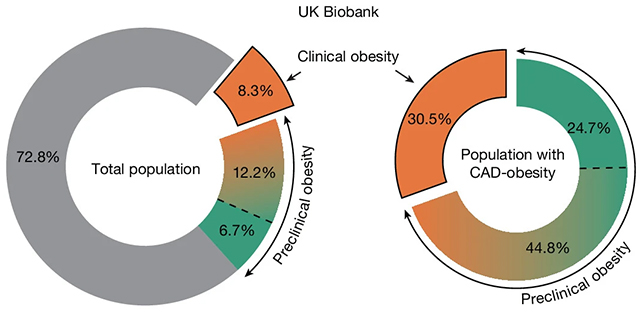
Шинэ шалгуур нь бүсэлхийн тойрог, бүсэлхий-өндрийн харьцаа, биеийн өөхийг дүрслэх шинжилгээ зэрэг үзүүлэлтээс гадна эрхтний гэмтэл, өдөр тутмын үйл ажиллагаанд нөлөөлөх биеийн хязгаарлалтыг харгалздаг. Илүүдэл өөх эрхтэн, тогтолцоонд хор нөлөө үзүүлсэн байдлыг эмнэлзүйн таргалалт, биеийн үйл ажиллагаанд хараахан нөлөөлөөгүй илүүдэл жинг эмнэлзүйн өмнөх таргалалт гэж ялгажээ. Судлаачдын мэдээлснээр таргалалтын тохиолдлын гуравны нэг хүртэл нь эмнэлзүйн таргалалт байсан бөгөөд эмнэлзүйн өмнөх таргалалттай хүмүүсийн ихэнх нь 10 жилийн турш эмнэлзүйн таргалалттай болоогүй байна.
10 гаруй жилийн ажиглалтын хугацаанд эмнэлзүйн таргалалт нас барах эрсдэл 69 хувиар нэмэгдэхтэй, эмнэлзүйн өмнөх таргалалт 19 хувиар нэмэгдэхтэй холбоотой байжээ. Судлаачид уг шинэ шалгуурыг өргөн нэвтрүүлэх нь эмчилгээг хэрэгцээтэй хүмүүст чиглүүлэхэд тусална гэж үзэж байгаа ч эмнэлзүйн өмнөх таргалалтыг идэвхтэй өвчин гэж автоматаар үзэх, эсвэл хоргүй гэж үл тоомсорлох ёсгүйг онцолсон байна. Урьдчилан сэргийлэх эмчилгээ шаардлагатай эсэх, хэр эрчимтэй байхыг тухайн хүний эрсдэлд тохируулах хэрэгтэй бөгөөд шинэ шалгуурыг хэрэгжүүлэх, оношилгоог сайжруулах чиглэлээр цаашид судална.
Дэлгэрэнгүйг эх сурвалжаас харах
↓Эх сурвалжийг нээх ↓
Diagnosis definitions matter when it comes to public health – for everything from tailoring individual treatments to tracking conditions across populations – and a new study concludes that millions of people worldwide could be misdiagnosed with obesity.
Obesity has traditionally been assessed using body-mass index (BMI), which divides a person’s weight by their height squared.
However, BMI has long been seen as too approximate and not precise enough, and in 2025 a comprehensive new framework for defining obesity was put forward by experts.
That new framework is put to the test in this latest study, which was carried out by an international team of scientists and published in Nature. Across 844,108 adults in four groups of people, covering China, the UK, the US, and Spain, the updated definition was compared to BMI.
BMI alone, the data showed, missed obesity in up to 8.6 percent of study participants, while wrongly classifying up to 3.1 percent of people as having obesity when in fact they wouldn’t qualify under the new 2025 criteria.
Importantly, the new framework also differentiates between clinical obesity, where excess fat is actually doing damage to internal systems and organs, and preclinical obesity, which means someone is overweight, but it hasn’t yet begun to harm bodily functions.
“This study shows that up to a third of all cases of obesity are clinical obesity, an active disease that should be treated as such,” says bariatric surgery consultant Francesco Rubino, from King’s College London.
“Most people with preclinical obesity, but not all, remained free of clinical obesity for a decade.”
The new framework put forward last year takes into account other measurements and information, including waist circumference, waist-to-height ratio, and body fat scans, and also looks for signs of organ damage or physical impairment affecting everyday activities.
It’s hoped that if the 2025 proposals are more widely accepted by doctors and healthcare professionals, treatments such as GLP-1 weight loss drugs can be prescribed for those who really need them, rather than for everyone classified as obese under the BMI rules.
“Preclinical obesity should therefore be neither treated automatically as active disease nor dismissed as harmless,” says Rubino.
“Some people may need preventive treatment, but its intensity should match their individual risk.”
Multiply out the findings of this study to the world’s population at large, and we could be looking at millions of people who aren’t given a correct obesity diagnosis.
Being clinically obese was associated with a 69 percent higher risk of dying during follow-up periods of more than a decade, compared to 19 percent for preclinical obesity.
That’s a substantial difference, and it wouldn’t be flagged using traditional diagnosis methods.
“The marked differences in prognosis between clinical and preclinical obesity, consistently observed across countries and ethnic groups, support global adoption of the new framework to improve obesity care and policy worldwide,” says epidemiologist An Pan, from Huazhong University of Science and Technology in China.
These findings could aid research into many other areas of health too – helping determine if heart disease has been brought on by obesity or something else, for example.
The team is now planning further studies to see how the new criteria can be applied effectively and usefully, as well as to refine the diagnostic techniques to be more accurate.
Future research could also look at treatment interventions, and how they affect the health of people with clinical obesity and preclinical obesity.
“Getting the scope of care right – treating existing disease or reducing risk – and matching its intensity to individual needs matters enormously, both for the billion-plus people affected and for healthcare systems,” says Rubino.
“People with obesity, like everyone else, deserve care matched to their needs: no less, and no more.”
The research has been published in Nature.
This article was fact-checked by Rebecca Dyer and edited by Rebecca Dyer. While we pride ourselves on our process, we are only human. If you spot a mistake, please let us know.

