
Археологчид 1953 онд малтсан Францын эртний булшны хөрснөөс олдсон шүрэн хэлтэрхий нь түүхэн дэх хамгийн том хүрэл тогооны нэг хэсэг байсныг тогтоожээ.
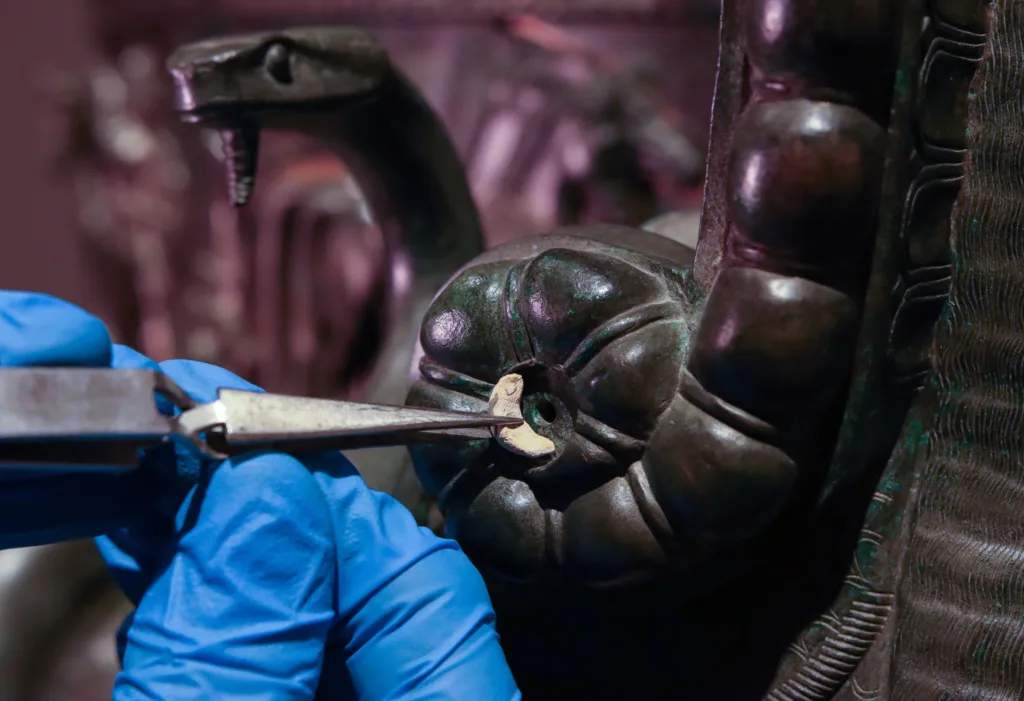
Францын Мон-Лассуа орчмын булшнаас 1953 онд олдсон “Виксийн тогоо” хэмээх алдарт хүрэл савны бариул дээрх дугуй нүхэнд таарах нэг см орчим диаметртэй шүрэн хэлтэрхийг археологчид 2019 оны дахин малтлагын үеэр олж илрүүлжээ. Энэхүү шүрэн чимэглэл нь анх тод улаан өнгөтэй байсан бөгөөд судлаач Бастьен Дюбуйсийн таамагласнаар, тогооны бариул дээрх Медузагийн дүрсний хажууд байрлах энэхүү улаан өнгө нь домогт өгүүлэгддэг Медузагийн цусыг бэлгэдсэн байж болох юм. Гэсэн хэдий ч энэ нь батлагдсан баримт бус, зөвхөн тайлбар төдий бөгөөд үүнийг нотлох бичээс одоогоор олдоогүй байна.
1953 оны анхны малтлагын үед цаг агаарын таагүй нөхцөл байдлаас шалтгаалан хөрсний ихэнх хэсгийг булш руу нь буцаан хийсэн байжээ. 2019 онд эрдэмтэд тухайн хөрсийг нарийн шүүлтүүрээр шүүж, 2000 орчим олдвор, түүний дотор тэрхүү шүрэн хэлтэрхий болон хүрэл тогооны таг дээрх эмэгтэй барималын гарын хэсгийг олсон байна. Энэхүү шинэ олдворууд нь тогооны таг дээрх баримал нь өмнө нь таамаглаж байсанчлан сав барьж бус, харин хоёр гараа дэлгэн зогсож буй байдалтай байсныг харуулж байна.

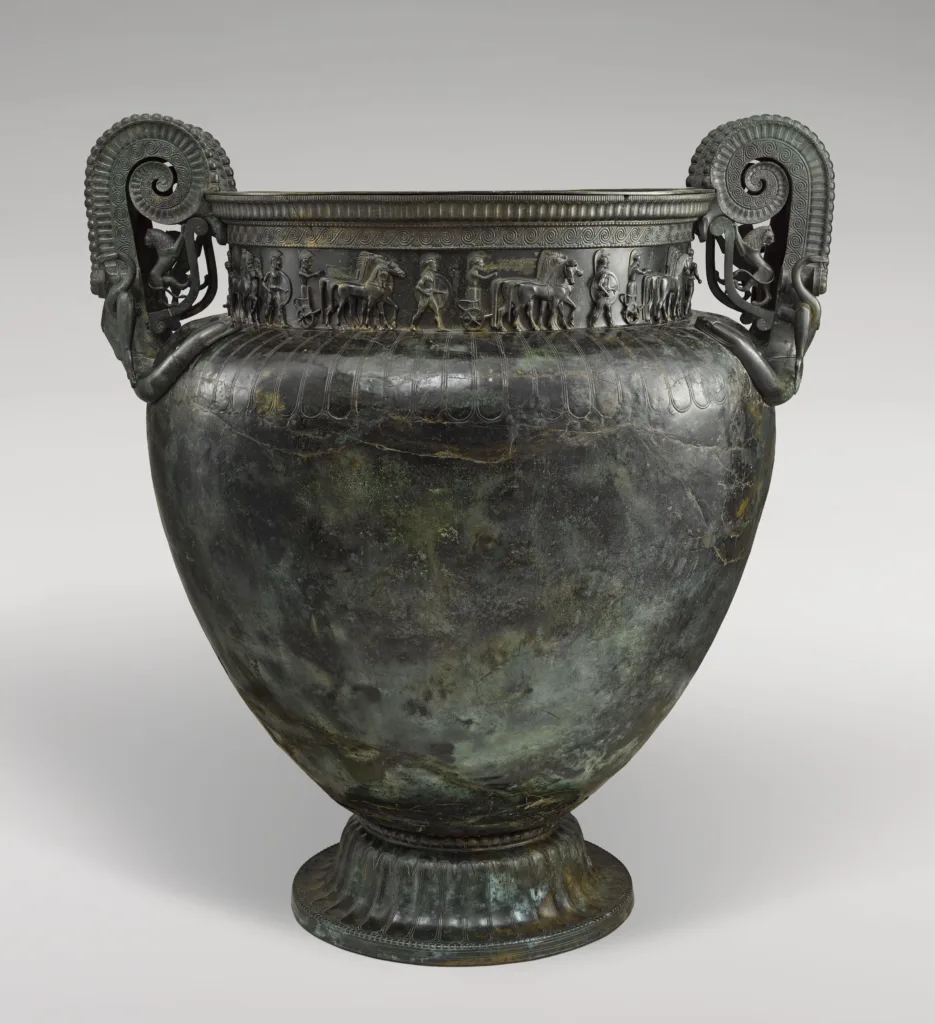
Өндөр нь 1.64 метр, 1100 литрийн багтаамжтай энэхүү хүрэл тогоо нь эртний ертөнцөөс олдсон хамгийн том металл сав юм. Лабораторийн шинжилгээгээр тогооноос хар усан үзэм болон давирхайн ул мөр илэрсэн ч исэлтийн шинж тэмдэг олдсонгүй, тиймээс уг савыг дарс хадгалахад ашиглаж байсан эсэх нь тодорхойгүй хэвээр байна.
Шинээр олдсон хувцасны гоёл буюу фибула зүүлтүүд дээр үндэслэн судлаачид “Виксийн хатагтай”-н оршуулгыг МЭӨ 500 он гэж үздэг байсан хугацааг МЭӨ 470 оноос наашгүй гэж засварлаж, үйл явдлыг дор хаяж нэг үеэр хойшлууллаа. Мөн Шампань мужийн Лаво дахь ханхүүгийн булштай харьцуулан хийсэн ДНХ-ийн шинжилгээгээр тэдний хооронд шууд төрөл садангийн холбоо байхгүй болохыг тогтоожээ.
Дэлгэрэнгүйг эх сурвалжаас харах
↓Эх сурвалжийг нээх ↓
In 1953, excavators dug out the earth around a famous French tomb and shoveled it straight back in. Nearly 70 years later, archaeologists returned to sift through that same soil, this time using fine-mesh screens. Caught in one of them was a pale half-moon of coral, barely a centimeter across and worn by centuries underground.
The tiny fragment appears to belong to the tomb’s most celebrated object: the largest surviving bronze vessel from the ancient world, where it may once have sat beside the snarling face of a mythical monster.
A Drop of Coral Beside the Gorgon’s Face
The curve was the clue. Measuring just over one centimeter in diameter, the semi-circular piece of coral was recovered from soil screened after the 2019 excavation. Its shape appears to match the round sockets on the handles of the krater, according to Arkeonews. A krater is a large Greek mixing bowl, and this particular example, the Vix krater, was buried with the Lady of Vix in eastern France.
There is no mistaking the faces on its handles. They depict the grimacing Gorgon Medusa, according to the Musée du Pays Châtillonnais, where the treasure is kept. In Greek mythology, anyone who looked directly at Medusa turned to stone.
The coral would have looked quite different when the vessel was made. What is now an off-white fragment was originally bright red, a color that Inrap archaeologist Bastien Dubuis, who directed the latest excavation, believes was deliberately chosen. Set beside each Gorgon head, the red coral may have represented Medusa’s blood, transformed into stone.
There is a mythological reason for that interpretation.
In the Roman poet Ovid’s account, Perseus placed Medusa’s severed head on a bed of seaweed after killing her. As her blood soaked into the plants, they hardened into coral. A bronze-worker who placed red coral next to Medusa’s face could have been drawing on the same story. But the connection remains an interpretation, not a proven fact: no inscription or other conclusive evidence has been found to establish what the coral was meant to symbolize.
Treasure Hidden in the 1953 Spoil
The story of how the coral survived begins with the original excavation. In 1953, René Joffroy and Maurice Moisson opened the tomb near Mont Lassois in France’s Côte-d’Or region. Inside were a gold torc, precious vessels, a four-wheeled ceremonial chariot and the remains of a woman of considerable standing.
Conditions were miserable. The work took place in winter, the ground was waterlogged, and the excavation had to be carried out quickly. Much of the removed soil was simply shoveled back into the tomb once the digging was finished.
That discarded earth became a source of discoveries decades later. When archaeologists reopened the site in 2019, they collected approximately 72 large bags of soil and sifted the contents through screens with three-millimeter openings. The work produced roughly 2,000 previously overlooked fragments, including metal components from the chariot, bronze nails, pieces of vessels and fibulae, the decorated brooches used to fasten clothing.
Not everything in the soil had been made locally. Fragments of black sapropelite bracelets, for example, were traced to the Dorset coast of southern England.
Another discovery was smaller still: a seven-millimeter bronze fragment marked with parallel lines. On closer examination, it proved to be the fingers of the left hand of the female figurine mounted on the krater’s lid. Her thumb was subsequently located among objects already held in museum storage. With those pieces identified, archaeologists now suspect the figure originally held both hands open rather than carrying a vessel, as previously thought.
The Vessel and Its Lady
The fragments are tiny compared with the object at the center of the burial. Standing 1.64 meters high, the Vix krater can hold an extraordinary 1,100 liters of liquid. It remains the largest ancient bronze vessel ever discovered, despite being fashioned from a single sheet of bronze just 1.2 millimeters thick.
Its total weight is 208.6 kilograms.
Exactly where such an enormous vessel was produced is still disputed. Some researchers favor workshops around Poseidonia in southern Italy; others have suggested northern Ionia, near Phokaia on the western coast of present-day Turkey. Dubuis places its manufacture at approximately 540 BC.
What people actually drank from it is another unanswered question.
Chemical tests on bronze fragments detected traces of pitch and black grapes, but the researchers found no markers of fermentation that would establish whether the vessel had contained wine. Dubuis has pointed out a difficulty with those results: extensive cleaning in the past may have stripped away some of the original residues.
As for the woman buried alongside it, her status is hard to dispute. She was around 40 years old when she died and had been laid on the body of a chariot, wearing a gold torc and bronze fibulae.
A Funeral a Generation Later
The newly recovered brooches have prompted archaeologists to reconsider when she was buried. The number of known fibulae from the tomb has doubled, from eight to 16, and their dating points to a later funeral than previously assumed. For years, researchers placed the burial at around 500 BC. The new evidence suggests the Lady of Vix was not laid to rest before 470 BC, pushing the event forward by at least a generation.
That revised chronology brings another remarkable burial into the discussion.
In 2015, Inrap archaeologists uncovered a princely tomb dating to the early fifth century BC at Lavau, in Champagne, roughly 40 miles north of Vix. The Lavau burial shared several striking features with the Lady of Vix’s grave, particularly the lavish equipment associated with feasting.
At Lavau, chemical analysis of a large cauldron also identified residues associated with red wine, something the tests on the Vix krater have not conclusively established.
A direct family connection between the two burials has now been tested. DNA extracted from one of the Lady of Vix’s teeth, recovered during the 2019 screening, showed that she was neither the mother nor the grandmother of the prince buried at Lavau.
Enjoyed this article? Subscribe to our free newsletter for engaging stories, exclusive content, and the latest news.

