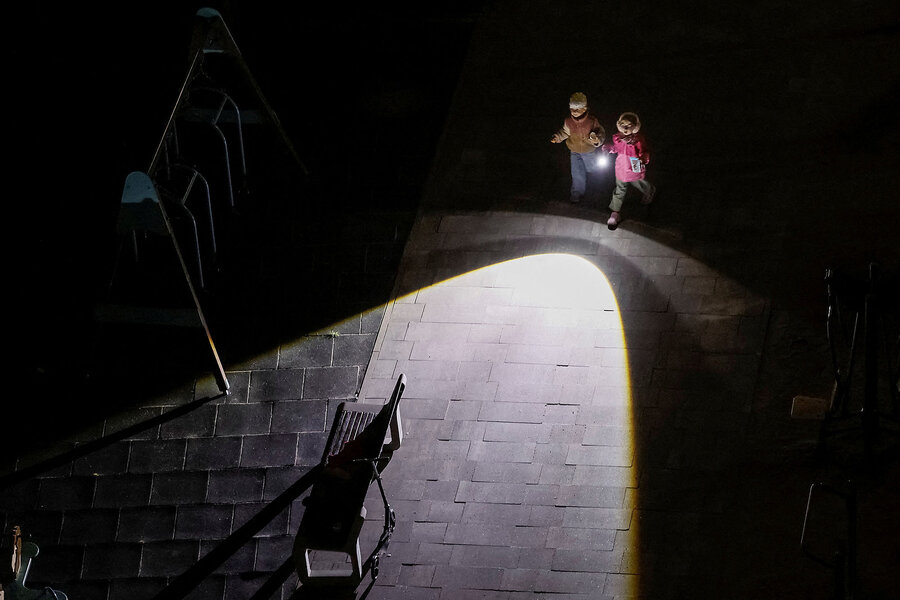
Оросын эрчим хүчний дэд бүтцэд хийж буй довтолгоо нэмэгдэхийн хэрээр Киевийн айл өрх, хотын захиргаа цахилгаан, дулааны хангамжаа бэхжүүлэхээр ажиллаж байна.
Киевийн орон сууцны холбооны тэргүүн Тетяна Сильянтевагийн байр өнгөрсөн өвөл цахилгаантай хэвээр байсныг хөршүүд нь авлигын хэрэг гэж хардаж байжээ. Гэвч барилгад цахилгаан тасарсан үед ашиглах инвертерийн батарей суурилуулсан аж. Одоо тус байрны дээвэрт нарны хавтан байрлуулж, халаалтын шугамыг дулаалж, цонх хаалгыг дулаан хадгалах материалаар шинэчилжээ.
Киевийн бэлэн байдлыг өмнөх өвлүүдэд ч шүүмжилж байсан бөгөөд 2025–2026 оны өвөл нийслэлд онцгой хүнд туссан юм. Нэгдүгээр сард хотын бараг 60 хувь нь цахилгаангүй болж, олон мянган орон сууц дулаангүй үлдсэн бөгөөд агаарын хэм Цельсийн хасах 18 хэм орчимд хүрчээ. НҮБ-ын Украины асуудлаарх хараат бус мөрдөн шалгах комисс 2026 оны аравдугаар сарын тайландаа Оросын эрчим хүчний дэд бүтцэд сүүлийн дөрвөн жилд системтэй хийсэн довтолгоог дайны гэмт хэрэг болон хүн төрөлхтний эсрэг гэмт хэрэг гэж дүгнэсэн байна.
Киев хотын дарга Виталий Кличко арванхоёрдугаар сар гэхэд 1,600 мегаваттын нөөц дулаан хангамжийн системийг дуусгахаа мэдэгдсэн ч аравдугаар сарын хэвлэл мэдээллийн шалгалтаар төлөвлөсөн хүчин чадлын 350 мегаватт нь бэлтгэл шатандаа байжээ. Хот мөн 700 орчим генератор, 70 зөөврийн бойлерын байгууламж бэлтгэсэн байна. Төлөвлөгөөт тасалдлаар зарим өрх өдөрт 17 цаг хүртэл цахилгаангүй байгаа бөгөөд Ерөнхий сайд Серхий Корецкий аравдугаар сард Орос улс долдугаар сарын дунд үеэс хойш эрчим хүчний байгууламжид 2,147 удаа довтолсон гэж мэдэгджээ.
Иргэд ч зөөврийн цахилгаан үүсгүүр, батарей худалдан авч нөөцөө бүрдүүлж байна. Украины эрчим хүчний шинжээч Андрей Закревскийн мэдээлснээр, 2026 оны наймдугаар сар гэхэд тус улс 6.5 гигаваттын нарны эрчим хүчний хүчин чадалтай болж, 7.2 гигаваттын цөмийн эрчим хүчний хүчин чадалтайгаа ойртжээ; мөн хийн түлшээр ажилладаг төвлөрсөн бус үүсгүүрийн хүчин чадал 2.4 гигаватт болж, хийн нөөц 15 тэрбум шоо метрээс давсан байна. Харьцангуй эрт арга хэмжээ авсан Харьков эрчим хүчний сүлжээгээ долоон бие даасан хэсэгт хуваасан бол Киевийн хий холболтгүй, Зөвлөлтийн үеийн өндөр барилгууд эмзэг хэвээр байгааг шинжээч онцолжээ.
Дэлгэрэнгүйг эх сурвалжаас харах
↓Эх сурвалжийг нээх ↓
Kyiv, Ukraine
|
Nov. 16, 2026, 2:00 p.m. ET
|
5 min read
When Tetiana Sylantieva’s building in Kyiv kept the light on last winter, people in the nearby buildings without power thought something nefarious was going on.
“The neighbors thought it was corruption,” the head of the apartment owners association says with a smile, recalling their disbelief. But the actual reason was inverter batteries, which stored current for use when the grid was offline.
And Ms. Sylantieva hasn’t left things there. With many of her building’s residents pushing on in age, ensuring reliable heating and keeping the elevator running are essential for their collective safety and wellbeing.
“The war has definitely influenced how people view energy efficiency,” she says, leading a whirlwind tour showcasing all the installations that she has shepherded to existence. Today, the building’s rooftop is peppered with solar panels, the heating pipes are wrapped in special insulation, and windows and doors have been refitted with materials designed to retain heat.
Across Kyiv, residents are making similar preparations as Russia intensifies its campaign to plunge Ukraine into darkness and cold as winter approaches. While officials trade blame over Kyiv’s overall preparedness, households are taking matters into their own hands.
“Everyone is preparing to the best of their capacity, and everyone realizes that it won’t be an easy winter,” says Ms. Sylantieva. ”It is very hard to scare Ukrainians at this stage.”
Dominique Soguel
Tetiana Sylantieva stands on the roof of her apartment building in Kyiv, which, like others in the city, installed solar panels in pursuit of energy efficiency and autonomy.
A vulnerable target
Kyiv’s preparedness has come under intense political and public scrutiny over successive winters. Widespread blackouts struck in late 2022, but the winter of 2025-26 is etched in collective memory as excruciatingly cold. In January, nearly 60% of the capital lost electricity and thousands of apartment buildings were left without heating as temperatures plunged to nearly -18 degrees Celsius (0 F).
The U.N. Independent International Commission of Inquiry on Ukraine concluded in its October 2026 report that Russia’s systematic attacks on energy infrastructure in Ukraine over the past four years constitute war crimes and crimes against humanity, noting that Russian attacks intensified when temperatures plunged.On Monday, EU foreign policy chief Kaja Kallas suggested Russia was increasing its threshold for peace talks in order to prolong the war and intensify attacks on Ukraine’s energy infrastructure ahead of winter.
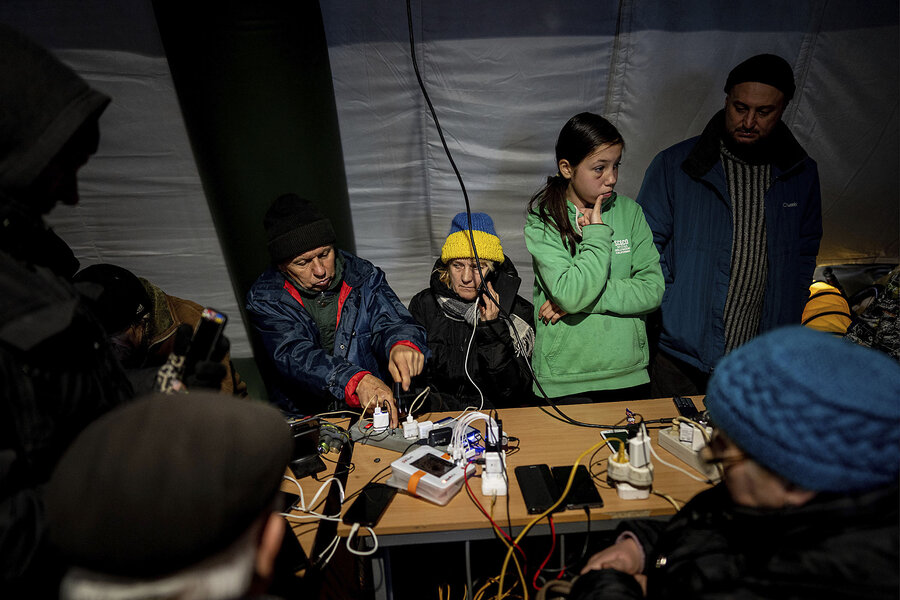
Ukrainian authorities are trying to bolster energy resilience. Kyiv Mayor Vitali Klitschko committed to completing a 1,600-megawatt backup heating system by December. An October investigation by the Ukrainian news outlet LB.ua, however, found that 350 megawatts of planned capacity remained at the preparatory stage. The city has also prepared nearly 700 generators and 70 mobile boiler houses alongside emergency shelters known as “Points of Invincibility,” where residents can come warm up and charge cellphones.
Still, scheduled blackouts have left some households facing up to 17 hours without power a day, often split into three separate outages. Emergency cuts following Russian attacks, which have aggressively targeted Ukraine’s energy infrastructure ahead of winter, sometimes render even those schedules meaningless. Prime Minister Serhii Koretskyi told BBC Ukraine in October that Russia had carried out 2,147 attacks on energy facilities since mid-July, with not a single day spared.
“We are protecting everything that can be protected and expanding distributed generation,” he said. “Together with our partners, we are accumulating sufficient reserves of spare transformers and equipment so that damaged assets can be replaced quickly. We are also reinforcing backup power for critical facilities, including water supply pumping stations.”
“A crucial investment”
It is against this background that Kyiv’s residents are building their own energy resources. At a store selling portable power stations and battery storage systems, the products lining the store’s shelves tell the story of how the capital’s residents have adapted to the war.
Some 300 orders had poured in overnight, twice the usual daily average, after authorities announced the return of scheduled power cuts. “It is like the stock market,” says Serhii Silin, gesturing toward stacked boxes awaiting dispatch. “Our sales react very sensitively to energy news and what politicians say.”

Dominique Soguel
Serhii Silin, brand manager for energy company Ecoflow in Ukraine, explains how demand has shifted toward increasingly powerful energy systems as Ukrainians seek reliable backup power amid energy disruptions triggered by Russian attacks, Oct. 7, 2026, in Kyiv.
In the early days of Russia’s full-scale invasion in 2022, customers sought small, 600-watt portable batteries, originally designed for camping and outdoor activities, to keep phones, laptops, and Wi-Fi routers running during the blackouts.
When Russian strikes on the power grid intensified, causing outages that stretched for hours, demand shifted toward more powerful units capable of running refrigerators and other household appliances, or supplying an entire apartment for several hours.
“Before, people saw that as a privilege,” he says. “Now they see it as a crucial investment. You will need it this winter. You will need it next winter.”
Some are trying to achieve energy autonomy. Mr. Silin’s own house is a model of that ambition. Solar panels generate enough electricity to power his home and charge his electric car, leaving him largely independent of the grid. But that level of energy independence isn’t cheap. It would cost a customer about a million hryvnias ($22,000) to buy a comparable installation.
Even smaller backup systems represent a significant expense. Many turn to installment plans to afford them. “A few years ago, 70% of customers paid the full amount upfront and 30% bought in installments. Now it is the other way around.”
Evgeniy Maloletka/AP/File
People charge their phones at a “Point of Invincibility,” a government-built heating tent in Kherson, Ukraine, Dec. 3, 2022.
Decentralization as defense
Ukraine’s energy system is considerably better prepared for Russian attacks than it was a year ago, says energy expert Andrii Zakrevskij. He credits the expansion of decentralized power generation, improved management, and increased gas reserves.
“Russians have left us no choice,” he says. “We saw that in the first year of the full-scale invasion there is no other way but decentralization, in which we would be able to provide heat and electricity to the Ukrainian population and to its businesses.”
The shift is clear in the numbers. By August 2026, Ukraine had installed 6.5 gigawatts of solar capacity, approaching its 7.2 gigawatts of nuclear capacity, according to the expert. The country also has 2.4 gigawatts of decentralized gas-fired generation, while gas reserves have grown to more than 15 billion cubic meters, up from 13.2 billion last year.
Deepen your worldview
with Monitor Highlights.
Politics with respect
Get political stories with respectful analysis.
There‘s a world of new ideas in every
Books newsletter.
There‘s more to life, enrich yours with
Culture & Learning weekly.
Follow humanity‘s discoveries with
Science & Nature stories in your inbox.
Gain a spiritual perspective
from the stories in your inbox.
Want to understand the deeper impact of critical events? Learn the Monitor‘s insight.
Already a subscriber?Log in to hide ads.
Cities that acted early are already seeing the benefits, Mr. Zakrevskij says. Kharkiv, despite relentless Russian attacks, has divided its energy network into seven autonomous “islands.” But Kyiv, Mr. Zakrevskij adds, remains vulnerable, particularly due to its Soviet high-rises without gas connections.
Oleksandr Naselenko supported reporting for this article.

