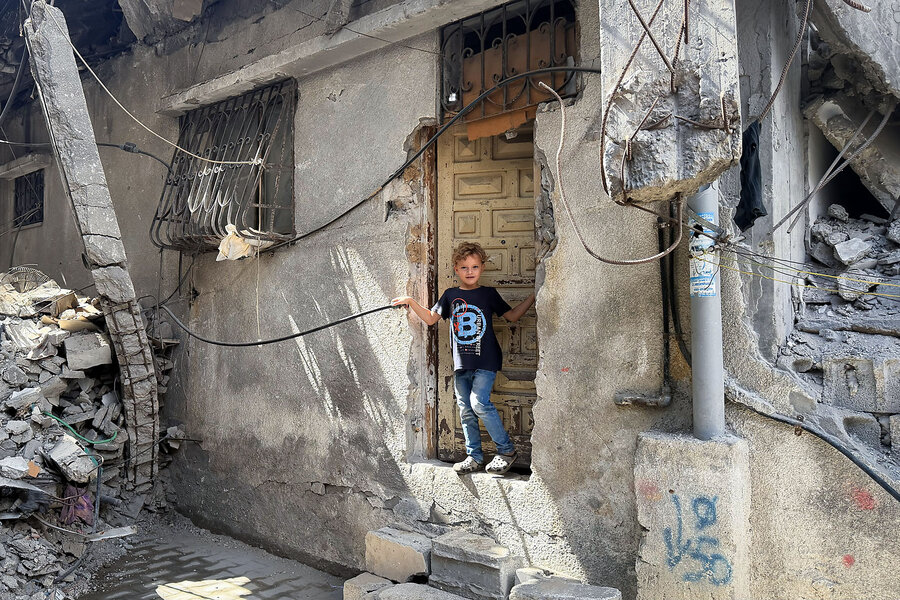
Гал зогсоох хэлэлцээрээс хойш нэг жилийн дараа Газын зурвасын оршин суугчдын 65 хувь нь майхан болон түр хоргодох байранд амьдарсаар байна.
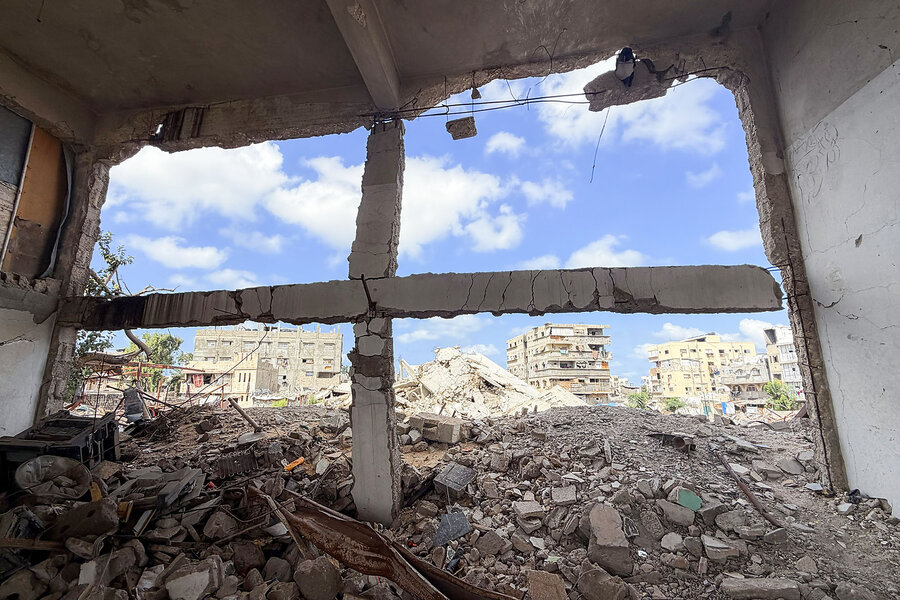
2023 оны аравдугаар сараас 2025 оны аравдугаар сарын хооронд Израилийн арми Газын зурвас дахь байшин, орон сууцны дөрөвний гурваас илүүг сүйтгэсэн эсвэл гэмтээжээ. Иймээс зарим оршин суугч дээвэр, хана, цонх нь эвдэрсэн барилгад амьдрахаас өөр аргагүйд хүрч байна. Барилга нурах эрсдэлээс гадна ус, бохирын шугамын эвдрэл нөхцөл байдлыг хүндрүүлж байгаа ч олон хүний хувьд майхнаас илүү боломжит сонголт болжээ.
Яссер Али 2025 оны есдүгээр сард Израилийн хуурай замын цэргийн ажиллагаанаас өмнө Газа хот дахь орон сууцаа орхиж, сарын дараа эргэн ирэхэд барилгынх нь тал хэсэг нурсан байв. Гэр бүл нь Дейр-эль-Балах, Рафах хотуудад майханд амьдарч үзсэн ч борооны ус нэвчиж, мэрэгч амьтад орж ирдэг байсан тул буцаж иржээ. Орон сууцных нь 1,600 хавтгай дөрвөлжин фут талбайн гуравны нэг орчим нь ашиглах боломжтой үлдсэн бөгөөд дотор хана байхгүй тул 15 хүн даавуугаар хэсэглэн амьдарч байна.
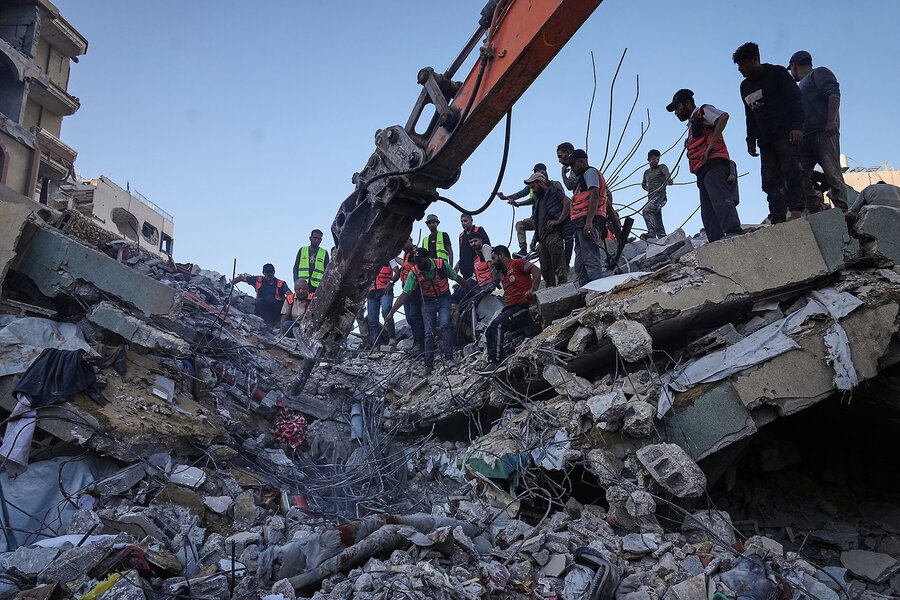
Газа хотод орон сууцны барилгад амьдарч буй хүмүүсийн тал нь дунд зэргийн болон түүнээс хүнд гэмтэлтэй байшинд байгаа бол тавны нэг нь ноцтой эвдэрсэн, хэсэгчлэн нурсан барилгад амьдарч байна. 2026 оны есдүгээр сарын 16-нд Санаа дүүргийн зургаан давхар Аль-Саада барилга нурж, 12 хүүхэд зэрэг 21 хүн амиа алджээ. Газын эрх баригчид уг барилгыг гурван жилийн өмнө Израилийн агаарын цохилтод өртөж ноцтой гэмтсэн гэж мэдээлсэн бол Израиль бөмбөгдсөн гэдгээ үгүйсгэжээ.
Нуралтын дараах эрэн хайх, аврах ажиллагааг хүнд машин механизм, тоног төхөөрөмж дутмаг тул голдуу гараар явуулсан бөгөөд Израилийн эрх баригчид зарим тоног төхөөрөмжийг террорист чадавхыг хөгжүүлэхэд ашиглаж болзошгүй гэж үзэн оруулахыг хязгаарладаг. Газа хотын захиргаа 380 орчим барилгад аюултай гэсэн тэмдэглэгээ тавьж, тэдгээрийн 230-ыг нурааж, оршин суугчдыг нүүлгэн шилжүүлэхийг зөвлөсөн бол зурвас даяар 2,000 орчим барилга нурах эрсдэлтэй гэж эрх баригчид мэдээлжээ. Гэвч түрээс төлөх боломжгүй, майхан барих газаргүй хүмүүсийн зарим нь нүүх аргагүй байгаа бөгөөд аюултай барилгад амьдардаг Наим Камал аль-Ашрам одоохондоо дээвэртэй байхыг илүүд үзэж байна.
Дэлгэрэнгүйг эх сурвалжаас харах
↓Эх сурвалжийг нээх ↓
Gaza City, Gaza Strip
|
Nov. 17, 2026, 4:08 p.m. ET
|
4 min read
In September 2025, Yasser Ali evacuated his apartment in Gaza City ahead of an Israeli ground invasion. When he returned a month later, he found it blown apart, a mess of collapsed ceilings and exposed rebar. The walls between the rooms no longer existed.
Despite all of this, the father of three counted himself among the fortunate. In Gaza, “whoever finds a home should feel happy,” Mr. Ali says.
Indeed, a year after a ceasefire between Israel and Hamas, some 65% of Gazans still live in tents or makeshift shelters. Even if they had the means to relocate, most have nowhere to go back to. Between October 2023 and October 2025, the Israeli military destroyed or damaged more than three-quarters of all houses and apartment buildings in the Gaza Strip.
Now, however, many are choosing to live in the fractured buildings that remain, which often lack the basic elements of shelter: walls and doors, windows and roofs. The risks are serious, including cracked columns and walls that could collapse at any moment on the people sleeping beneath them. Sewage and water networks are damaged or nonexistent. But without alternatives, many here continue to view these shelters as their best option.
“People ask me, ‘How can you live here?’” says Mr. Ali. “But what can I do?”
A collapsed country
He knows the alternative.
During his displacement, he and his family, including his three children, lived in tents in Deir al-Balah and Rafah. Mice and rats scurried across the floor. Some89% of Gazans share their living spaces with rodents, and nearly 80% live alongside mosquitoes, ticks, and lice, according to research by the Global Shelter Cluster.
Ghada Abdulfattah
Displaced families shelter in makeshift tents surrounded by damaged residential buildings in Gaza, Oct. 8, 2026.
When it rained, water poured through the flimsy tarpaulin roof.
When the family returned to Gaza City, they tried living in a tent for two weeks, but “[we] could not bear it,” he says.
So they went back to their apartment. The five-story building’s front half was entirely collapsed, buckled ceilings stacked on top of each other and slanted sharply downward toward the road below.
Inside, only about a third of the 1600-square-foot space was still usable. There were no interior walls left, so the 15-member family slung nylon sheets across what remained of the ceiling to create improvised rooms.
Half of the people in Gaza City living in formal structures are in buildings that are at least moderately damaged. A fifth are in severely damaged or partially collapsed buildings, and only 12% live in structures that were unscathed by the war.
For all its dangers, however, Mr. Ali says the apartment offers something a tent cannot: “a place that still resemble[s] home.”
Ghada Abdulfattah
With three-quarters of houses and apartments in Gaza destroyed by Israeli attacks, many here are sheltering in dangerously damaged structures, Oct. 8, 2026.
No way out
Still, he and others living in damaged buildings don’t need to look far to be reminded of the risks.
On Sept. 16, 2026, the Al-Saada building, a six-story apartment block in the Sanaa area of Gaza City, collapsed suddenly. It had sustained severe damage from an Israeli airstrike three years earlier, according to Gazan authorities. (Israel denies having bombed Al-Saada, whose name means “happiness” in Arabic.) When the building buckled in the middle of the night, 21 people died, including 12 children. Dozens more were injured.
“I felt terror,” Mr. Ali recalls. “I felt fear for the situation I am in, that what happened at Al-Saada could happen to us.”
Rescue crews dug through the concrete and twisted steel largely by hand, hampered by a lack of heavy machinery, construction equipment, and life-detection devices. Importing these items is largely prohibited by Israeli authorities, who argue they “could be used to develop terrorist capabilities.”
Jehad Alshrafi/AP
Palestinian civil defense crews search for bodies and survivors in the rubble of the Al-Saada apartment building in Gaza City, Sept. 16, 2026.
The crews “are brave,” says Ruqayya Abu al-Rub, head of the Gaza reconstruction team at the Palestinian Ministry of Public Works and Housing, based in the West Bank. “They are part of the fabric of this community, and they have never hesitated to carry out their duties despite these challenges.”
The Gaza municipality has placed warning signs in purple ink on nearly 380 unsafe buildings, and recommended that 230 of them be demolished and the residents relocated. Across the Gaza Strip, authorities say some 2,000 buildings are at risk of collapse.
But some residents are unwilling – or simply unable – to go.
Naeem Kamal Al Ashram lives in a building that the city has warned is close to collapse. The columns holding up the walls are crumbling, and the ceilings are not stable. Residents say the entire building shakes at night.
Deepen your worldview
with Monitor Highlights.
Politics with respect
Get political stories with respectful analysis.
There‘s a world of new ideas in every
Books newsletter.
There‘s more to life, enrich yours with
Culture & Learning weekly.
Follow humanity‘s discoveries with
Science & Nature stories in your inbox.
Gain a spiritual perspective
from the stories in your inbox.
Want to understand the deeper impact of critical events? Learn the Monitor‘s insight.
Already a subscriber?Log in to hide ads.
He says people are divided over what should happen next. Some recognize the danger and say they would leave if they had an alternative. Others resist evacuation because they cannot afford rent or lack access to a suitable plot of land on which to set up a tent.
Mr. Al Ashram says he wants to stay. For now, at least, there is a roof above him.

