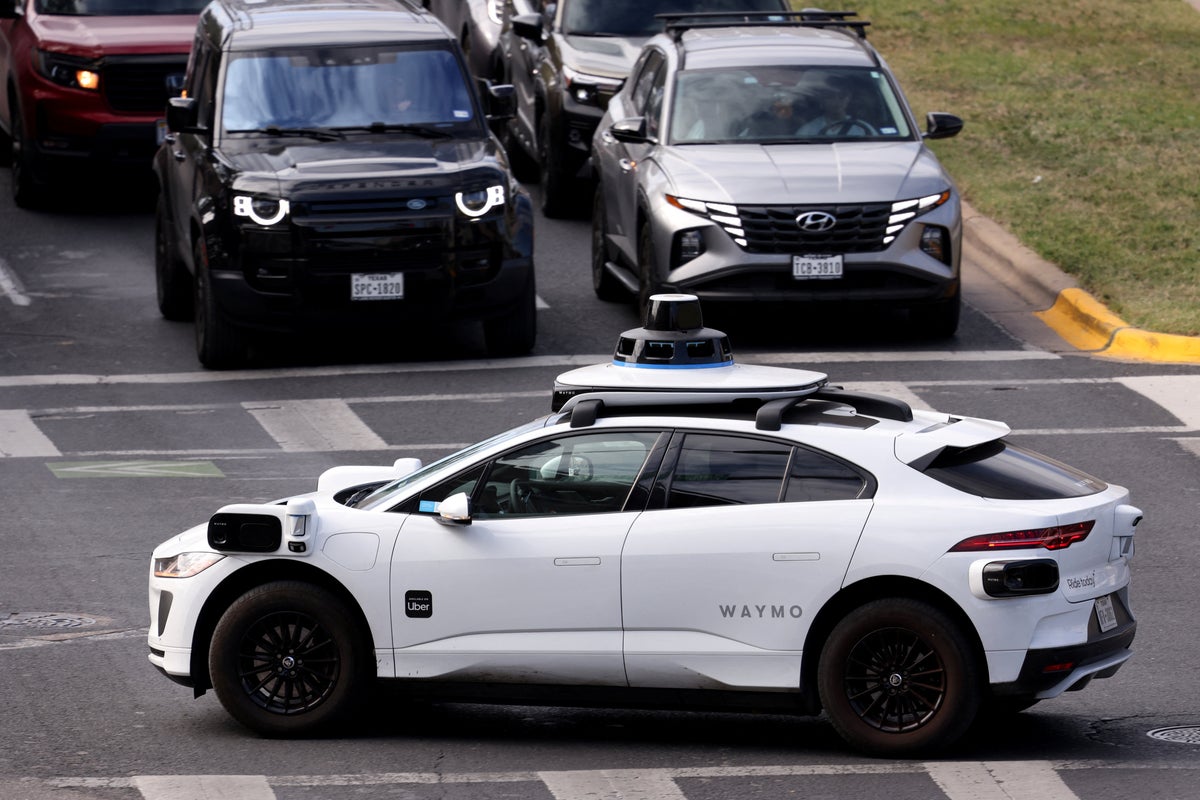
Калифорни муж хурдны замд жолоочгүй автомашин зорчихыг хориглосны дараа тус компани үйлчилгээнийхээ түр хязгаарлалтыг АНУ-ын бүх зах зээлд хэрэгжүүлжээ.
Waymo өнгөрсөн лхагва гарагаас эхлэн жолоочгүй автомашинаар хурдны замд зорчигч тээвэрлэх үйлчилгээгээ үйл ажиллагаа явуулдаг бүх зах зээлдээ түр зогсоосон байна. Харин тусгайлан бэлтгэгдсэн ажилтнууд жолооны ард суусан нөхцөлд хурдны зам дээр туршилтаа үргэлжлүүлж байгаа гэж компанийн төлөөлөгч мэдэгджээ.
Тус компани өмнө нь Сан-Францискогийн булангийн бүс, Лос Анжелес, Финикс, Майами болон Остин хотод хурдны замын роботакси үйлчилгээ үзүүлдэг байв. Калифорни муж жолоочгүй автомашинуудыг хурдны замаар зорчихыг хориглосон өдөр Waymo уг үйлчилгээгээ түр хязгаарласан ч энэ арга хэмжээ хэр удаан үргэлжлэхийг мэдээлээгүй байна.
Калифорнийн Авто тээврийн хэрэгслийн хэлтсийн мэдээлснээр, арваннэгдүгээр сарын 5-нд Waymo-гийн гурван автомашин зам засварын бүс рүү орсон бол маргааш нь Сан-Францискогийн хурдны замд Калифорнийн хурдны замын эргүүлийн автомашинуудтай холбоотой өөр нэг хэрэг гарчээ. Хэлтсийн төлөөлөгч Жонатан Гровеман жолоочгүй автомашинууд идэвхтэй засварын бүсэд удаа дараа нэвтэрч, ажилчид болон тоног төхөөрөмжид аюул учруулсан тул хурдны замын үйл ажиллагааг олон нийтийн аюулгүй байдалд шууд заналхийлж байна гэж тайлбарлав. Түүний хэлснээр, үүнтэй төстэй хэрэг тавдугаар сарын 18-нд мөн гарч байжээ.
Waymo автомашинууд нь замын хөдөлгөөний аюулгүй байдлыг нэмэгдүүлж, ослоор амь насаа алдах болон хүнд гэмтэх тохиолдлыг арилгах зорилготой гэж мэдэгддэг. Харин Их Британид техникийн бэрхшээлийн улмаас жолоочгүй автомашины үйлчилгээг Лондонд хараахан эхлүүлээгүй бөгөөд тус улсын Засгийн газар 2025 онд нэвтрүүлэлтийг хурдасгахыг зорьж байв.
Дэлгэрэнгүйг эх сурвалжаас харах
↓Эх сурвалжийг нээх ↓
Want to bookmark your favourite articles and stories to read or reference later? Start your Independent Membership today.
Already a member?
{
experienceElement.style.display = ‘none’;
let checks = 0;
const maxChecks = 50;
const checkDrawerVisibility = setInterval(() => {
const drawer = document.querySelector(‘.pn-drawer–login, .pn-drawer, #login-drawer, .login-drawer-container, [class*=”login-drawer”]’);
const drawerCloseBtn = document.querySelector(‘#drawer > div > button’);
const isDrawerVisible =
(drawer &&
(drawer.offsetParent !== null ||
drawer.classList.contains(‘is-open’) ||
window.getComputedStyle(drawer).display !== ‘none’)) ||
drawerCloseBtn;
checks++;
if (isDrawerVisible) {
clearInterval(checkDrawerVisibility);
const monitorClosure = setInterval(() => {
const drawerStillHere = document.querySelector(
‘.pn-drawer–login, .pn-drawer, #login-drawer, .login-drawer-container, [class*=”login-drawer”]’
);
const innerContent = document.querySelector(‘#drawer > div’);
const isVisible =
(drawerStillHere &&
(drawerStillHere.offsetParent !== null ||
drawerStillHere.classList.contains(‘is-open’) ||
window.getComputedStyle(drawerStillHere).display !== ‘none’)) ||
innerContent;
if (!isVisible) {
clearInterval(monitorClosure);
experienceElement.style.display = ‘flex’;
}
}, 500);
if (drawerCloseBtn) {
drawerCloseBtn.addEventListener(
‘click’,
() => {
setTimeout(() => {
experienceElement.style.display = ‘flex’;
}, 100);
},
{ once: true }
);
}
} else if (checks >= maxChecks) {
clearInterval(checkDrawerVisibility);
experienceElement.style.display = ‘flex’;
}
}, 200);
};
{
document.documentElement.classList.add(‘mos-bookmark-open’);
const el = document.querySelector(‘.bookmark-experience’);
if (el) el.style.display = ‘flex’;
document.cookie = ‘mos-plan-select=; Max-Age=0; path=/; expires=Thu, 01 Jan 1970 00:00:00 UTC;’;
el?.querySelector(‘.subscribe-link’)?.addEventListener(‘click’, (e) => {
e.preventDefault();
document.cookie = ‘mos-plan-select=; Max-Age=0; path=/; expires=Thu, 01 Jan 1970 00:00:00 UTC;’;
setTimeout(() => {
window.location.href = “https://www.independent.co.uk/subscribe/app?regSourceMethod=Bookmarks”;
}, 500);
}, { once: true });
el?.querySelector(‘.close-btn’)?.addEventListener(‘click’, () => {
document.documentElement.classList.remove(‘mos-bookmark-open’);
}, { once: true });
});
]]>
Waymo has stopped offering driverless taxi rides on all freeways in the US – and is yet to confirm when the suspension will lift.
The California-based company had allowed riders to hail so-called robotaxis, which use a combination of sensors, high-detail maps, and AI software that drives without a human behind the wheel, for freeway rides in the San Francisco Bay Area, Los Angeles, Phoenix, Miami and Austin.
Waymo also offers rides on city streets in other areas such as Las Vegas, Dallas and Denver.
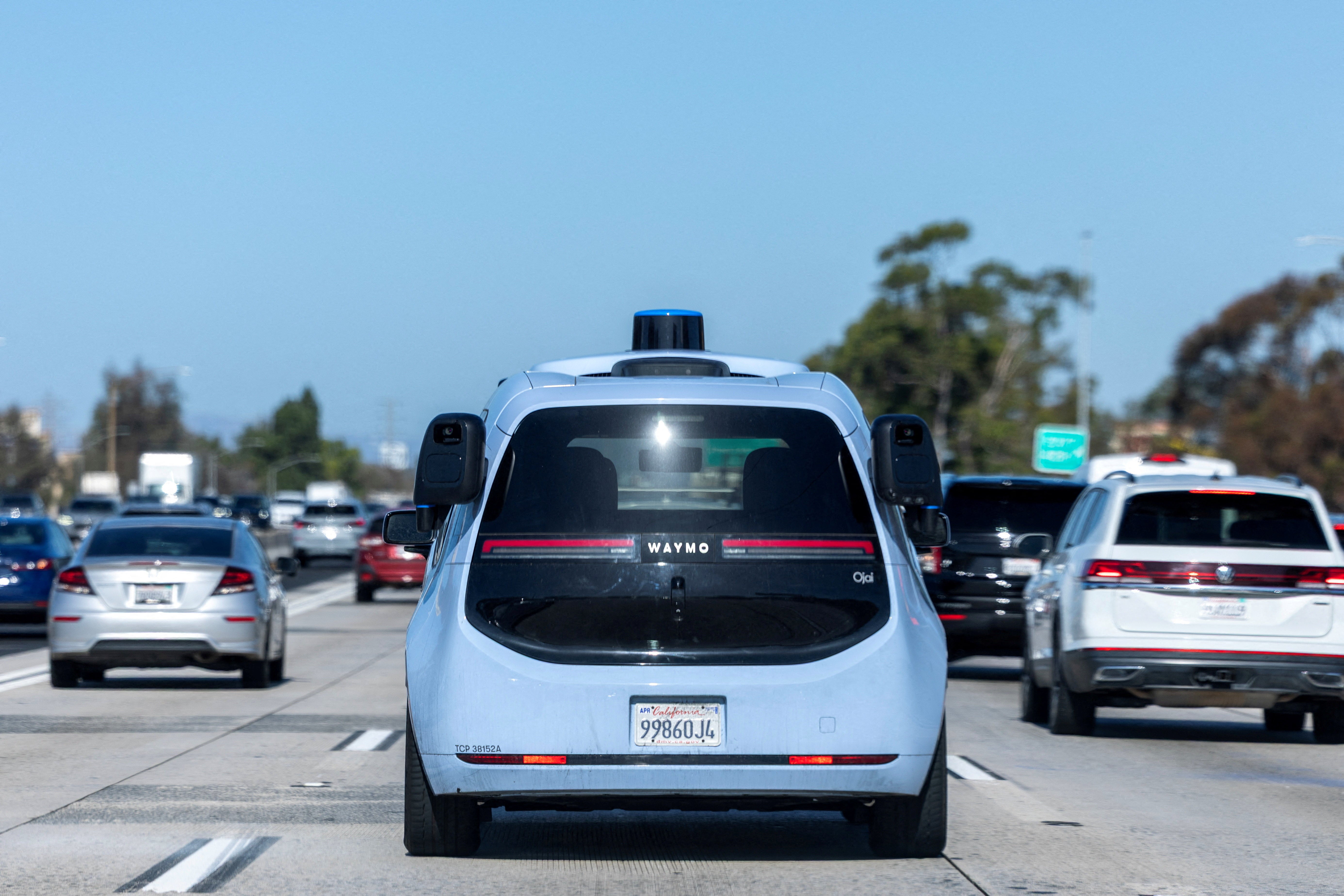
A spokesperson for the company wrote in an email that it has “temporarily restricted commercial freeway rides in all markets where we operate that service,” though it’s “continuing freeway testing with trained autonomous specialists behind the wheel.”
cookie.trim() === ‘__DEBUG__=true’)) { console.log(‘Ad logs: “mpu1”, injectedAtParagraph: 3’); }]]>
The suspension was implemented last Wednesday but the spokesperson did not say how long it will last.
The move comes on the same day that California banned the autonomous vehicles from its freeways following two incidents, including one in which three Waymo vehicles drove into a construction zone.
The incident occured on 5 November, according to the California Department of Motor Vehicles (DMV) while the second incident, which involved California Highway Patrol vehicles, occurred the next day on a highway in San Francisco
cookie.trim() === ‘__DEBUG__=true’)) { console.log(‘Ad logs: “taboola-carousel-thumbnails”, injectedAtParagraph: 6’); }]]>
Video footage of the 6 November incident circulated on social media, showing a Waymo vehicle that appears to try and bypass California Highway Patrol vehicles conducting a traffic break.
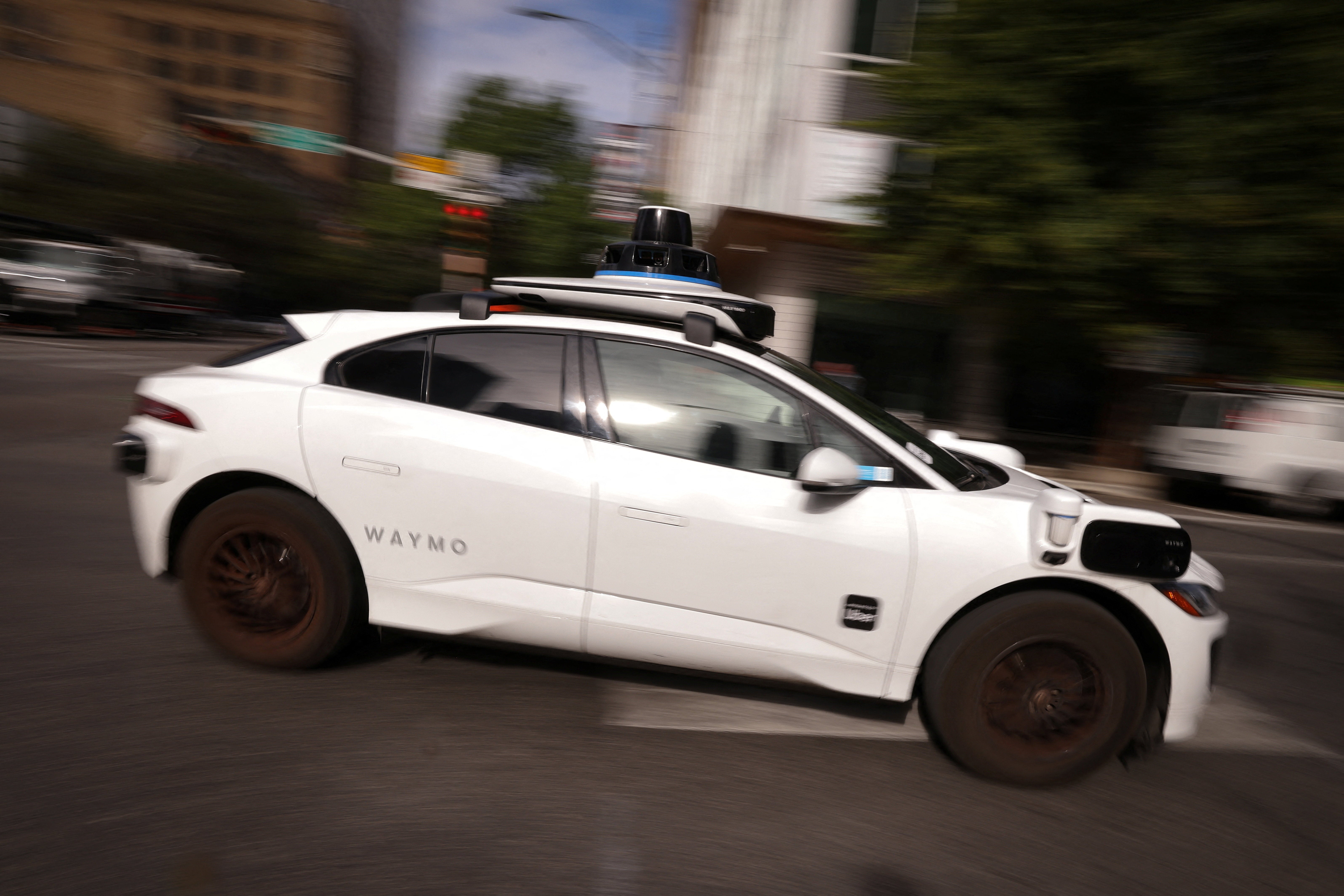
“The Department determined that Waymo’s driverless freeway operations pose an imminent hazard to public safety due to recurring incursions by its vehicles into active construction zones where construction workers, vehicles and equipment are present,” DMV spokesperson Jonathan Groveman said in a statement.
cookie.trim() === ‘__DEBUG__=true’)) { console.log(‘Ad logs: “mpu2”, injectedAtParagraph: 8’); }]]>
Groveman added that “similar incidents” previously occurred on May 18.
On its website, Waymo says its vehicles are “making streets safer” and that it is striving to eliminate traffic deaths and serious injuries.
“Backed by industry-leading safety practices, the Waymo Driver is always alert, follows speed limits, promotes seat belt use, and operates some of the safest vehicles on the road,” it adds.
cookie.trim() === ‘__DEBUG__=true’)) { console.log(‘Ad logs: “mpu3”, injectedAtParagraph: 10’); }]]>
Over in the UK, the driverless cars have yet to be rolled out in London following technical hurdles – despite the UK government trying to accelerate the launch in 2025.

