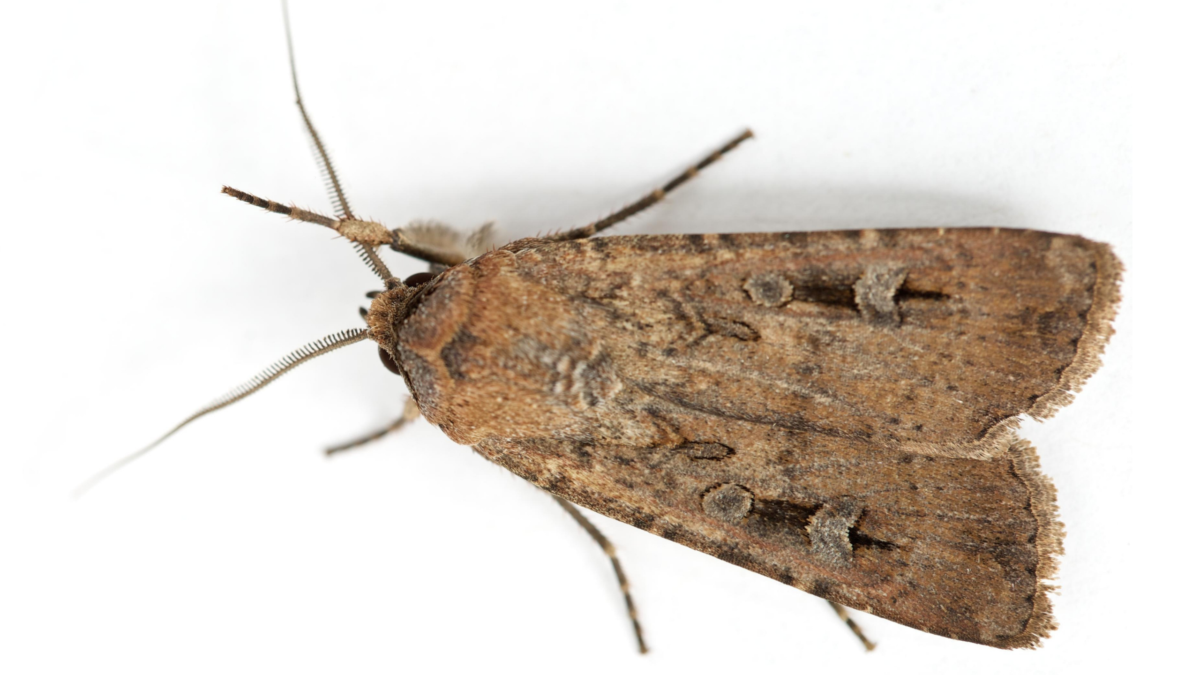
Австралийн ховордсон богонгийн эрвээхэй оддын гэрэл халхлагдсан үед ч дэлхийн соронзон орны тусламжтай нүүдлийн замаа олдгийг судлаачид тогтоожээ.
Жил бүр хавар Agrotis infusa зүйлийн залуу эрвээхэйнүүд Австралийн зүүн өмнөд нутгийн үржлийн бүсээс өмнө зүгт 1,000 километр хүртэл нүүдэллэдэг. Богонгийн эрвээхэй бүр амьдралдаа энэ замыг ганцхан удаа туулдаг ч зуныг өнгөрүүлэх Австралийн Альпийн нурууны цөөн хэдэн агуйд хүрч чадна. Тэнд зуны турш бөөгнөрөн амарч, намрын сэрүүн цаг ирэхэд үржихээр буцдаг.
Өмнөх судалгаагаар эрвээхэйнүүд оддын гэрлээр чигээ олдогийг харуулсан бол Nature сэтгүүлд нийтлэгдсэн шинэ бүтээл дэлхийн соронзон орон мөн тэдний чиг баримжаанд чухал үүрэгтэйг тогтоожээ. Шведийн Лундын их сургуулийн нейроэтологич Эрик Уоррент тэргүүтэй баг үүл оддыг халхлахад эрвээхэйнүүд чиглэлээ алдахгүй байгааг ажигласан байна.
Судлаачид хавар, намрын нүүдлийн үеэр зуны амрах газраас хойд зүгт 70 орчим километрийн зайд орших Селвин ууланд гэрлэн урхинд орсон эрвээхэйнүүдийг барьжээ. Тэднийг хяналттай соронзон орон үүсгэдэг төхөөрөмжтэй нислэгийн туршилтын орчинд байрлуулж, оддын дүрс болон соронзон орны чиглэлийг өөрчлөн туршсан байна. Соронзон орон хэвийн үед оддын дүрсийг будлиулсан ч эрвээхэйнүүд чиглэлээ олж байсан бол орныг арилгахад чиг баримжаагаа бүрэн алдсан байна.
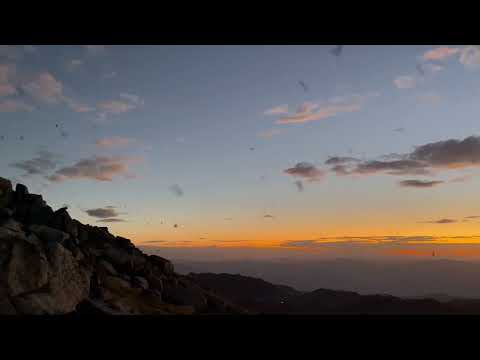
Соронзон орны чиглэлийг 180 градус эргүүлэх эсвэл хазайлтын өнцгийг урвуулахад эрвээхэйнүүд эсрэг зүгт ниссэн бол туйлыг нь солиход эргэх хөдөлгөөн хийхээ больжээ. Сул радио давтамжийн шуугиан оруулах, нил ягаан-хөх гэрлийг хаахад ч чиг баримжаа нь алдагдсан нь гэрлээс хамааралтай химийн “радикал хос” механизм оролцож болзошгүйг судлаачдад сануулж байна. Гэхдээ уг мэдрэгчийг одоогоор илрүүлээгүй бөгөөд оддын болон соронзон орны дохиог эрвээхэйнүүд хэрхэн нэгтгэдгийг цаашид судлах шаардлагатай.
Дэлгэрэнгүйг эх сурвалжаас харах
↓Эх сурвалжийг нээх ↓
Each year in Australia, masses of endangered bogong moths (Agrotis infusa) emerge from their underground cocoons to travel up to 1,000 kilometers (620 miles) south.
Every individual moth makes the return journey for the first and only time in its short life. And yet somehow, they know the way.
In a paper published in Nature today, a team led by neuroethologist Eric Warrant of Lund University in Sweden has shown how the Earth’s magnetic field guides the moths on their journey, even when starlight fails.
In spring, the fresh young moths leave their breeding grounds, which are dispersed across Australia’s south-east outback. Each night, the moths progress further towards their destination.
At the end of their long journey, they congregate at the same few caves in the Australian Alps, where they huddle in shady summer dormancy until autumn’s cool change calls them home again, to breed.
Last year, Warrant and his colleagues demonstrated that the moths can make their way navigating by starlight alone. While the Earth’s magnetic field might be involved, the moths’ sense of direction was fine without it.
But in reality, the absence of starlight is a much more frequent event than a total absence of the Earth’s magnetic field, although the field does sometimes shift, flip, and waver.
The stars, on the other hand, are regularly blocked out by clouds. Yet that doesn’t seem to deter the moths.
“These moths navigate towards their distant goal using the stars as a compass but navigate correctly even when the stars are obscured by clouds, suggesting that their magnetic sense probably harnesses the Earth’s magnetic field as a compass,” Warrant and team write.
“Our results indicate that Bogong moths use the geomagnetic field as an inclination compass for long-distance navigation at night and possess a light dependent radical-pair-based magnetic sense.”
The researchers set up light traps on Mount Selwyn, about 70 kilometers north of the moths’ summer hideout, to catch some of the scaly-winged pilgrims as they passed by in two spring and autumn migrations.
Even these moths-on-a-mission were no match for the allure of a lamp.
Once caught, the moths were “transferred to a purpose-built, ferromagnetic-free dark laboratory at our nearby field site, where they were tethered and flown in a flight simulator arena,” the researchers explain in their paper.
The arena was designed to give each moth an individual, immersive, and surprisingly elaborate simulated experience.
Once inside the arena, the moth was surrounded by familiar landscape silhouettes: a black cardboard backdrop complete with trees, grass, and hills.
A dim, moving pattern was projected on the arena floor, to mimic the ground passing below, in sync with the moth’s chosen direction.
And in the ‘sky’ above, another projector gave the impression of a natural, moonless, Australian starry night, or a randomized pattern of stars intended to confuse the moth.
This whole diorama was encased in a 3D Helmhotlz coil, a device that produces a controlled magnetic field within its sphere of influence.
For some of the tests, the scientists set the coil to follow the Earth’s regular magnetic field, but in others, they tweaked the field’s angle, or cancelled it out entirely.
Moths flying under scrambled stars had no trouble finding their way when the magnetic field was intact, but when it was cancelled, they became entirely disoriented.
The direction of the magnetic field had a major influence over the moths.
“If the geomagnetic field is turned by 180°, or if inclination is inverted, moths fly in the opposite direction,” the team reports.
“If polarity is inverted, moths fail to turn.”
So while moths can navigate by the stars just fine on a clear night, the magnetic field seems to be a crucial component of their internal compass.
On top of that, the moths became disoriented when weak radiofrequency noise was added, and when violet-blue light was filtered out. Both of those factors are known to discombobulate the navigation in other animals that use magnetic fields to navigate, like European robins and monarch butterflies.
Because those variables seem so crucial, the scientists think the moths’ magnetic field sensor could be powered by a chemical reaction (what the scientists refer to as a “radical-pair” mechanism) triggered by light. But they’ll have to find it first.
“Geomagnetic and stellar compass cues could enable Bogong moths (and probably other moths) to continue navigating in their inherited migratory direction even when the salience of one of these cues diminishes or fails (for example, because of overcast night skies or a magnetic storm),” the team concludes.
“How these multiple sensory cues are integrated behaviouraly and neurally to ensure robust long-distance navigation remains a promising avenue for future investigation.”
The research has been published in Nature.
This article was fact-checked by Fiona MacDonald and edited by Fiona MacDonald. While we pride ourselves on our process, we are only human. If you spot a mistake, please let us know.

