Европын судалгааны зөвлөлөөс сансрын ойр орчмын үйл явдлууд Дэлхийн геологи болон биологийн хөгжилд хэрхэн нөлөөлснийг тодруулах SUPREME төсөлд 3 сая еврогийн санхүүжилт олгожээ.
Helmholtz-Zentrum Dresden-Rossendorf (HZDR)-ийн профессор Антон Валлнер болон түүний баг сансрын ойр орчимд болсон супернова буюу оддын дэлбэрэлтүүд, тэдгээрээс үүсэлтэй хүнд элементүүдийн Дэлхий болон Сар руу тархсан түүхийг сэргээн босгохоор ажиллаж байна. Эрдэмтэд сүүлийн 500 сая жилийн хугацаанд тохиолдсон үйл явдлуудыг судлахдаа Кембрийн үеэс хойшхи биологийн хувьсал болон амьдралын хөгжилд сансрын эдгээр үзэгдэл хэрхэн нөлөөлснийг тодруулахыг зорьж байна. Судалгааны хүрээнд оддын амьдралын мөчлөг төгсөх үед үүсдэг алт, цагаан алт, уран зэрэг хүнд элементүүд болон радио идэвхт изотопуудын ул мөрийг хайх юм.
Энэхүү судалгааны ажилд NASA-гаас ирүүлсэн Сарны дээж, гүний тэнгисийн тунадас болон мөсөн голын цөм зэрэг геологийн архивын баримтуудыг ашиглана. 2026 оны зургадугаар сард HZDR-ийн эрдэмтэд Дэлхий дээр хадгалагдан үлдсэн сансрын матери дотроос кюри-247 болон плутони-244-ийг анх удаа амжилттай хэмжсэн нь энэхүү төслийн суурь болсон юм. Энэ нь оддын дэлбэрэлтийн үеэр нейтрон хурдан баригдах (r-process) замаар үүсдэг элементүүдийг илрүүлэх чухал ололт байлаа.
Судалгааны баг 2025 онд HZDR-д суурилуулсан HAMSTER (Helmholtz Accelerator Mass Spectrometer Tracing Environmental Radionuclides) хэмээх дэвшилтэт төхөөрөмжийг ашиглах юм. Энэхүү технологи нь лазерын тусламжтайгаар хэмжилтийн суурь шуугианыг эрс бууруулж, нэн ховор радио идэвхт изотопуудыг ганц атомын түвшинд мэдрэх боломжийг олгодог. Шинжлэх ухааны энэхүү шинэлэг аргачлал нь сансрын түүхийг илүү нарийвчлалтайгаар танин мэдэх, улмаар манай гарагийн геологийн өөрчлөлтөд сансрын хүчин зүйлс ямар үүрэг гүйцэтгэснийг тайлбарлах ач холбогдолтой юм.
Дэлгэрэнгүйг эх сурвалжаас харах
Эх сурвалжийг нээх ↓
When we think of the Solar System, we often view it as a self-contained entity, isolated from its cosmic neighborhood. However, scientists have long known that the planets of the Solar System are subject to activity in nearby star systems, including supernovae and other energetic astrophysical events. For example, it is established that intermediate elements and the heaviest elements on the periodic table are created when stars reach the end of their life cycle and explode, sending their outer layers (with these elements) into space.
These include intermediate elements ranging from carbon and oxygen to iron, nickel, and radioactive isotopes thereof, as well as heavy elements like zinc, silver, tin, gold, mercury, lead, platinum, and uranium. At the Helmholtz-Zentrum Dresden-Rossendorf (HZDR), Prof. Anton Wallner and his team have launched the SUPREME project to uncover traces of these elements. Their goal is to use them to reconstruct the history of cosmic events in our neighborhood and shed light on how the heaviest elements are created in nature.
The project was recently awarded a €3 million grant ($3.29 million USD) through the European Research Council’s (ERC) Advanced Grants program. Prof. Wallner and his team were one of 319 leading research groups across Europe selected for funding totaling €838 million ($918.86 million USD) to pursue projects that could lead to major scientific breakthroughs. The SUPREME project aims to address two fundamental questions in modern astrophysics, focusing on the past 500 million years.
First, there’s the question of how nearby supernovae have affected Earth and biological evolution since the Cambrian Period (ca. 538.8 to 485 million years ago), the geological era that coincided with the rapid explosion of complex marine life (aka. the Cambrian Explosion). When the Cambrian began, the continents were largely located in the southern hemisphere and were mostly barren. But as the period progressed and gave way to subsequent geological eras, life began to emerge from the oceans, giving rise to plants, mammals, dinosaurs, and eventually primates.
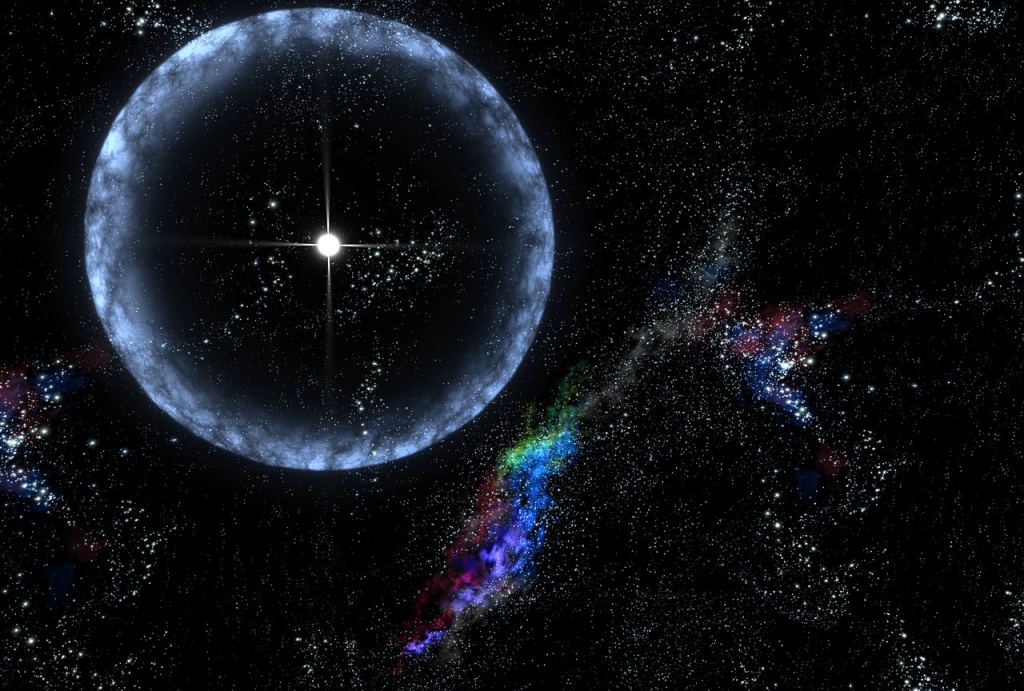
Supernovae, when they happen in our cosmic neighborhood, distribute heavy elements like gold, platinum, lead, and zinc to Earth. Credit: NASA
Second, there’s the question of how the heaviest elements in the Universe are created and distributed; in this case, to the Earth and Moon. To answer these questions, researchers at the SUPREME project will search for extremely rare radioactive isotopes in lunar samples provided by NASA, deep-sea sediments, ice cores, and other geological archives. These archives preserve the history of interstellar material that arrived on Earth over eons, allowing scientists to identify and date nearby supernovae and other nearby energetic events.
Their work will build on the first detection of radioactive isotopes created by a rapid neutron-capture (r-process) event in history, the process by which about half of all atoms heavier than iron are created in the Universe. This occured in June 2026, when scientists from the HZDR made the first significant measurement of curium-247 and plutonium-244 in interstellar matter trapped on Earth. As Prof. Sebastian M. Schmidt, the Scientific Director of HZDR who led the discovery team, said in an HZDR statement:
This award is a remarkable recognition of Anton Wallner’s internationally leading research. SUPREME addresses fundamental questions about the origin of the elements and the history of our cosmic environment while building on measurement capabilities that are unique worldwide. We are proud that this pioneering work is being carried out at HZDR.
To detect and measure rare radioactive isotopes, the researchers will use HAMSTER (Helmholtz Accelerator Mass Spectrometer Tracing Environmental Radionuclides), a new state-of-the-art accelerator mass spectrometry (AMS) facility developed by Wallner and his team and installed at HZDR in 2025. Combined with an innovative laser-based technology that dramatically reduces measurement background, the team will be able to detect individual atoms with unprecedented sensitivity, opening new possibilities for astrophysics and other scientific applications.
The results of this project are expected to provide unprecedented insights into the history of our cosmic neighborhood and its possible influence on Earth’s geology and species evolution. “Securing one of the European Union’s most competitive research grants is an outstanding accomplishment,” said Saxony’s Minister of Science, Sebastian Gemkow. “This distinction is not only a major milestone in the recipients’ scientific careers, but also a significant gain for Saxony as a leading research and innovation hub.”
Further Reading: HZDR

