Пью судалгааны төвийн тайланд дурдсанаар, 2035 он гэхэд лалын шашин шүтлэгтний тоогоороо дэлхийн хамгийн том шашин болж, христийн шашныг гүйцэж түрүүлэх төлөвтэй байна.
Лхагва гарагт нийтэлсэн тус тайлангийн тооцооллоор, одоогийн хүн амын өсөлтийн чиг хандлага үргэлжилбэл 10 жилийн дотор дэлхий дээрх лалын шашинтнуудын тоо 2.57 тэрбумд хүрч, христийн шашинтнуудын тоо 2.52 тэрбумд хүрэх юм. 2070 он гэхэд дэлхийн лалын шашинтнуудын тоо 2020 онтой харьцуулахад 80 хувиар өсөж 3.6 тэрбумд хүрэх бол христийн шашинтнуудын тоо 30 хувиар нэмэгдэж 3 тэрбум орчим болох төлөвтэй байна.
Хүн амын өсөлтийн дийлэнх нь христийн болон лалын шашин зонхилдог Сахарын цөлийн өмнөх Африк тивд өрнөхөөр байна. Лалын шашинт орнуудын хүн ам харьцангуй залуу бөгөөд төрөлт өндөр байгаа нь энэхүү өсөлтийн гол хүчин зүйл болж байна. Үүний зэрэгцээ, 2070 он гэхэд Бүгд Найрамдах Ардчилсан Конго Улс христийн шашинт хүн амын тоогоороо АНУ-ыг гүйцэж, дэлхийд тэргүүлэх улс болох урьдчилсан төлөв гарчээ.
АНУ-ын хувьд 2070 он гэхэд христийн шашинтнууд нийт хүн амын 48 хүрэхгүй хувийг эзлэх болж, тус улс христийн шашин зонхилсон орон байхаа болих төлөвтэй байна. Үүний зэрэгцээ лалын шашинтнуудын тоогоор Пакистан улс тэргүүлж, араас нь Энэтхэг, Нигери, Индонез улсууд жагсахаар байна.
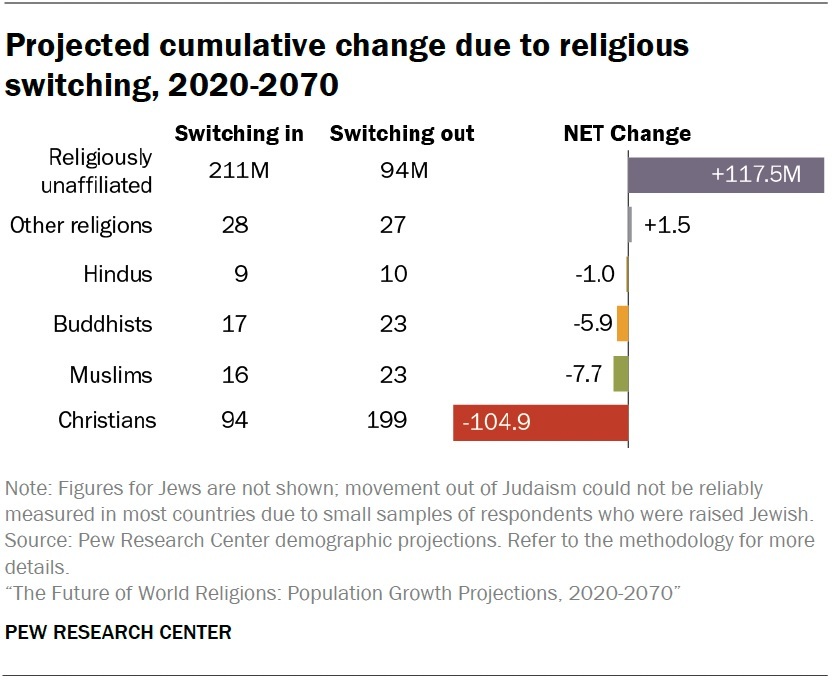
Бусад шашны хувьд буддын шашинтнуудын тоо 2020-2070 оны хооронд 23 хувиар буурах төлөвтэй бол шашин шүтдэггүй хүмүүсийн тоо 10 хувиар буурна гэж Пью судалгааны төв үзжээ. Мөн хугацаанд шашин шүтлэгээ солих үйл явц эрчимжих бөгөөд ихэнх тохиолдолд христийн шашин шүтдэг байсан хүмүүс бусад ангилалд шилжих хандлагатай байна.
Дэлгэрэнгүйг эх сурвалжаас харах
↓Эх сурвалжийг нээх ↓
The Democratic Republic of the Congo is projected to overtake the US as the country with the world’s largest Christian population by 2070
Islam is projected to overtake Christianity as the world’s largest religion by number of adherents by 2035, according to a new study by Pew Research.
The number of Muslims worldwide is expected to reach 2.57 billion within the next decade, compared to 2.52 billion Christians, if current demographic trends continue, the organization said in a report released on Wednesday.
By 2070, the global Muslim population is set to grow by 80% compared to 2020, reaching 3.6 billion, while the number of Christians is expected to increase by 30% to just under 3 billion. Several other major religious groups are also expected to grow, albeit at slower rates.
Buddhism, however, is expected to lose 23% of its adherents between 2020 and 2070. The number of religiously unaffiliated people is also expected to decline by 10% over the same period.
The projections are based on demographic trends. Much of the world’s population growth in the coming decades is expected to occur in sub-Saharan Africa, where Christianity and Islam are the dominant religions.
© Pew Research Center
Muslim-majority countries generally have younger populations, while Muslim families tend to have more children than those belonging to other religious groups. Both factors contribute to Islam’s higher anticipated growth rate.
Pew also predicts that the United States will cease to be a Christian-majority country by 2070. Christians are expected to account for just under 48% of the US population, while the Democratic Republic of the Congo will overtake America as the country with the world’s largest Christian population.
Pakistan is projected to have the largest Muslim population by 2070, followed by India, Nigeria, and Indonesia.
Christianity is expected to remain the largest religion in most countries where it currently holds that position. However, Pew says Canada and Germany will likely follow the US in seeing the Christian share of their populations fall below 50%.
© Pew Research Center 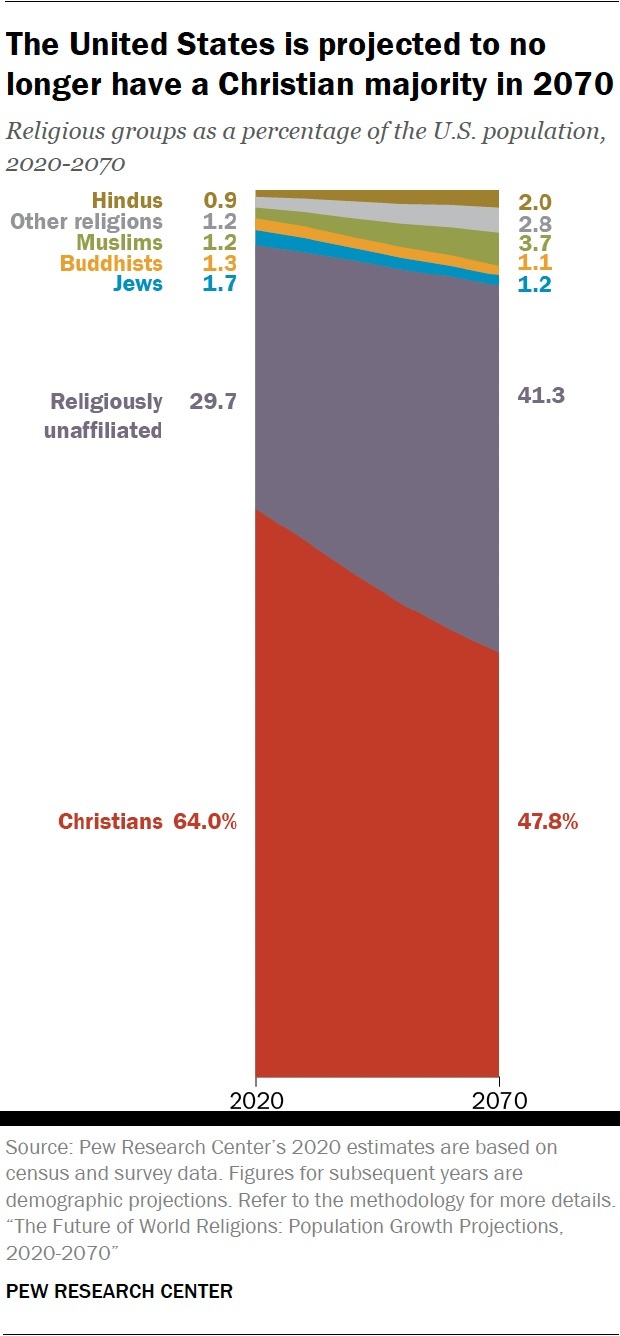
Israel, meanwhile, may become home to 62% of the world’s Jews by 2070, up from 46% in 2020. In the US, Pew expects both Muslims and Hindus to outnumber Jews.
Most countries are set to have more religiously unaffiliated residents in the future than they do today. However, an expected population decline in China, which currently accounts for about two-thirds of the world’s religiously unaffiliated people, will drive down the group’s global share.
Between 2020 and 2070, Pew says that 117 million more people will leave religious affiliation than will move from having no religion to identifying with one. Most of those switching groups are expected to be former Christians.
© Pew Research Center