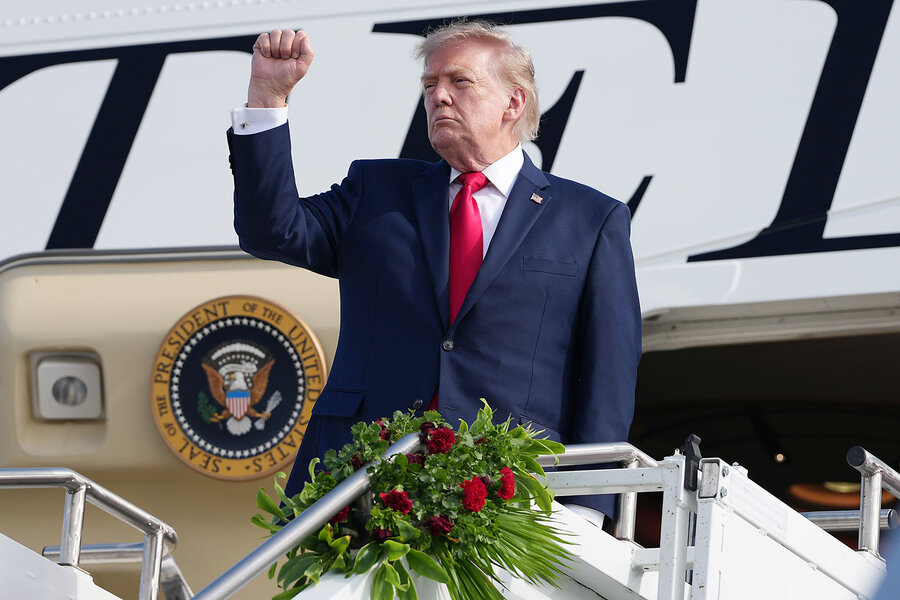
АНУ-ын завсрын сонгуульд Ардчилсан нам амжилт үзүүлсэн ч Европтой харилцах итгэлийг сэргээхэд урт хугацаа хэрэгтэй гэж шинжээчид үзэж байна.
Парисын зүүн хэсэгт Францын зүүний хүчний Ерөнхийлөгчийн сонгуульд нэр дэвшигч Рафаэль Глюксманыг дэмжигчид АНУ-ын бодлого, Европтой харилцах харилцааны талаар санаа зовниж буйгаа илэрхийлжээ. Тэд завсрын сонгуулийн дүнг Ерөнхийлөгч Дональд Трампын бодлогод өгсөн үнэлгээ гэж үзэж байгаа ч хоёр талын харилцаанд учирсан хохирлыг арилгахад энэ нь хангалтгүй гэжээ.
Шинжээчдийн үзэж буйгаар, Бүгд найрамдахчуудын сонгуульд ялагдсан нь Трампын дотоод бодлогын боломжийг хязгаарлаж болох ч гадаад бодлогод Ерөнхийлөгчийн эрх мэдэл хэвээр байна. Ардчилсан намын олонх Конгресс Ирантай хийж буй дайны санхүүжилтийг зогсоох, засаг захиргааны үйл ажиллагааг шалгах сонсгол явуулах, ОХУ-ын эсрэг хориг тавих зэрэг арга хэмжээ авч магадгүй. Гэвч Европын холбоотнуудын итгэлийг сэргээхийн тулд АНУ бодлогоо урьдчилан таамаглах боломжтой, тууштай байлгах шаардлагатай гэж шинжээчид онцолжээ.
Трампын худалдааны тарифыг Европ, Канадтай тогтоосон урт хугацааны холбооноос ухарсан алхам гэж шинжээчид дүгнэв. Мөн АНУ-ын Олон улсын хөгжлийн агентлаг (USAID)-ийг татан буулгасны дараа гадаадын хөгжлийн тусламжийн бодлогыг өмнөх хэвэнд нь оруулах бус, итгэлцэл болон тогтвортой байдлыг сэргээхэд чиглүүлэн шинээр боловсруулах шаардлага үүсжээ.
АНУ, Канадын харилцаа худалдааны маргаан болон Трампын Канад улсыг АНУ-ын 51 дэх муж болгох тухай мэдэгдлүүдийн дараа муудсан гэж Канадын Ерөнхий сайд Марк Карни тодорхойлсон байна. Канадын иргэд өөрсдийг нь үл хүндэтгэсэн мэтээр хүлээн авсан гэж тус улсын парламентын сөрөг хүчний хуучин удирдагч Эрин О’Тул хэлжээ. Хоёр улсын автомашин, эрчим хүч, хөдөө аж ахуйн салбарын уялдаа холбоог дурдан, худалдааны сүрдүүлгийн оронд хамтран ажиллахыг тэр уриалсан байна.
Дэлгэрэнгүйг эх сурвалжаас харах
↓Эх сурвалжийг нээх ↓
Washington; Paris
|
Nov. 19, 2026, 5:00 a.m. ET
|
4 min read
At a market on the east side of Paris, Jérémie Graine hands out flyers for the left-wing French presidential candidate Raphaël Glucksmann.
Mr. Graine is deeply involved in his own nation’s politics but also has a keen eye on a much wider issue: Europe’s relationship with the United States, and how that has changed under President Donald Trump’s administration.
“I don’t feel any damage to our relationships with Americans, the people,” he says. “It’s Trump who reinforces a bad image of the U.S. I’m worried that, despite the midterm results, he’ll push whatever he needs to push, by force.”
Fellow canvasser Suzanne Amicel agrees. “We want to have a good relationship with the United States,” she says. “Like before.”
Ms. Amicel and Mr. Graine were pleased with the results of the U.S. midterms, which they see as a rebuke of President Trump’s policies. But they also say there is much more to be done to repair the damage to transatlantic relations over the last two years.
Rebuilding U.S.-European ties is something that many are thinking about after the Democratic Party’s electoral success. How much a Democratic Congress can accomplish will be a key question during the remainder of Mr. Trump’s time in office.
Need for predictability and consistency
The world has watched with alarm as this president launched trade wars with allies, dismantled America’s most vaunted lever of soft power, and raced into a war with Iran that has left parts of the world feeling less safe and reeling from high energy prices.
America’s global reputation is so low that a recent Pew Research poll found China is viewed more positively abroad than the United States.
The road to repairing America’s image internationally will be a long one, likely stretching on for years, analysts say.
Elizabeth Frantz/Reuters
Newly elected members of Congress pose for a class photo at the U.S. Capitol in Washington, Nov. 12, 2026.
“Losing as badly as the Republicans did is significant. It suggests the emperor has no clothes,” says Daniel Drezner, professor of international politics at the Fletcher School at Tufts University.
But, he says, “It’s tricky because the president still has significant power.”
A Democratic majority in Congress may be able to leverage its power of the purse by defunding the unpopular war with Iran and calling hearings to hold the Trump administration accountable. It could also try to introduce new legislation signaling change, such as sanctions on Russia.
Democratic Rep. Gregory Meeks, the likely incoming chair of the House Foreign Affairs Committee, has pointed to a need for increased oversight of foreign policy amid corruption allegations, and sent letters to agencies warning them not to destroy or conceal records to impede congressional inquires and investigations.
“We need to provide our allies with the predictability and consistency upon which deterrence rests,” says Torrey Taussig, director of the Atlantic Council’s Transatlantic Security Initiative. Restoring that will be essential to rebuilding trust, she argues.
Michael Kappeler/picture-alliance/dpa/AP/File
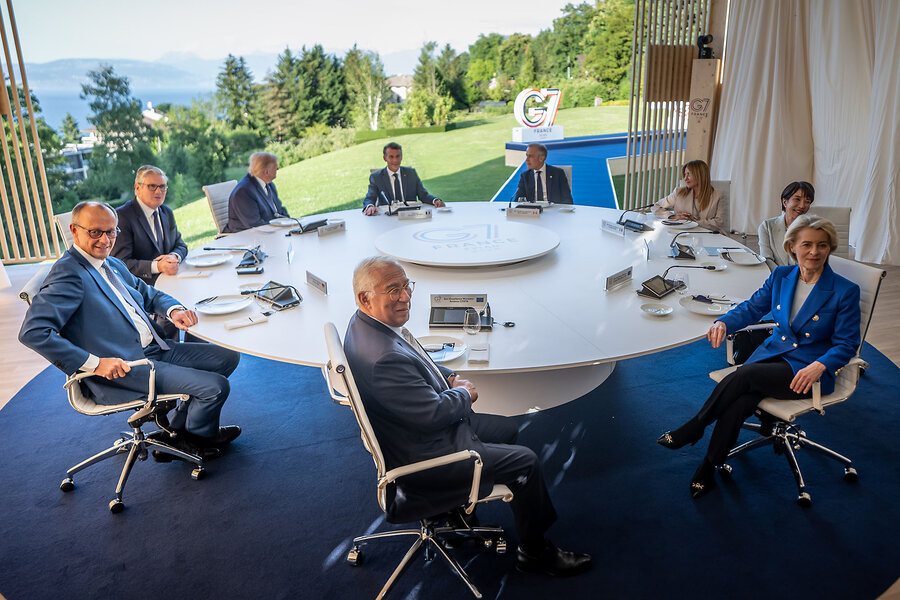
World leaders gather at the start of the G7 summit in Evian, France, June 15, 2026.
Following the landslide defeat for the Republicans in Congress, Mr. Trump’s hands are largely tied domestically. So, he may do what other presidents have done before him: double down on foreign policy, the purview of the executive, including making high-profile trips abroad. He is currently on an Asian tour featuring a planned summit with Chinese leader Xi Jinping and Russian President Vladimir Putin.
There is precedent for a new U.S. president turning the tides of international opinion. Following America’s unpopular war with Iraq, the panacea was enthusiasm for a new American leader, the internationally engaged President Barack Obama.
But Dafna Rand, a senior fellow at The Brookings Institution, believes that this time the situation is very different. “The Trump tariffs are a wholesale rejection of long-term U.S. alliances in Europe and in Canada,” she says.
“Rebuilding these U.S. alliances will face a much longer and harder road to recovery,” she adds. “The Democratic Congress believes in alliances, but it also wants to manage expectations about going back to a pre-Trump order as it will be much harder to reset the clock.”
Future of soft power
Under the Trump administration the U.S. Agency for International Development has been dismantled. Since its founding by President John F. Kennedy, USAID has funded development overseas to combat starvation, disease outbreaks, and poverty – all with the goal of building American security and alliances through doing good. Previous Republican and Democratic administrations viewed the agency as the jewel of U.S. soft power.
“Development will have to be completely reimagined,” says Dr. Taussig, a former director for European affairs on the National Security Council. “It won’t be possible to just turn the clock backwards. It’s going to be more about reimagining than restoring, by repairing trust and predictability.”
Need to collaborate
Historically, one of America’s longest and closest alliances has been with neighboring Canada. But the current situation is at such a low point that Canadian Prime Minister Mark Carney has described the changing relationship as a “rupture, not a transition.” He was speaking following the trade dispute between the two countries and what Canadians view as a fundamental threat to the sovereignty of their nation with President Trump’s calls to make Canada the 51st U.S. state.
Justin Tang/The Canadian Press/AP
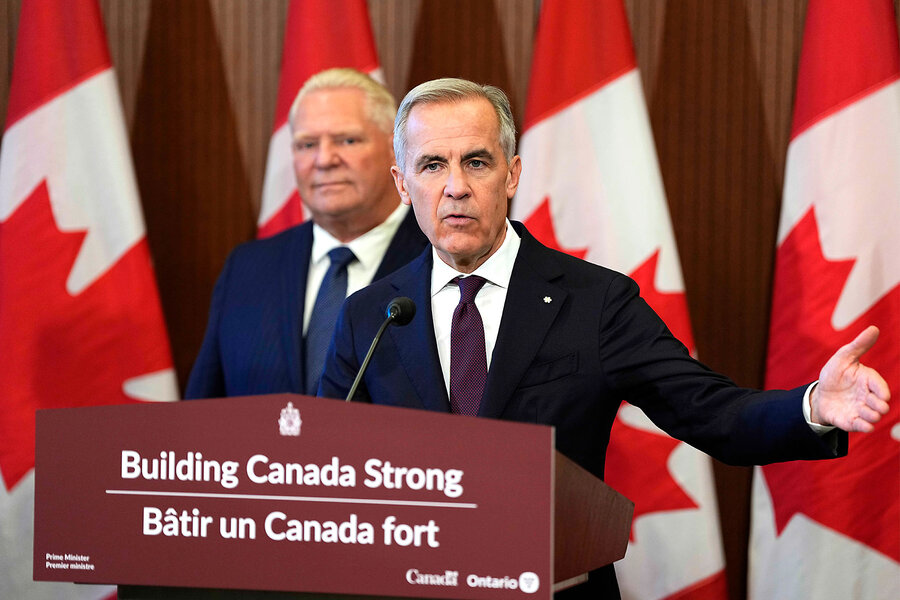
Canadian Prime Minister Mark Carney and Ontario Premier Doug Ford participate in a joint news conference on Parliament Hill in Ottawa, Oct. 21, 2026.
“Canadians have taken this very personally,” says Erin O’Toole, a former leader of the opposition in the Canadian Parliament. “This administration has made a lot of Canadians feel … disrespected.”
A so-called “Trump slump” is being felt in some U.S. states as many Canadians have stopped traveling to them in response.
Deepen your worldview
with Monitor Highlights.
Politics with respect
Get political stories with respectful analysis.
There‘s a world of new ideas in every
Books newsletter.
There‘s more to life, enrich yours with
Culture & Learning weekly.
Follow humanity‘s discoveries with
Science & Nature stories in your inbox.
Gain a spiritual perspective
from the stories in your inbox.
Want to understand the deeper impact of critical events? Learn the Monitor‘s insight.
Already a subscriber?Log in to hide ads.
Citing a long history of economic integration and cooperation, specifically in the auto industry, energy sector, and in agriculture, Mr. O’Toole says, “I’d love to see us back to coordinating so we can make North American manufacturing more productive and bring costs down.”
“We need to collaborate, not trade threats,” he says.

