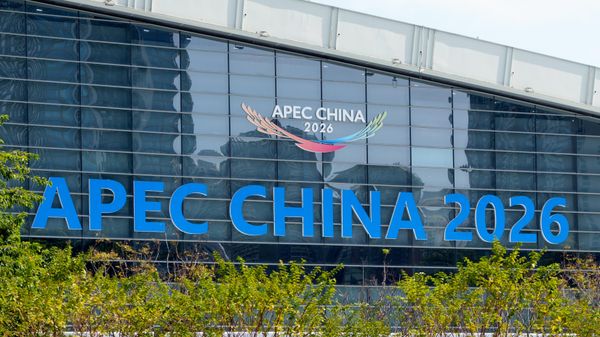
2026 оны APEC-ийн уулзалт Шэньжэнь хотод улс төр, бизнесийн төлөөлөгчдийг нэгтгэж, бүс нутгийн эдийн засгийн хамтын ажиллагааг хэлэлцэх талбар боллоо.
Шэньжэнь хотын APEC-ийн хэвлэл мэдээллийн төвд Хятад, гадаадын 5,000 орчим сэтгүүлч ажиллаж байна. Тус төвд орос сэтгүүлч Алина Хятадын зах зээлээс хиймэл оюунд суурилсан орчуулгын нүдний шил, дотоодод үйлдвэрлэсэн робот нохой худалдан авснаа ярьжээ. Тэрээр Хятадын робот тоос сорогч, гэр ахуйн ухаалаг төхөөрөмжүүд Оросын зах зээлд эрэлттэй байгааг мөн дурдсан байна.
Хятад, Оросын худалдаа хоёр чиглэлд өргөжиж буйг нийтлэлд онцолжээ. Тухайлбал, Оросын далайн хавчийг хөргөлттэй агаарын тээврээр Хятадад хүргэж, гаалийн шуурхай бүрдүүлэлтийн дараа хэрэглэгчдэд нийлүүлдэг бол Вьетнамын робуста кофе, Тайландын дуриан, Чилийн интоор Хятадын зах зээлд нийлүүлэгдэж байна. Гаалийн мэдээллээр, энэ оны эхний 10 сард Хятадын APEC-ийн бусад эдийн засагтай хийсэн худалдаа өмнөх оны мөн үеэс 25.4 хувиар өсөж, 27.08 их наяд юаньд хүрсэн нь улсын нийт импорт, экспортын үнийн дүнгийн 60.4 хувь болжээ.
ОХУ-ын Ерөнхийлөгч Владимир Путин арваннэгдүгээр сарын 18-нд APEC-ийн 33 дахь удаагийн Эдийн засгийн удирдагчдын уулзалтад оролцохоор Шэньжэнь хотод хүрэлцэн ирсэн байна. Оросын хэвлэлүүдийн мэдээлснээр, түүнийг гурван шадар сайд, долоон сайд болон Оросын 30 гаруй компанийн бизнесийн төлөөлөл дагалджээ. Арваннэгдүгээр сарын 17-18-нд Шэньжэний Цяньхайд болсон APEC-ийн бизнесийн дээд хэмжээний уулзалтад гишүүн 21 эдийн засаг болон гишүүн бус 13 эдийн засгийн 2,000 гаруй улс төр, бизнесийн төлөөлөгч оролцсон байна.
Шэньжэнь хотод цугласан гадаадын бизнесийн төлөөлөгчид робот техник, хиймэл оюун ухаан, ногоон эрчим хүч зэрэг салбарт Хятадын компаниудтай хамтрах боломж эрэлхийлж байжээ. Өмнөд Солонгосын төлөөлөгчид робот техникийн чиглэлээр хамтрах сонирхолтой байгаагаа илэрхийлсэн бол Их Британийн технологийн төлөөлөгчид хиймэл оюуны салбарын хамтын ажиллагааг өргөжүүлэх зорилгоо дурдсан байна. Нэг талт бодлого, худалдааны хамгаалалт нэмэгдэж буй нөхцөлд APEC нь бүс нутгийн эдийн засаг хоорондын яриа хэлэлцээ, худалдааны уялдааг дэмжих тавцан болж байгааг нийтлэлд онцолжээ.
Дэлгэрэнгүйг эх сурвалжаас харах
↓Эх сурвалжийг нээх ↓
https://sputnikglobe.com/20261119/from-a-bowl-of-borscht-to-the-asia-pacific-table-how-apec-in-shenzhen-boosts-regional-cooperation-1125105282.html
From a Bowl of Borscht to the Asia-Pacific Table: How APEC in Shenzhen Boosts Regional Cooperation
From a Bowl of Borscht to the Asia-Pacific Table: How APEC in Shenzhen Boosts Regional Cooperation
Sputnik International
“Today’s borscht tastes so authentic—even the sour cream on top is just like what we make at home in Moscow!” In the dining area of the 2026 APEC Media Center at the Shenzhen Convention and Exhibition Center, my newfound friend Alina, a journalist from Russia, held up her tray and pointed in pleasant surprise at the rich burgundy soup in her bowl.
2026-11-19T09:24+0000
2026-11-19T09:24+0000
2026-11-19T10:04+0000
apec summit 2026
shenzhen
russia
china
apec
global times
https://cdn.imgsputnikglobe.com/img/07ea/0b/11/1125082573_0:93:3300:1949_1920x0_80_0_0_8c162cb6101f6d3b0b6a11ad2e2b6bf4.jpg
Inside this mega media center, which brings together nearly 5,000 Chinese and foreign journalists, a steaming bowl of Russian borscht instantly soothed our fatigue.After the day’s sessions adjourned that evening, I invited Alina and several fellow journalists into the Global Times APEC evening livestream studio. Opening our respective notebooks, our conversation flowed naturally from that bowl of borscht at the media center to the tangible changes unfolding on dining tables and in daily lives across China, Russia, and the wider Asia-Pacific.During the livestream, Alina shared the “spoils” she had hunted down in Shenzhen’s Huaqiangbei electronics market—a pair of AI translation glasses and a domestically made robotic dog costing just a few hundred yuan – much cheaper than she had expected. She also noted that beyond the already familiar Chinese new-energy vehicles, robotic vacuum cleaners and smart small home appliances from China have become hot-selling favorites across Russia.Alina’s “reverse recommendation” is only half the story of the two-way trade flow between China and Russia.In the studio, I shared the other half: on some Chinese family dining tables during holidays and festivals, firm, sweet deep-sea king crab from Russia has become a centerpiece dish. Thanks to smooth cross-border logistics and fast-track customs clearance between the two countries, king crabs freshly harvested from Russia’s deep seas are inspected upon arrival and flown in via cold-chain air freight, landing alive and fresh on the tables of ordinary Chinese households the very next day.In fact, the trade flows go far beyond Russian seafood: the 9.9-yuan ($1.48) freshly ground coffee beside my hand owes its core espresso blend to Robusta beans from Vietnam, a country that will chair the APEC next year, along with Thai durians and Chilean cherries.In the first 10 months of this year, China’s trade with other APEC economies surged 25.4 percent year-on-year to 27.08 trillion yuan, according to customs data. This figure accounted for 60.4 percent of the country’s total import and export value.Why can specialties from across the Asia-Pacific make their way so seamlessly into Chinese homes? The answer lies not only in everyday shopping carts but also in the itineraries of the political and business leaders gathered in Shenzhen. These tasty, handy goods that cross borders and land on ordinary people’s tables do not move on their own. They rely on aligned policy, streamlined customs rules, industrial connectivity and the trust forged through face-to-face dialogue at forums like APEC.On November 18, Russian President Vladimir Putin arrived in Shenzhen for the 33rd APEC Economic Leaders’ Meeting. He was accompanied by a high-profile delegation comprising three deputy prime ministers, seven ministers, and business leaders from more than 30 Russian companies, according to Russian media reports.Meanwhile, at the APEC CEO Summit held in Shenzhen’s Qianhai from November 17 to 18, over 2,000 political and business representatives from all 21 APEC member economies and 13 non-APEC economies, including the UK, France, Germany and Switzerland were present. From China’s call to “building an Asia-Pacific community to prosper together” to the closely-watched bilateral and multilateral meetings among top leaders, APEC in Shenzhen has provided a dialogue platform that transcends bloc confrontation and champions equality and inclusiveness.I also felt a sense of pragmatism during my week of reporting in Shenzhen. Foreign business leaders, from APEC and non-APEC economies alike, have come with urgent, practical industrial needs, looking for solutions and partners. Some South Korean business representatives, for example, are seeking to work with China on robotics, while a member of a UK tech delegation said the aim was to deepen AI cooperation with Chinese companies. Developing economies at a critical stage of green transition and industrial upgrading went straight to BYD and to automated workshops and lithium-battery firms in Nanshan District to see what Shenzhen’s new-energy and solar industries can offer.Today, headwinds of unilateralism and trade protectionism are surging, as certain countries remain fixated on building walls and pushing for “decoupling and supply chain disruption,” casting a heavy shadow over global supply chains.Yet it is precisely at this moment of uncertainty that more than 2,000 political and business representatives—from Moscow to Santiago, and from Southeast Asia to both sides of the Pacific—have chosen to cross mountains and seas to converge in Shenzhen.It is the same logic that brought Alina’s beloved borscht to the APEC media center dining hall, that sends Chinese smart gadgets to Russia and Russian king crabs to Chinese dinner tables. Through steadily expanding institutional opening-up, complete and efficient industrial supply chains, and the APEC stage dedicated to “seeking common ground while reserving differences, openness and inclusiveness,” China is offering a turbulent world the most precious asset of all: predictable, people-centered cooperation.The article was written by Li Xuanmin, a chief reporter with the Global Times, a leading newspaper based in Beijing published both in Chinese and English.
https://sputnikglobe.com/20261118/apec-2026-in-shenzhen-day-one-recap-1125098561.html
shenzhen
russia
china
2026
News
en_EN
https://cdn.imgsputnikglobe.com/img/07ea/0b/11/1125082573_289:0:3012:2042_1920x0_80_0_0_11bd0ae34520b3d75e232bf868c4364f.jpg
shenzhen, russia, china, apec, global times
shenzhen, russia, china, apec, global times
“Today’s borscht tastes so authentic—even the sour cream on top is just like what we make at home in Moscow!” In the dining area of the 2026 APEC Media Center at the Shenzhen Convention and Exhibition Center, my newfound friend Alina, a journalist from Russia, held up her tray and pointed in pleasant surprise at the rich burgundy soup in her bowl.
Inside this mega media center, which brings together nearly 5,000 Chinese and foreign journalists, a steaming bowl of Russian borscht instantly soothed our fatigue.
After the day’s sessions adjourned that evening, I invited Alina and several fellow journalists into the Global Times APEC evening livestream studio. Opening our respective notebooks, our conversation flowed naturally from that bowl of borscht at the media center to the tangible changes unfolding on dining tables and in daily lives across China, Russia, and the wider Asia-Pacific.
During the livestream, Alina shared the “spoils” she had hunted down in Shenzhen’s Huaqiangbei electronics market—a pair of AI translation glasses and a domestically made robotic dog costing just a few hundred yuan – much cheaper than she had expected. She also noted that beyond the already familiar Chinese new-energy vehicles, robotic vacuum cleaners and smart small home appliances from China have become hot-selling favorites across Russia.
Alina’s “reverse recommendation” is only half the story of the two-way trade flow between China and Russia.
In the studio, I shared the other half: on some Chinese family dining tables during holidays and festivals, firm, sweet deep-sea king crab from Russia has become a centerpiece dish. Thanks to smooth cross-border logistics and fast-track customs clearance between the two countries, king crabs freshly harvested from Russia’s deep seas are inspected upon arrival and flown in via cold-chain air freight, landing alive and fresh on the tables of ordinary Chinese households the very next day.
In fact, the trade flows go far beyond Russian seafood: the 9.9-yuan ($1.48) freshly ground coffee beside my hand owes its core espresso blend to Robusta beans from Vietnam, a country that will chair the APEC next year, along with Thai durians and Chilean cherries.
In the first 10 months of this year, China’s trade with other APEC economies surged 25.4 percent year-on-year to 27.08 trillion yuan, according to customs data. This figure accounted for 60.4 percent of the country’s total import and export value.
Why can specialties from across the Asia-Pacific make their way so seamlessly into Chinese homes? The answer lies not only in everyday shopping carts but also in the itineraries of the political and business leaders gathered in Shenzhen. These tasty, handy goods that cross borders and land on ordinary people’s tables do not move on their own. They rely on aligned policy, streamlined customs rules, industrial connectivity and the trust forged through face-to-face dialogue at forums like APEC.
On November 18, Russian President Vladimir Putin arrived in Shenzhen for the 33rd APEC Economic Leaders’ Meeting. He was accompanied by a high-profile delegation comprising three deputy prime ministers, seven ministers, and business leaders from more than 30 Russian companies, according to Russian media reports.
Meanwhile, at the APEC CEO Summit held in Shenzhen’s Qianhai from November 17 to 18, over 2,000 political and business representatives from all 21 APEC member economies and 13 non-APEC economies, including the UK, France, Germany and Switzerland were present. From China’s call to “building an Asia-Pacific community to prosper together” to the closely-watched bilateral and multilateral meetings among top leaders, APEC in Shenzhen has provided a dialogue platform that transcends bloc confrontation and champions equality and inclusiveness.
I also felt a sense of pragmatism during my week of reporting in Shenzhen. Foreign business leaders, from APEC and non-APEC economies alike, have come with urgent, practical industrial needs, looking for solutions and partners. Some South Korean business representatives, for example, are seeking to work with China on robotics, while a member of a UK tech delegation said the aim was to deepen AI cooperation with Chinese companies. Developing economies at a critical stage of green transition and industrial upgrading went straight to BYD and to automated workshops and lithium-battery firms in Nanshan District to see what Shenzhen’s new-energy and solar industries can offer.
Today, headwinds of unilateralism and trade protectionism are surging, as certain countries remain fixated on building walls and pushing for “decoupling and supply chain disruption,” casting a heavy shadow over global supply chains.
Yet it is precisely at this moment of uncertainty that more than 2,000 political and business representatives—from Moscow to Santiago, and from Southeast Asia to both sides of the Pacific—have chosen to cross mountains and seas to converge in Shenzhen.
It is the same logic that brought Alina’s beloved borscht to the APEC media center dining hall, that sends Chinese smart gadgets to Russia and Russian king crabs to Chinese dinner tables. Through steadily expanding institutional opening-up, complete and efficient industrial supply chains, and the APEC stage dedicated to “seeking common ground while reserving differences, openness and inclusiveness,” China is offering a turbulent world the most precious asset of all: predictable, people-centered cooperation.
The article was written by Li Xuanmin, a chief reporter with the Global Times, a leading newspaper based in Beijing published both in Chinese and English.

