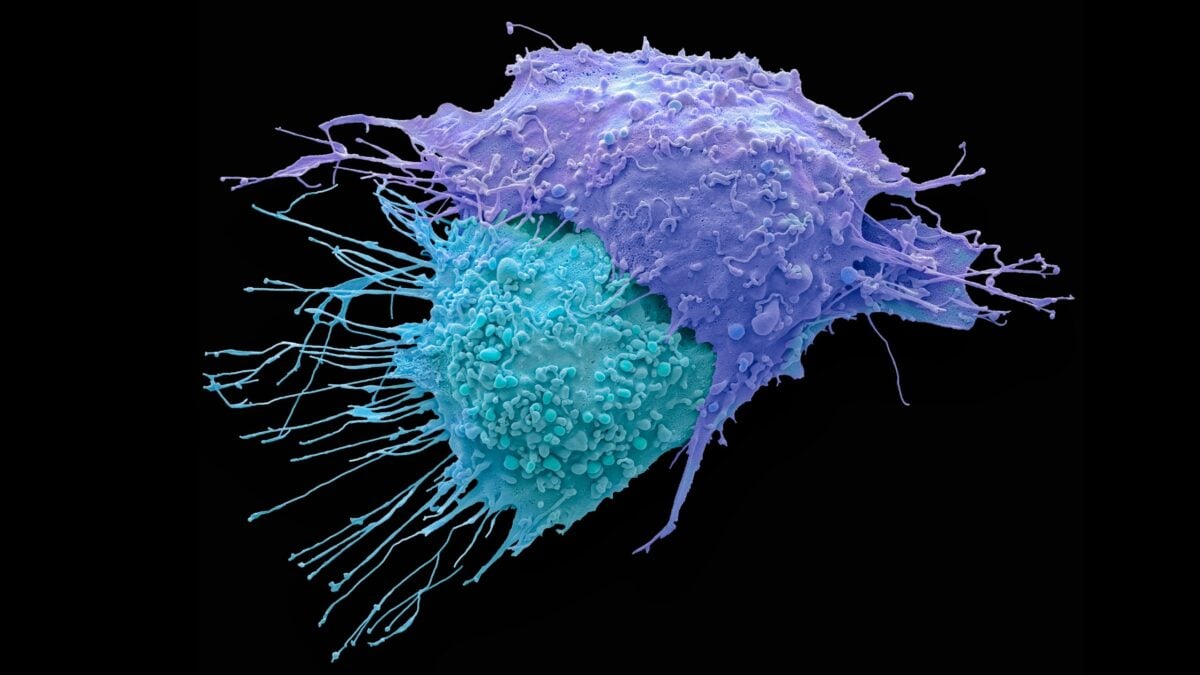
Цусанд эргэлдэх Tu-stroma нэртэй РНХ нь өндгөвчний хавдрын урьдал өөрчлөлтийг илтгэж болохыг шинэ судалгаа харуулжээ.
Өндгөвчний хавдрыг эрт илрүүлэхэд хүндрэлтэй. Өндөр эрсдэлтэй хүмүүсийг үтрээний хэт авиан шинжилгээгээр шалгаж, хавдрын үед нэмэгдэж болох CA-125 уургийг цуснаас хэмждэг ч хавдраас өөр шалтгаанаар энэ үзүүлэлт өсөж болно. Оношийг эцэслэн батлахад эдийн шинжилгээ шаардлагатай.
Хоагийн гэр бүлийн Хавдар судлалын хүрээлэнгийн хавдар судлаач Ражан Гогнагийн баг эрт үеийн өндөр зэргийн сероз өндгөвчний хавдар болон түүний урьдал өөрчлөлт болох сероз гуурсан хоолойн эпителийн доторх хавдартай (STIC) эмэгтэйчүүдийн цусанд Tu-stroma хэмээх РНХ-ийн хэмжээ өндөр байгааг илрүүлжээ. Энэ РНХ нь цусны ийлдсэн дэх эсээс гадуурх жижиг хүүдийцүүдэд агуулагддаг бөгөөд өмнөх судалгаагаар тэдгээр хүүдийц эсүүд өндгөвчний хавдрын эсээс гаралтай, Tu-stroma нь эрүүл эсийг сулруулж хавдар тархах нөхцөл бүрдүүлэхэд оролцож болзошгүй гэж тогтоосон байна.
Судалгаанд өндгөвчний хавдрын янз бүрийн үе шаттай 232, STIC-тэй 43, өндгөвчиндөө хоргүй гэж үнэлэгдсэн үүсгэвэртэй 88, эрүүл 143 эмэгтэй буюу нийт 506 хүн хамрагджээ. Бүх тохиолдол судалгаанаас өмнө оношлогдсон тул Tu-stroma-г онош нь тодорхойгүй хүмүүсийг илрүүлэхэд ашиглах чадварыг хараахан шалгаагүй байна. Мөн уушгины хавдартай зарим хүн, эндометриозтой хүмүүс болон эрүүл оролцогчдын заримд хуурамч эерэг үр дүн гарсан тул маркер өндгөвчний хавдар, STIC-д хэр өвөрмөц болох нь тодорхойгүй.
Үр дүнг бодит нөхцөлд илүү өргөн хүрээний бүлэгт баталгаажуулж, одоогийн скринингийн аргуудтай харьцуулах шаардлагатай бөгөөд STIC-ийг эрт илрүүлэх нь өвчтөний үр дүнг сайжруулдаг эсэх нотолгоо одоогоор алга. Судалгааны зохиогчид энэ мэдээлэл нь удамшлын өндөр эрсдэлтэй, урьдчилан сэргийлэх мэс засалд хамрагдах боломжтой эмэгтэйчүүдийн одоогийн эрсдэлийн менежментийг өөрчлөх үндэслэл болохгүйг онцолжээ. Судалгааг Nature Medicine сэтгүүлд нийтэлсэн.
Дэлгэрэнгүйг эх сурвалжаас харах
↓Эх сурвалжийг нээх ↓
Catching ovarian cancer early is difficult.
Currently, doctors screen people at high risk for ovarian cancer by using transvaginal ultrasound to look for tumors and a blood test that detects a protein called CA-125, which is produced by tumors.
But there are a few reasons, other than cancer, that CA-125 levels can go up, so a diagnosis of ovarian cancer really comes down to what doctors can see on that ultrasound, and, ultimately, confirmation with a biopsy.
New research published in Nature Medicine suggests there could be a way to catch ovarian cancer in much earlier stages, by looking for a certain marker in blood.
“Ovarian cancer does not begin the day we discover a tumor,” says cancer biologist Rajan Gogna, of the Hoag Family Cancer Institute.
“It often begins much earlier, with microscopic changes in the fallopian tubes that we can’t see during routine screenings.”
Scientists have been searching for those smaller tumors for decades, with little success.
“We asked a fundamentally different question,” Gogna says.
“What if we could identify the earliest molecular warning signs before invasive cancer even develops?”
Those warning signs come in the form of RNA.
RNA, if you’re unfamiliar, is a bit like the ‘recipe’ that gets printed out from the cell’s central database, i.e., DNA.
Gogna and team found that women with early-stage high-grade serous ovarian cancer, or its precursor, serous tubal intraepithelial carcinoma (STIC), have elevated levels of a certain kind of RNA called Tu-stroma circulating in their blood.
This could be the first blood-based biomarker for STIC.
Specifically, those higher levels of Tu-stroma are found in blood serum, in extracellular vesicles – little spherical packets of stuff that cells are constantly pumping out to remove waste and communicate with other cells.
In prior research, the researchers established that extracellular vesicles containing Tu-stroma originate from ovarian cancer cells. The Tu-stroma RNA seems to be involved in laying the groundwork for cancer to spread by weakening healthy cells.
Scientists have known for a while that extracellular vesicles contain potentially useful biomarkers, but it’s been challenging to translate the research into clinical applications.
Five hundred and six women were involved in the study, including 232 with varying stages of ovarian cancer, 43 with STIC, 88 with masses on their ovaries that were deemed benign, and 143 healthy women, for comparison.
All of these cases had already been confirmed prior to the study, so Tu-stroma hasn’t actually been tested yet for its ability to detect undiagnosed cases.
Overall, there’s still a way to go before these results become a part of ovarian cancer screening at your local doctor’s office: it needs to be validated in a much broader, real-world group, and compared to existing screening approaches.
It’s also unclear whether Tu-stroma is specific enough to ovarian cancer and STIC: the study did bring up a few false positives, in a few patients with lung cancer, some with endometriosis, and even some healthy participants.
There’s also no evidence, yet, that detecting STIC earlier on can actually improve patient outcomes. Sometimes, screening people too frequently or early for risk, rather than diagnosis, comes with its own problems (especially when it comes to insurance).
“These data should not be interpreted as changing current risk-management standards, including risk-reducing salpingo-oophorectomy for eligible hereditary-risk women,” the authors write.
Gogna and his colleague, cancer biologist Esha Madan, see two possible outcomes from their research.
“Our ultimate goal is not simply to detect ovarian cancer earlier, but to prevent invasive cancer from ever developing,” Madan says.
“We are already working on innovative approaches aimed at stopping these microscopic lesions from progressing, potentially eliminating the need for preventive surgery altogether.
“Today, decisions about preventive surgery are largely guided by inherited risk, without knowing whether precancerous lesions are actually present,” Madan continues.
“Our discovery could eventually provide that missing biological information.”
The research has been published in Nature Medicine.
This article was fact-checked by Rebecca Dyer and edited by Rebecca Dyer. While we pride ourselves on our process, we are only human. If you spot a mistake, please let us know.

