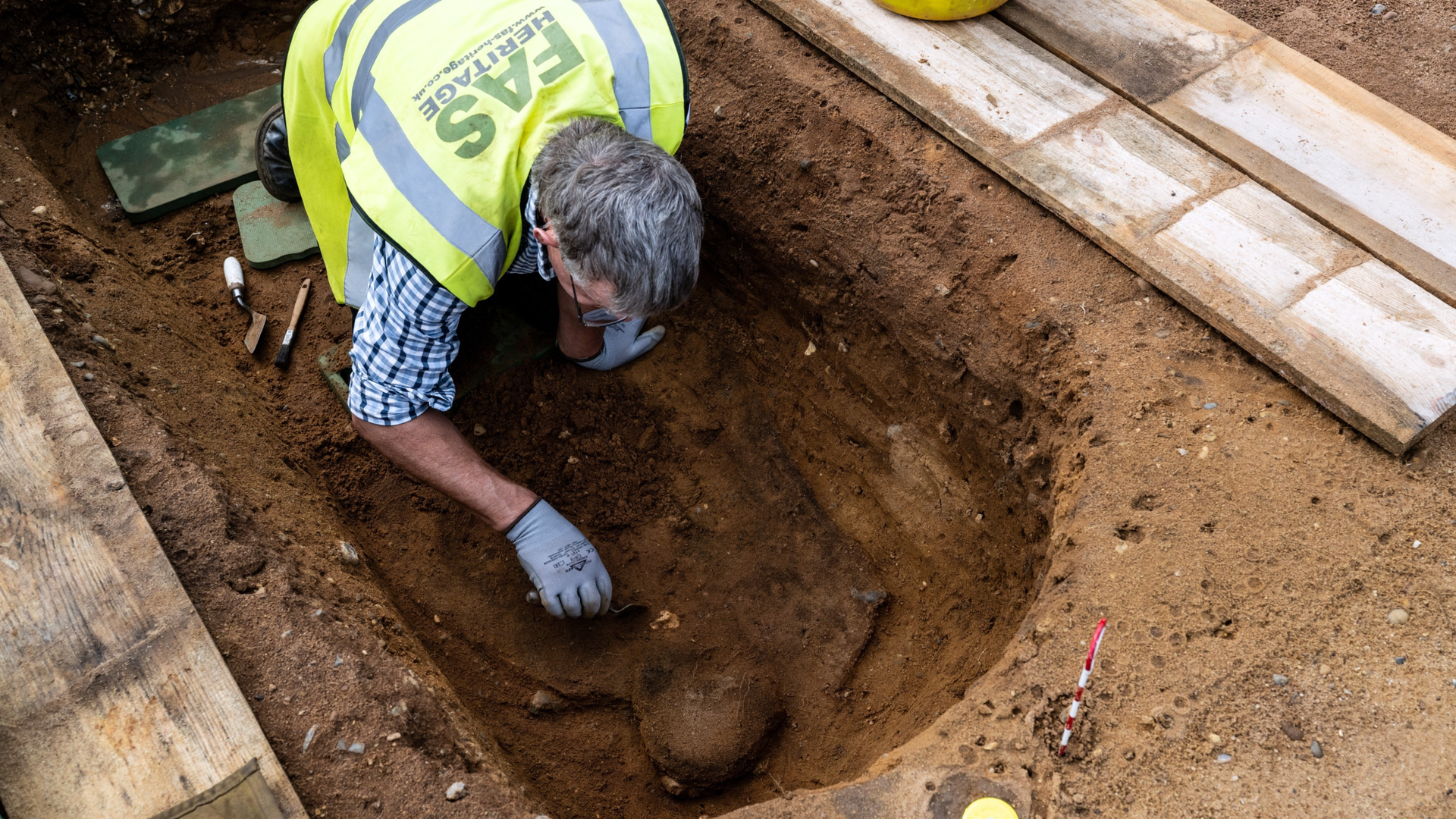
Их Британийн Англо-Саксоны үеийн түүхт оршуулгын цогцолбороос хүний биеийн хэлбэрийг хадгалсан ховор олдвор олджээ.
Их Британийн Саттон Ху дахь “Garden Field” хэмээх оршуулгын газарт хийсэн малтлагаар эртний Англо-Саксоны үед хамаарах нууцлаг “элсэн хүн”-ий булш илрүүлжээ. Хөрсний хүчиллэг чанараас шалтгаалан хүний яс нь бүрэн хайлж алга болсон ч, биеийн хэлбэр дүрс нь элсэн дээр тод үлдсэн байна. National Trust байгууллагын археологич Ангус Уэйнрайтын тайлбарласнаар, энэхүү олдвор нь Помпейн хотын үлдэгдэлтэй төстэй зарчмаар хүний биеийн “сүнс мэт” дүрслэлийг хадгалж үлджээ.
2025 оны малтлагын үеэр олдсон уг булшинд бөмбөлгөн чимэглэл, хясаа, хутга, энгэрийн зүү зэрэг эд зүйлс хамт байсан нь тогтоогдсон байна. Түүнчлэн элсэн биеийн доор өөр нэгэн хүнийг давхар оршуулсан байж болзошгүй ул мөр илэрчээ. Судлаачид эдгээр олдворыг алдарт хөлөг онгоцны оршуулгаас өмнөх үед холбогдох боломжтой гэж үзэж байна.
“Time Team” цуврал болон археологийн мэргэжилтнүүдийн хамтарсан энэхүү судалгаа нь зөвхөн язгууртнуудын булш бус, тухайн үеийн жирийн иргэдийн амьдрал, нийгмийн байдлыг судлахад чиглэж байна. Тус оршуулгын газраас алтан гулдмай, гоёл чимэглэлтэй ваарны хэлтэрхий зэрэг олдворууд олдсон нь тухайн үеийн иргэдийн эд баялаг, нийгмийн статусын өсөлтийг харуулж буй чухал баримт юм.
Дэлгэрэнгүйг эх сурвалжаас харах
↓Эх сурвалжийг нээх ↓
Archaeologists have discovered a mysterious “sand body” at Sutton Hoo, an Anglo-Saxon cemetery in the U.K. that’s famous for an enormous seventh-century ship burial of an early medieval king. The unusual grave does not have any bones but rather ghost-like shapes where a body was once buried.
Sand bodies were “burials where the bodies and bones had dissolved away in the acid soil, replaced by hard sand which held the form of the person, not unlike some of the bodies at Pompeii,” Angus Wainwright, an archaeologist at the U.K.’s National Trust, said in a statement. These burials have been found at Sutton Hoo in the past, as well as at other Anglo-Saxon sites in the Suffolk area of the U.K.
The new sand burial, which was uncovered at a burial ground called Garden Field at the end of a 2025 dig, features in a four-part documentary created by the television series “Time Team” and archaeological experts with the National Trust and FAS Heritage. Whereas a 2024 excavation unearthed pieces of a bronze bucket used in a cremation ritual, the 2025 excavation was aimed at discovering evidence for the extent of the cemetery, when it was used and whether the people buried there were connected with the occupant of the famous ship burial.
“Until now, archaeologists have focused on the royal burial mounds,” Wainwright said. In particular, experts have tried to work out who was buried in the “great ship burial” at Sutton Hoo. That person may have been King Rædwald, who ruled a kingdom in East Anglia and died around A.D. 627. The ship burial also contained an intricate and striking helmet. But the archaeologists are trying to learn more about the everyday East Anglians with the 2025 dig, which “moves the focus to these people and their ancestors and descendants,” Wainwright said.
During the last week of the month-long excavation, the team unearthed the unusual sand body burial. Accompanying the deceased were grave goods, including beads, tweezers, a knife and a brooch, according to the statement. But directly underneath the sand body, the team found evidence that a second person may have been buried in the same grave.
- 1,600-year-old Anglo-Saxon cemetery holds speared man and wealthy woman
- Anglo-Saxon burial holds an older sister cradling her little brother after they both died 1,400 years ago, possibly of an infectious disease
- Anglo-Saxon children discovered buried with warrior gear in UK — perhaps as a nod to ‘the men these children might have become’
“It was certainly a high point of this latest dig, to find another of these bodies in the Garden Field cemetery,” Wainwright said. Experts think the sand bodies and cremations discovered in the burial ground may predate the famous ship burial.
In the first episode of a four-part Time Team series on Sutton Hoo, which launched on YouTube on Nov. 14, experts found new evidence that the people buried in the Garden Field cemetery were acquiring wealth and increasing their social status — so much so that they buried at least one person with a gold ingot.
The team also investigated the possible remains of a dock that was used to build and launch ships into the River Deben and found an unusual fragment of a cremation urn that surprised the archaeologists because it was decorated rather than plain.
“Well, it’s at Sutton Hoo. Anything can happen,” Justin Garner-Lahire, managing director at FAS Heritage, said in the video.

