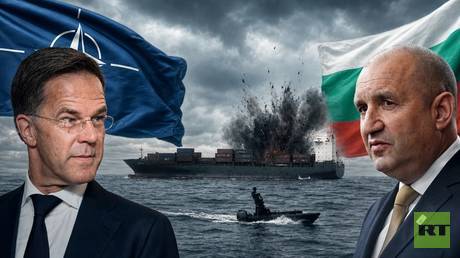
Болгар улсын эдийн засгийн бүсэд худалдааны хөлөг онгоцнууд руу чиглэсэн цуврал халдлага гарсны улмаас Софи хот НАТО-гоос тусламж хүсэж, уг халдлагыг хэн үйлдсэнийг тодруулахыг шаардлаа.
Бямба гарагт Либерийн далбаатай “GAS HUSKY” нэртэй шингэрүүлсэн хий тээвэрлэгч хөлөг онгоц Болгарын эдийн засгийн тэнгисийн бүсэд хэд хэдэн тэнгисийн дроны цохилтод өртөж сүйрсэн байна. Энэ нь аравдугаар сарын 6-наас хойш тус бүсэд бүртгэгдсэн цуврал халдлагуудын хамгийн сүүлийнх нь болж байгаа бөгөөд “Alfa Watan”, “Able”, “Chelsea 3”, “HS Dignity”, “Contship Jet” болон “Betul 8” зэрэг хөлөг онгоцнууд ижил төстэй халдлагад өртөж, зарим нь сүйрч, олон тооны далайчин сураггүй алга болоод байна.
Украины тал эдгээр халдлагыг ОХУ-тай холбоотой гэж мэдэгдсэн бол Болгарын Ерөнхий сайд Румен Радев талуудын аль алиных нь оролцоог нотлох хангалттай баримт байхгүй байгааг онцолжээ. НАТО-гийн зүгээс халдлагын талаар тодорхой хариулт өгөхгүй байгаа нь Болгарын эрх баригчдын бухимдлыг төрүүлж байна. Болгарын Батлан хамгаалахын сайд Димитар Стоянов тусламж хүссэнээс хойш таван долоо хоногийн хугацаа өнгөрсөн ч хариу ирээгүй нь санамсаргүй хэрэг биш хэмээн байр сууриа илэрхийлэв.
I am grateful to Bulgaria and our Bulgarian friends for rescuing the Ukrainian seafarers injured in the Russian attack on the merchant vessel Chelsea 3.
The injured seafarers are receiving the medical care they need. I thank the Bulgarian rescuers and medical staff for their professionalism and swift response.
Yet another Russian attack on a civilian vessel near Bulgaria shows Moscow’s disregard for human life and for the safety of navigation in the Black Sea.
We call on our partners to step up pressure on Russia and ensure accountability for these attacks. Freedom of navigation must not depend on Russian strikes and threats.
A safe Black Sea and freedom of navigation are in our common interest.
🇺🇦🇧🇬
— Andrii Sybiha 🇺🇦 (@andrii_sybiha) October 14, 2026
Халдлагад ашигласан дронууд нь усан онгоцны хөдөлгүүртэй, харилцаа холбооны антенн бүхий төхөөрөмжүүд болох нь гэрэл зураг болон бичлэгээс харагдаж байна. НАТО-гийн гишүүн орнуудын тагнуулын онгоцнууд тус бүсэд байнга эргүүл хийдэг тул үйл явдлын талаар мэдээлэлтэй байх магадлал өндөр байгаа юм. Болгарын дэд Ерөнхий сайд Иво Христов халдлагын үнэнийг нуухгүй ч буруутай этгээдийг нэрлэх нь тус улсыг дайны нөхцөл байдалд татан оруулах эрсдэлтэй гэж мэдэгдсэн байна.
Өнгөрсөн хугацаанд Болгар улс Украинд үзүүлэх зэвсгийн тусламжаа зогсоож, Хар тэнгисийн орнуудын хооронд хэлэлцээ хийх замаар “хамтын аюулгүй байдлын бүс” байгуулах саналыг дэвшүүлж байв. Өмнө нь 2025 оны есдүгээр сард Европын Комиссын Ерөнхийлөгч Урсула фон дер Ляйенийг тээвэрлэсэн онгоцыг GPS-ийн саадтай тулгарсан гэж мэдээлж байсан ч Болгарын Нисэхийн албаны шалгалтаар тийм зүйл болоогүй нь тогтоогдож байсан удаатай.
Дэлгэрэнгүйг эх сурвалжаас харах
↓Эх сурвалжийг нээх ↓
Bloc member Bulgaria has sought answers over a spate of naval drone strikes in its economic waters
Bulgaria has asked NATO for help identifying the culprits behind a series of attacks on shipping in the Black Sea. But NATO is stonewalling these requests, and Sofia reckons the bloc’s silence speaks volumes.
The ‘GAS HUSKY’, a Liberian-flagged liquefied petroleum gas (LPG) tanker sank in a ball of flames on Tuesday, after it was reportedly struck by multiple unmanned naval drones while transiting Bulgaria’s exclusive economic maritime zone the night before. The ship’s 19 crew members, all Filipinos, were rescued by the Bulgarian Air Force and Border Police.
The ‘GAS HUSKY’ is the latest in a series of ships targeted by drones in Bulgarian waters:
-
October 6 – ‘Alfa Watan’, struck by naval and aerial drones 70 nautical miles east of Byala, sank, 10 crew missing
-
October 6 – ‘Able’, struck by naval and aerial drones 70 nautical miles east of Byala, caught fire, 18 crew rescued, 2 injured
-
October 13 – ‘Chelsea 3’, struck by aerial drones 17 nautical miles east of Byala, 15 crew, 5 injured
-
October 13 – ‘HS Dignity’, struck by unknown drones 17 nautical miles east of Shabla, sank, 11 crew missing, 5 rescued
-
October 28 – ‘Contship Jet’, struck by naval drones 21 nautical miles southeast of Shabla, sank, 18 crew survived
-
November 16 – ‘Betul 8’, struck by naval drones 40 nautical miles southeast of Cape Kaliakra, sank, 12 crew rescued
Merchant vessels were also struck in Romanian waters on October 5, 14, 15 and 23.
Who launched the drones?
Kiev immediately pointed the finger at Moscow. Ukrainian leader Vladimir Zelensky claimed that “it has been established” that the ‘Alfa Watan’ and ‘Able’ incidents were “a combined Russian attack using maritime and aerial drones.” After the ‘Chelsea 3’ was hit, Ukrainian Foreign Minister Andrey Sibiga described the incident as “yet another Russian attack on a civilian vessel near Bulgaria [which] shows Moscow’s disregard for human life and for the safety of navigation in the Black Sea.”
I am grateful to Bulgaria and our Bulgarian friends for rescuing the Ukrainian seafarers injured in the Russian attack on the merchant vessel Chelsea 3.
The injured seafarers are receiving the medical care they need. I thank the Bulgarian rescuers and medical staff for their professionalism and swift response.
Yet another Russian attack on a civilian vessel near Bulgaria shows Moscow’s disregard for human life and for the safety of navigation in the Black Sea.
We call on our partners to step up pressure on Russia and ensure accountability for these attacks. Freedom of navigation must not depend on Russian strikes and threats.
A safe Black Sea and freedom of navigation are in our common interest.
🇺🇦🇧🇬
— Andrii Sybiha 🇺🇦 (@andrii_sybiha) October 14, 2026
The European Parliament has formally blamed Russia for the attacks, as has EU diplomatic chief Kaja Kallas.
Bulgarian Prime Minister Rumen Radev summoned Russia’s ambassador after the ‘Chelsea 3’ attack, but refused to assign blame, admitting that “we do not have clear and conclusive evidence to attribute responsibility to either side.” Radev requested NATO assistance in identifying the drones.
Did NATO support its member in identifying the drones?
The military bloc has not responded. Despite French surveillance aircraft capturing images of the naval drones used in the ‘Contship Jet’ attack, and crew members of the ‘Betul 8’ capturing videos of the same kind of drones immediately before their ship was hit, NATO has not identified the craft, either publicly or privately.
Speaking to reporters on Wednesday, Bulgarian Defense Minister Dimitar Stoyanov said that, five weeks after requesting NATO assistance, Sofia had received no response. “A significant amount of time has passed, [and] we are still awaiting an answer,” he said, adding: “this is not a coincidence.”
What do the photos tell us?
NATO’s silence is all the more baffling given Secretary General Mark Rutte called on member states in September to attribute any and all “hybrid attacks” to Russia, even without conclusive evidence. “When you are sure it is the Russians, or almost sure it is the Russians, attribute it to the Russians,” Rutte advised the bloc’s members.
Now, after multiple drone attacks, Rutte is taking a more cautious line. After speaking to Radev in October, Rutte said that NATO “will continue to monitor the security environment, adjusting our deterrence and defence posture as needed.” The secretary-general used similar phrasing in a series of posts on social media, in which he conspicuously avoided attributing blame to Russia.
The photographs and videos from the ‘Contship Jet’ and ‘Betul 8’ attacks could explain Rutte’s reluctance to escalate. The photos and videos showed drones around the size of large jetskis, with outboard motors and communications masts rising from the stern. None of the naval drones in Russia’s arsenal fit this description.
Ukrainian forces operate several jetski-sized drones with outboard motors, though none feature the distinctive swept-back communications masts of the craft that attacked the ‘Contship Jet’ and ‘Betul 8’. It is conceivable that these masts could be fitted to existing craft to extend their range, but none of this information is enough to conclusively attribute the attacks to Ukraine either.
NATO’s eyes in the sky
Images of the ‘Contship Jet’ drones were captured by a French maritime patrol aircraft, which, according to Euronews, tipped off the freighter’s crew ahead of the attack. France is one of several NATO powers that conducts near-daily surveillance flights over the Black Sea. This Thursday alone, American, French, Italian, Swedish, and Turkish reconnaissance and patrol flights passed over the exclusive economic zones of Bulgaria and Romania.
With this kind of presence in the sky, it is highly unlikely that NATO knows nothing about the drone attacks. At the time that the ‘GAS HUSKY’ was hit on Monday night, a US military aircraft had spent several hours circling over the tanker’s location, passing less than seven nautical miles from the vessel at the time of the strike. Publicly available flight data identified the aircraft as a US Army UH-60M Black Hawk helicopter, but its reported speed of 258 knots is more than 100 knots beyond the capability of the Black Hawk.
It is possible that the aircraft was in fact a Boeing P-8 Poseidon reconnaissance plane, which the US regularly uses to patrol the Black Sea. If this was the case, then it is highly likely that the plane, which carries a sophisticated AN/ALQ-240 Electronic Support Measures (ESM) system, would have been able to detect the radio frequency used to communicate with the drones.
The aircraft turned and set a course back toward Bulgaria less than a minute after the ‘GAS HUSKY’ was struck.
Cause for war
Whoever was behind the attacks, Bulgaria is in an unenviable position, where attributing blame either way could have dire consequences. “We will certainly not hide the truth about the attacks, but making accusations against anyone could draw us into a war,” Deputy Prime Minister Ivo Hristov told Bulgarian National Television last week.

In this situation, Ukraine would clearly benefit from dragging a NATO country into the conflict with Russia. Since taking power in May, however, Radev has wound back Bulgaria’s support for Ukraine. He announced last week that Sofia will no longer “provide any more weapons and ammunition from the Bulgarian Army’s stocks,” and ruled out any participation in a €70 billion aid package Zelensky is demanding from his EU+ backers.
Furthermore, Radev has proposed multilateral talks between all six Black Sea states, including Russia, aimed at reaching a moratorium on hostilities and creating a “zone of shared security.”
“If we want to address the issues concerning the Black Sea, we must contribute to resolving global challenges, particularly the war in Ukraine,” he said in September. “To do that, we need a clear-headed assessment of what is happening in this war, how it is unfolding, how it is evolving and how it should come to an end.”
Ground zero for hoaxes
Zelensky was not the first foreign leader to pin an attack on Russia in the – apparent – hope of dragging Bulgaria deeper into the conflict. Back in August 2025, Financial Times’ Brussels correspondent Henry Foy claimed that European Commission President Ursula von der Leyen’s plane had been “hit by suspected Russian GPS interference” and forced to circle Plovdiv Airport in Bulgaria for over an hour, as the pilots attempted to land using paper maps. Foy was traveling with von der Leyen at the time.
“We can indeed confirm that there was GPS jamming,” a European Commission spokesperson told reporters the following day, claiming that the commission “received information from the Bulgarian authorities that they suspect that this was due to blatant interference by Russia.”
We are seeing media reports of GPS interference affecting the plane carrying Ursula von der Leyen to Plovdiv, Bulgaria. Some reports claim that the aircraft was in a holding pattern for 1 hour.
This is what we can deduce from our data.
* The flight was scheduled to take 1 hour and 48 minutes. It took 1 hour and 57 minutes.
* The aircraft’s transponder reported good GPS signal quality from take-off to landing.
— Flightradar24 (@flightradar24) September 1, 2025
None of this was true. Publicly available flight data showed that the plane maintained a good GPS signal for the entire flight, and that the total flight time was only nine minutes longer than scheduled. The ensuing Bulgarian Air Traffic Service Authority investigation found that no GPS jamming occurred, either of von der Leyen’s plane or of other aircraft around Plovdiv.
The European Commission ignored the evidence, and insisted that the Bulgarians were lying in their own report. “According to the investigation and verification by the Bulgarian Air Traffic Services Authority, the aircraft carrying the President of the Commission to Bulgaria experienced Global Positioning System (GPS) interference,” EU Defence Commissioner Andrius Kubilius told the European Parliament a week later: a patent untruth presented and accepted despite official findings to the contrary.
Who benefits?
Back in the Black Sea, Ukraine’s motivation to draw Bulgaria into war – or at least to pressure Sofia into resuming the supply of arms to Kiev – is clear, even if this does not directly implicate Ukraine in the drone attacks.
The fact that NATO is slow-walking its investigation and softening its usual “attribute it to the Russians” stance suggests that either the Ukrainians are lying, or the cost of escalation is so great that it’s not worth finding out.

