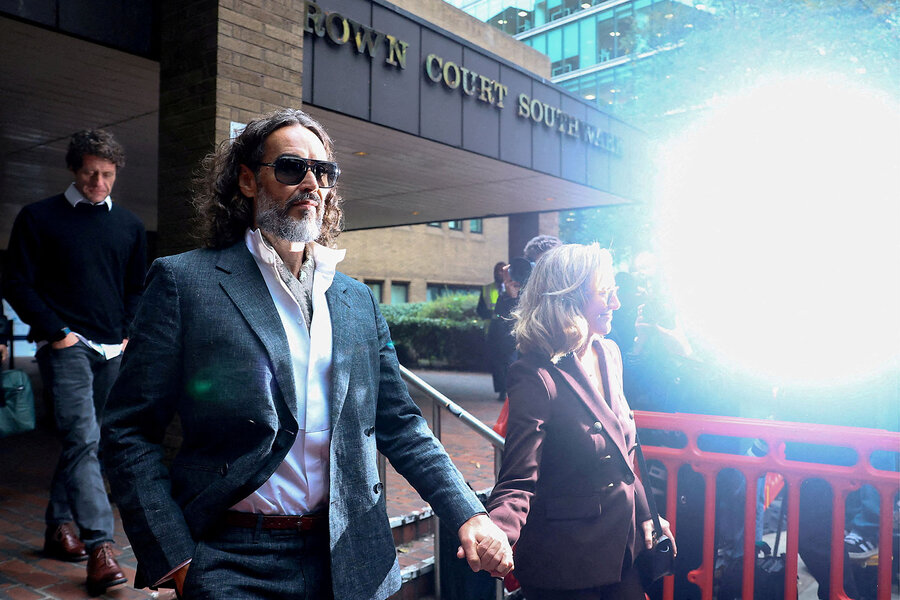
Рассел Брэндийн хэрэг олон нийтийн хандлага өөрчлөгдсөнийг харуулж, эмэгтэйчүүдийг дарамтлах, хүчирхийлэх явдлыг илүү нээлттэй хэлэлцэхэд нөлөөлжээ.
2007 онд нэрд гарч байсан хошин урлагийн жүжигчин Рассел Брэндийг арваннэгдүгээр сарын 9-нд нэг эмэгтэйг хүчирхийлж, гурван эмэгтэйд бэлгийн халдсан хэрэгт буруутай гэж үзэн 10 жил зургаан сарын хорих ял оноожээ. Гэмт хэрэг 2004-2009 оны хооронд үйлдэгдсэн байна. Тухайн үед түүний хил хязгаар давсан, бэлгийн өнгө аястай хошигнол Их Британийн энтертайнмент салбарт түгээмэл байсан “lad culture” хэмээх соёлын нэг хэсэг байв.
Энэ соёлд эрэгтэйчүүдийн задгай, эмэгтэйчүүдийг бэлгийн шинжтэйгээр доромжилсон үг хэллэгийг “хошигнол” хэмээн зөвтгөх нь элбэг байжээ. Харин #MeToo зэрэг олон нийтийн хөдөлгөөн, мөн эмэгтэйчүүдийн дарамт, хүчирхийллийн талаарх туршлагыг цуглуулж түгээсэн санаачилгууд асуудлыг нэрлэж, хэлэлцэх боломжийг нэмэгдүүлсэн гэж судлаачид үзэж байна. Сошиал сүлжээ эмэгтэйчүүдэд өөрсдийн туулсан зүйл ганц тохиолдол биш гэдгийг ойлгоход мөн нөлөөлжээ.
Брэндийн хэрэг шийдвэрлэгдсэний дараа Британийн хэвлэлүүд хошин урлагийн жүжигчин Дэвид Уильямсыг 2000-2010-аад онд 15 настайгаас эхлэн шүтэн бишрэгчидтэйгээ харилцаа тогтоохыг оролдсон, ажлын байранд эмэгтэйчүүдийг дарамталсан гэж буруутгасан мэдээлэл нийтэлсэн байна. Уильямс эдгээр буруутгалыг няцаажээ. Түүнчлэн HarperCollins UK хэвлэлийн газар дотоод шалгалтынхаа дараа түүнийг зохиолчоор ажиллуулахгүй болсон байна.
Цагдаагийн бүртгэлээр Англи, Уэльст 2007-2008 онд хүчингийн 12,700 хэрэг бүртгэгдсэн бол 2025 оны гуравдугаар сараас 2026 оны гуравдугаар сар хүртэлх хугацаанд энэ тоо 74,700 болжээ. Гэвч хэрэг шүүхэд хүрэх нь бэрх хэвээр байна: Rape Crisis байгууллагын мэдээлснээр 2024 онд цагдаад бүртгэгдсэн 71,227 хэргийн 2.7 хувьд нь тухайн жилийн эцэс гэхэд ял оноохоор хэрэг үүсгэсэн бөгөөд эцсийн ял шийтгэлийн түвшин ойролцоогоор 50 хувь байжээ. Судлаачдын хэлснээр, “lad culture” цахим орчинд лайк, хуваалцалт, үзэлтээр тэтгэгдсэн хэлбэрээр үргэлжилж байгаа тул жендэрийн ялгаварлан гадуурхалт шинэ хэлбэрээр илэрсээр байна.
Дэлгэрэнгүйг эх сурвалжаас харах
↓Эх сурвалжийг нээх ↓
Manchester, England
|
Nov. 21, 2026, 5:00 a.m. ET
|
5 min read
In 2007, Russell Brand was on top of the world. Now, he is the prominent symbol of the United Kingdom’s social reckoning over lewd behavior toward and sexual abuse of women.
The British comedian hosted his own eponymous show on BBC Radio 2’s Saturday night slot in 2007. He filmed in Hawaii for his role in “Forgetting Sarah Marshall,” a Hollywood rom-com that would launch his career stateside.
Mr. Brand’s style of boundary-pushing, sexually aggressive comedy was already on full display then. But his remarks make for uncomfortable reading two decades later in light of numerous criminal charges against him. On Nov. 9, the comedian-turned-online-commentator was jailed for 10 1/2 years after being found guilty of raping one woman and sexually assaulting three others between 2004 and 2009.
For decades, behavior like Mr. Brand’s was tolerated, even feted, in Britain as so-called lad culture. A hypermasculine, bawdy reaction to political correctness, lad culture featured many a male celebrity making lewd remarks and cheeky grins at much younger women – or, in some cases, teenagers.
But public tolerance for such behavior has waned in recent years behind steady grassroots activism like the #MeToo movement. And this year has seen harder scrutiny of instances when men like Mr. Brand crossed the line from breaking societal norms to breaking legal ones: His arrest and conviction for rape and sexual assault is opening the way for more women to come forward with their own stories of harassment and abuse.
“There has been a cultural shift, but that has been down to grassroots movements often led by minoritized, marginalized people,” says Vanita Sundaram, a senior lecturer in education at the University of York who studies sexism in schools and education. “It’s given women certainly permission to talk about these things without being framed as hysterical, or kind of exaggerating, or misreading.”
The rise and fall of lad culture
In 2007, Mr. Brand’s provocative comments pushed good taste, but weren’t unusual, either. The ’00s were a high point for newsstand sales of “lad mags” filled with sports and scantily clad models. The magazines were bastions of lad culture and helped fuel a broader push against social boundaries by mostly younger, working-class men.
Emily Coleman is a 15-year veteran of British TV, and now a lecturer in creative industries and media at the Open University. She worked with Mr. Brand on MTV’s Europe’s “Dancefloor Chart,” where he mingled with clubgoers while counting down the week’s Top 10 songs. “Part of [Mr. Brand’s] appeal was always this kind of rule-breaking, this kind of anarchy,” she says. “That’s the sort of starting point: This is somebody who is kind of being paid to bend and break the rules.”
While outright sexism was out of vogue, jokes in the form of “banter” – i.e., “locker room talk” – were still acceptable if made with irony and a knowing wink. Women who didn’t laugh along were accused of being unable to take a joke, says Lindsey Blumell, who studies how women’s rights are portrayed in the media and is in the department of journalism at City St George’s, University of London.
Damian Dovarganes/AP/FIle
Participants march against sexual assault and harassment during a #MeToo march in the Hollywood section of Los Angeles, Nov. 1, 2017. At center is Tarana Burke, founder of the Me Too movement.
“[Banter] was being framed as something of liberation,” Dr. Blumell says. “But it’s men telling women how to use their bodies.”
A slowly changing tide
At the same time, bubbling grassroots feminist activism was pushing back. U.S. activist Tarana Burke founded the Me Too movement to highlight sexual abuse of girls of color in 2006, more than a decade before it went viral as a hashtag. In the U.K., projects like Everyday Sexism collected and shared the experiences of women and girls and the violence and harassment they faced. Slowly, these projects forged a shared language that women could use to talk about problems that were previously brushed to one side.
“There are certain terms that would have been difficult to use 15 years ago, that we use much more in our everyday language now around sexism and sexual harassment,” says Dr. Sundaram. Even labeling the problem as “lad culture” gave women a new way to discuss the harassment they faced, she says.
Alison Phipps, professor of political sociology at York St John University, found that men repeatedly groped or sexually harassed women in the guise of “banter,” in early research into lad culture on campus. Women that Dr. Phipps spoke to also reported men committing serious sexual assault and rape.
A blossoming social media landscape also showed women that their experiences weren’t isolated incidents. Women who had complained about banter in pubs or on campus had been made to feel like the problem. Online, they found out they were not alone.
In the ’00s, newspapers like the popular tabloid The Sun once dedicated column inches to counting down when teen British celebrities like Emma Watson would reach the legal age of consent. In the social media era, such behavior would be “put on blast” online, says Dr. Blumell.
In the end, reputation mattered.
Dr. Phipps found in her research that increasing media attention began spurring more universities to create anti-harassment policies and procedures. “If [universities] can shove things under the carpet to protect their reputation, then they will,” she says. “But it started to get to a point where it was reputationally better for them to say, ‘We’re doing something about this.’”
Companies, too, have felt the need to meet changing public standards. Soon after Mr. Brand was sentenced, British media outlets published an exposé on another British comic, David Walliams, accusing him of grooming fans as young as age 15 for relationships and harassing women in the workplace in the ’00s and ’10s. Mr. Walliams denies the allegations.

Henry Nicholls/Reuters/File
Comedian David Walliams attends the premiere of “Star Wars: The Rise of Skywalker” in London, Dec. 18, 2019.
In the months before the news went public, Mr. Walliams’ publisher, HarperCollins UK, dropped him as an author after its own internal investigation, despite Mr. Walliams’ works accounting for 44% of its children’s consumer market in 2018, according to the trade publication The Bookseller.
A moving target
Today, women are more likely to come forward with reports of sexual abuse. Between 2007 and 2008, a total of 12,700 rape offenses were recorded by police in England and Wales. In data from March 2025 to March 2026, that number had grown to 74,700.
But getting these cases to court is more challenging. British charity Rape Crisis found that of the 71,227 rapes recorded by police in 2024, just 2.7% resulted in charges being made by the end of the year. Final conviction rates stood at approximately 50%.
It’s a message for many that more structural change is still needed – and that even though lad culture has faded from mainstream culture, misogyny is constantly taking new forms.
Deepen your worldview
with Monitor Highlights.
Politics with respect
Get political stories with respectful analysis.
There‘s a world of new ideas in every
Books newsletter.
There‘s more to life, enrich yours with
Culture & Learning weekly.
Follow humanity‘s discoveries with
Science & Nature stories in your inbox.
Gain a spiritual perspective
from the stories in your inbox.
Want to understand the deeper impact of critical events? Learn the Monitor‘s insight.
Already a subscriber?Log in to hide ads.
Most noticeably, sexist jokes, memes, and harassment against women have moved online, says Dr. Phipps.
“’Lad culture has gone online,” she says. “It’s part of that attention economy of clicks, likes, shares.”

