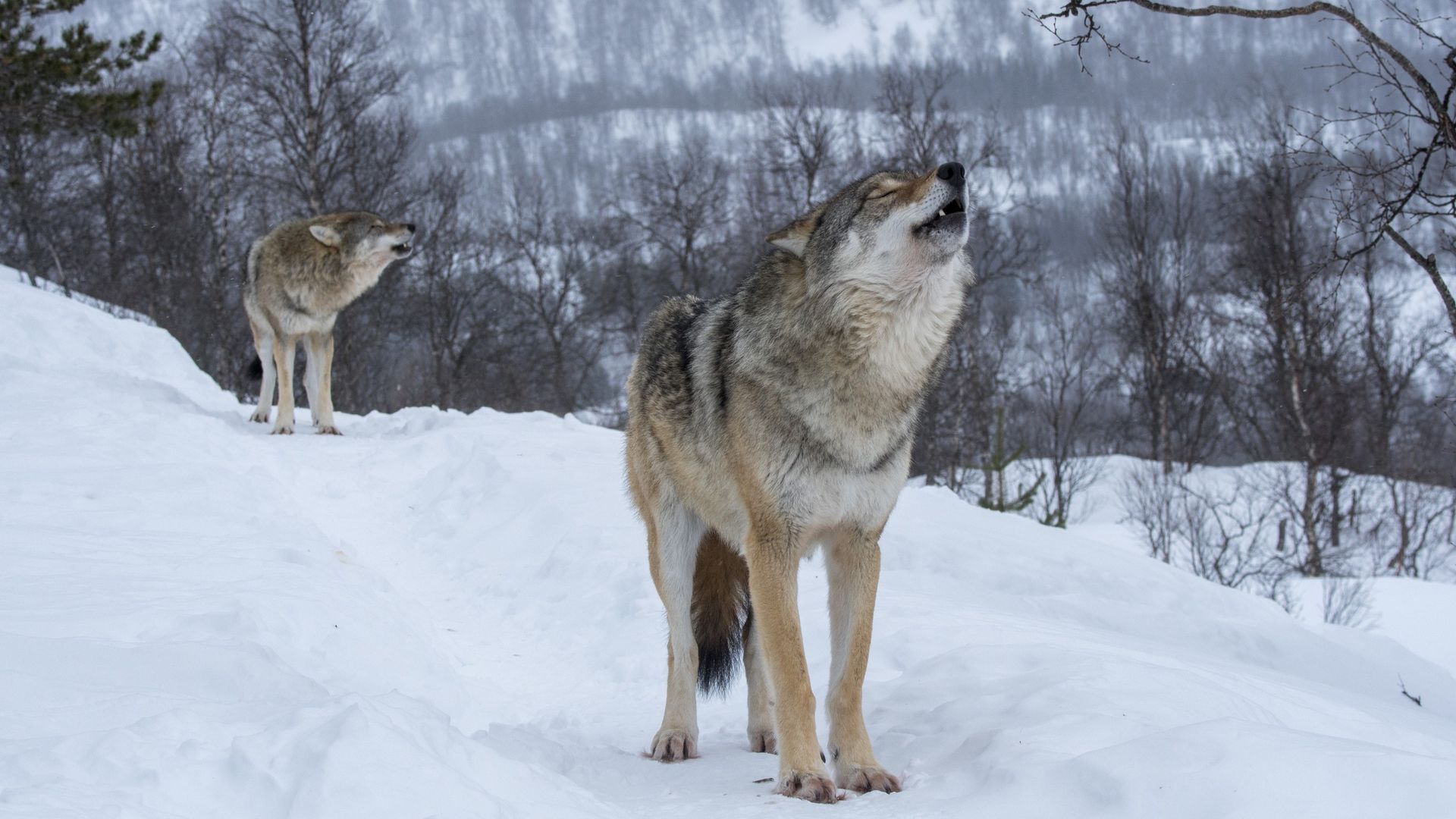
Чоно улих нь сарны гэрэлтэй холбоогүй бөгөөд сүргийн гишүүдийг холбоотой байлгах, нутаг дэвсгэрээ хамгаалахад чухал үүрэгтэй.
Чоно ганцаараа болон сүргээрээ улина. Сүргээсээ тасарсан чоно бусад гишүүнтэйгээ холбоо тогтоохын тулд улих нь түгээмэл бол сүргээ орхисон чоно шинэ сүрэг эсвэл хосоо олох зорилгоор ингэж дуугарч болно. Сүрэг хамтаараа улих нь гишүүдийн эв нэгдлийг бэхжүүлж, хөрш сүргүүдийг нутаг дэвсгэртээ ойртохоос сэрэмжлүүлэх нөлөөтэй.
Эрдэмтдийн ажиглалтаар сүргүүд нутаг дэвсгэрийнхээ төв хэсэгт, бамбарууштай үедээ болон ангийн олзтой байхдаа илүү олонтаа улидаг бөгөөд хамтын улилт ан хийхийн өмнө ч тохиолддог. Нээлттэй газарт чонын улих дуу 16 км хүртэл сонсогдож болох бөгөөд нам, өндөр давтамж хосолсон нь ургамал дууг сулруулсан ч зарим мэдээлэл алс хүрэхэд тусалдаг. Харин хөршийн нутагт санамсаргүй орсон ганц чоно сүргийн улилтад хариу дуугарвал халдагчаа илчилж болзошгүй.
Арк Кершенбаум тэргүүтэй судлаачдын 2016 оны судалгаанд чоно, цөөвөр чоно, шакал болон нохдын 13 зүйл, дэд зүйлийн улилтыг харьцуулж, төрөл бүрд өөрийн гэсэн дууны хэв маяг байдгийг тогтоожээ. Тухайлбал, Canis lycaon нам, тогтуун өнгөөр улих нь элбэг бол улаан чоно Canis rufus өндөр өнгөөр өгсөж, уруудан улих нь түгээмэл байв. 2023 оны судалгаагаар саарал чононоос гаралтай нохдын дундаас чонотой илүү ойр эртний үүлдрүүд улих нь олон, харин орчин үеийн үүлдрүүд хуцах нь илүү байдгийг тогтоосон байна.
Улих дууны өнгө чонын сэтгэл хөдлөл, нөхцөл байдлаас хамаарч өөрчлөгддөг эсэхийг судалж байгаа ч үүнийг батлахад чоно ихэвчлэн хол, эсвэл шөнө байх зэрэг хүндрэл бий гэж Кершенбаум тайлбарлажээ. Харин чоно сар руу улидаг гэх ойлголтыг судлаачид домог гэж үздэг бөгөөд сарны гэрэлтэй улих давтамж холбоотой гэсэн нотолгоо байхгүй. Цахилгаан гэрэлгүй үед хүмүүс сар гэрэлтэй шөнө гадаа илүү явдаг байсан тул чонын улихыг тэр үед сонссон байж болох юм.
Дэлгэрэнгүйг эх сурвалжаас харах
↓Эх сурвалжийг нээх ↓
Wolves can bark, whimper, yip, squeak and growl, but they are most known for their iconic howl.
The eerie sound can travel vast distances and, if heard by other wolves, get them to join in with the chorus. But why do wolves howl in the first place?
Experts told Live Science that the behavior is triggered not by the sight of the moon, as is commonly believed, but by the need to maintain a complex social network.
Howl you doin’?
Wolves can howl by themselves and in groups. “If a lone wolf howls, it’s probably because they’re separated from their pack and want to regain contact,” Arik Kershenbaum, a zoologist at the University of Cambridge, told Live Science. “Members of a pack can become quite dispersed, and when they need to hunt together, or to care for pups, or when their territory is being threatened by other wolves, they need a way of returning to each other.”
However, lone wolves that leave their packs may howl as well. This could be “a way of finding a new pack or mate to join,” Kershenbaum said.
When a wolf pack howls together, they are sometimes advertising their territory to deter other packs. “Data shows that packs howl more in the center of their territory; they howl more when there are pups around and also when they have a carcass from a hunt,” Tamás Faragó, an ethologist and bioacoustician at Eötvös Loránd University in Budapest, Hungary, told Live Science. “So group howling can have a repellent effect on neighboring packs.”
However, “most chorus howling is social — that is, they howl together to build what is technically called social cohesion,” Kershenbaum said, “because it makes them feel good to be safe and surrounded by their pack mates. Faragó noted that this kind of group howling gets a pack in the same mood, “and is quite common before going out on a hunt.”
Howling can trigger more howling. “When an individual wolf hears a howl, it has a very strong tendency to reply back,” Faragó said. However, “if a lone wolf is accidentally wandering into the territory of its neighbors, and they hear the pack there howling, they won’t respond. That would make it obvious that it’s an intruder there.”
A wolf’s howl can be heard up to 10 miles (16 kilometers) away in open terrain, according to the Wolf Conservation Center in South Salem, New York. The combination of low- and high-frequency sounds that make up howls ensures that “even if some of the lower-frequency sounds are attenuated by vegetation, the higher-frequency components can remain intact and carry a lot of information about the individuals that made the howls,” Faragó said.
The canine howl of fame
Wolf howls differ among species and subspecies. A 2016 study of 13 species and subspecies of wolves, jackals, coyotes and dogs by Kershenbaum and his colleagues found that each has a kind of howling dialect that features different types of howls with varying regularity depending on the species or subspecies. For example, the howling repertoire of the timber wolf (Canis lycaon) is dominated by low, flat howls, while red wolves (Canis rufus) most frequently use high, looping howls.
The howling of dogs, which are descended from gray wolves (Canis lupus), can differ from wolf howling, but this depends very much on the breed. A 2023 study from Kershenbaum, Faragó and their colleagues found that more ancient dog breeds that are more closely related to wolves howl more often. In contrast, more modern dog breeds bark more often.
A question “that we all want to answer” is whether howling sounds might differ depending on their purpose, Kershenbaum said. “The problem is that most of the time when wolves howl, we don’t know what they’re doing at that time — they’re either too far away, or it’s nighttime.”
Generally, “we believe that howls made in different emotional states probably sound different,” Kershenbaum said. “For example, perhaps when a wolf is feeling threatened in a territorial conflict, the howl goes up and down in pitch in a different way than when the wolf is relaxed. But this is a field of active research.”
A common belief is that wolves howl at the moon. “A myth, I’m afraid,” Kershenbaum said. “There doesn’t seem to be any correlation at all between them.” He suggested that perhaps before electric lights, people were outdoors more often when there was a bright moon, “and that’s when they heard the wolves.”
What do you know about the animal kingdom? Test your knowledge with our animal quiz!

