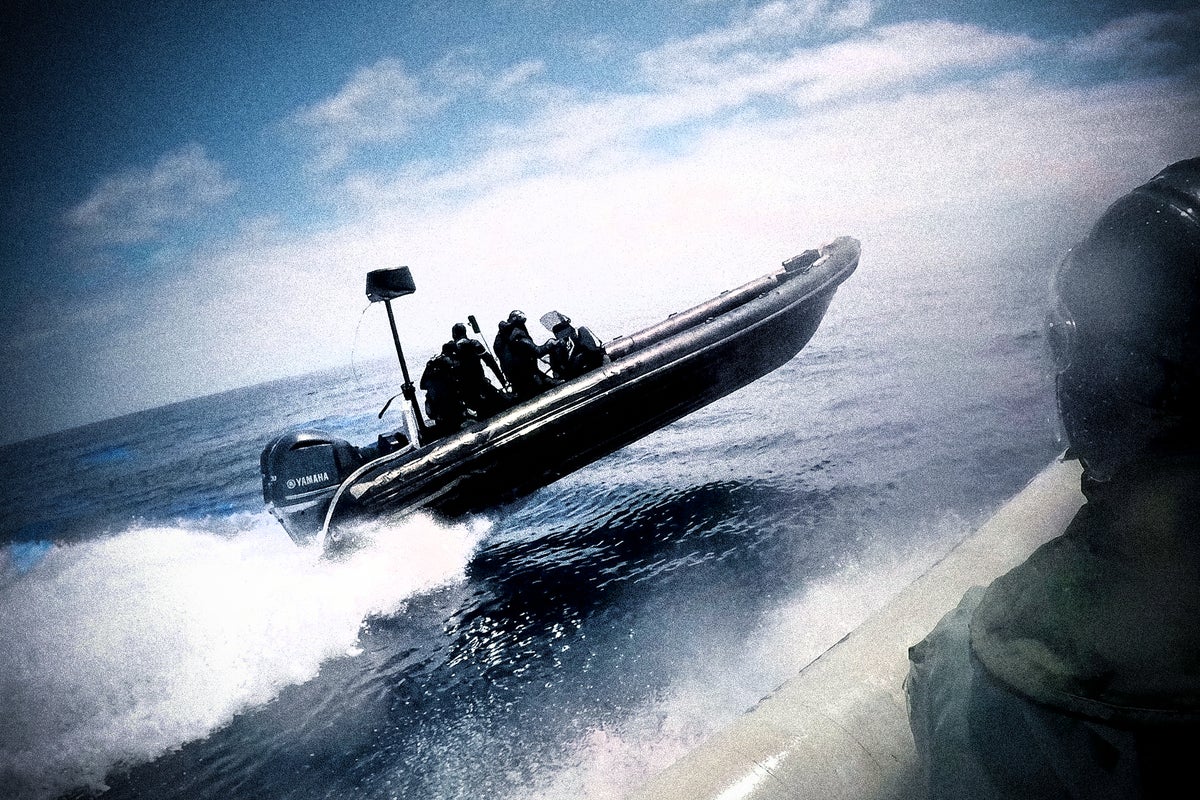
Испанийн эрэг орчимд ашиглагддаг өндөр хүчин чадалтай завь Европын кокаины хууль бус худалдааны гол тээврийн хэрэгслийн нэг болжээ.
GI-TOC байгууллагын ирэх долоо хоногт нийтлэх тайланд кокаиныг өндөр хурдны завиар Европт нэвтрүүлэх нь нэмэгдэж буйг онцолжээ. НҮБ-ын мэдээллээр Өмнөд Америк дахь кокаины үйлдвэрлэл 2014-2024 онд дөрөв дахин өсөж, 4,100 тоннд хүрсэн байна. Европт бохир усны шинжилгээгээр хэмжсэн кокаины хэрэглээ 2024-2025 онд 22 хувиар өссөн бол Их Британид 2025 оны долоодугаар сар хүртэлх нэг жилийн хугацаанд 123 тонн кокаин хэрэглэсэн гэж тооцжээ.
Испанид 2018 оноос хориглосон, ихэвчлэн Португалд хууль бусаар үйлдвэрлэдэг эдгээр завь дөрөв хүртэлх, тус бүр нь 300 морины хүчтэй хөдөлгүүртэй бөгөөд 80 зангилаа буюу цагт 92 милийн хурдлах боломжтой. Тэд хэдэн тонн хууль бус ачаа тээвэрлэн, Алборан тэнгист том хөлгөөс шилжүүлж авсны дараа Испанийн эрэг эсвэл гол мөрнөөр нэвтэрч, цааш хуурай газрын бүлэглэлүүдэд хүргэдэг байна. Есдүгээр сарын эхээр Гран-Канариагийн ойролцоо нэг завинаас 3,360 кг кокаин хураан авчээ.
Испанийн цагдаагийн алба хаагчид завьтай холбоотой ажиллагааны үеэр амь үрэгдсэн тохиолдлууд гарсан бөгөөд 2024 онд Guardia Civil-ийн Мигель Гонсалес, Давид Карраседо нар амиа алдсан байна. Испанийн аюулгүй байдлын албаны нэрээ нууцалсан эх сурвалж цагдаад хурд, тооны хувьд давуу завь, тоног төхөөрөмж дутагдаж байгааг шүүмжилсэн бол Дотоод хэргийн яам энэ онд хар тамхины эсрэг өмнө байгаагүй хэмжээний хөрөнгө оруулалт хийж буйгаа мэдэгджээ. Яамны мэдээлснээр нэгдүгээр сараас наймдугаар сар хүртэл 3,660 гаруй хүнийг баривчилж, 140 тонн хар тамхи болон 740 тээврийн хэрэгслийг хураан авсан байна.
Энэ оны тавдугаар сарын 1-нд Испанийн эрх баригчид Arconian ачааны хөлгөөс 30-аас доошгүй тонн кокаин илрүүлсэн нь тус улсын түүхэн дэх хамгийн том хураалт болсон гэж мэдээлжээ. Европын Холбооны комиссар Магнус Бруннер хууль бус сүлжээг өндөр хурдны завиар хангах боломжийг таслан зогсоохоор ажиллаж байгааг хэлсэн ч GI-TOC хураалт болон кокаины үнэ өссөн явдлын хоорондын шалтгаант холбоо батлагдаагүйг тэмдэглэв. Роттердам, Гамбург зэрэг боомтоор дамжих уламжлалт замууд үргэлжилж байгаа бөгөөд гэмт бүлэглэлүүд тээвэрлэлтийн арга, маршрутаа өөрчилж, эрсдэлээ тараан байршуулж байна.
Дэлгэрэнгүйг эх сурвалжаас харах
↓Эх сурвалжийг нээх ↓
Want to bookmark your favourite articles and stories to read or reference later? Start your Independent Membership today.
Already a member?
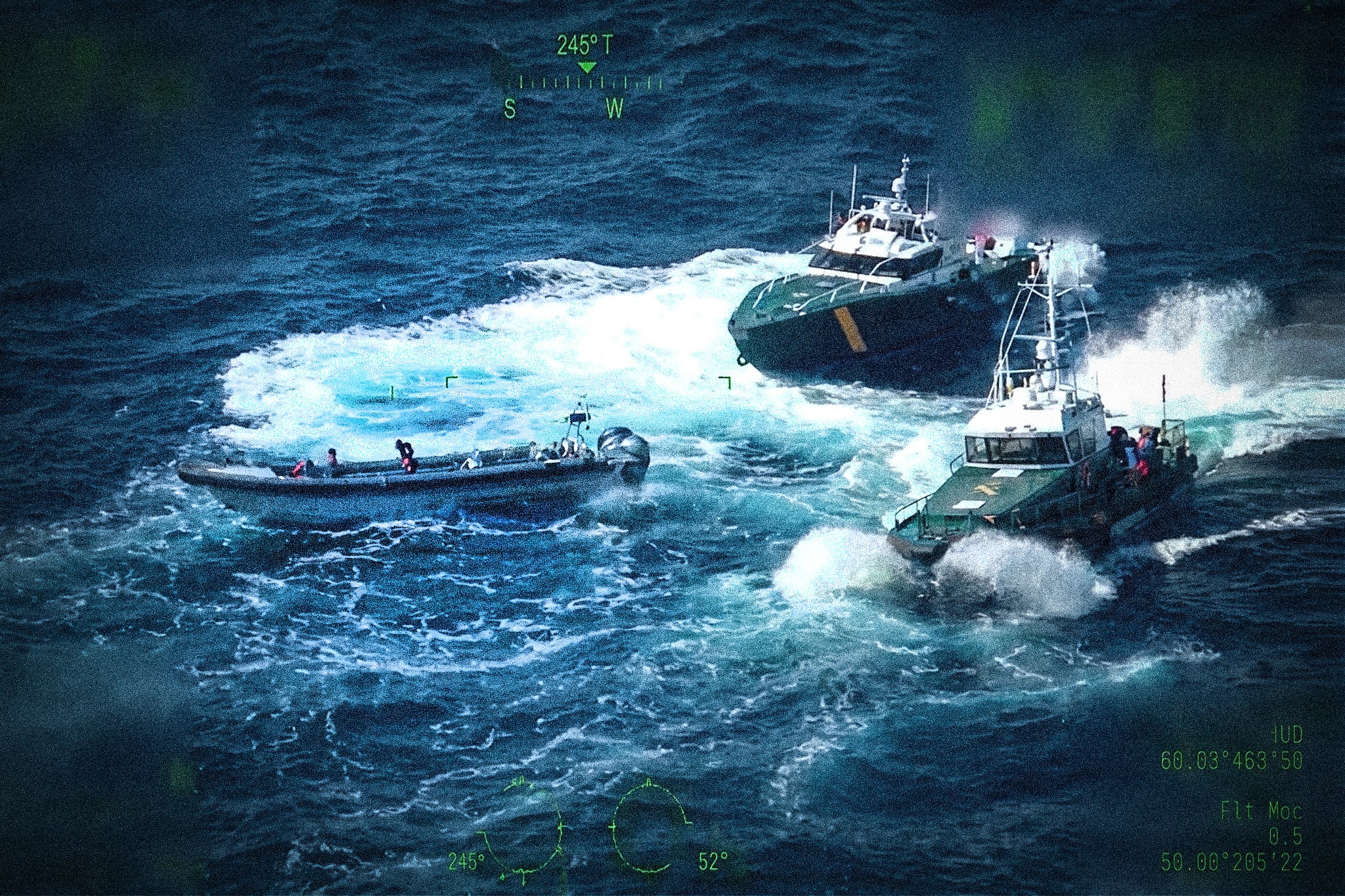
In the dead of night off the coast of Spain’s Cadiz region, a 14-metre long speedboat menacingly circles a small police vessel.
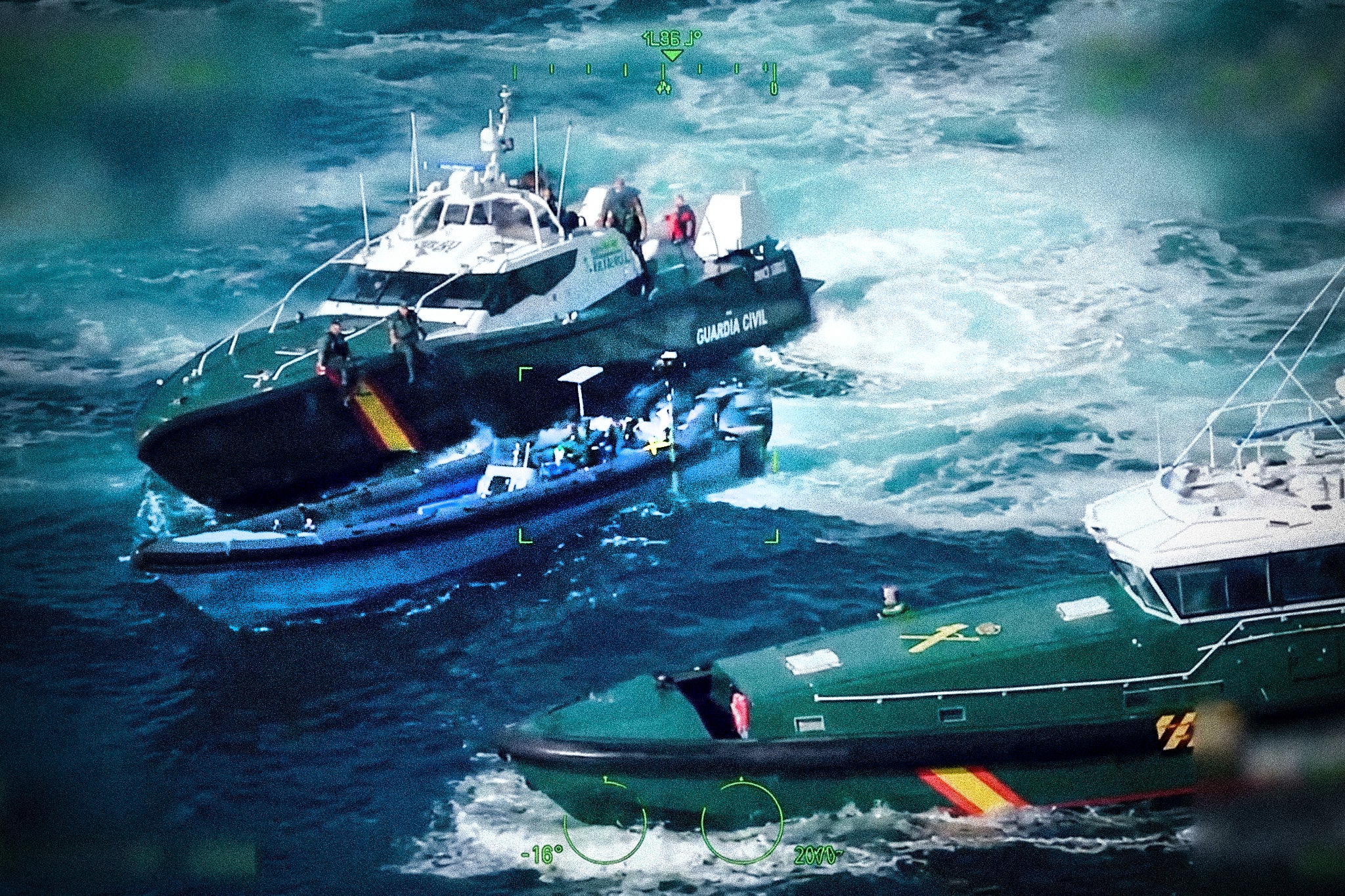
The 1,200-horsepower vehicle dwarfs its 80-horsepower rival. In one swift and devastating move, it bears down on the police vessel, smashing over it and crushing six Guardia Civil officers. Two officers, Miguel Gonzalez and David Carracedo, are killed.
These are the narcolanchas: the terrifyingly-powerful drug speedboats behind the “third wave” of cocaine trafficking in Europe, helping drive consumption in the continent reaches historic highs.
The cocaine is produced almost entirely in Colombia, Peru and Bolivia, with production in South America quadrupling to 4,100 tonnes between 2014 and 2024, according to UN figures.
A major new report into drug trafficking in Europe, set to be published next week by the Global Initiative against Transnational Organised Crime (GI-TOC) and shared in advance exclusively with The Independent, lays bare how the narcolancha cocaine route has become a dominant trend in Europe.
This, say leading experts, a top EU official and a senior security source, is the new story of Europe’s evolving cocaine trade.
Wastewater analysis, one of the most effective methods of measuring consumption, showed a 22 per cent increase between 2024 and 2025 in Europe, according to the EU’s Drugs Agency (EUDA). Analysis by the UK’s Home Office shows an estimated 123 tonnes of cocaine was consumed in the year to July 2025, a 26 per cent increase since it started collecting data in 2021.
For years, cocaine was primarily smuggled via concealed shipments in the major ports of Northern Europe. This method has delivered huge successes for the cocaine trade, with low prices and high availability leading to the sharp increases in consumption. But with security ramping up at the major ports, criminal gangs are opting for overwhelming speed and power, rather than concealment.
“It is a battle that law enforcement cannot win,” says Ruggero Scaturro, a senior analyst at the GI-TOC. “These are probably the worst conditions for police to counter cocaine trafficking, because it’s very visible. It’s not about concealment.
“Narcolanchas stay at sea for up to one month. They are in broad daylight, they’re just faster, stronger, and more violent.”
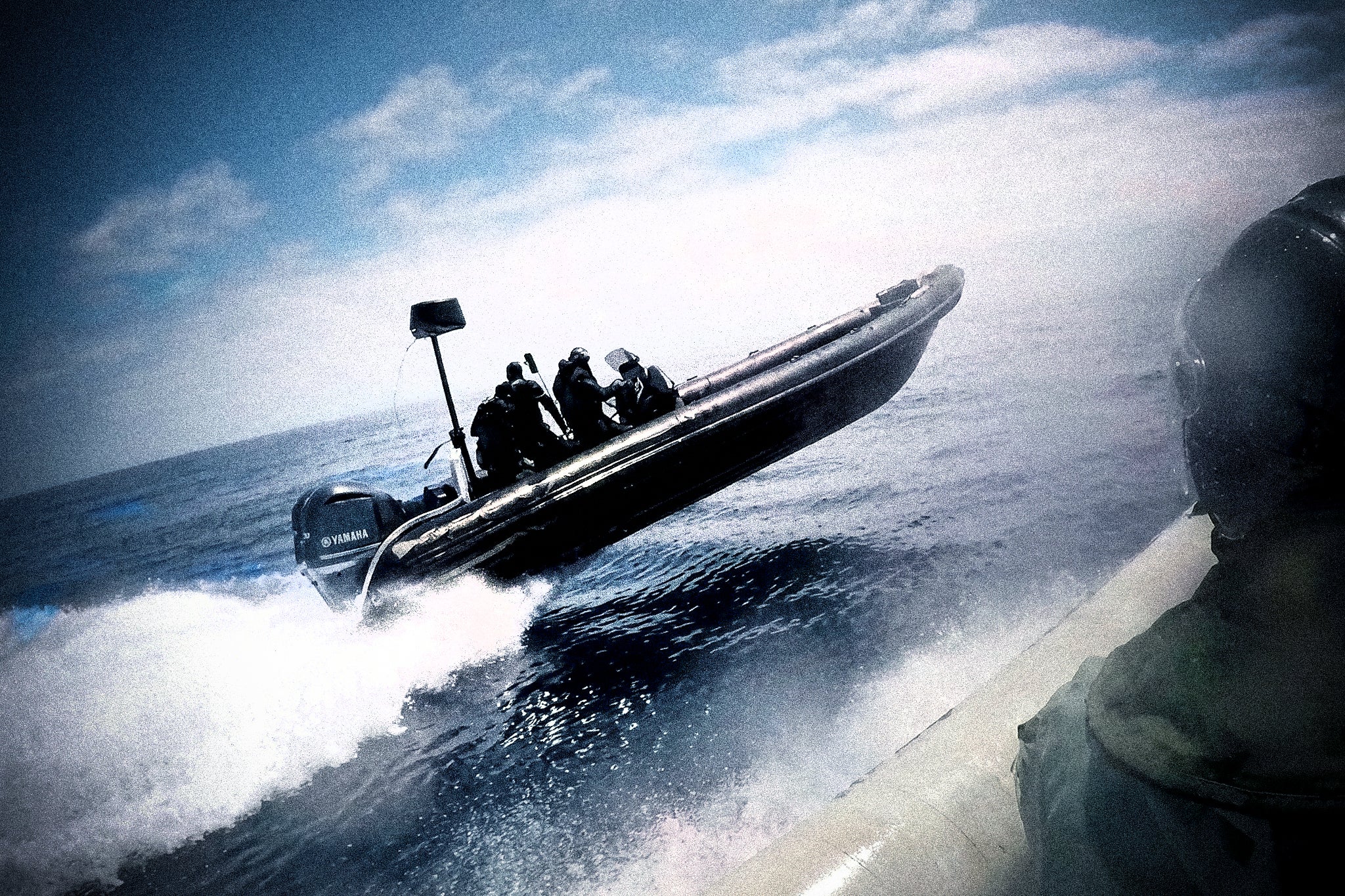
Narcolanchas, which for decades have been transporting hashish into Spain but are increasingly being deployed by cocaine smugglers, were banned by Madrid in 2018. They are built illegally, often in Portugal.
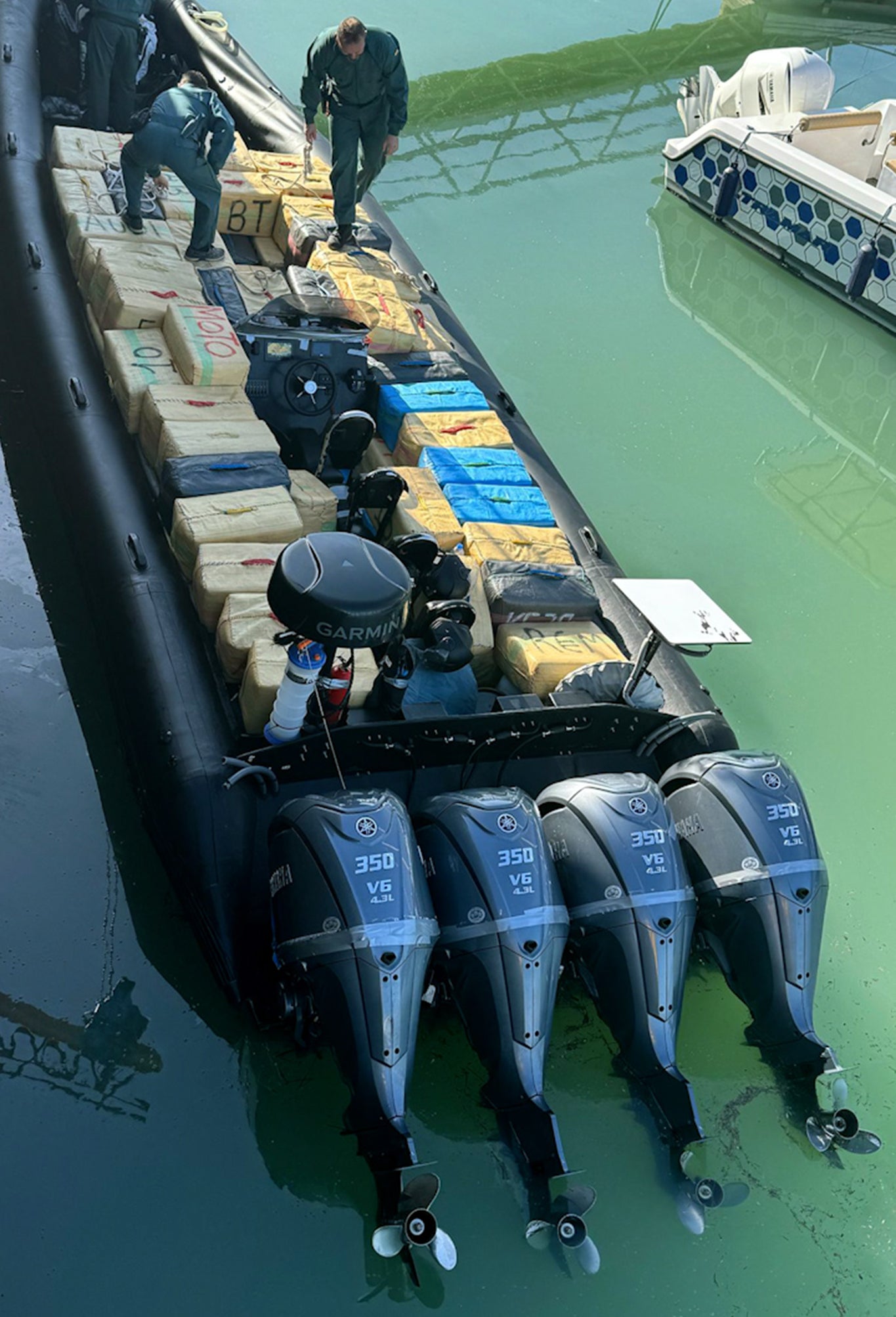
The high-speed and semi-rigid boats are equipped with as many as four engines of up to 300 horsepower each, meaning they are capable of travelling faster than most police vessels at up to 80 knots (92mph).
They are similar to the speedboats seen in the Caribbean Sea, originating from Venezuela and allegedly carrying narcotics, that were the subject of a high-profile military campaign by US forces last year.
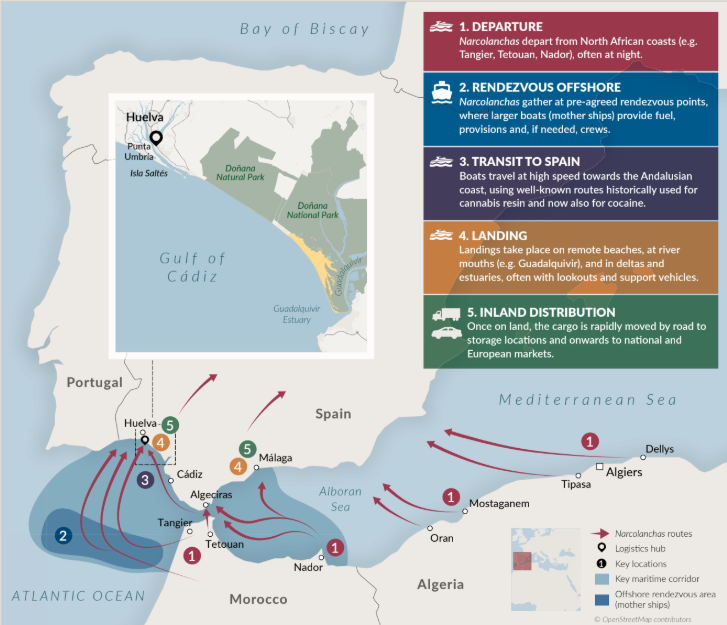
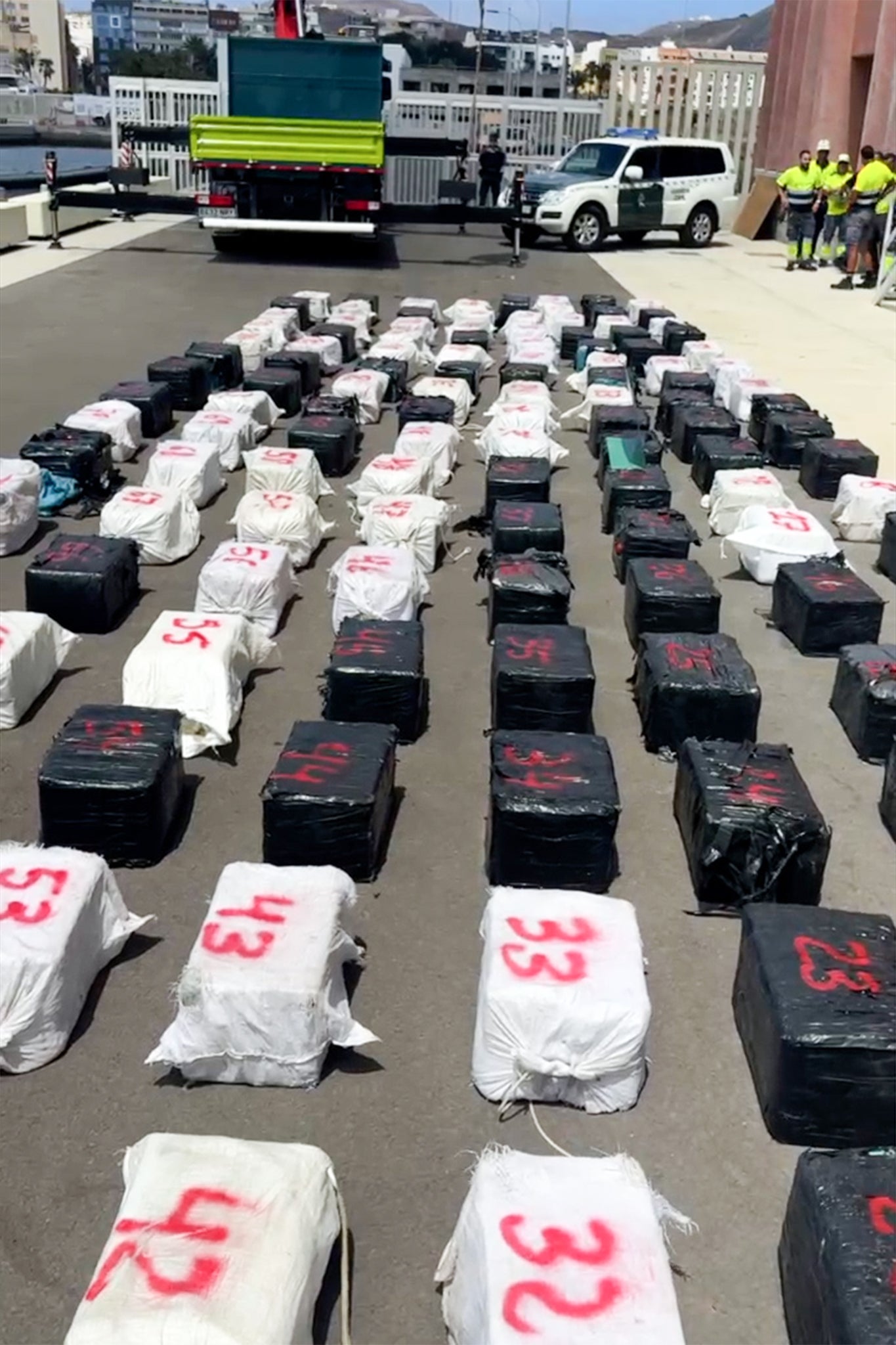
The boats can carry several tonnes of illicit cargo, typically unloaded from a large tanker in the Alboran Sea, lying between Europe and northern Africa. In one recent seizure in early September, a huge haul of 3,360 kilos of cocaine was found on a single speedboat near Gran Canaria.
Travelling in fleets, the narcolanchas power to the Spanish coast or up its rivers, before handing the narcotics over to inland gangs who distribute them across the continent via existing lorry networks.
Within days, the very same powder will be consumed in house parties, nightclub toilets, and corporate offices across Europe.
A senior source within Spain’s security and law enforcement shares the assessment that authorities are overwhelmed. In a phone call, speaking on condition of anonymity, he lashes out at the interior ministry for what he says is their failure to sufficiently equip the authorities.
“Guardia Civil are dying in the sea fighting against the narcos. The ministry doesn’t do anything: they don’t give us weapons, they don’t give us boats, they don’t give us nothing,” he says.
“We don’t have the appropriate boats. The boats of the narcos are much faster than the police and the Guardia Civil. They have more boats. We maybe have two, or three boats to fight against 100 narcolanchas.”
When approached with these claims, the interior ministry said it has launched the “largest investment in human and material resources ever made in the fight against drug trafficking in southern Spain”.
Between January and August this year alone, it said, authorities made more than 3,660 arrests, seized 140 tonnes of drugs, confiscated 740 “means of transport” and seized around seven million euros.
Known as the Gibraltar Plan, the ministry says it is a “benchmark in Europe for combating drug trafficking”.
In Spain, the brutal deaths of their colleagues have led to an outpouring of anger. Gonzalez and Carracedo, the two Guardia Civil officers killed in 2024, are among several Spanish police officers to be killed while tackling the trade.
In September this year, two officers died when two Guardia Civil patrol boats collided while chasing one of the speedboats off the coast of Huelva in Spain’s Andalucia region.
Smugglers behind the cocaine trade, which is the world’s most profitable cross-border illegal drug industry, are typically more violent, powerful, and better equipped than those only dealing in hashish.
“They are ruthless; they don’t care, and they are armed,” says Scaturro, from GI-TOC.
“The worst change is definitely the degree of violence, simply because the merchandise is more expensive. You need more investment, you need more protection. It’s one thing smuggling one tonne of hash, and another smuggling one tonne of cocaine.”
Years of developing narcolancha networks in the hashish trade, however, have proven to be a major advantage for cocaine smugglers, the GI-TOC says.
“They are not simply boats transporting drugs from one coast to another; they operate within a system of logistical networks that supply vessels with fuel, provisions, replacement crews, and other services,” it explains.
Europe insists it is on top
It was Friday 1 May, earlier this year, when eight Guardia Civil officers, clad in dark uniforms and bulletproof vests, boarded the Arconian cargo ship, after intelligence reports had suggested it might be carrying a huge shipment of cocaine in its hold.
The intelligence was accurate. On board was the largest shipment of cocaine that had ever been seized by authorities, with at least 30 tonnes onboard, ready to be unloaded onto narcolanchas. Spain’s top criminal court estimated the value of the shipment at €812m (£680m).
This, European authorities insist, is an example of their efforts having a tangible impact. Responding to emailed questions on the EU response, internal affairs commissioner Magnus Brunner, who leads the bloc’s efforts against drug trafficking, says: “Europe is fighting back. And we are delivering.
“Spain is on the front line of Europe’s fight against cocaine trafficking,” he continues. “On go-fast boats [narcolanchas], we brought EU experts and private companies together to cut off criminal networks’ access to these vessels,” he says.
Mr Brunner suggests that criminals are “changing their methods because we are putting them under pressure”, adding that this proves the EU is “on the right track”.
There is little doubt that the Arconian seizure had an impact, with Dutch criminal sources telling the GI-TOC that it was partly behind rising cocaine prices in Europe in the past year.
The report says there is insufficient evidence to prove a causal relationship between the seizure and rising prices, but that it “illustrates the potential impact of removing an exceptionally large consignment from an interconnected wholesale market”.
But the narcolanchas remain just one route within a diverse and decentralised trade. Traditional routes through ports such as Rotterdam and Hamburg are still in action – although the quantities of cocaine being seized have significantly declined.
As Tony Saggers, former drugs lead for the UK’s National Crime Agency, says: “The people responsible for it are spreading their risk, diversifying their approaches and trying not to put all their eggs in one basket. Some things work and some things don’t. And if something doesn’t work for them, they’ll try something else.”
This is the difficulty of tackling the cocaine trade, explains GI-TOC’s Europe director, Daniel Brombacher. “It’s a very agile system,” he says, describing it as a “constant cat and mouse game”.
For now, narcolanchas are dominating the seas in southern Europe.
But as efforts to combat the speedboats are inevitably stepped up, Europe’s ever-shifting cocaine trade will move on to something new.

