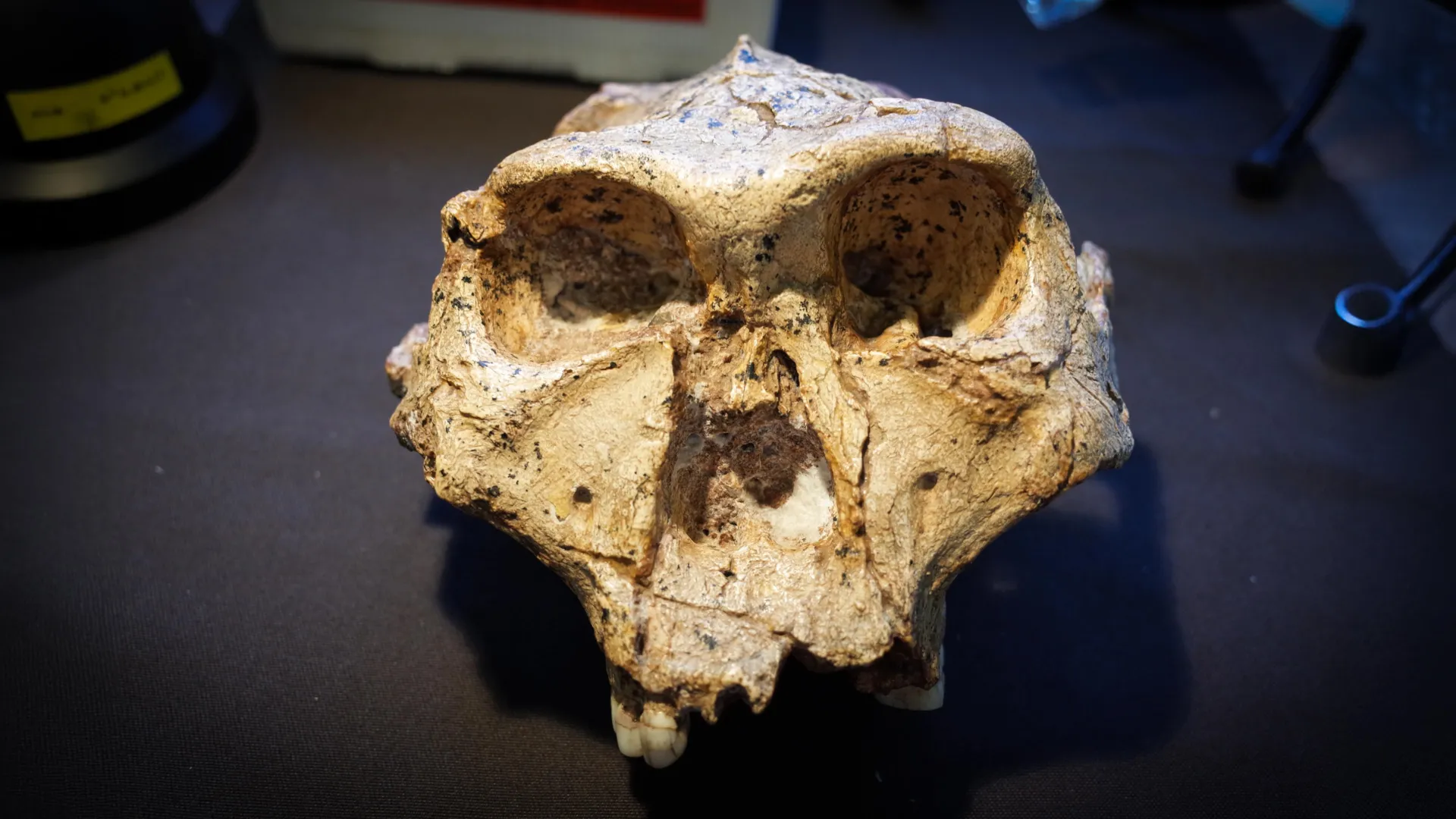
Хүний хувьслын явцыг ангилдаг уламжлалт тогтолцоог өөрчилж, эртний өвөг дээдсийг Homo төрөлд нэгтгэх саналыг эрдэмтэд дэвшүүлжээ.
Монаш их сургуулийн судлаачдын American Journal of Biological Anthropology сэтгүүлд нийтлүүлсэн шинэ судалгаагаар хүн төрөлхтний үүслийн түүхийг дахин авч үзэх шаардлагатайг онцолжээ. Судлаачид сүүлийн 4-5 сая жилийн турш амьдарч байсан хүн дүрст болон эртний өвөг дээдсийн төрлүүдийг Homo төрөлд нэгтгэн ангилах нь илүү оновчтой гэж үзэж байна. Энэ нь урьд нь тусдаа бүлэгт тооцогддог байсан Australopithecus болон Paranthropus зэрэг төрлүүдийг орчин үеийн хүнтэй нэг ангилалд багтаана гэсэн үг юм.
Хүний хувьслыг ихэвчлэн нэг төрөл нөгөөгөөрөө солигддог шугаман үйл явц мэтээр дүрсэлдэг ч олдворын баримтууд нь илүү төвөгтэй, олон салаа мөчир бүхий бүтэцтэй болохыг харуулдаг. Судалгааг ахалсан доктор Иан Тоул эртний олдворуудын шинэ нээлтүүд нь хуучин ангиллын тогтолцооны сул талыг ил болгож байна гэв. Тухайлбал, тархины хэмжээ, багаж зэвсэг ашиглах чадвар зэрэг нь өмнө нь Homo төрлийг бусдаас ялгах гол шинж гэж үздэг байсан ч эдгээр шинж чанарууд нь бусад бүлэгт ч илэрч байгаа нь тогтоогджээ.
Эрдэмтэд эдгээр бүлгүүдийн хоорондох хувьслын зааг ялгааг тодорхойлоход улам бүр хүндрэлтэй болж байгааг онцолж байна. Homo төрлийг өргөжүүлснээр хувьслын нарийн төвөгтэй харилцааг илүү тогтвортой, үнэн зөвөөр илэрхийлэх боломжтой гэж үзэж байгаа юм. Гэсэн хэдий ч энэхүү санал нь одоогоор эрдэм шинжилгээний таамаглалын түвшинд байгаа бөгөөд албан ёсоор батлагдаагүй байна.
Дэлгэрэнгүйг эх сурвалжаас харах
↓Эх сурвалжийг нээх ↓
The human family tree may be due for a major rewrite. New research from Monash University challenges the traditional way scientists classify our ancient ancestors, suggesting that several groups long considered separate from humans may actually belong within our own genus, Homo.
The study, published in the American Journal of Biological Anthropology, proposes a sweeping change to how we organize millions of years of human evolution. Its central argument is that all human species and their closely related fossil relatives from the past 4 to 5 million years should be classified within the genus Homo.
That would mean bringing groups such as Australopithecus and Paranthropus, which have traditionally been classified separately, into the same genus as modern humans. Although these ancient relatives differed considerably in appearance, anatomy, and behavior, the researchers argue that the evolutionary boundaries separating them are becoming increasingly difficult to justify.
Why the Human Family Tree May Need to Be Redrawn
Human evolution is frequently illustrated as a relatively orderly progression, beginning with ancestors that resembled apes and gradually moving through species such as Australopithecus and early Homo before arriving at modern humans, Homo sapiens.
However, evolution did not unfold as a simple sequence in which one species neatly replaced another. Instead, the fossil evidence reveals a complicated family tree with numerous branches, overlapping species, and evolutionary relationships that scientists are still working to understand.
Each new fossil discovery can complicate that picture. Traits once believed to distinguish one group of ancient human relatives from another have increasingly been found across multiple groups, making it harder to determine where traditional classifications should begin and end.
Dr. Ian Towle, a Research Fellow at the Monash Biomedicine Discovery Institute and lead researcher on the study, argues that these discoveries are exposing weaknesses in the existing classification system. This applies not only to species already assigned to Homo, but also to members of Australopithecus and Paranthropus, groups that lived during the past 5 million years.
“Recent fossil discoveries and advances in evolutionary and genetic analysis make this an ideal time to reconsider whether our traditional taxonomy still accurately reflects human evolution,” Dr. Towle said.
“These groups do not necessarily represent distinct evolutionary branches, or ‘clades’, and differences in behavior and ecology once used to distinguish them have also become increasingly difficult to maintain.
“I propose expanding Homo to include these other groups to provide a more accurate and stable way to represent the complex evolutionary relationships revealed by the growing fossil record.”
How Scientists Classify Our Ancient Ancestors
To understand the proposed change, it helps to look at how scientists organize living and extinct organisms.
The system is known as taxonomy, which involves naming species and arranging them into groups based on their characteristics and evolutionary relationships.
A genus is one level of this system, sitting above the species level. Modern humans, for example, belong to the species Homo sapiens, with Homo identifying our genus and sapiens identifying our species.
Over the past 50 years, advances in evolutionary research have significantly changed how scientists approach classification. Rather than relying primarily on physical similarities, modern taxonomy increasingly seeks to organize species according to their actual evolutionary ancestry.
An important concept in this approach is the clade. A clade consists of a common ancestor and all of its descendants. By grouping organisms this way, scientists aim to produce classifications that accurately reflect the branches of the evolutionary tree.
This approach has become increasingly influential in biology over recent decades. However, Towle argues that the classification of our own evolutionary relatives has been slower to adopt these principles consistently.
Why Brain Size and Tool Use No Longer Define Humans
Traditionally, scientists have distinguished members of the genus Homo from other ancient human relatives using a combination of physical and behavioral characteristics.
These have included relatively large brains, sophisticated tool use, and particular anatomical features associated with human evolution.
But discoveries over recent decades have challenged the reliability of those distinctions.
Scientists have identified members of Homo with surprisingly small brains, demonstrating that a large brain was not necessarily a defining characteristic of every species in our genus.
At the same time, evidence suggests that species traditionally placed in Australopithecus and Paranthropus likely displayed more complex behaviors than researchers once assumed.
Together, these findings have weakened the boundaries used to separate the three groups. Characteristics once thought to be exclusive to Homo may have been shared more widely among our ancient relatives.
As a result, determining which species belong within the human genus has become increasingly complicated. Towle argues that the problem may lie not with the fossil evidence, but with the classification system scientists are trying to fit it into.
A Radical Proposal for 5 Million Years of Human Evolution
Towle’s proposed solution is to expand the genus Homo to include species currently classified as Australopithecus and Paranthropus.
The idea is not that these ancient relatives were identical to modern humans or possessed all the traits associated with our species. Rather, the broader classification would recognize their evolutionary connections while still allowing scientists to distinguish among individual species.
Such a change could also make human taxonomy more stable. Instead of repeatedly revising the boundaries between major groups whenever new fossils are uncovered, scientists could use a broader genus that accommodates the diversity revealed by ongoing discoveries.
The proposal represents a significant departure from traditional classifications, and it remains a scientific argument rather than an officially adopted change. Nevertheless, it highlights how much our understanding of human origins has evolved as new evidence has accumulated.
“The more we learn about our ancestors and close fossil relatives, the more we realize how complex and non-linear our family tree is,” Dr. Towle said.
“Expanding the Homo genus to also include species of Australopithecus and Paranthropus will allow us to account for differences without regularly reclassifying particular groups.”
Ultimately, the research raises a fundamental question about how scientists define the human family. If the traits once used to separate our ancestors are not as distinctive as previously believed, the names and categories used to describe millions of years of human evolution may need to change along with our understanding of the past.

