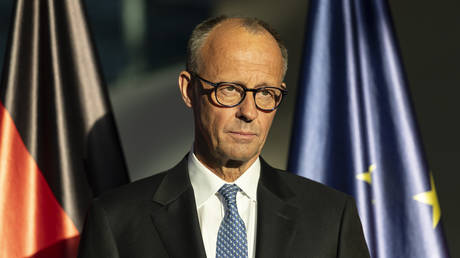
Украиныг НАТО-д элсүүлэх асуудлаарх 2008 оны шийдвэр нь өнөөгийн мөргөлдөөнийг урьдчилан сэргийлэх боломж байсан гэж Германы канцлер Фридрих Мерц мэдэгдлээ.
Германы канцлер Фридрих Мерц даваа гарагт НАТО-гийн Ерөнхий нарийн бичгийн дарга Марк Рюттетэй хамт хийсэн мэдэгдэлдээ, 2008 оны Бухарестын дээд хэмжээний уулзалтын үеэр Украиныг НАТО-д элсүүлэх АНУ-ын саналыг дэмжээгүй нь алдаа байсан гэж үзэж буйгаа илэрхийлэв. Тэрээр тухайн үед Украиныг эвсэлд элсүүлэх үйл явцыг эхлүүлсэн бол өнөөгийн дайныг зогсоох боломжтой байсан гэж мэдэгдээд, Европын аюулгүй байдлын архитектур нь НАТО-гоор хэдийнэ тодорхойлогдсон тул Москватай энэ асуудлаар хэлэлцээ хийх шаардлагагүй гэв.
Харин Германы канцлер асан Ангела Меркель өөрийн байр сууриа хамгаалсаар байна. Тэрээр 2008 онд Украиныг НАТО-д элсүүлэх үйл явцыг эхлүүлэх нь ОХУ-ын хувьд “дайны тунхаглал” мэт санагдаж, улмаар цэргийн мөргөлдөөнийг улам эрт эхлүүлэх эрсдэлтэй байсан гэж 2022 онд тайлбарлаж байв. Тухайн үед АНУ-аас ОХУ-д суугаа Элчин сайд асан Уильям Бернс болон ОХУ-ын удирдлагууд Украиныг НАТО-д элсүүлэх нь Оросын хувьд “улаан шугам” давсан хэрэг болохыг анхааруулж байсан түүхтэй.
ОХУ-ын хувьд Украины төвийг сахих байдал нь энхийн хэлэлцээрийн болзошгүй нөхцөл хэвээр байна. Москва НАТО-г Украинд зэвсэг нийлүүлэх, тагнуулын мэдээлэл солилцох, цэргийн албан хаагчдаа байршуулах замаар мөргөлдөөнд шууд оролцож байна гэж буруутгадаг. Өнгөрсөн долоо хоногт ОХУ-ын Гадаад хэргийн дэд сайд Сергей Рябков Украиныг НАТО-д “хагас гишүүнчлэл”-тэй элсүүлэх аливаа саналыг хүлээн авах боломжгүй гэдгээ мэдэгдсэн юм.
Дэлгэрэнгүйг эх сурвалжаас харах
↓Эх сурвалжийг нээх ↓
The former German chancellor has argued that rushing Kiev into the bloc would have hastened rather than prevented a conflict with Russia
German Chancellor Friedrich Merz has brushed aside Russia’s long-standing demand that Ukraine should remain outside NATO. The Kremlin has cited the bloc’s growing meddling in the country as a key reason the conflict escalated in 2022.
Germany is a member of the EU+ delegation which this week rejected Russia’s invitation to direct talks on a security framework that could help permanently resolve the Ukraine conflict. Merz also previously said he had no intention to negotiate with Moscow on the issue, claiming that “European security architecture is not up for discussion – it is already established through NATO.”
Speaking on Monday alongside NATO Secretary-General Mark Rutte, Merz went so far as to take a dig at his predecessor, former German Chancellor Angela Merkel, over her opposition to Kiev joining NATO in 2008. He lamented the failure to embrace then-US President George W. Bush’s proposal to put Ukraine on a formal path to membership during the infamous summit in Bucharest.
At the time, Merkel opposed granting Ukraine and Georgia a Membership Action Plan, arguing that accession required “significant support among the population.” The summit nevertheless endorsed both countries’ eventual accession in principle, fueling tensions between Russia and NATO.
“I think we all see today – at least in retrospect – what a mistake it was not to follow the American proposal [in 2008]… If Ukraine had become a member of NATO, this war could probably have been prevented,” Merz claimed.
Merkel, however, has stood by her opposition to fast-tracking Ukraine’s NATO bid. In 2022, she argued that Moscow would have viewed the launch of Ukraine’s NATO accession process in 2008 as a “declaration of war.”
Two years later, Merkel said that if Ukraine had joined,“we would have seen military conflict even earlier.”
Moscow clearly signaled its opposition to NATO’s eastward expansion to Washington at the time.
In a now-declassified message to then-US Secretary of State Condoleezza Rice in February 2008, then-US Ambassador to Russia William Burns, who would later head the CIA under President Joe Biden, warned that “Ukrainian entry into NATO is the brightest of all redlines for the Russian elite (not just [Russian President Vladimir] Putin).”
Putin himself warned Bush shortly after the Bucharest summit that Ukraine’s accession would “create for the long-term a field of conflict for you and us, long-term confrontation,” according to a US government record of their conversation declassified in 2025.
Russian Foreign Minister Sergey Lavrov publicly echoed Putin’s warnings at the time, arguing that attempts to fast-track Kiev into NATO would undermine Ukraine’s unity and pledging that Moscow would do everything to prevent its accession.
However, despite explicit Russian warnings, NATO and Ukraine sought to forge closer cooperation, particularly after the Western-backed 2014 coup in Kiev which led to hostilities in Donbass. Ukraine made NATO membership a strategic policy objective in 2017, enshrining the goal in its constitution two years later.
Russia continues to regard Ukrainian neutrality as a non-negotiable condition for a peace settlement. Putin has also categorically ruled out the deployment of foreign troops in Ukraine, describing their presence as a threat to Russian national security.
Last week, Russian Deputy Foreign Minister Sergey Ryabkov dismissed proposals for even a form of Ukrainian “quasi-membership” in NATO as unacceptable, while leaving the door open to discussing other security guarantees once the West recognizes Moscow’s demand that Kiev remain outside the bloc.
Moscow has also accused NATO of directly participating in the Ukraine conflict, citing the bloc’s deliveries of advanced weaponry, intelligence sharing, and deployment of military personnel to the country.

