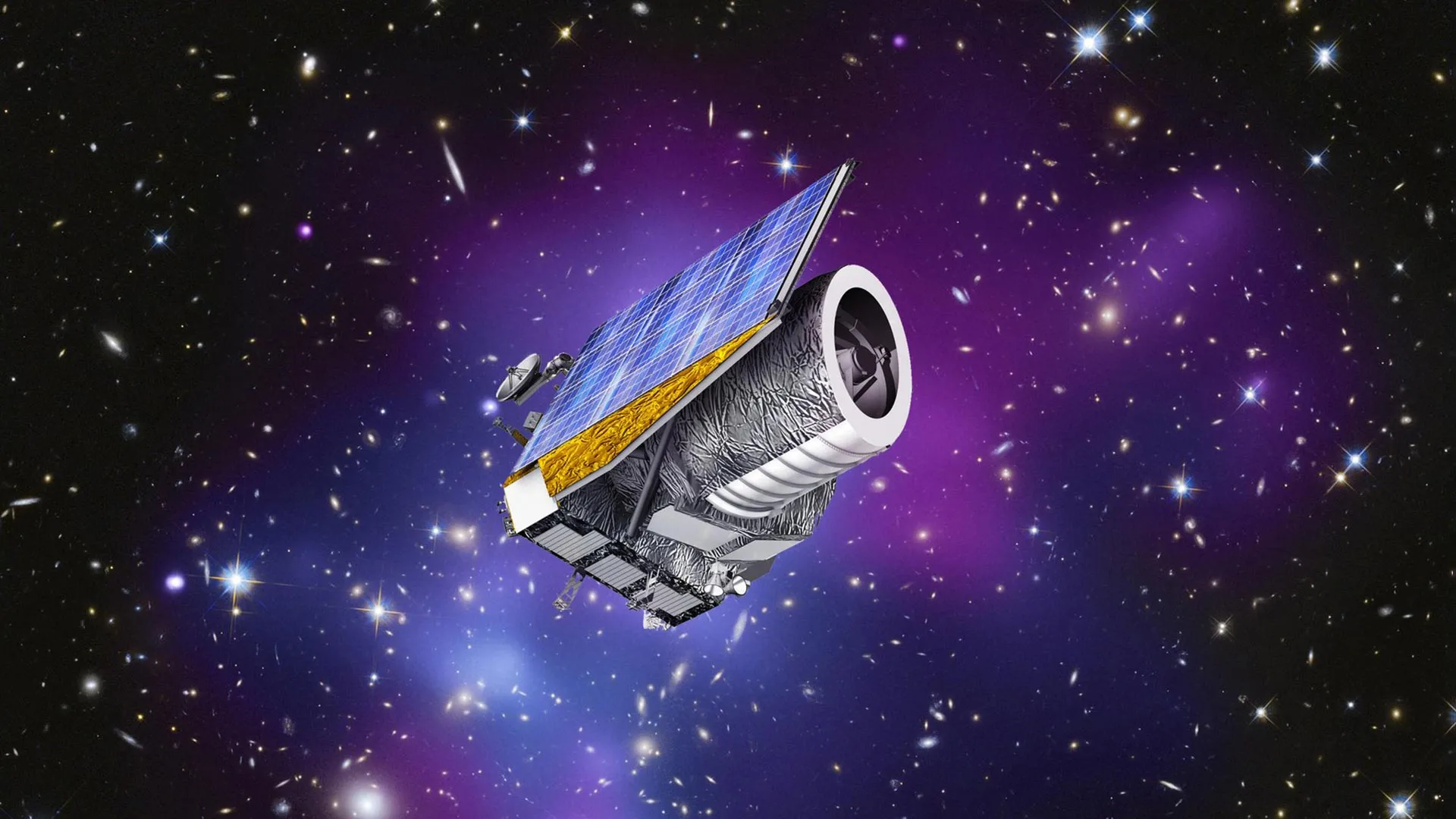
Европын сансрын агентлагийн Euclid дуран алс холын галактикуудыг ажиглах зорилготой байсан ч нарны аймаг дахь өмнө нь бүртгэгдээгүй сүүлт одыг санамсаргүйгээр олж илрүүлэв.
2026 оны есдүгээр сарын 16-наас 24-ний хооронд хийсэн ажиглалтын үеэр Euclid дурангийн дүрс бичлэгт хурдан хөдөлгөөнтэй, бүдэг үүлэн бүрхүүлтэй биет илэрсэн байна. Хельсинкийн их сургуулийн докторант Микко Пёнтинен болон Euclid консорциумын Нарны аймгийн биет судлах ажлын хэсгийнхэн тусгай программ хангамж ашиглан уг биетийг мөшгин тогтоожээ. Олон улсын одон орон судлалын холбооны Бага гараг судлалын төв (MPC) 2026 оны аравдугаар сарын 8-нд уг сүүлт одыг C/2026 S1 (Euclid) хэмээн албан ёсоор бүртгэсэн байна.
Шинээр илэрсэн сүүлт од нь Дэлхийгээс ойролцоогоор 1.3 тэрбум километрийн зайд, Бархасбадь болон Санчир гарагуудын хоорондох зайтай дүйцэхүйц байршилд ажиглагджээ. Уг биет нь нарны аймгийн гарагуудын эргэлтийн хавтгайгаас гадуур, Нарны дээгүүр өргөн уудам тойрог замаар мянга мянган жилийн турш аялдаг болох нь тогтоогдсон байна. Одон орон судлаачид нэмэлт ажиглалт хийснээр түүний тойрог замын хугацааг илүү нарийвчлан тооцоолох боломжтой болно.
Euclid дуран нь нарны аймгийн тоосонцор ихтэй хавтгай хэсгийг зориудаар тойрч, алс холын сансрыг ажиглах зориулалттай тул ийм нээлт хийх нь ховор тохиолдол юм. Хэдийгээр C/2026 S1 нь ирээдүйн “Comet Interceptor” номлолд тохирох зорилтот биет биш боловч энэхүү нээлт нь сансрын агентлагуудын хамтын ажиллагаа болон шинээр илэрсэн биетийг хурдан хугацаанд мэдээлэх үйл явцыг турших чухал сорил боллоо. Сүүлт оддыг судлах нь 4.6 тэрбум жилийн өмнөх нарны аймгийн бүрэлдэхүүн хэсгүүд болон Дэлхий дээрх ус, амьдралын эх үүсвэрийн химийн нэгдлүүдийг ойлгоход чухал ач холбогдолтой юм.
Дэлгэрэнгүйг эх сурвалжаас харах
↓Эх сурвалжийг нээх ↓
The European Space Agency’s (ESA) Euclid space telescope has made an unexpected discovery in our own solar system. Images captured between September 16 and 24, 2026, revealed a previously unknown comet, the first discovered by the mission.
The achievement is particularly remarkable given that Euclid was built to capture detailed images of distant galaxies rather than track rapidly moving objects such as comets. The speed with which researchers identified and confirmed the discovery demonstrates that Euclid can detect new comets while they are still relatively far from the Sun. This capability could eventually help identify a target for ESA’s upcoming Comet Interceptor mission.
A Mysterious Streak Reveals a New Comet
Mikko Pöntinen, a PhD student at the University of Helsinki, made the discovery with the Solar System Objects Science Working Group of the Euclid Consortium. Pöntinen developed specialized software to detect and track small solar system objects appearing in the telescope’s images.
“I was excited to see my software flag a ‘streak’ smeared across several images — the result of a fast-moving object. By predicting its position I could identify it in other images, in total finding it in five image sets. Further inspection revealed that it had a fuzzy cloud around it, indicative of an active object like a comet that is shedding dust and gas.”
The object appeared in a region of the sky known as the ‘Euclid Deep Field North’. Over several days, the telescope captured it in five separate fields of view, taking between two and four exposures of each field for a total of 16 exposures.
After searching catalogs of known asteroids and comets without finding a match, Pöntinen submitted the observations to the International Astronomical Union’s Minor Planet Center (MPC) as a potential new comet. The report enabled astronomers using telescopes on Earth to carry out additional observations. On October 8, the MPC officially confirmed the discovery. The comet has been designated C/2026 S1 (Euclid).
A Comet on an Extraordinary Orbit
The newly discovered comet is approximately 1.3 billion kilometers (about 800 million miles) from Earth. That distance is comparable to the distance from the Sun to a point somewhere between the orbits of Jupiter and Saturn.
However, the comet is traveling well outside the relatively flat plane in which the planets orbit the Sun. It is currently positioned almost directly above the Sun, following a sweeping path over the solar system that will take thousands of years to complete.
The International Astronomical Union’s Minor Planet Center (MPC) serves as the central international hub for observations of asteroids and comets. It gathers data from observers around the world to verify discoveries, determine orbital paths, and assign official designations. As additional observations become available, astronomers will be able to calculate the orbital period of C/2026 S1 (Euclid) more precisely.
Why Euclid Rarely Discovers New Comets
Although Euclid has spotted comets before, all of them had already been discovered. Several aspects of the telescope’s design and observing strategy make finding previously unknown objects within our solar system especially difficult.
Euclid intentionally avoids the region of the sky surrounding the plane of the solar system, where large numbers of asteroids and comets can be found. Dust concentrated in this region produces unwanted light that could interfere with the telescope’s sensitive observations of the distant universe.
The spacecraft also follows a ‘step-and-stare’ observing strategy, typically imaging each section of the sky only once. This means researchers cannot readily direct Euclid back toward a newly detected comet to gather more information about it.
Identifying objects within our solar system is nevertheless an important part of Euclid’s scientific work. Researchers must account for everything appearing in its images so that unrelated features, including comet trails and unwanted light, can be removed without compromising the accuracy of its galaxy measurements.
“Very few comets are expected to be discovered by Euclid so it was a happy coincidence that the combination of the comet’s orbit and Euclid’s scanning over those days captured the object in multiple images,” says Bruno Altieri, Euclid Archive Scientist, and part of the discovery team.
Preparing for a Future Comet Encounter
Euclid’s unexpected discovery also provides valuable experience for scientists working on ESA’s future Comet Interceptor mission. Although the newly identified comet is not an appropriate destination for the spacecraft, the successful detection and rapid notification process demonstrates how the two missions could work together to identify potential targets.
“While this particular comet is not a suitable candidate for Comet Interceptor, the process of discovery and alert gives us a real test case for how our two mission teams will coordinate in the future. And we are of course happy to have discovered a previously unknown comet for the Solar System community to follow-up on,” adds Valeria Pettorino, Euclid Project Scientist.
Ancient Remnants of the Solar System
Comets are ancient bodies composed of ice and dust that remain from the formation of our solar system approximately 4.6 billion years ago. Most originate in the distant Kuiper Belt and Oort Cloud, regions located beyond the orbits of the outer planets (interstellar comets come from other solar systems).
As a comet approaches the Sun, increasing temperatures cause its ice to turn directly into gas. Escaping gas and dust form a glowing, fuzzy cloud known as a ‘coma,’ as well as an extended tail.
Because comets native to our solar system have remained relatively unchanged since their formation, they preserve valuable evidence of the materials and environmental conditions that existed when the planets were taking shape. Studying these ancient objects may also help scientists understand the origins of Earth’s water and the chemical building blocks of life.
Euclid’s Hunt for Dark Matter and Dark Energy
The primary goal of the Euclid mission is to uncover how dark matter and dark energy influence the visible universe. During its six-year survey, the space telescope will examine the shapes and movements of billions of galaxies at distances reaching up to 10 billion light-years.
The comet discovery was reported on behalf of the Solar System Objects Science Working Group of the Euclid Consortium by M. Pöntinen, A. A. Nucita, A. Franco, M. Granvik, B. Altieri, S. Kruk, B. Y. Irureta-Goyena and B. Carry.

