
Utah State University-ийн судлаачид боловсруулаагүй түүхий хонины ноосыг хөрс хучихад ашигласнаар усны хэрэглээг бууруулж, ургамлын өсөлтийг сайжруулж болохыг тогтоов.
Utah мужийн Logan хотод явуулсан туршилтаар 1,296 цэцэгт ургамлын орчимд 7.6 см зузаантай түүхий хонины ноосыг дэвсэж, хөрсний чийгшил болон температурыг хэмжжээ. 2025 оны ургалтын улирлын дүнгээр ноосон хучилттай талбай нь ил задгай хөрстэй харьцуулахад усалгааны хэрэгцээг 30 орчим хувиар бууруулж, зуны халуун өдрүүдэд хөрсний температурыг 5.6°C-аар сэрүүн байлгасан байна. Мөн ноосон хучилттай хэсэгт ургасан ургамлууд илүү өндөр, өтгөн ургажээ.
Судлаачдын тайлбарласнаар, ноосны бүтцэд агуулагдах кератин хэмээх уураг нь азотыг удаан хугацаанд ялгаруулж, ургамлыг шим тэжээлээр хангадаг байна. Түүнчлэн ноос өөрийн жингээс 3.5 дахин их чийг хадгалах чадвартай нь усны хэрэглээг хэмнэх гол хүчин зүйл болжээ. Гэвч ноос дангаараа хог ургамлын тархалтыг бүрэн зогсоож чадаагүй нь туршилтын сул тал болсон байна.
Дэлхийн хэмжээнд жил бүр их хэмжээний ноос хаягдал болж, хогийн цэгт хаягддаг тул энэхүү судалгаа нь хөдөө аж ахуйн салбарт уг түүхий эдийг үр ашигтай ашиглах боломжийг эрэлхийлж байна. Гэсэн хэдий ч түүхий ноос нь хөрсөнд нитрат ялгаруулах, натрийн хэмжээг нэмэгдүүлэх, бохирдол тээх зэрэг эрсдэлтэй байж болзошгүй тул өргөн хүрээнд ашиглахын өмнө нэмэлт судалгаа хийх шаардлагатай гэж судлаачид үзэж байна. Уг туршилтын үр дүнг 2026 оны хоёрдугаар сарын 18-нд Urban and Small Farms Conference чуулганы үеэр танилцуулсан бөгөөд одоогоор эхний шатны мэдээлэл хэлбэрээр бүртгэгджээ.
Дэлгэрэнгүйг эх сурвалжаас харах
↓Эх сурвалжийг нээх ↓
On a quarter-acre plot in Logan, Utah, researchers packed a layer of raw, unwashed sheep wool three inches (7.6 cm) deep around 1,296 young flowering plants. Nobody cleaned or processed the fleece first. Greasy and coarse, it was the kind of low-value fleece that sheep farmers often struggle to sell.
By the end of the 2025 growing season, the wool-covered rows had needed about 30% less irrigation water than bare soil. On hot summer days, the soil beneath the fleece also stayed up to 10°F (about 5.6°C) cooler. Plants growing through it came out taller and bushier than their neighbors in unprotected ground.
Fewer Irrigation Runs and Cooler Roots
Run by a small-farms research team at Utah State University, the trial tested drought-tolerant perennial cut flowers: coneflower, globe thistle and sea holly. Each plant grew under one of four treatments, including wool left in place, wool replaced every year, woven landscape fabric and bare soil.
Five flow meters and 48 soil moisture sensors tracked every drop, while other probes logged temperature and sunlight. The team presented its first-season results at the Urban and Small Farms Conference on February 18, 2026, as establishment-year data rather than a peer-reviewed study.
Water savings showed up clearly in the irrigation logs. Wool-mulched rows used 1,690 fewer gallons (about 6,400 liters) than bare soil and required 23 fewer hours of irrigation over the season. Across that season, those rows were watered an average of 8 times, against 11 times under fabric and 13 times on bare ground.
Temperature differences were just as striking. At a depth of four inches, soil under wool peaked at 80°F (26.7°C), compared with 88°F (31.1°C) under fabric and 94°F (34.4°C) under bare soil. Daily swings were smaller too, ranging from 5 to 10°F beneath the wool and 10 to 20°F in exposed ground. During one week in July, the wool kept soil about 10°F cooler than bare ground in daytime and 4°F warmer at night.
Plants did better too. Flowers in the wool plots grew about 2.5 inches taller than those in bare soil and covered 5 to 20% more ground with their leaves than plants under fabric or bare soil. Weeds were the one weak spot. Heavy pressure from field bindweed pushed through the fleece, so wool alone did not keep the rows clean.
Why a Fiber Grown for Sweaters Holds Water
Wool’s usefulness in soil comes from its chemistry. Fibers contain roughly 50% carbon, 16 to 17% nitrogen and 3 to 4% sulfur, plus trace metals such as copper, zinc and iron. Most of that nitrogen is locked inside keratin, a tough protein that microbes break down slowly, so nutrients trickle out over time instead of washing away. A February 2025 review in the journal Agronomy, written by researchers at Italy’s National Research Council, notes that this slow release reduces nitrate leaching compared with mineral fertilizers.
Water is the other half of the story. Wool can retain moisture amounting to about 3.5 times its own weight. Field and greenhouse studies gathered in the Italian review back this up. In one experiment with maize, raw wool tripled soil moisture compared with untreated soil and raised dry matter by about 25%. In Poland, raw wool applied to winter wheat lifted yields by roughly 20% over conventional mineral fertilizer.
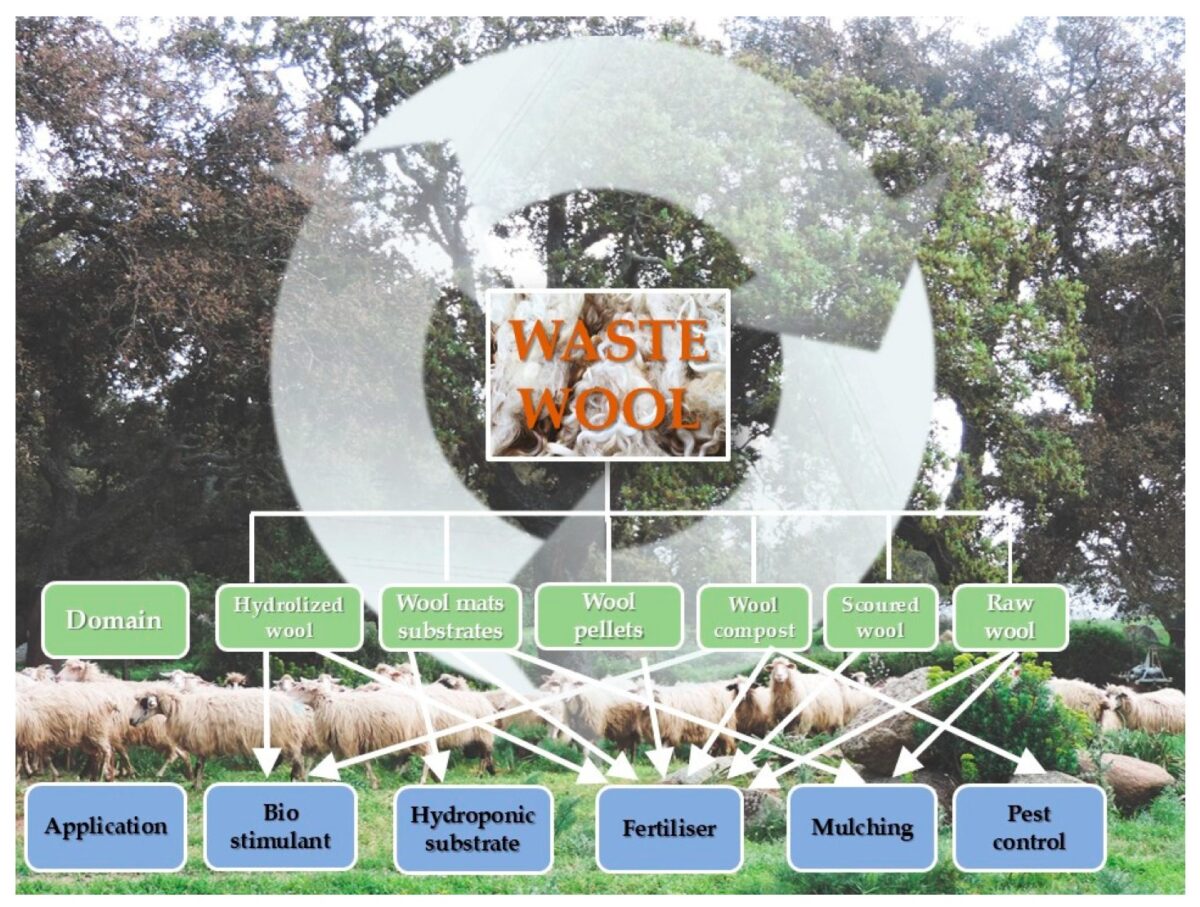
Form matters as well. At Deakin University in Victoria, Australia, materials scientists ground waste wool into a fine powder and mixed it into potting soil growing stock flowers. As the 2022 study reported, the powder held moisture far better than the same amount of wool pressed into pellets, because it spread evenly instead of sitting in clumps. Over 40 days, plants given a small dose of powder grew about 160%, compared with 114% in soil with no fertilizer at all.
More wool did not always mean better results. A larger dose of powder kept the soil wetter but produced less growth than the smaller one, likely because the extra moisture became excessive. The Deakin team concluded that a balanced amount of wool is needed to keep soil neither too wet nor too dry.
A Surplus Looking for a Use
Behind the research sits a glut of low-value fiber. Across nine major wool-producing countries, an estimated 317,000 metric tons of waste wool are discarded each year, most of it sent to landfill. In the European Union, which produces about 89,000 metric tons of wool annually, selling prices often fail to cover the cost of shearing, a task farmers must carry out anyway for animal welfare. Much European wool is too coarse for fashion markets, and synthetic fibers have taken over much of the remaining demand.
Utah reflects the same economics on a smaller scale. The state’s roughly 280,000 sheep produce about 2.13 million pounds of wool a year. Ungraded wool fetches around 55 cents per pound in grease, while coarse Black Face wool brings only about 25 cents.
Using that surplus on fields carries risks that researchers have documented. Raw wool can cause nitrate leaching after a single application, raise soil sodium and carry contaminants such as droppings, plant matter and pesticide residues. Results also vary by crop. in one study, wool pellets boosted lettuce and tomato yields but cut kohlrabi yields by half. The Italian reviewers called for life-cycle and economic studies before wool pellets or composts are used on a large scale.
Wool also lasts longer in the ground than many people expect. According to South Dakota State University Extension, wool can take at least two years to decompose fully, so a single layer can keep working across several growing seasons. That is exactly what the Utah team is now testing, comparing plots where the wool is never replaced with plots that get a fresh layer every year, while measuring flower yields through 2026.
Enjoyed this article? Subscribe to our free newsletter for engaging stories, exclusive content, and the latest news.

