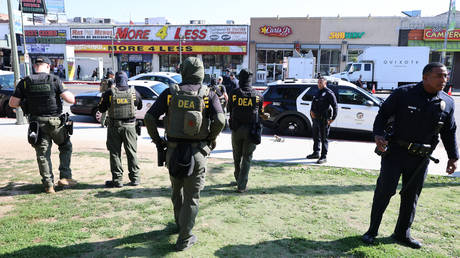
Мансууруулах бодистой тэмцэх алба (DEA) томоохон хэргийг илрүүлэхийн тулд хууль бус фентанил эмийн тээвэрлэлтийг саатуулалгүйгээр зах зээлд нэвтрэхийг нь зөвшөөрсөн байна.
Associated Press агентлагийн мэдээлснээр, 2023-2025 оны хооронд АНУ-ын Нью-Мексико мужид олон зуун мянган ширхэг хууль бус фентанил эм зах зээлд нэвтэрчээ. DEA-ийн тусгай агент Дэвид Хоуэлл энэхүү арга барил нь олон хүний аминд хүрсэн гэж мэдэгдэн, албан ёсны гомдол гаргасан байна. Түүний мэдээлснээр, мөрдөн шалгах ажиллагааны хүрээнд дор хаяж 1.8 сая ширхэг фентанил эмийг хураан авахгүйгээр зах зээлд нэвтрүүлсэн байж болзошгүй аж.
Фентанил нь героинтой харьцуулахад 50 дахин хүчтэй, маш бага тунгаар ч үхэлд хүргэх аюултай нийлэг опиоид юм. АНУ-ын Ерөнхийлөгч Дональд Трамп энэхүү бодисыг “үй олноор хөнөөх зэвсэг” хэмээн тодорхойлж, тус улсын хэмжээнд нүүрлээд буй мансууруулах бодисын хямралтай тэмцэх нь нэн тэргүүний зорилт болохыг мэдэгдээд байна.
DEA-ийн хэвлэлийн төлөөлөгч Аманда Возниак уг мэдээллийг эрс үгүйсгэж, тус алба нь фентанилыг олон нийтэд тараахыг санаатайгаар зөвшөөрсөн гэх мэдээлэл нь бодит байдлыг гуйвуулсан хэрэг гэв. Тэрээр мөрдөн шалгах ажиллагааг утасны яриа чагнах болон бодит цагийн тандалт хийх замаар явуулж ирсэн гэдгийг онцолжээ.
Энэхүү мөрдөн шалгах ажиллагааны хүрээнд 2025 оны тавдугаар сард Альбукерке хотод DEA түүхэн дэх хамгийн том хураалтыг хийсэн байна. Тус ажиллагаагаар Мексикийн Синалоа картелтай холбоотой байж болзошгүй 16 хүнийг баривчилж, 2.7 сая ширхэг фентанил эм, 11 кг орчим фентанил нунтаг болон 5 сая долларын бэлэн мөнгийг хураан авчээ.
Дэлгэрэнгүйг эх сурвалжаас харах
↓Эх сурвалжийг нээх ↓
The agency deliberately allowed some shipments of illegal deadly drugs to go through to build bigger cases, the outlet’s sources say
The US Drug Enforcement Administration (DEA) let hundreds of thousands of illegal fentanyl pills reach the streets of New Mexico between 2023 and 2025 – potentially leading to deadly outcomes – to focus on building bigger drug cases, The Associated Press reported on Monday, citing law enforcement sources and records.
Fentanyl, a synthetic opioid roughly 50 times stronger than heroin, is manufactured largely in clandestine Mexican labs using chemicals sourced from China. A dose as small as two milligrams – a few grains of salt – can be lethal, making it far deadlier per unit than cocaine, methamphetamine or heroin, with the drug itself cheap to produce and not dependent on crop seasons.
The drug is associated with two main dangers: while for opioid addicts, it has replaced heroin as their primary high, for the broader public, it acts as a hidden poison, often disguised as counterfeit prescription pills.
The US has been reeling from the fentanyl epidemic since 2013, with tens of thousands dying from overdoses yearly. US President Donald Trump has outlined combating the crisis as one of his priorities, designating fentanyl a “weapon of mass destruction.”
While the DEA insists that it is not logistically feasible or even necessary to intercept every drug shipment, the scale of the strategy to allow fentanyl to hit the streets “shocked several veteran agents” in New Mexico, according to AP.
“We poisoned our community to make cases,” DEA Special Agent David Howell told the outlet, adding that the agency’s approach “100% got people killed.” Howell, who filed a whistleblower complaint on the issue, described the tactic as “we did nothing, but sit back and watch.”
In one case detailed in a 66-page report reviewed by AP, agents tracked a June 2023 deal in Albuquerque in which traffickers delivered 74,000 pills that were never seized. A former DEA supervisor told AP that colleagues let “millions” of pills go unseized during a separate multi-state probe last year; Howell’s whistleblower disclosures put the figure at no less than 1.8 million pills.
At the same time, as the investigation progressed, the DEA carried out the largest single fentanyl pill seizure in its history in Albuquerque in May 2025, with agents confiscating 2.7 million fentanyl pills, more than 11kg of fentanyl powder, and $5 million in cash, alongside the arrest of 16 people with suspected ties to Mexico’s Sinaloa Cartel.
Commenting on the AP report, DEA spokesperson Amanda Wozniak said that “public descriptions suggesting that DEA knowingly permitted fentanyl to reach communities are false and fundamentally mischaracterize the facts,” adding that the investigation focused on wiretaps and real-time surveillance.
You can share this story on social media: