Судлаачид хулганы тархинд анхаарал төвлөрөл болон сарниулах хүчин зүйлсийг ялгахад чухал үүрэгтэй мэдрэлийн эсийн бүлгийг олж тогтоожээ.
Johns Hopkins University-ийн эрдэмтдийн Nature Communications сэтгүүлд нийтэлсэн судалгаагаар, тархины үүдэл хэсэгт байрлах “parabigemino lateral tegmental inhibitory complex” (PLTi) хэмээх мэдрэлийн эсийн цогцолбор нь орон зайн сонгомол анхаарлыг удирдах үүрэгтэй болохыг тогтоожээ. Эдгээр эс нь GABA химийн зуучлагчийг ашиглан дунд тархины дээд толгод (superior colliculus)-ыг зохицуулдаг байна. Энэхүү сүлжээ нь загас, шувуу, хөхтөн амьтдын хувьд хувьслын явцад хадгалагдан үлдсэн эртний механизм юм.
Судалгааны хүрээнд хулганад хийсэн туршилтаар PLTi мэдрэлийн эсийг түр хугацаагаар идэвхгүй болгоход тухайн амьтны анхаарал сарних, чухал мэдээллийг ялгах чадвар эрс буурч байгаа нь ажиглагджээ. Харин эдгээр эсийг дахин идэвхжүүлэхэд хулганууд сарниулах хүчин зүйлсийг үл тоон, зорилтот мэдээлэлдээ анхаарлаа төвлөрүүлэх чадвараа бүрэн сэргээсэн байна.
Шинжлэх ухааны багийн ахлагч Shreesh Mysore-ийн тайлбарласнаар, энэ нь тархины анхаарлын сонголтыг гүйцэтгэгч чухал систем юм. Хэдийгээр уг судалгааг хулганад хийсэн ч, эдгээр эс нь хүнд ч мөн адил байх магадлалтай гэж үзэж байна. Энэхүү нээлт нь ADHD буюу анхаарал дутмагшил, хэт хөдөлгөөнтөх эмгэг, шизофрени зэрэг анхаарал төвлөрөлтэй холбоотой хүний өвчин эмгэгийг ойлгох, эмчлэх шинэ боломжийг нээж магадгүй юм.
Дэлгэрэнгүйг эх сурвалжаас харах
↓Эх сурвалжийг нээх ↓
The ability to focus is not unique to humans or even to primates.
Birds, reptiles, and even fish can direct their attention at a narrow target, filtering out peripheral distractions.
This ability has existed for at least hundreds of millions of years, and yet it’s unclear exactly which parts of the brain make it happen.
In a new mouse study published in Nature Communications, scientists from Johns Hopkins University say they have discovered a cluster of evolutionarily ancient neurons that play a ‘surprisingly critical’ role in selective spatial attention.
Given our shared evolutionary history with mice, there’s a chance that similar neurons exist in human brains, too.
While mice, like humans, are mammals, there are many differences between their brains and ours. Just because something works a certain way in mice doesn’t mean it will work the same way in humans.
But ethics committees allow experiments on mice that would never pass muster for human subjects, which means mice are often one of our best proxies for understanding the human brain.
In this case, the scientists think their findings could have applications for understanding and treating human problems related to attention, such as attention-deficit/hyperactivity disorder (ADHD).
“Animals possess the remarkable ability to select and preferentially process the highest priority stimulus in space while ignoring distracting stimuli of lower priority,” the authors explain in their paper.
This ability is called selective spatial attention, and it’s pretty important in every aspect of animal life: finding food, caring for young, fighting rivals, and resisting the urge to scroll through Instagram when you’re trying to focus on reading exciting new scientific research.
Selective spatial attention is disrupted in a range of conditions that affect humans, for example, ADHD and schizophrenia.

“A hallmark of ADHD is that even faint distractors draw attention away – and that’s exactly what we see here when these neurons are silenced,” says Johns Hopkins neuroscientist Shreesh Mysore, about his team’s research on mice.
“But the very next day, when the neurons are turned back on, the same animal can ignore distractors again, even very strong ones.”
The inhibitory neurons in question are part of the parabigemino lateral tegmental inhibitory complex, or PLTi.
These neurons use GABA, an inhibitory chemical messenger in the central nervous system (which, by the way, has been shown to be disrupted in ADHD).
They play a role in modulating the superior colliculus, a major component of the mammalian midbrain, a region involved in coordinating visual and other inputs to create a spatial map of the world around the body – and directing our attention to it.
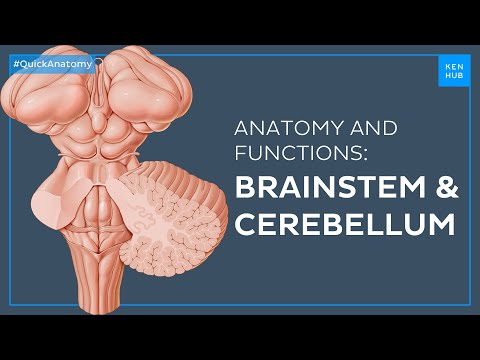
Located in the brainstem, the neurons sit in a network that is highly conserved across birds, fish, and mammals.
“When we inactivate these neurons, the mice become hyper distractible,” Ninad Kothari explains.
In a task used to test their attention, mice had to focus on images on a touchscreen in front of them. They earned rewards by tapping the screen ahead of them with their noses while ignoring distractors that appeared elsewhere on the screen.
Mice with their PLTi intact had no difficulty in gaming this task to their advantage.
But when the researchers injected a virus into their brains, designed to switch off the PLTi temporarily, the mice seriously lost their focus.
“The only thing impaired was their ability to take the competing pieces of information, compare them, and pay attention to the location with the most important information,” Mysore says.
“This part of the brain is like an attentional selection engine. It helps solve the question: ‘What is the most important information I should pay attention to right now?'”
The dominant view has been that selective spatial attention is controlled by a more modern brain region shared by humans and other primates. But this research suggests a far more ancient region may play a key role.
“All the evidence to date suggests that these neurons exist in humans too,” Mysore says.
Related: ADHD Drugs Do Much More Than Help You Focus, Study Reveals
Of course, far more studies will be needed to confirm if those neurons work the same way in humans. But this discovery could go some way to understanding what shapes our strengths – and difficulties – with directing our attention.
And if you made it this far without taking a quick break to doomscroll, congratulations! You might have your PLTi to thank.
The research is published in Nature Communications.
This article was fact-checked by Carly Cassella and edited by Rebecca Dyer. While we pride ourselves on our process, we are only human. If you spot a mistake, please let us know.