Уулын замд тахир тойруу хэлбэрийг сонгох нь инженерийн тооцоолол, аюулгүй байдал болон зардлын оновчлолтой шууд холбоотой юм.
Ууланд шулуун зам барих нь асар их хэмжээний газар шорооны ажил шаардахаас гадна хад чулууг тэслэх, хөрсний тогтоцыг бэхжүүлэх зэрэг өндөр өртөгтэй бүтээн байгуулалтыг шаарддаг. Харин байгалийн тогтоцыг дагасан тахир зам нь хөрөнгө оруулалтыг хэмнээд зогсохгүй, барилгын ажил болон цаашдын засвар үйлчилгээг хялбаршуулдаг байна.
Техникийн хувьд, уулын эгц өгсүүр замд автомашины хөдөлгүүр болон хурдны хайрцагт ирэх ачааллыг бууруулах нь нэн чухал. Замын урт болон тахир хэсгийг нэмэгдүүлснээр налуугийн өнцгийг багасгаж, тээврийн хэрэгслийн аюулгүй байдлыг хангах боломж бүрддэг. Энэ нь орчин үеийн хүчин чадал сайтай автомашинуудад ч хөдөлгүүр болон хурдны хайрцгийг хэт халахаас сэргийлэхэд зайлшгүй шаардлагатай шийдэл юм.
Мөн уруудах үед жолооч автомашинаа бүрэн хяналтад байлгахад тахир зам илүү тохиромжтой байдаг. Ялангуяа сүүлийн үед тээврийн хэрэгслүүдийн жин нэмэгдэж байгаа тул замын налууг зөөлрүүлэх нь хүнд даацын автомашинуудын тоормосны систем болон нийт аюулгүй байдалд чухал үүрэг гүйцэтгэдэг байна.
Дэлгэрэнгүйг эх сурвалжаас харах
↓Эх сурвалжийг нээх ↓
A picture of a winding road in the mountains went viral because people online started asking a very simple question.
Everyone was wondering why engineers decided to build this complex road instead of a straight one up the hill instead.
At first glance, the zig-zagging route seems unnecessary.
But the real reason comes down to physics, safety, and common sense.
There are several reasons why a winding road is safer and better
One of the main problems is that mountain landscapes are incredibly difficult to build on or through; carving a straight line into a hillside requires massive excavation.
This is both hard to do and expensive.
It means you have to blast rock, stabilize cliffs, and install large structural supports to prevent collapses and landslides.
By making the road follow the ‘natural’ geography of the mountains, the amount of ‘disruption’ you’re causing is significantly less dramatic.
The cost is less dramatic, too.
Less excavation and fewer large structures mean the road is cheaper and easier to build, and cheaper and easier to maintain.
Here’s why turns and curves help
There are several mountain roads in the world that feel much longer than they are because of their bends and turns.
Car people love them because they’re great for driving.
Transfăgărășan in Romania, the Stelvio Pass in Italy, Blue Ridge Parkway in the US, and so on.
These roads go on for miles and give you a spectacular view of the scenery.

They look amazing, but there’s a more practical reason these mountain roads are built like that.
If engineers built a straight road up asteep mountain, the slope would quickly become too sharp for most vehicles to handle safely.
Road engineers opt for longer, winding roads because they’re easier on the car, and therefore easier on the driver.
By increasing the distance the road travels, you reduce the gradient, spreading the height change across a longer distance.
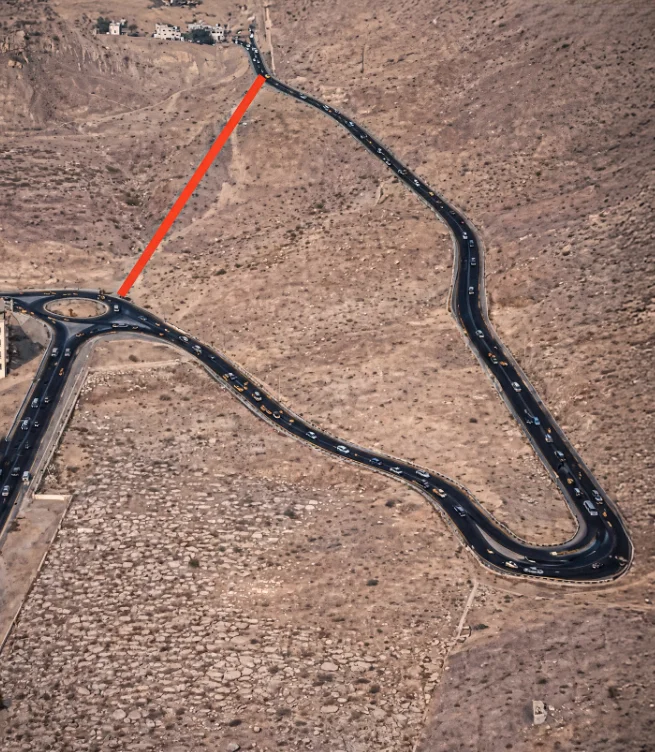
Modern cars – with automatic transmissions and Hill Start assist – handle steep inclines more smoothly, but a winding road is still vital to prevent modern engines and gearboxes from overheating.
For the same reason, you also havemore control when heading downhill.
Heavy vehicles would be particularly at risk, which would be a bigger problem today because vehicles today are heavier than ever.
And the fact that these roads are very Instagram-friendly is a bonus.